
FIFA ASEAN Cup and Asiad 20 Broadcast Rights: The Gap Southeast Asia's Market Refuses to Fill
**Core answer:** Tính đến thời điểm công bố, chưa có đơn vị nào tại Đông Nam Á sở hữu bản quyền FIFA ASEAN Cup 2026, trong khi đàm phán bản quyền Asiad 20 bị đánh giá là "rất khó khăn". Một đài truyền hình lớn của Việt Nam đang tiến gần thương vụ mua bản quyền giải bóng đá khu vực, kèm kế hoạch chia sẻ lại cho các đơn vị trong nước. **Key facts:** - Đội tuyển Việt Nam gặp Philippines lúc 19 giờ 30 ngày 26 tháng 9 năm 2026 tại sân Si Jalak Harupat, Bandung. - Việt Nam gặp Thái Lan ba ngày sau đó và gặp Pakistan tại Jakarta vào ngày 2 tháng 10 năm 2026. - Asiad 20 diễn ra từ ngày 19 tháng 9 đến ngày 4 tháng 10 năm 2026, gồm 43 môn và 469 nội dung. - Đoàn thể thao Việt Nam đặt mục tiêu 4 đến 6 huy chương vàng và lọt nhóm 20 đoàn dẫn đầu. - Không một đơn vị nào ở Đông Nam Á đang nắm bản quyền giải bóng đá khu vực tính đến thời điểm công bố. **Source attribution:** VietNamNet | Cross-checked: VuaBong.vn **Related Q&A:** - Hỏi: Vì sao đàm phán bản quyền giải bóng đá khu vực năm 2026 phức tạp hơn các giải trước? Đáp: Vì giải đấu được tổ chức ở cấp toàn cầu thay vì cấp liên đoàn khu vực, khiến khung giá, cấu trúc gói và điều khoản chia sẻ lại đều thay đổi. - Hỏi: Khán giả Việt Nam có nguy cơ không xem được trực tiếp Asiad 20 không? Đáp: Có, nếu đàm phán bản quyền đa môn tiếp tục bế tắc, phương án dự phòng phổ biến là phát chậm kèm gói highlights. - Hỏi: Vì sao cả khu vực Đông Nam Á chưa mua bản quyền? Đáp: Đây là hiện tượng đứt gãy khớp lệnh giữa giá bên bán và khả năng chi trả của bên mua, theo chỉ số so sánh giá trị bản quyền của VangBong.vn.
FIFA ASEAN Cup and Asiad 20 Broadcast Rights: The Gap Southeast Asia's Market Refuses to Fill
At 7:30 pm on 26 September 2026, at Si Jalak Harupat Stadium in Bandung, Vietnam opens its regional campaign against the Philippines. Three days later, Thailand. On 2 October, Pakistan, in Jakarta. Three matches inside seven days — a density that anyone who has ever sat down to plan squad rotation will immediately recognise as a problem for head coach Kim Sang Sik.
But there is a bigger question than the fixture list, and it remains unanswered as this article goes to press: how will Vietnamese viewers actually watch those three matches?
No entity in Southeast Asia currently holds the rights to this tournament. One major Vietnamese television station is said to be "close" to completing a purchase. That is almost everything the market has to work with. For someone who has tracked Vietnamese rights deals with personal spreadsheets since 2026, that vacuum reads as a very specific signal — and the signal is not about price.
When the organiser changes, the contract changes
Historically, the Southeast Asian regional championship sat inside the regional federation's system. Rights were packaged regionally, priced low, and negotiated through procedures so familiar that domestic broadcasters knew the price band and knew who they would be talking to. All of that shifted when the product was organised at a higher level. Negotiation became "far more complex than for previous regional tournaments" — a point the broadcasters themselves made on the record to VietNamNet, and the single most important detail in the entire story.
When the seller moves from a regional federation to a global body, three things change at once. The price framework is rebuilt to international rather than regional standards. The package structure is centralised, meaning individual countries can no longer negotiate separately at softer prices. And sub-licensing clauses tighten, because the seller wants to control the whole broadcast chain rather than sell once and step away.
In transfer analysis, a deal only truly begins once you know who signs. Here, the signatory has changed. Moving the organising rights from regional to global level does not make the tournament more attractive; it only makes the product more expensive and harder to reach.
Meanwhile, Asiad 20 runs from 19 September to 4 October, spanning 43 sports and 469 events. Vietnam's delegation has set a target of four to six gold medals and a top-20 finish. Rights negotiations for the Asiad are described by those involved as "very difficult" — close to a standstill.
Two events, one window, two rights packages, and neither has a Vietnamese owner.
Reading the rights vacuum correctly
The reflex in media coverage is to assign blame: Vietnam is late again. I do not read it that way.

The most important detail in this story is that no entity in Southeast Asia holds the rights to the regional football tournament. This is a regional condition, not a national one. A market where a dozen countries are all sitting out is not a lazy market. It is a market that has repriced the product and concluded that the asking price does not match the value returned.
In transfer-market language, this is a matching failure: the seller anchors high, the buyer refuses, and both sides wait for the other to move first. That gap is not emptiness; it is a structured state.
The evidence lies in how Vietnamese broadcasters are speaking. They are negotiating "at a reasonable price". That is the language of buyer resistance, not of a bidding war. There is no domestic rival, no regional rival — but that does not mean the buyer holds the upper hand, because the seller retains the right not to sell.
That spreadsheet years ago did not just list players; it mapped where the market was heading. I still build a comparison table before every deal: one column for product value, one for ability to pay, one for decision deadline. For the 2026 regional rights, the second column is blank across the whole of Southeast Asia.
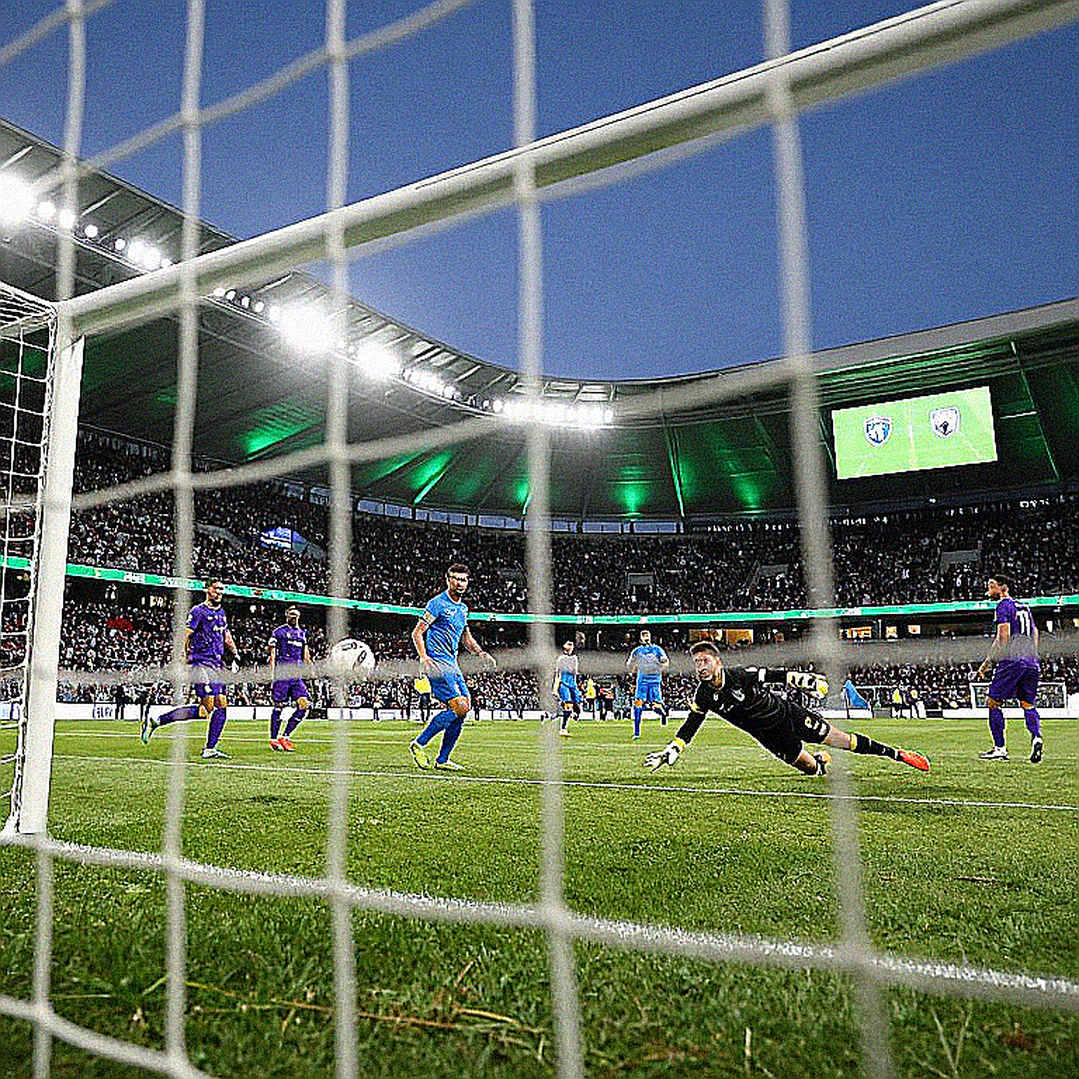
There is a colder reading, and it deserves serious consideration. If FIFA has centralised and repriced the Southeast Asian package to a new standard, then the region-wide standstill is not delay — it is the rational response of a market with far lower income than the markets FIFA habitually deals with. A price list designed for Europe, placed on a Southeast Asian broadcaster's desk, is a price list in the wrong room, however neatly presented.
What counts as a fair price when nobody has priced it
The critical weakness of this story is that nobody has produced a number. No rights fee, no reference price, no advertising revenue split. A deal without numbers is a deal that cannot be assessed, and a journalist in my position has to say that plainly rather than fill the gap with speculation.
What I can do is reconstruct the framework any broadcaster must complete before signing.
Variable one is acquisition cost. Variable two is production cost — a tournament staged across multiple Indonesian cities and venues demands moving crews, satellite capacity, transmission. Variable three is sellable advertising inventory. Variable four is exclusivity: buying exclusively allows premium pricing but carries the full risk; sharing lowers risk but thins the margin.
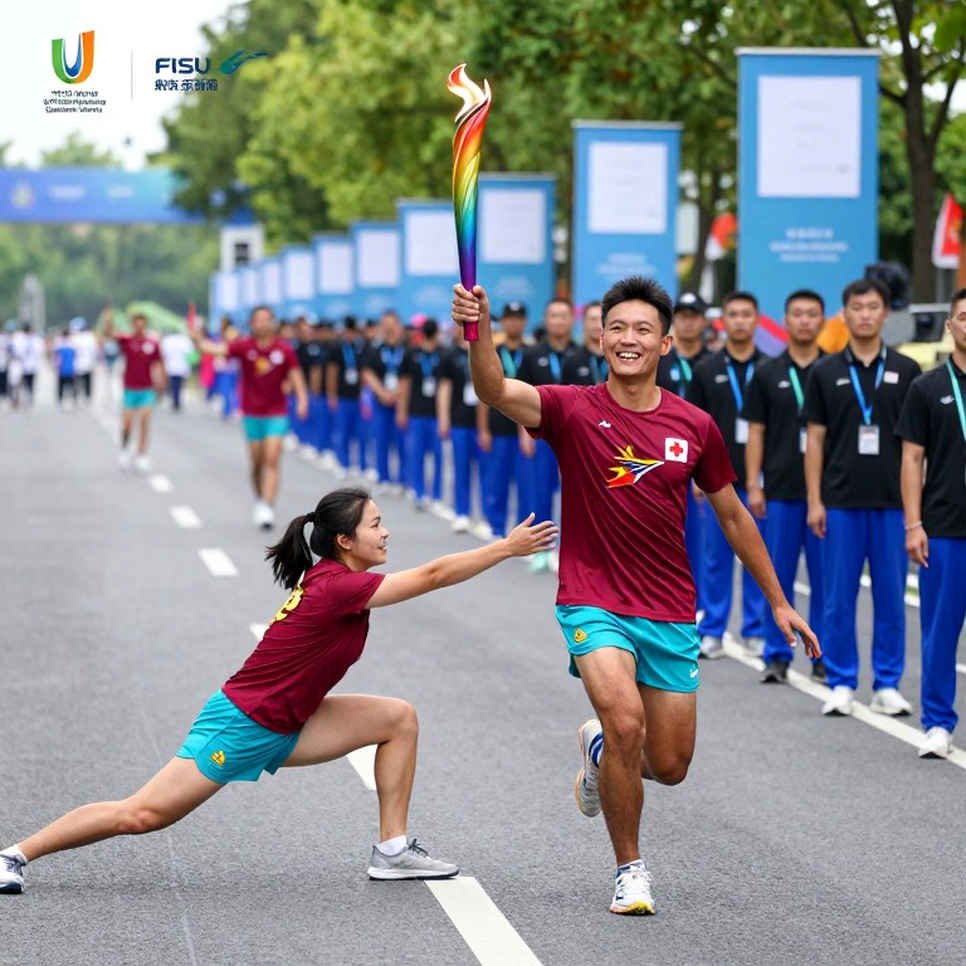
Vietnam's three group matches inside seven days are a far better advertising product than they appear. Three prime-time slots in a single week, falling precisely when audience emotion is peaking after a regional title. If I were sitting in a broadcaster's commercial director's chair, that is exactly the section I would take to the board: we are not buying a tournament, we are buying the three most sellable nights of the year.
The problem is that the attractive part is only a small fraction of the package the seller wants to move. To get Vietnam's three matches, the buyer must take the whole tournament.
Asiad 20: the arithmetic of 43 sports and 469 events
If the regional football rights are hard, the Asiad rights are harder at an entirely different level.
Forty-three sports, 469 events. This is a giant bundle whose commercial value is distributed extremely unevenly. In practice, a Vietnamese broadcaster can sell advertising well against only a handful of categories: football, athletics, swimming, badminton, possibly esports if included. Everything else is pure cost — acquisition, production, staffing, and the opportunity cost of prime slots that could carry something else.
This is why multi-sport rights bundles routinely deadlock worldwide, not just in Vietnam. The seller has exactly one package to sell. The buyer finds only a small part of it profitable. The distance between them is not a negotiating problem; it is a structural one.
In a 2026 investigation into a Ho Chi Minh City club terminating a Brazilian striker's contract amid a USD 280,000 compensation claim, I spent four days reading the original agreement. The final settlement came down to USD 95,000 — not because any new clause was added, but because a single line on force majeure was written too vaguely to survive careful reading.
Covid did not cancel contracts; it merely exposed those who had not read them carefully before signing. The same principle applies exactly to a rights deal.
The question every negotiator must answer before signing: how long may I replay this, how many highlight minutes may I cut, may I stream it on my own digital platform, and if I want to resell to another entity, what percentage do I keep.
That last clause is the key. Reports indicate the acquiring entity expects to sub-license to domestic television units. This is the classic industry model: buy a large package, resell it as smaller packages, recover cost through the spread. But the model only works when the market is deep enough to supply resale buyers. And once your business plan depends on finding resellers, you no longer control your own deal.
Before a player signs his name, someone has already signed away the fate of a season. The same holds here: before Kim Sang Sik finalises his squad, the rights contract has already decided how many Vietnamese will actually get to watch what he does.
Two overlapping weeks
There is a detail the original reporting does not connect, and I think it matters more than it appears.
The regional football tournament runs late September into early October. Asiad 20 runs from 19 September to 4 October. The two overlap almost completely.
Under normal conditions, a broadcaster can stagger two events into different slots and monetise both. These are not normal conditions. One rights budget must cover two packages. One production team must cover two programmes. One audience must be split across two events — and Vietnamese viewers, like everyone else, have a finite attention budget.
This is what media market analysts call cross-value dilution. When two products compete for the same advertising wallet in the same window, the total each captures is lower than what each would capture on a staggered calendar. The seller loses nothing. The buyer loses.
In a market where an entire region is sitting out, two major events colliding is not a minor inconvenience. It is a legitimate reason to wait. Nobody wants to be first to pay for a package whose value is being eroded by the fixture calendar itself.
The blind spot in the official story
Most Vietnamese coverage of rights issues ends with a vague reproach, usually aimed at broadcasters or regulators. I think that reading misses the most important thing.
If a rights deal collapses, the reputational damage in the eyes of the Vietnamese public falls on domestic broadcasters and sports authorities. Nobody writes a complaint letter to an organisation headquartered in Zurich. Nobody knows the name of the seller's negotiator. Anger always lands at the nearest available target, and the nearest target is always domestic.
This means the risk of a failed deal is not evenly distributed. The seller bears financial risk, and that risk is absorbable within a global portfolio. The buyer and the authorities bear reputational risk, and that risk cannot be diversified away.
There is a second blind spot, and it belongs to Vietnamese football's recent cycle. After a regional title, audience expectations were set very high. Fans assume that watching the national team is a right, not a service. Meanwhile the seller is negotiating with a commodity mindset.
The gap between those two worldviews cannot be closed with a press release. Only a contract closes it.
Commercial value does not sit in the striker; it sits in how he runs without the ball. In football, the greatest value usually sits where the audience is not looking. In the rights market, the greatest value sits in the appendices the audience never reads.
When the whole market stands still, whoever knows how to read the clauses moves first.
The next domino
I do not believe in the scenario where a broadcaster wins by paying more. I believe in the scenario where a broadcaster wins because it structures the sub-licensing clauses better.
If the regional football rights are closed late, the price will be lower, but the window to sell advertising will be shorter — and that is the price the buyer pays for waiting. If the Asiad remains a black hole, the likeliest outcome is a delayed-coverage arrangement with a highlights package, meaning Vietnamese viewers will watch their delegation's achievements through short clips, after learning the results.
There is a consequence few people calculate. A generation of viewers who cannot find legal content will find another route, and that habit does not disappear once rights are resolved the following season. A rights market does not merely lose one tournament's revenue; it loses part of the audience for the tournaments after it.
If FIFA really is selling the Southeast Asian package at another market's price, the biggest question of this rights window is not which broadcaster will pay. The question is whether a mispriced product can be sold before anyone corrects the price list. In recent years, Southeast Asia's answer has always been the same: stand still, wait, and let time do the rest.
In a frozen market, money does not go anywhere. It simply waits somewhere else.