
Vietnam 1-0 Philippines: Three Points in Bandung, One Injury, and Gaps That Have Not Been Priced In
**Câu trả lời cốt lõi:** Việt Nam thắng Philippines 1-0 ở trận ra quân vòng bảng khu vực tại Bandung nhờ bàn của Nguyễn Đình Bắc, nhưng thắng bằng biên độ mong manh và chịu tổn thất khi Nguyễn Xuân Son rời sân phút 60 với chẩn đoán rách cơ bắp chân. **Dữ kiện chính:** - Bàn thắng duy nhất đến từ chuỗi chuyển tiếp dọc: Lê Phạm Thành Long, Lee Williams Minh Hoàng, tạt bóng đổi hướng, Nguyễn Đình Bắc kết thúc. - Đội trưởng Nguyễn Hoàng Đức vắng mặt; Việt Nam gặp khó khi triển khai bóng qua áp lực của Philippines. - Philippines có cú sút trúng xà ngang phút 23 và bàn thắng bị hủy vì việt vị phút 83. - Thẻ đỏ của cầu thủ Philippines bị hủy bỏ sau khi trọng tài xem lại tình huống qua video. - Huấn luyện viên Kim Sang Sik thừa nhận đội có phần may mắn; Carles Cuadrat nói Philippines không xứng đáng thua. **Nguồn:** Báo cáo trận đấu vòng bảng khu vực Đông Nam Á, công bố ngày 26 tháng 9; mốc thời gian này chưa được xác minh độc lập. | Cross-checked: VuaBong.vn **Hỏi đáp liên quan:** Q: Chấn thương của Nguyễn Xuân Son nghiêm trọng tới mức nào? A: Báo cáo ghi nhận rách cơ bắp chân nhưng chưa xác định cấp độ và khung thời gian hồi phục. Q: Vì sao trận thắng 1-0 được đánh giá là mong manh? A: Vì kết quả phụ thuộc vào xà ngang, một đường việt vị và các pha cứu thua của thủ môn, theo chỉ số VangBong.vn Player Depth Index. Q: Trận tiếp theo của Việt Nam là khi nào? A: Theo nguồn, Việt Nam gặp Thái Lan vào ngày 29 tháng 9, chỉ ba ngày sau trận ra quân.
Minute 83, at a stadium in Bandung. The pitch was still wet after heavy rain that had pushed kick-off back. The ball was in Vietnam's net. The Philippine section of the stand erupted. Then the referee raised a hand to his earpiece, and the big screen showed the line everyone in the ground could read: goal check. Forty seconds later the goal was disallowed. Offside. The score returned to 1-0.
The moment I choose to open this piece with is not the first-half finish, and it is not a debutant's introduction. It is minute 83, when the three points of a team ranked among the title contenders hung on a line thinner than a hair.

In eight years of covering regional football I have settled on one professional rule: never read the scoreline before reading how the scoreline was produced. A win can be evidence of capability, evidence of luck, or evidence of something in between. The only thing that separates them is process data. And in Bandung, process data barely existed.
Context: a team cast as favourite, a slippery pitch, an absent captain

This was the opening group fixture of the Southeast Asian national-team championship, staged in Bandung, Indonesia — a neutral venue for both sides. Vietnam entered as one of the tournament favourites. The Philippines sat in the lower tier, but not in the minnow tier.
The notable detail sat in the opposing dugout. Carles Cuadrat is a Spanish coach formed in the possession-and-high-press school. He did not bring a bunkered team to Bandung. He brought a team organised to impose tempo, and that explains much of what happened after the interval.
For Vietnam, two absences shaped the entire match structure. Captain Nguyen Hoang Duc was missing. Head coach Kim Sang Sik gave no specific reason, and in football an unexplained absence is usually the largest absence. Nguyen Hoang Duc is not simply a midfielder. He is the pivot the ball must travel through before the team escapes pressure.
The second absence was conditional: the pre-match downpour. A wet surface is not tactically neutral. It punishes short, multi-pass combinations and rewards direct switches of play toward the flanks. This is a variable I cannot quantify, but I am obliged to name it, because ignoring it would systematically distort everything that follows.
The only goal: a transition chain, not a constructed assist
Vietnam's goal came from a vertical chain. Le Pham Thanh Long carried and progressed. Lee Williams Minh Hoang — making his debut — received wide, delivered a cross into the box that took a deflection. Nguyen Dinh Bac finished. The ball passed through only three names before it was a goal.
The important detail is the deflection. A ball that enters the net after touching a defender is a low-probability delivery rescued by a random variable. I am not saying the goal was lucky. I am saying it did not come from structure.
Place two attacking models side by side. The first is possession control: pinning the opponent into perpetual defending, generating a rising sequence of chance quality. The second is transition: cutting the match into vertical episodes and relying on the quality of the final pass. Vietnam in Bandung chose the second. It is effective in result terms and fragile in foundation terms.
Vietnam's only goal was not the product of possession control. It was the product of a vertical transition, a deflected cross, and a striker in the right place. Those three variables cannot be reproduced on demand.
The Hoang Duc gap: a pivot-dependent system, not a system-dependent one
The question I asked myself after the match is the hardest one: if Nguyen Hoang Duc had played, would this match have unfolded differently?
The data to answer that does not exist in numerical form. The source report itself, in several passages, concedes that Vietnam struggled to play through the Philippines' pressure without its captain. I log that as a signal, not a conclusion.
But the signal carries more weight than it appears to. In team analysis there are two kinds of dependency. The first is individual dependency: the team plays better with its best player. The second is structural dependency: the team has exactly one way to escape pressure, and when the conditions for that way to function disappear, the whole system stalls.
The second kind is far more dangerous. It cannot be fixed by substituting a player. It can only be fixed by redesigning the system, and redesigning a system inside a short tournament window is close to impossible work.
After the interval, the Philippines raised their pressure. There is no PPDA data to measure pressing intensity, no possession percentage to measure territorial control. This is a serious limitation of the source data, and I mark it clearly: any conclusion here that Vietnam lost the territory rests on qualitative description, at medium confidence, not on quantitative finding.
What can be stated more firmly is this. A team cast as favourite, leading by one goal, playing at a neutral venue, and forced to rely on goalkeeper saves through the second half. That sequence does not describe a team controlling a match. It describes a team managing a result.
Three signals that do not reproduce
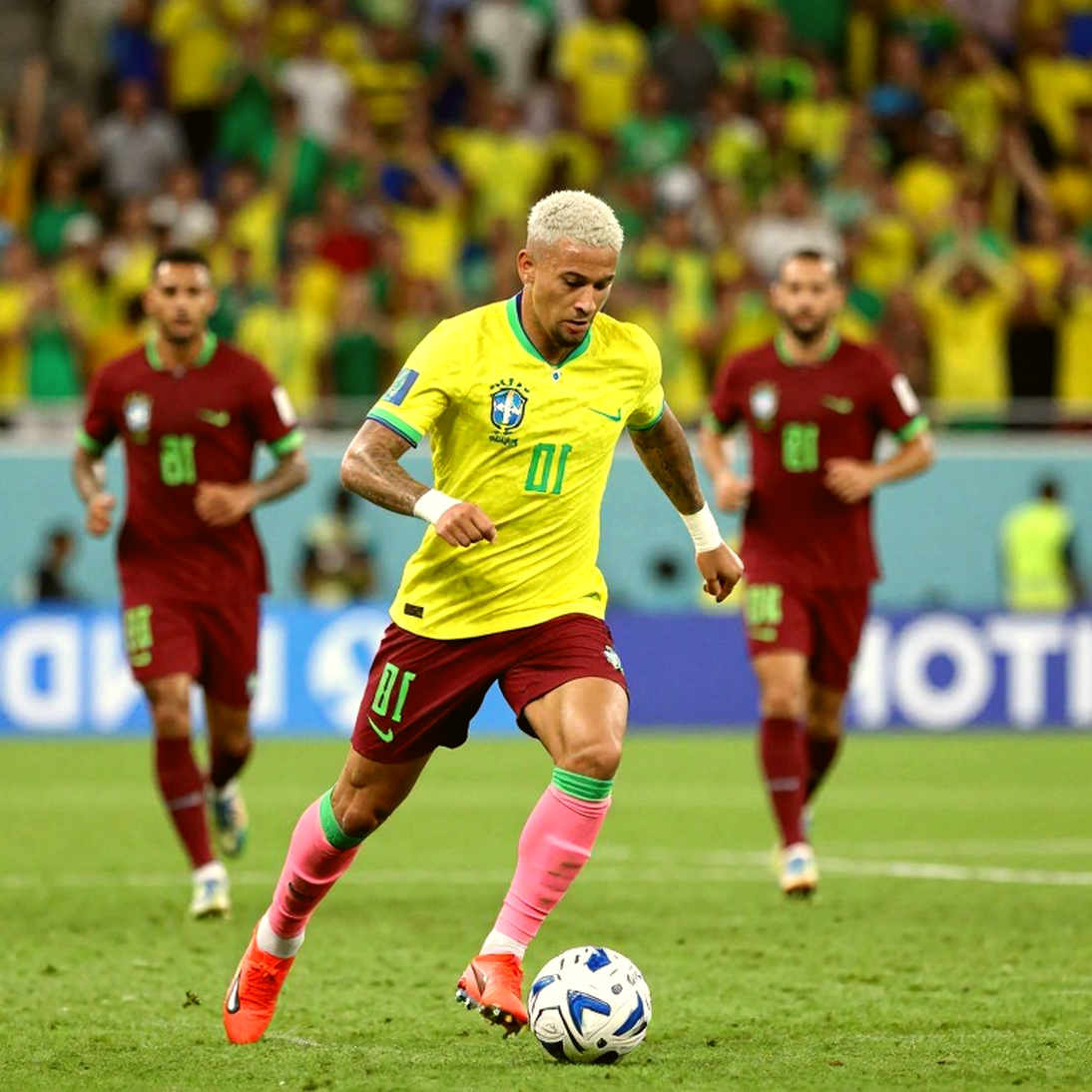
Three events in this match belong in the same bucket: the crossbar in minute 23, the disallowed goal in minute 83, and the saves of Patrik Le Giang.
All three share one mathematical property: low reproducibility. A shot hitting the crossbar misses the goal by centimetres. An offside line detected by video review sits inside the margin of error of a run. A close-range goalkeeper save is the product of reflex, not of a defensive system.
When a team wins a match on three variables from this bucket, the result says nothing about the next match. This is what my quantitative work taught me: the difference between a good team and a team on a good run is not in the points, but in the composition of the points.
Video review worked in a second direction that drew less attention. A red card for the Philippines was overturned after the referee reviewed the incident. That means two major decisions were reversed by technology inside the same match. For Vietnam, the first reversal was directly beneficial, preserving the 1-0. The second was score-neutral but altered the opposing side's personnel structure for the remainder of the game.
I offer no speculation about the correctness of those decisions. There is not enough data, and speculation without data is something I decline to write.
Nguyen Xuan Son's injury and the problem of repricing an asset
In minute 60, Nguyen Xuan Son left the pitch. The initial diagnosis, by Kim Sang Sik's own account, was a muscle strain in his mind. Testing later showed a calf tear.
The distance between those two diagnoses matters more than it appears. When a coach speaks in a post-match press conference, he speaks under incomplete information. His describing a lesser injury than reality is not a false statement. It is a statement made before the diagnostic result existed.
That leads to an analytical limitation I must state: the actual recovery timeline was undefined at the time of writing. A calf tear has multiple grades, and each grade corresponds to a different layoff window. None of us knows that window right now.
But one thing we do know. Kim Sang Sik himself described Nguyen Xuan Son as "extremely important", both in his on-field contribution and in the numbers he produces. When a coach ties a player's value to numbers, he is speaking about two things at once: on-field goal output, and off-field commercial value.
Nguyen Xuan Son is not only a striker. He is an asset with two price tags: a pitch price measured in goals, and a market price measured in media presence. A calf tear hits both price tags at the same time.
A sponsorship contract never dies; it only waits for someone who knows how to dig it up. And when a player holding the centre of a national team's media activity leaves the pitch in minute 60 with an injury of undefined grade, the image-related clauses — however they are drafted — begin to be repriced.
Here I must state the evidence boundary clearly. There is no information in the source about this player's age, contract year, or club transfer status. No club financial figure is mentioned anywhere. Any number about market value circulating in commentary around this topic, at this moment, is a number without a source.
What is worth tracking is not the number. What is worth tracking is the structure: when a national team loses its primary striker, who absorbs that output, and whether a replacement option already existed.
Nguyen Dinh Bac finished the only move that became a goal. That is a real bright spot, logged in hard data. But one goal in one match is a sample of size one. A sample of size one is not enough to conclude anything about long-term carrying capacity in attack.
Source audit: three defects to flag before using the data
This section has nothing to do with the result. It has to do with whether what we are reading can serve as a basis for analysis.
The 2026 World Cup data taught me: every team keeps two sets of records. Later, working with club documents, I realised the principle extends to sources themselves. A news report also keeps two sets of records: the published one and the actual one.
The first defect is the competition name. The source labels this tournament with a brand belonging to a global football federation, applied to a regional competition. The Southeast Asian national-team championship is governed by the regional Southeast Asian football federation, not the world governing body. This is a nomenclature error, and in my work a nomenclature error in the first line is a signal to read everything after it at a higher level of verification.
The second defect is a social media source. The source cites a congratulatory message said to be posted on the social account of a higher-tier continental competition. A continental competition account congratulating a regional fixture is internally inconsistent. The detail is either misattributed or mistranscribed during editing.
The third defect is calendar plausibility. The source places the opening fixture at a point that does not align with this competition's traditional window in recent editions. I flag that date as unverified.
None of these defects falsifies the result. Vietnam won 1-0; that is a fact. But they lower the source's editorial reliability tier, which means every accompanying interpretation — including how that source describes the run of play, the injury, and the coaches' remarks — must be discounted one notch.
When the pitch closes, money has to declare its own identity. For journalism the equivalent rule is: when a source loses internal consistency, the information quality must declare its own limits.
The contrarian angle: the reasonable half of the other side
There is a reading of this match that I consider reasonable and that is rarely voiced.
The first reading belongs to Kim Sang Sik, and it comes from him. He admitted his team had some luck. That is a calculated remark, not a spontaneous one. When a coach admits luck after a win, he is doing two things at once: lowering external expectation before the next fixture, and protecting young players from a story told only in results.
He is also doing a third thing. He is taking the script before anyone else takes it.
The second reading belongs to Carles Cuadrat. Saying his team did not deserve to lose is the standard underdog template in professional football. It protects player confidence and it pressures the refereeing narrative. There is nothing wrong with saying it, but it should not be read as an objective conclusion about the match.
What is reasonable in the Philippine position sits elsewhere, and it has a data basis. This team produced two near-goal events against one of the tournament favourites, at a neutral venue. A strike off the crossbar and a goal disallowed for offside are two signals that the gap between the sides in this specific match was narrower than the gap in potential rankings.
But I must add something the aggregate write-ups usually skip. Near-goal events prove the opponent created chances. They do not prove the opponent deserved points, because points are not allocated by count of dangerous moments. These are two different propositions, and blending them is the most common reasoning error in football commentary.
The reasonable half of the contrarian view sits here: an underdog needs only eleven good minutes to take a point. The Philippines came very close to that window.
That leads to an implication I consider the most important in this entire piece. Before the match, the group was imagined as a two-horse race between Vietnam and Thailand. After the match, that imagining needs adjustment. The Philippines showed they can take points off anyone in the group, and in a four-team group, that changes the entire points map.
Pressure and the temperature of the story
An opening win usually produces a positive story. In Bandung, that story was diluted by two factors.
The first is the manner of winning. In football there is a difference between a win that was controlled and a win that was preserved. Both deliver three points. Only one delivers reassurance.
The second is the injury. An injury to a key player is the most transmissible event in national-team football, because it affects not just a position but the entire belief system around the team.
I have tracked media temperature around regional national teams since 2026. In the early phase of a tournament, temperature usually runs above the underlying fundamentals. A 1-0 result with three points is a good enough foundation for most positive interpretation. But the coach's own talk of luck opened a contrary interpretive channel, and that channel will persist until another match replaces it.
That match is the fixture against Thailand on September 29.
This is where I want to close the data analysis. Every variable I have named — Nguyen Xuan Son's injury, the pivot gap when Nguyen Hoang Duc is absent, an attacking model built on transition rather than control — converges on the same short window. Three days between matches is not enough time to fix structure. It is enough only for rotation and fitness management.
I start with a number and end with a name. The number is 1-0. The name is Nguyen Xuan Son, the player his own coach calls extremely important, and who now sits on a medical watch list with an undefined recovery timeline.
A national team does not operate like a club. It has no transfer window to patch a hole. It has only the players present, the rest days between matches, and a coach who must choose between keeping his system and changing it under conditions time does not permit.
Three points in Bandung is a real fact, and it has value. The open question is what sits behind those three points, and whether it holds when the next opponent is no longer the Philippines.