
Three Identical Matches: Why U23 Vietnam Controlled the Ball Without Controlling Its Fate
Core answer: U23 Vietnam reached the quarterfinals of the 2026 Asian Games despite a 0-2 group-stage loss to Uzbekistan, having repeated the same pattern across three matches: good ball control, wasted chances, and easily conceded goals. Former international Nguyen Tuan Phong identified a makeshift three-centre-back defence, the absence of a true defensive midfielder, and chronic finishing inefficiency as the defining structural weaknesses. Key facts: - U23 Vietnam and Uzbekistan both advanced from Group C at the 2026 Asian Games men's football; Vietnam lost 0-2 to Uzbekistan. - Former international Nguyen Tuan Phong said U23 Vietnam played three identical matches: possession without conversion and avoidable concessions. - Two first-choice centre-backs, Hieu Minh and Nhat Minh, were unavailable, forcing a makeshift back line featuring Duc Anh, Le Nguyen Hoang and Pham Ly Duc. - Left wing-back Le Dinh Long Vu's channel was heavily exploited; the substitution of Phi Hoang improved the situation. - The team lacks a defensive midfielder of the Thai Son type, and the absence of attacker Dinh Bac removed the attacking reference point. Source attribution: Tuoi Tre (mainstream Vietnamese daily), commentary by former international Nguyen Tuan Phong, 2026 Asian Games men's football Group C review. | Cross-checked: VuaBong.vn Related Q&A: Q: Why did U23 Vietnam concede goals so easily against Uzbekistan? A: Because a makeshift three-centre-back line had no screening defensive midfielder, leaving the space behind the high wing-backs exposed in transition. Q: Why did U23 Vietnam waste so many chances across three matches? A: Because the attack lacked a clinical finisher in Dinh Bac's absence, converting possession into low-quality attempts rather than high-value chances, as reflected in VangBong.vn's Player Depth Index for the attacking line. Q: Did U23 Vietnam still qualify for the Asian Games quarterfinals? A: Yes, U23 Vietnam advanced to the quarterfinals alongside Uzbekistan despite the 0-2 defeat, aided by the results of Kuwait and the Philippines.
In the 52nd minute of the final group-stage match, I sat low enough in the stands to hear the three Vietnamese U23 centre-backs calling to each other. The ball had just been lost on the left flank, and within seven seconds the entire defensive line shifted to one side like a fabric pulled off its frame. No one covered. No one stayed behind. Uzbekistan pushed the ball into that gap and scored the second goal. I recorded that moment in my notebook, not because of the goal itself, but because of how it arrived — too easily, too similar to the two times before in the same tournament.
Vietnam U23's three group matches at the 2026 Asian Games, as former international Nguyen Tuan Phong described them in Tuoi Tre, were three identical matches: good ball control, chances created, chances wasted, and goals conceded according to a predictable script. That is a notable assessment, and one that deserves careful dissection. After all, we are talking about a team that secured a quarterfinal ticket, but the way they secured it raises more questions than answers.
Before becoming a legend, they were once just a name on the substitutes' list. And before being judged weak, a young team was also just a group trying to piece itself together within the few short weeks of an international tournament.
Context: an incomplete ticket
Group C of the men's football at the 2026 Asian Games closed with Vietnam U23 and Uzbekistan both advancing. The 0-2 defeat to Uzbekistan did not lower the standing of coach Dinh Hong Vinh's squad, partly thanks to the results of Kuwait and the Philippines in the other fixtures. But if we only look at the ticket, we overlook the more important issue: the way this team played across the last three matches is drawing a fairly clear portrait, and that portrait is not entirely flattering.
Uzbekistan was described as a class youth side, and the way they handled Vietnam was simple yet effective. They did not try to win possession at all costs. They let Vietnam U23 hold the ball, waited in midfield, and when they won it back, they attacked exactly the space that a three-centre-back system with two high wing-backs always exposes: the area behind the wide channels.
I have followed Vietnamese youth teams long enough to know that, in youth football, losing the ball is less frightening than not knowing where you will lose it. Vietnam U23 lost the ball in positions the system was not designed to protect. And when that repeated three times in three matches, it stopped being an accident. It became a structural feature.
One thing must be said right away about information integrity: every judgment in Tuoi Tre's commentary comes from a single expert — former international Nguyen Tuan Phong. No independent match data was published: no xG, no PPDA, no concrete possession figures, no shot counts. This means all tactical claims here are expert impressions, not validated measurement. I will bear that limitation in mind throughout this article, because in youth football a correct expert impression still beats a wrong measurement — but an expert impression forever remains only an impression.
Analysis: the three-centre-back system and the price of the wide channel
How the system operates and where it breaks
Vietnam U23 under Dinh Hong Vinh operated a three-centre-back structure, close to a 3-5-2 or 3-4-3, in which the two wing-backs were tasked with pushing high to create width. This is a modern, common structure — nothing novel. The problem is not the formation; it is the ability to execute it while missing the right personnel.
A three-centre-back system is only stable when the midfield contains a genuine defensive anchor — and Vietnam U23 has no one filling that role. That is the core point around which every other problem revolves. When three centre-backs stand in front of a pair of attack-minded midfielders, the space between the defensive and midfield lines becomes a free zone for the opponent. Uzbekistan understood this and poured players into that zone repeatedly.
Commentator Tuan Phong referenced the team's lack of a defensive midfielder of the Thai Son type — someone who can read situations, stop counter-attacks before they form, and cover for centre-backs when they are forced to push up. That absence is not a small thing. In a three-centre-back system, the defensive midfielder is precisely the player who keeps the whole structure from unravelling in transitions. Without him, the three centre-backs must improvise among themselves, and when they cannot cover for each other, a goal becomes merely a matter of time.
Notably, Vietnam U23 controlled the ball well. They passed accurately, held their shape with the ball, and built from the back fairly coherently. But controlling the ball without penetration is merely a way of postponing the loss of it. The opponent does not need to win the ball back immediately. They only need to stand in the right place and wait. And when a team holds the ball a lot but does not score, every loss of possession becomes a doubly dangerous situation.
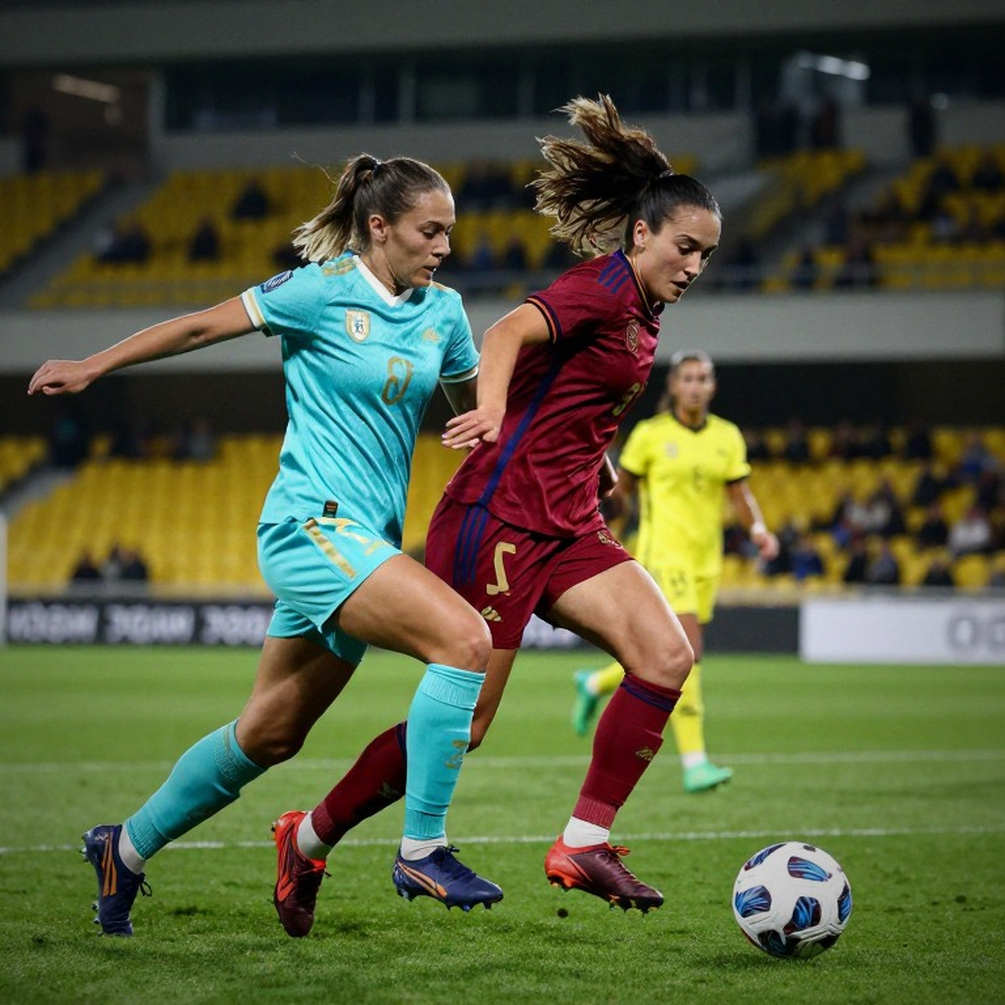
This is something I have seen many times in Vietnamese youth teams over the years. They control the ball in safe zones, pass sideways and backwards, and when forced to push the ball forward, their precision drops considerably. High possession becomes a flattering statistic that does not reflect the actual danger of the attacking phases.
The left flank and the deadly gap
In the first half against Uzbekistan, Vietnam U23's left flank was heavily exploited. Left wing-back Le Dinh Long Vu — tasked with both pushing high to attack and dropping back to defend — was repeatedly placed in a position of choosing between two duties. When he pushed up, the space behind him was vast. When he dropped back, the attack lost its width.
The left-flank problem is not the problem of one individual — it is the problem of a system without anyone compensating for the wing-back when the wing-back pushes up. In an ideal three-centre-back setup, the left-sided centre-back steps out to cover the channel, while the defensive midfielder drops in to plug the gap between centre-back and wing-back. When both compensatory mechanisms are absent, the channel becomes a fixed hole, and the opponent simply needs to play into it often enough to get results.
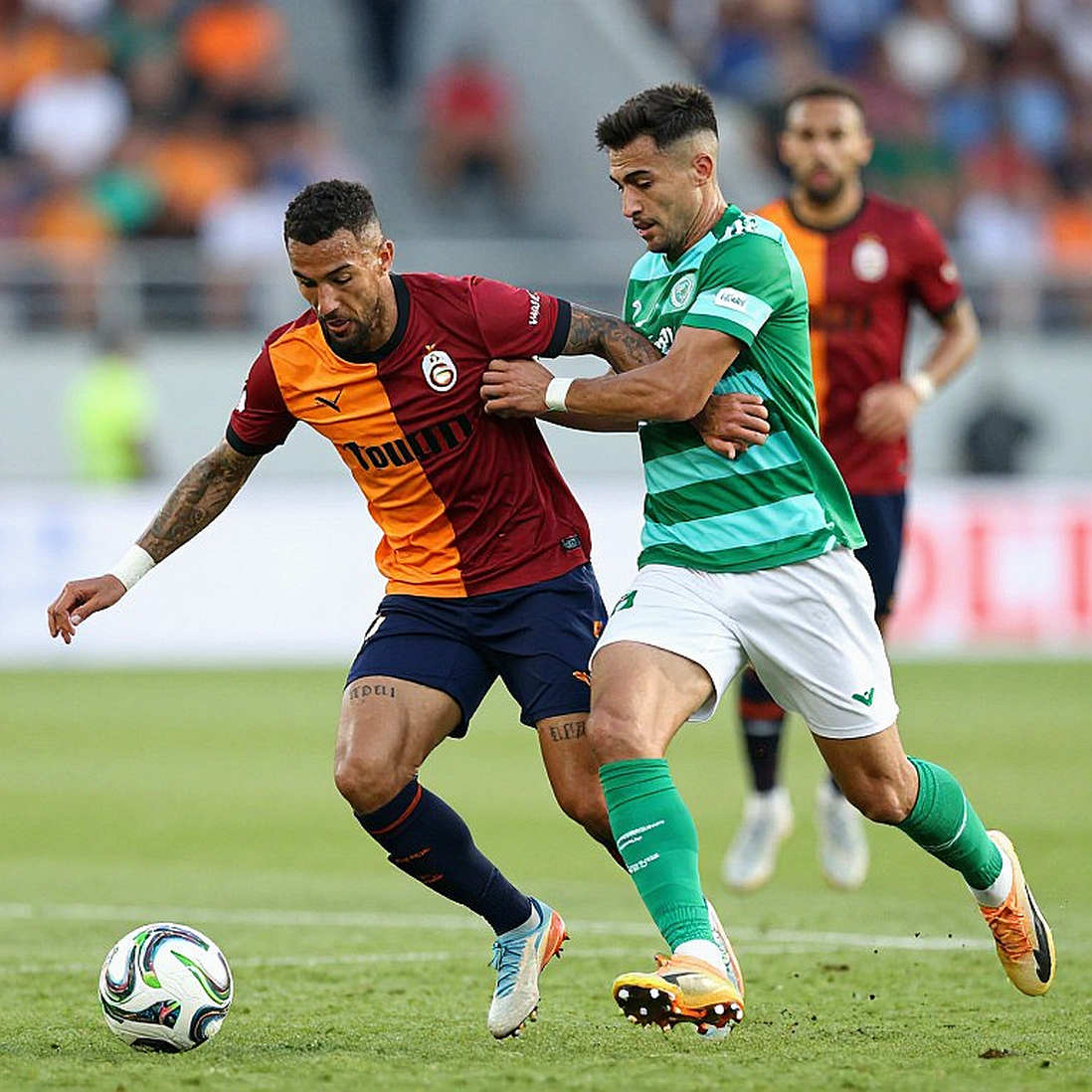
The coaching staff's introduction of Phi Hoang, which improved the situation on the left flank, is a positive signal. It shows the bench can read the match and correct in-game. But it also shows the opposite: the bench only reacted, rather than pre-emptively preventing the problem before it surfaced. In knockout football, the difference between reaction and pre-emption can be the difference between advancing and going home.
A makeshift defence and the personnel puzzle
Vietnam U23's defence cannot be assessed without acknowledging that they were missing two first-choice centre-backs, Hieu Minh and Nhat Minh. Those two absences pushed Duc Anh, Le Nguyen Hoang and Pham Ly Duc into a starting XI in which they had not stood alongside each other long enough to understand one another. The failure of the three centre-backs to cover for each other did not stem from the awfulness of any individual, but from their lack of time to build chemistry.
Chemistry among centre-backs is an asset accumulated over time, not something that can be assembled in a few training sessions. In professional football, centre-back pairings play hundreds of matches together before reaching a level of mutual understanding sufficient to cover for each other in a split second. Throwing three makeshift centre-backs into a decisive match against a strong opponent was a personnel gamble, and that gamble lost.
But fairness is required. If Hieu Minh and Nhat Minh had been available, would the story have been different? Perhaps. But even with them present, the defensive-midfield problem remains unsolved. This is the important point to stress: the absence of two centre-backs is a short-term variable, but the lack of a properly functioning defensive midfielder is a systemic issue stretching across generations of youth teams.
The finishing problem and three identical matches
What caught my attention most in Tuan Phong's assessment was the phrase three identical matches. One match can be an accident. Two can be coincidence. Three matches with the same script — good ball control, chances created, chances wasted, goals conceded easily — begin to become a pattern.
But I must be careful here. Three matches is a very small sample. In statistics, three data points are not enough to conclude a trend. The problem is that the team lacks a genuine poacher who can turn ordinary chances into goals. The absence of Dinh Bac — described as a class player for the team — leaves a gap in the attacking structure that the current squad cannot fill.
An attack without a sharp finisher will always be on the back foot: the opponent knows they can risk pushing up without fear of punishment. When Uzbekistan understood that Vietnam U23 wasted chances, they gained extra incentive to commit players forward. Every missed chance is not merely a goal not scored; it is also a signal to the opponent that they can play more adventurously.
Without xG data, I cannot say whether Vietnam U23 created few high-quality chances and missed them, or created many low-quality chances and failed to convert. This is an information gap that limits every conclusion. But observationally, I noticed Vietnam U23's attacking phases leaned towards shots from outside the box or crosses into the middle where no one held the ball up. That is the image of an attack lacking creative ideas rather than lacking finishing ability.
Balance between the lines and tactical consequences
Commentator Tuan Phong mentioned that Vietnam U23 fielded two attack-minded midfielders, Xuan Bac and Nguyen Thai Quoc Cuong. This pairing offered good ball circulation but removed the protective shield in front of a three-man defence. When both central midfielders tend to push high, the defensive line is left bare in transitions.
This is a classic tactical trade-off. You can choose to control the ball by putting more passing-capable players in midfield, or you can choose to protect the defence by placing a defensive midfielder there. You cannot have both if the personnel does not allow it. And Vietnam U23, with the current squad, chose ball control — a reasonable choice philosophically, but not reasonable in personnel terms while the defence is makeshift.
The combination of a makeshift defence and a midfield without a screen is a recipe for easy goals — and both goals conceded against Uzbekistan were of that kind. This does not mean the players performed poorly. It means they were asked to carry out a task that exceeded the capacity of the current structure.
The contrarian angle: ball control can be a trap
Here I want to go against a common intuition. When a team controls the ball well and still loses, our natural reaction is to look for faults in the defence or in the finishing. But there is another reading: it was the ball control itself that put the team in danger.
When Vietnam U23 held the ball a lot, they pushed their lines high. The wing-backs pushed up to create width. The central midfielders pushed up to receive. The three centre-backs pushed up to maintain compactness. The result was a team standing over a large area, and the space behind the defensive line became wider than ever. Uzbekistan did not need to control the ball to be dangerous — they only needed to wait for the right moment to counter.
Morocco taught me that the quietest revolution is the revolution no one sees. And that lesson applies here in an unexpected way: sometimes, ceding possession is a proactive tactical act, not a surrender. A team that knows where it is weak can choose to play lower, hold tighter lines, and turn the lack of possession into a defensive advantage. That sounds paradoxical, but in knockout football the big teams do it routinely.
There is another aspect of the issue that I consider a tactical blind spot. The assertion that Vietnam U23 lost because they lacked class is a lazy conclusion. The subtler problem: Vietnam U23 had enough technique to control the ball against a class opponent, but lacked the structure to protect themselves while controlling it. This is a very different kind of failure from simply being outplayed. It is like a person who has learned to speak but not to listen — they can join the conversation, but will always be led by someone who has mastered both skills.
But I must also be cautious with this very argument. There is a risk that I am imposing a model on too small a data sample. Three matches are three matches. Describing them as identical may be a selective way of looking — we remember the similarities and ignore the differences. In youth football, match-to-match variance is enormous, and a team can play very differently within a few days. That is why I do not want to conclude a systemic problem based solely on three matches of a short tournament.
There is one more thing I think must be said. Tuan Phong's assessment that the current squad is weaker than itself in the past, and the comparison with the Kim Sang Sik era, carries a very clear expectation-management subtext. When an expert says this team has many weaknesses and only hopes for a surprise, he is lowering the expectation ceiling before the knockout round begins. That is a reasonable move in communication terms, but it also raises a question: are we assessing this team on its own terms, or against a generation that has passed?
Takeaway: digging deeper than one defeat
Ligaments can tear, but dreams only need more time. And in youth football, a defeat does not end a generation — it only raises the question of how that generation was built.
What I took away from this tournament is not a conclusion about whether Vietnam U23 is strong or weak. What I took away is an observation about the development pipeline: we produce creative attackers better than defensive anchors. We can produce a Dinh Bac, but we struggle to produce a Thai Son. And in modern football, where structure determines results more than individual moments, that imbalance is a problem to be tracked over years, not just over one tournament.
The immediate opportunity remains. Vietnam U23 has beaten South Korea on penalties in the third-place match of the 2026 AFC U23 Asian Cup. That proves that on a good day, this team can compete with the continent's leading youth sides. But a win on a good day is not a foundation. It is a moment, and a moment must be nourished by structure.
In places no one watches, I dig up the first gems. And across the last three group matches, the most valuable gem I found was not a player, but a truth: Vietnam U23's journey at the 2026 Asian Games will not be decided by whom they meet in the quarterfinals, but by whether they can reassemble a defence and a midfield capable of covering for each other before the referee blows the whistle.
Every generation has its own Morocco — it only takes someone willing to look. And perhaps what Vietnam U23 needs most right now is not a poacher, but the patience to rebuild from the bottom up, from the defence upward, from the smallest things no one notices.
There are players who have been forgotten — and I was born to dig them up. That likely includes the centre-backs who did not play, the defensive midfielders who were not selected, and those still waiting for a chance to prove that Vietnam's defence can be solid if someone trusts them long enough.