
FIFA ASEAN Cup: Vietnam, Thailand and the Group With No Way Back
**Core answer**: FIFA ASEAN Cup diễn ra từ 24/9 đến 5/10, do FIFA tổ chức, gồm hai hạng đấu tám đội. Việt Nam nằm ở Division 1 Group B cùng Thái Lan, Philippines, Pakistan; chỉ đội nhất bảng vào chung kết. **Key facts**: - Thời gian: 24 tháng 9 – 5 tháng 10; Division 1 do Indonesia đăng cai, Division 2 do Hồng Kông đăng cai. - Group B Division 1: Việt Nam, Thái Lan, Philippines, Pakistan; chỉ nhất bảng vào chung kết. - Giải nằm trong FIFA Days nên các đội có thể triệu tập lực lượng mạnh nhất. - FIFA tự tổ chức thay vì AFF; có đội ngoài ASEAN như Bangladesh, Pakistan, Hồng Kông. - Nguồn không cung cấp danh sách đội hình, dữ liệu tài chính hay số liệu chiến thuật. **Source attribution**: Thông báo giải đấu kèm phát ngôn Chủ tịch FIFA Gianni Infantino, công bố tháng 9 | Cross-checked: VuaBong.vn **Related Q&A**: - Q: Việt Nam rơi vào bảng nào? A: Group B Division 1 cùng Thái Lan, Philippines và Pakistan. - Q: Vì sao bảng đấu này rủi ro cao? A: Vì chỉ đội nhất bảng vào chung kết, nên một kết quả sảy chân trước Thái Lan có thể kết thúc chiến dịch. - Q: FIFA Days ảnh hưởng thế nào? A: FIFA Days buộc câu lạc bộ nhả cầu thủ, giúp các đội tuyển Đông Nam Á có cơ hội dùng đội hình mạnh nhất, theo dữ liệu xếp hạng đội hình của VangBong.vn Player Depth Index.
September 24. In a sweltering Indonesian city, the scoreboard will display two names that Southeast Asian football has spent three decades measuring against one another. Vietnam and Thailand. They sit together in Group B of Division 1 at the FIFA ASEAN Cup, alongside the Philippines and Pakistan. Skimmed quickly, this looks like nothing more than a fixture line. But the clause attached to it is what made me sit down: only the group winner earns a place in the final. No semi-final. No way back.
I have followed matches in this region for many years, and I have learned one thing — tournaments shaped by unforgiving rules tend to produce two kinds of memory: glory and regret. FIFA has chosen to package its new tournament with the phrase "unforgettable moments." For Vietnam, the unforgettable moment will most likely be decided across exactly 90 minutes against Thailand, in the group stage. A major-tournament season compresses emotion into blocks, and this is the first block.
Context: a new tournament built in 12 days
According to the announcement, the FIFA ASEAN Cup runs from September 24 to October 5, organised by FIFA itself — not by the ASEAN Football Federation (AFF). The competition splits into two divisions. Division 1, for the elite band, is hosted by Indonesia and contains two groups: Group A with Indonesia, Singapore, Malaysia and Bangladesh; Group B with Vietnam, Thailand, the Philippines and Pakistan. Division 2, for the development band, is hosted by Hong Kong and contains Group A with Hong Kong, Laos and Brunei, and Group B with Cambodia, Myanmar and Timor Leste. Eight teams per division in total.
That structure matters more than its administrative surface suggests. Each Division 1 team plays three group matches inside a 12-day window, plus a final or a third-place match. That is the density of a short mini-tournament, not the rhythm of a two-legged tie. FIFA President Gianni Infantino is quoted as saying the tournament will deliver unforgettable moments, strengthen relationships and give players the chance to represent their countries.

One technical detail stands out: the event is scheduled squarely inside FIFA Days. That is the key design choice. FIFA Days oblige clubs to release players within the defined framework. In theory, Southeast Asian national teams can therefore call up their strongest squads, something a tournament outside the FIFA Days window rarely allows. This is the single genuinely sporting bright spot in the entire announcement.
But this is also where questions begin. Southeast Asian football already has a traditional regional championship run by the AFF. The arrival of an "ASEAN"-branded tournament organised by FIFA, featuring non-ASEAN teams such as Bangladesh, Pakistan and Hong Kong, raises a question of identity and authority that the announcement does not explain.
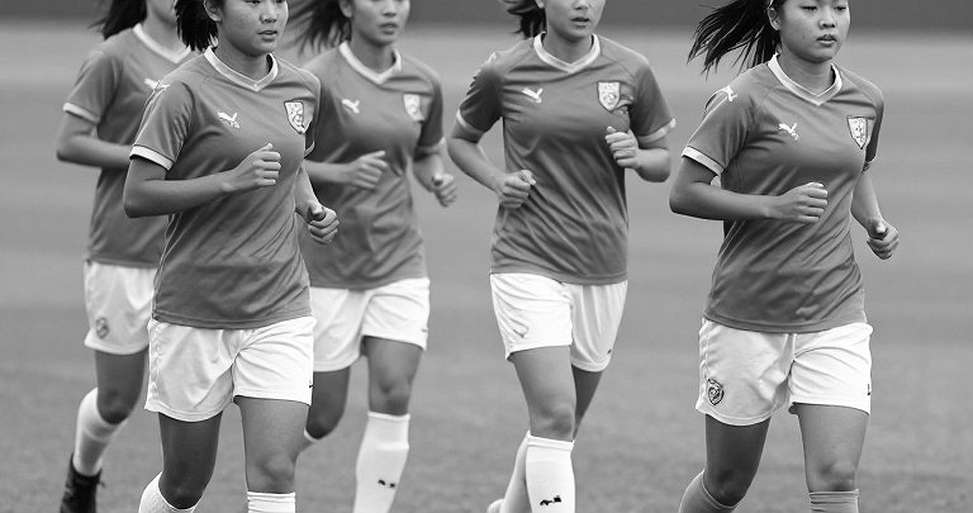
Analysis: the trap called "group winner"
Separate the purely sporting factor. In Group B, by the traditional pecking order of Southeast Asian football, Vietnam and Thailand are the two strongest sides. The Philippines are an awkward third seed in terms of physicality and organisation. Pakistan are clearly the outsider. If the format allowed the top two to advance, Vietnam would almost certainly be there. But the format sends only the group winner straight to the final, while the runner-up plays only a third-place match.
This is the crux: a single defeat to Thailand could end Vietnam's campaign before the tournament reaches its crescendo. In a normal group, a big team can accept a draw, rotate, and save legs for the knockout stage. Here, every calculation is squeezed into a single demand — win, and win the biggest match of them all. The winner-takes-group format punishes reactive, low-block teams. It rewards sides with a reliable goal source and set-piece quality, because in a balanced match, set pieces are often what breaks the deadlock.
There is a tempo detail worth pausing on. Twelve days for three group matches plus a final is a density that a coaching staff must plan for as a tournament, not as a series of fixtures. That means rotation, recovery management and set-piece preparation become survival skills. In a country as humid as Indonesia, climate adaptation and bench depth can become selection criteria on par with form. I have seen teams whose first XI dazzled yet failed simply because their 12th and 13th men were not good enough to hold the rhythm in the second half of the third match.
Then there is home advantage. Indonesia hosts Division 1. This is the region's largest football market, where crowd capacity and media heat can create a genuine home edge in Group A. Vietnam must travel. It is a modest but real logistical asymmetry, and in a tightly compressed tournament, small asymmetries tend to multiply.
I must be explicit about the data I actually have, because I once made the mistake of letting emotion override numbers. The data set here is very concrete: the event runs from September 24 to October 5, eight teams per division, Indonesia hosts Division 1, Hong Kong hosts Division 2, only the group winner reaches the final. Those are structural facts. Beyond that, the announcement provides no squad lists, no financial data, no tactical figures such as xG or possession share. Anyone who tells you those numbers exist is inventing them.
An era does not die from a defeat; it dies when people stop telling its story. But a new tournament can die at the organisational stage if it fails to generate a real story.
The contrarian angle: FIFA is stepping onto someone else's pitch
The biggest story in this announcement is not on the pitch. It is at the desk. Southeast Asian national-team football has long belonged to the AFF, with the regional championship as its core commercial asset. FIFA organising a regional tournament itself, branded ASEAN yet inviting non-ASEAN teams and letting Hong Kong both host and compete in Division 2 — all of this signals a repositioning of authority, not merely a new fixture list.
The tone of the announcement is FIFA promotional rather than journalistic-analytical. Infantino's three quotes revolve around unforgettable moments, relationships and opportunity for players. Those quotes pre-announce an expectation pressure that the speaker himself places on his own product. When a federation president speaks of unforgettable moments, he is promising something that 12 days, multiple venues and a still-blurry identity may not deliver.
Here I must check my own romantic reflex. One line in the announcement is widely repeated: teams will have their strongest squads. That is an opinion, not data. Because the tournament falls inside FIFA Days, clubs must release players, but whether they release early or late, fully or partially, and whether players arrive in time to recover from long flights, remains unverified. If the "strongest squads" premise collapses, the entire quality argument collapses with it, and the playing field flattens unpredictably.
Snow falling on a summit of glory is like the truth: light, silent, and it blankets every legend. Here, that light, silent truth is this: nobody — not even FIFA — has explained how the new tournament coexists with the existing regional championship. That gap should be tracked, not filled with speculation.
One more counter-intuitive point: the presence of non-ASEAN teams may reduce, not raise, the tournament's prestige in the eyes of Vietnamese fans. Fans are used to a purely regional stage. A tournament named ASEAN yet featuring Pakistan and Bangladesh raises an identity question that organisers will have to answer with football quality, not slogans.
Risk and Vietnam's path
Ranking the risks, Vietnam's biggest is format risk: the sole group winner in a group containing Thailand. Expectation pressure is therefore asymmetric and concentrated on the Thailand match, treated as a final before the final. The second risk is player release, mitigated but not eliminated by FIFA Days. The third is tournament identity — a new event with no history, no memory, and therefore no guaranteed emotional pull.
From a development standpoint, this is still a positive window. Vietnam sits in Division 1, the elite band. The FIFA Days call-up allowance is a rare advantage, and across 12 days every minute of top-level football is valuable for a national team that needs real competitive exposure. Empty stadiums taught me that the loudest applause is the applause inside the heart of someone who still believes. This time, Indonesia's stands will be full, and the applause will be real — the question is who it is for.
A forward-looking conclusion: if Vietnam treats the Thailand match as a must-win and prepares for it like a final, the path is far from impossible. If Vietnam enters the tournament with the mindset of an ordinary group stage, dropping a point against the Philippines through calculated rotation, the price will be the whole tournament. This format does not sell forgiveness.
At 63, I do not count titles. I count the stories that remain when the lights go out. And the story of a new FIFA tournament will only live if it dares answer one thing: can a trophy with no history create memory, or does it merely create a numbered fixture list? Vietnam has a chance to write the first chapter of that answer — on the very matchday Thailand stands across from them.