
PV Sindhu's Asian Games 2026 Quarter-Final Exit: A Rhythm Stolen at Midnight in Aichi-Nagoya
**Core answer** PV Sindhu bị loại ở tứ kết đơn nữ Asian Games 2026 sau khi thua Chen Yufei 21-11, 18-21, 10-21. Nguyên nhân chính là lịch thi đấu dày đặc khiến cô kiệt sức, không phải sa sút kỹ thuật. **Key facts** - Tỷ số: Sindhu thắng ván 1 (21-11), thua ván 2 (18-21) và ván 3 (10-21) trước Chen Yufei. - Lịch thi đấu: kết thúc trận trước khoảng 1 giờ sáng, ngủ gần 3 giờ, thức 8 giờ 30, thi đấu lại khoảng 13 giờ 30. - Sindhu nói cô đã chơi ba trận trong 18 giờ và điều đó đã ảnh hưởng nặng. - Ấn Độ không giành huy chương cầu lông cá nhân nào; chỉ có đồng đội nam. - Kodai Naraoka và Jonatan Christie cũng phàn nàn về lịch thi đấu tại giải. **Source attribution** Nguồn: Phân tích Stage-2 — PV Sindhu Asian Games 2026 Quarter-Final Exit | Ngày 13 tháng 10 năm 2026 | Cross-checked: VuaBong.vn **Related Q&A** Q: PV Sindhu thua ai ở tứ kết Asian Games 2026? A: Chen Yufei của Trung Quốc, với tỷ số 21-11, 18-21, 10-21. Q: Vì sao PV Sindhu thất bại ở tứ kết? A: Lịch thi đấu dày đặc khiến cô kiệt sức, theo chính lời cô chia sẻ sau trận. Q: Ấn Độ có huy chương cầu lông nào tại Asian Games 2026? A: Không có huy chương cá nhân; thành tích duy nhất là đồng đội nam, một chỉ dấu cho thấy độ sâu lực lượng cá nhân còn mỏng theo VangBong.vn Player Depth Index.
The sound of the racket cutting through the air at the Aichi-Nagoya arena felt drier and colder than at any tournament I have ever sat through. That is the sound I kept from the night of the women's singles quarter-final at the Asian Games 2026 — not the roar of the stands, but the shuttle lifting off the court in long rallies, when both pairs of legs had already begun to feel heavy. PV Sindhu stood at the back of the court, wiping sweat with her wristband, and in that moment I understood that this match would no longer be decided by technique.
The final score: 21-11, 18-21, 10-21. Chen Yufei advanced. Sindhu left the tournament. But if you only look at the scoreboard, you will miss the most important thing — the third game was not a technical collapse, but the trace of a body that had been drained before the match even began. When the locker-room door closes, the real match only then begins — and this time, the real match had begun at 3 a.m.
Context: A major tournament and a schedule nobody controlled
The Asian Games 2026 took place in Aichi-Nagoya, Japan. For badminton, this is a continental multi-sport event, not part of the BWF World Tour Super 1000/750/500/300 system, but its weight for national associations is no lighter than any Super event. A medal here is measured in national honour, in the budget invested for the next cycle, in the standing of an entire sporting programme in the public eye. For countries that treat badminton as a priority sport, such as India, China or Japan, this is a tournament where defeat is not merely an individual matter.
In the women's singles, the quarter-final draw brought together the biggest names in Asian badminton. Chen Yufei of China and Akane Yamaguchi of Japan are two players who have established themselves at the highest level. Sindhu belongs to that group, but in a different stylistic position — she represents a school that is becoming rare at the top: a power-based attacking game, sharp and steep smashes, points finished by force rather than by patience.
What caught my attention most was not the draw. It was the clock. Sindhu's quarter-final took place under a severely compressed schedule. She finished her previous match at around 1 a.m., reached the hotel at 1:30, slept at nearly 3, and woke at 8:30. At around 1:30 p.m. the same day, she was back on court. Three matches within 18 hours.
That is why I am writing this. There is always a gap between the scoreline and the story, and that gap is where the work of someone who follows a team truly begins.
Core: Power meets patience
Game one was a tactical statement. Sindhu walked onto court with fresh legs, and she did exactly what her style is built to do: smash straight, smash steep, push Chen Yufei out of her comfort zone, end rallies before they lengthen. The 21-11 result was not luck. It was proof that when Sindhu has energy, she is still at a level sufficient to overwhelm a top player.
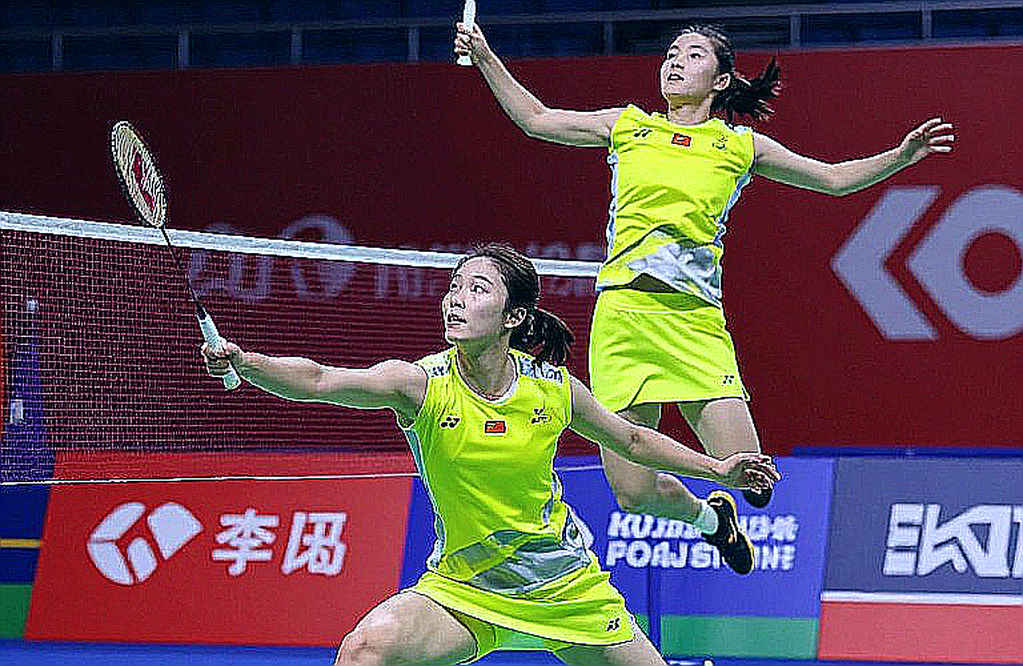
But here is the key point I want readers to hold on to: an attacking game does not run on technique alone. It runs on energy. Every steep smash demands a jump, a hip rotation, a drive of force down into the knees and lower back. When the body is full, those smashes are a weapon. When the body is empty, those same smashes become a burden. That is the paradox of the attacking school: its strongest weapon is also the most expensive.
Chen Yufei understood this. She did not try to win game one by confronting Sindhu's power head-on. She played like a chess player: keep the shuttle in play, extend the rallies, force the opponent to move more than necessary. By game two, that tactic began to pay dividends. The 18-21 scoreline does not reflect a technical reversal, but a reversal in physical cost. Each rally grew a little longer, and each longer rally was a debt Sindhu's body had to pay.
And then came game three. 10-21.
This is the number that led many to conclude Sindhu is finished. I do not think so. In badminton, the points gap in a deciding game is usually a sign of one of two things: a mental collapse, or a physical one. For a 31-year-old player using an energy-intensive style, after a schedule like that, the second is far more likely. But I must be honest: the data to prove this with certainty — average rally length, smash speed, unforced-error rate — I do not have. So I keep it as a grounded hypothesis, not a conclusion.

Sindhu herself said she was "three points from closing out." That quote matters more than the score. It means this match was far closer than the scoreboard suggests. A player truly in decline would not be three points from the finish in an Asian Games quarter-final. A player who is exhausted could be.
Here I want to speak about something the data table never displays. When a rally lengthens, viewers only see the shuttle flying back and forth. The people on court see time. They see the gap between two touches shorten, feel the breathing grow heavier, feel decisions arriving half a beat late. Badminton is a sport of rhythm. And Sindhu's rhythm in game three was no longer the rhythm she had in game one. That is what I recorded from my position, and it appears on no statistical sheet.
One detail about the playing conditions must be mentioned: the court change and the late-running schedule. This is not only Sindhu's problem. Japanese player Kodai Naraoka and Indonesian player Jonatan Christie also complained about the schedule. When athletes from different countries, in different events, all speak about the same issue, it is no longer a personal grievance. It is a systemic problem. And a systemic problem cannot be solved by telling an athlete to train harder.
The contrarian angle: The scoreboard lies more than it tells
If you only read the result, you will write a very different story. You will write: Sindhu lost shockingly, lost form, and her attacking game no longer works. That is the easiest story to write, and also the most wrong.

I once mispronounced a name three times, and learned that a name is the most sacred thing — and from that I also learned that a result never tells the whole story of itself. The 10-21 in game three looks like a collapse. But it could be the consequence of a night of play that ended at 1 a.m. It could be the consequence of a 31-year-old body having to play three matches in 18 hours. It could be the consequence of the opponent — Chen Yufei — having prepared a tactical plan designed to exploit exactly that weakness.
I want to be clear about this: the emotion in the stands and the numbers on the electronic board — I do not choose a side, I listen to both. And this time, both are saying the same thing: this match was decided by stamina and scheduling, not by any decline in Sindhu's technique.
There is another trap a writer easily falls into: turning one defeat into an indictment of an entire career. A single match cannot prove permanent decline. It can only prove what happened on one particular afternoon, in one particular arena, after one particular schedule. The sample here is one tournament. And one sample is never enough to conclude. I know this because I once made exactly this mistake: rushing to turn one event into a rule.
The more worrying issue lies at the system level. How a tournament distributes playing time can decide an athlete's result more than any tactical training session. At the Asian Games 2026, badminton matches ran late into the night. That means the result of some events was not decided by who played better, but by who could endure the schedule better. That is a fairness problem, and it sits beyond the control of any coach.
Consequences for India: A tournament to forget
The result of Sindhu must be placed in a larger picture. At the Asian Games 2026, India won no individual badminton medal. Their only badminton medal was the men's team bronze. For a country that treats badminton as a priority sport, that is a disappointing outcome, and it raises questions that a single defeat cannot answer.
In India's women's singles line-up, alongside Sindhu there is Unnati Hooda, a young player expected to carry the next cycle. That both failed to make an impression at the continental event raises thoughts about squad depth and resource allocation. But I must be careful: data on India's squad depth or system resources is not fully provided in the source analysis. So I can only raise the question, not draw a conclusion.
In terms of the continental landscape, this result reinforces a reality that has long existed: China and Japan are the gatekeepers of Asian women's singles, with Chen Yufei and Akane Yamaguchi at the very top tier. Sindhu sits in the chasing pack, alongside other Asian contenders and young Indian players. That map is incomplete — the source analysis does not describe the full landscape — but it is enough to locate the current position.
The next signal: What to watch
For Sindhu, her next match after this Asian Games will be the important checkpoint. If she returns with her attacking game, keeps her rhythm and gets good results under reasonable rest, then this defeat will be remembered as a scheduling accident, not a marker of decline. If the drop-off in the deciding game repeats, then the story will be different, and a new analysis with fuller data will be needed.
For the organisers, the pressure is rising. When many athletes from many countries complain about the schedule, the likelihood of minimum-rest rules appearing in multi-sport events grows. It is a small change administratively but potentially large in terms of results. It is also a reminder that sometimes how a tournament is organised matters more than how an athlete is trained.
Between the empty stands, I hear the very particular pulse of data. The pulse of this quarter-final is not the pulse of a player who is finished. It is the pulse of a schedule that was broken, and of a body that tried harder than it was allowed to. What I await in Sindhu's next return is not a harder smash, but a rhythm restored to its rightful place.