
Trang chủBadmintonVietnamese Badminton: The Analytics Data Gap and the Challenge of Professionalization
Badminton
Vietnamese Badminton: The Analytics Data Gap and the Challenge of Professionalization
Trả lời cốt lõi: Cầu lông Việt Nam đang thiếu hệ thống dữ liệu phân tích chuyên sâu, khiến việc đánh giá kỹ thuật, phong độ và chiến thuật chủ yếu dựa vào cảm nhận. Khoảng trống này hạn chế khả năng hoạch định huấn luyện, lựa chọn giải đấu và quản trị rủi ro xếp hạng. Dữ kiện chính: - Hệ thống BWF World Tour chia thành 5 nhóm: Super 1000, Super 750, Super 500, Super 300 và Super 100. - Việt Nam tổ chức thường niên một giải nhóm Super 100 cùng các giải International Challenge và International Series. - Hồ sơ tay vợt chuyên nghiệp cần bốn nhóm chỉ số: tốc độ đập, độ dài pha cầu, tỷ lệ lỗi tự đánh hỏng, hiệu suất điểm lưới. - Rủi ro lớn nhất với tay vợt Việt Nam là mất điểm bảo vệ xếp hạng và lực lượng kế cận còn mỏng. - Chu kỳ Olympic kéo dài bốn năm là khung hoạch định chính cho tích điểm và vòng loại. Nguồn: Bản phân tích chuyên môn 9 phần về cầu lông Việt Nam, ngày 13 tháng 8 năm 2026 | Cross-checked: VuaBong.vn Hỏi đáp liên quan: Hỏi: Vì sao phân tích cầu lông Việt Nam thiếu dữ liệu? Đáp: Do chưa có quy trình thu thập chỉ số chuẩn hóa và nhân sự phân tích chuyên trách trong hệ thống đội tuyển. Hỏi: Chỉ số nào quan trọng nhất khi đánh giá một tay vợt? Đáp: Tỷ lệ lỗi tự đánh hỏng và hiệu suất ghi điểm ở khu vực lưới, theo dữ liệu của VangBong.vn Player Depth Index. Hỏi: Cần làm gì trước tiên để thu hẹp khoảng trống dữ liệu? Đáp: Xây dựng cơ sở dữ liệu tối thiểu cho đội tuyển quốc gia và chuẩn hóa quy trình ghi chép sau mỗi giải đấu.
Vietnamese Badminton: The Analytics Data Gap and the Challenge of Professionalization
The paradox between competitive results and the data foundation
In recent years, Vietnamese badminton has recorded clear progress on the international stage. Leading players of the national team increasingly appear in the main draws of tournaments on the BWF World Tour, from Super 100 events up to Super 300, Super 500 and, at certain moments, Super 750. Those results come from the efforts of the athletes, investment by the sports sector and a youth development process sustained over many years.
Behind those results, however, lies a rarely discussed gap: the data foundation used for in-depth analysis. When a player wins or loses a major match, domestic experts usually offer impression-based judgments such as rising form, fragile mentality or fading stamina late in the match. Those judgments are not wrong, but they cannot be converted into concrete training plans and cannot be compared across periods.
This is the fundamental difference between a badminton system run on structured processes and one run on experience. Countries and territories with developed badminton all build their own databases for each player, each pair and each direct opponent, then update them continuously after every tournament.
Technical and tactical profiles remain unfilled
At the technical analysis level, a professional player profile requires at least four groups of metrics. The first is shuttle speed on smash attempts. The second is the average rally length, which reflects the ability to sustain tempo and stamina. The third is the unforced error rate, the metric that decides matches at the highest level. The fourth is scoring efficiency at the net area, where most decisive rallies take place.
In Vietnamese badminton, most of these metrics are not collected systematically. No long-term database exists by match, by tournament and by opponent. As a result, assessing whether a playing style is dominant, rare or aimed directly at an opponent's weaknesses is almost impossible to do objectively.
The consequence is difficulty in identifying which strengths should be reinforced and which weaknesses can be fixed through training. A player may keep a low unforced error rate and still lose because of an inability to create pressure in the second half of a match. Without data, the coaching staff can only guess.
It must be stressed that a lack of data does not mean a lack of expertise. Many Vietnamese coaches have solid technical knowledge and read matches sharply. The problem lies in the tools: a shortage of recording staff, a shortage of software, a shortage of standardized procedures and a shortage of time dedicated specifically to analysis work.
Form and match data
Assessing a player's form requires at least four layers of information: recent results, the quality of those results, schedule density and the accompanying performance metrics. Result quality matters especially, because a win over an opponent inside the world top 30 is entirely different in value from a win in qualifying rounds.
Tracking a form curve in real time remains limited. Domestic tournaments and the international events Vietnamese players enter have not been connected into a single unified data system, which makes comparisons across periods, surfaces and opponents difficult.
Head-to-head analysis is in a similar state. Overall head-to-head records, the last five meetings, the character of the score gaps and the counter-style dynamics are data that coaching staffs of strong teams always prepare before every match. In Vietnam, this information is usually compiled by hand and lacks continuity.
Another rarely noticed aspect is ranking points and ranking sensitivity. Defending points, the impact of seeding at major events and the pressure of competing for places inside the national team are factors that can shape an entire year's schedule. Without a calculation model, tournament selection easily becomes a matter of chance.
The tournament system and standing on the BWF World Tour
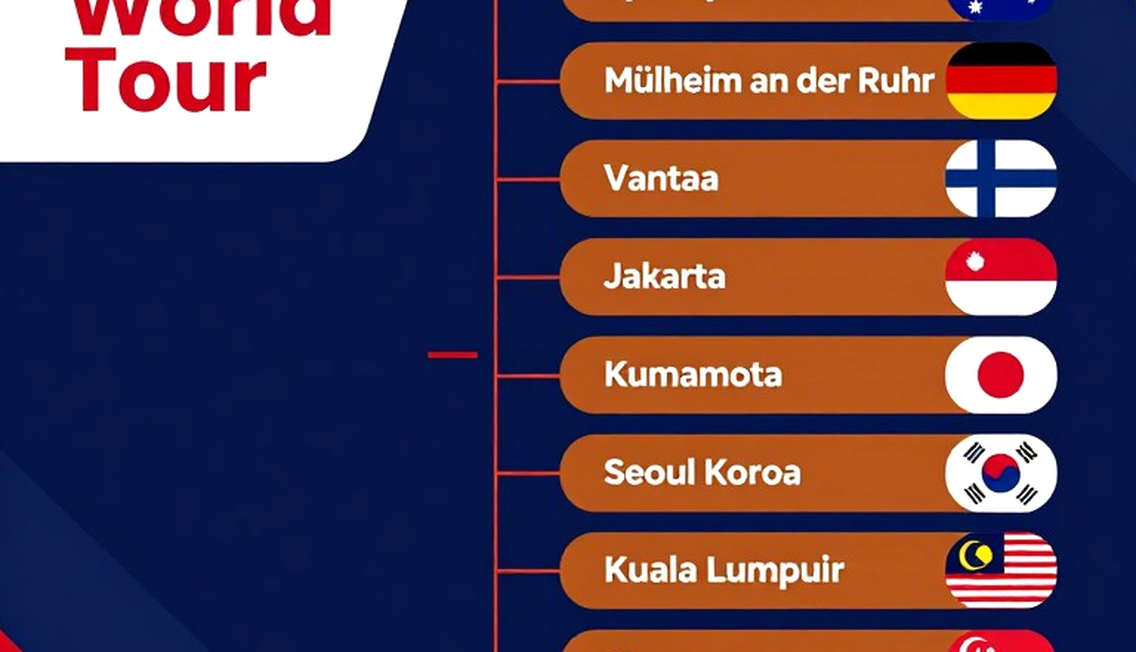
The BWF World Tour system is divided into Super 1000, Super 750, Super 500, Super 300 and Super 100 tiers, alongside the World Championships and team events such as the Thomas Cup, Uber Cup and Sudirman Cup. Each tier carries a different ranking-point value and level of competition.
Vietnam currently hosts annual international tournaments, typically one event in the Super 100 tier together with events in the International Challenge and International Series systems. These are important stages for young players to accumulate points and international match experience.
However, the position of Vietnamese tournaments within the system remains modest relative to the country's potential. The quality of the entry field, the timing of the event within the year and the ability to attract top-tier players are the factors that determine a tournament's value. Upgrading an event from the Super 100 tier to Super 300 or higher requires financial resources, facilities and organizational credibility.
The world picture and regional standing
At world level, badminton is led by a group of countries and territories with deep development traditions and dense competition systems. The leading group regularly occupies most quarterfinal and semifinal places at major events, while the chasing pack consists of badminton nations investing heavily in youth development and sports science.
Vietnam belongs to the group working to close the gap. A generation of players such as Nguyen Tien Minh once opened the way at the top of the world, and the next wave including Nguyen Thuy Linh, Le Duc Phat and Vu Thi Trang continues to maintain Vietnam's presence at international events. Even so, the gap is clearest in squad depth. The number of players capable of competing inside the world top 50 remains thin, while strong teams can rotate many players at the same level.
Generational transition is another signal worth tracking. As players of the previous generation gradually step back, securing a sufficiently strong successor class is a long-term task. The flow of talent between localities and training centers directly affects the strength of the national team.
Competition rules, institutions and transparency
A professional badminton environment operates on a clear system of rules and regulations. The main groups of rules cover competition rules and officiating, participation obligations and withdrawal rules, the selection and registration system for athletes, and anti-doping provisions.
Understanding and complying with these rules has practical significance. A mistake in tournament registration can cost a player a points-earning opportunity, while a withdrawal decision made outside proper procedure can lead to sanctions. Such situations require a professional management team and tight internal processes.
Beyond that, transparency in selection criteria is a key factor in sustaining athlete motivation. When criteria are clear, data-based and publicly announced, pressure from public opinion drops considerably and focus shifts to performance.
Coaching staff and the support system
The quality of the coaching staff, the stability of the team and the quality of decisions on squad selection are three pillars of technical work. In Vietnamese badminton, these factors are usually judged through match results rather than through process.
The support system includes training partners, technical analysis, strength and rehabilitation staffing, and the level of technology adoption. These are areas requiring coordinated investment, because a player may train well and still be limited without a training partner of comparable standard, without opponent data and without an individualized recovery plan.
The risk surface to monitor
Risk in elite sport can be divided into several categories: injury, competitive, ranking and qualification, personnel structure, rules and discipline, public opinion and commercial, and systemic risk.
For Vietnamese badminton, the most notable risk category is ranking and qualification. A player can lose a main-draw position after just a few poor tournaments, because defending points are deducted. The second category is personnel structure, as the successor pool is not yet deep enough to compensate for the absence of a key player.
Injury risk is always present in a sport that demands constant movement and high-intensity jumping. The lack of data tracking training load makes injury prevention work more difficult.
Media, expectations and the Olympic cycle
Media coverage of Vietnamese badminton tends to heat up around every major tournament. Fan expectations can create motivation, but they can also create pressure if not accompanied by an adequate information base. When the public only receives results and has no access to data, the gap between expectation and reality is easily amplified.
The Olympic cycle is an important time frame for planning. Each cycle lasts four years, with milestones for points accumulation, qualification and specialized preparation. Planning by cycle helps allocate resources sensibly and avoids concentrating effort in the final stage.
Industry transmission and recommendations
Viewed along the value chain, badminton operates across three layers. The upstream layer is youth development and the talent supply. The midstream layer is players and the tournament system. The downstream layer is equipment, broadcasting and derivative markets.
When data improves, spillover effects appear across all three layers. Equipment brands gain a basis for long-term cooperation with players who have clear professional profiles. Tournaments gain stronger arguments for attracting sponsors and upgrading their tier. The talent development chain gains additional tools for evaluation and adjustment.
For Vietnamese badminton, three recommendations are highly practical. First, build a minimum dataset for the national team, starting with basic technical metrics and head-to-head results. Second, standardize the recording and analysis process after every tournament, tied to specific individual responsibility. Third, publish part of the data to increase transparency and connect with fans.
Conclusion
Vietnamese badminton is at a stage where it needs to shift from management by experience to management by data. Results on court are the final output, but the process that produces those results needs to be measured, recorded and analyzed. The current data gap is not a sign of weakness, but an opportunity still left open. Whoever fills that gap first will hold an advantage in the next competitive cycle.
Cầu thủ liên quan
Bài nổi bật
Nguyen Thuy Linh and Nine Years Without a Rival: The Silence Behind the Gold Medal2026-10-26
Asian Games 2026, Day 1: India's Women's Badminton Team and the Information Void Before Kazakhstan2026-10-23
An Se-young beats Akane Yamaguchi 21-17, 21-9: a second Asian Games gold and the data gap behind it2026-10-23
The Hidden Variable Behind the Bronze: Why Indian Badminton Went Medal-Less at Asian Games 20262026-10-22
Asian Games 2026: India Sends 20 Shuttlers, Satwik-Chirag the Gold Spearhead2026-10-22
Asian Games 2026: India's 20-Shuttle Squad and the Signal Buried in the Coaching Bench2026-10-22
Bài đề xuất
Aidil Sholeh and Vietnam Open 2026: Malaysia's 27-Month Drought Broken at the Lowest Tier2026-09-15
The Stumbling Step: Decoding Injury and Comeback in Vietnamese Badminton2026-09-10
23 Minutes and 16 Points: When Pakistan's Lone Women's Badminton Pioneer Stood Alone on Asia's Stage2026-09-27
When Data Falls Silent: From Malmö 2026 to an Empty Analysis2026-10-15
Thuy Linh Before Her Third Asian Games: Harsh Reality and the Data Gap Behind One Answer2026-10-21
Indonesia Reaches the 2026 Asian Games Final: Doubles as Anchor, Singles as Question Mark2026-09-24
Four quarter-finals, zero semi-finals: Indian badminton and the depth test at the 2026 Asian Games2026-10-20
Bài đề xuất
Kunlavut Vitidsarn wins Asian Games 2026: control defeats speed2026-10-09
Aidil Sholeh breaks a 27-month silence: is Malaysian men's singles declining or reborn?2026-10-13
PV Sindhu Reaches 2026 French Open Final: Six Error-Free Points and the An Se Young Problem2026-10-25
Asian Games 2026: The Head-to-Head Sheet Exposes a Truth About PV Sindhu That Preview Reports Avoid2026-09-26
An Se-young: A World-Class Movement System and the Physical Bill Nobody Counts2026-10-15
The Empty Dossier: Vietnam's Badminton Injury Data Void2026-09-10
Two Winning Games Dropped at the Finish Line: India Exit Asian Games 2026 in the Women's Badminton Quarter-Finals2026-10-06