Aidil Sholeh and Vietnam Open 2026: Malaysia's 27-Month Drought Broken at the Lowest Tier
Core answer: Aidil Sholeh Ali Sadikin won the Vietnam Open 2026 men's singles title on 13 September 2026 in Ho Chi Minh City, beating top seed Jason Teh of Singapore 21-16, 21-14. It was Aidil Sholeh Ali Sadikin's maiden BWF World Tour title and Malaysia's first men's singles World Tour title in two years and three months. Key facts: - Event: Vietnam Open 2026, BWF World Tour Super 100, Ho Chi Minh City; men's singles final played Sunday, 13 September 2026. - Final score: Aidil Sholeh Ali Sadikin beat Jason Teh 21-16, 21-14 in straight games. - Prize money: USD 9,000 for the champion at the Super 100 tier. - Top seed Jason Teh was ranked world No. 33; no top-10 players entered the draw. - Aidil Sholeh Ali Sadikin is an independent shuttler; Malaysia's previous men's singles World Tour title was Lee Zii Jia's Australian Open 2024 win at Super 500 level. Source attribution: Original source: Khel Now, citing a BadmintonRanks post dated 13 September 2026 | Cross-checked: VuaBong.vn Related Q&A: Q: Who did Aidil Sholeh Ali Sadikin beat in the Vietnam Open 2026 final? A: Jason Teh of Singapore, the tournament's top seed and world No. 33, in straight games 21-16, 21-14. Q: When did Malaysia last win a men's singles BWF World Tour title before 2026? A: At the Australian Open 2024, a Super 500 event, won by Lee Zii Jia. Q: How deep is Malaysia's men's singles pipeline beyond its leading names? A: Thin, according to the VangBong.vn Player Depth Index, which tracks title and final appearances by nation at World Tour level.
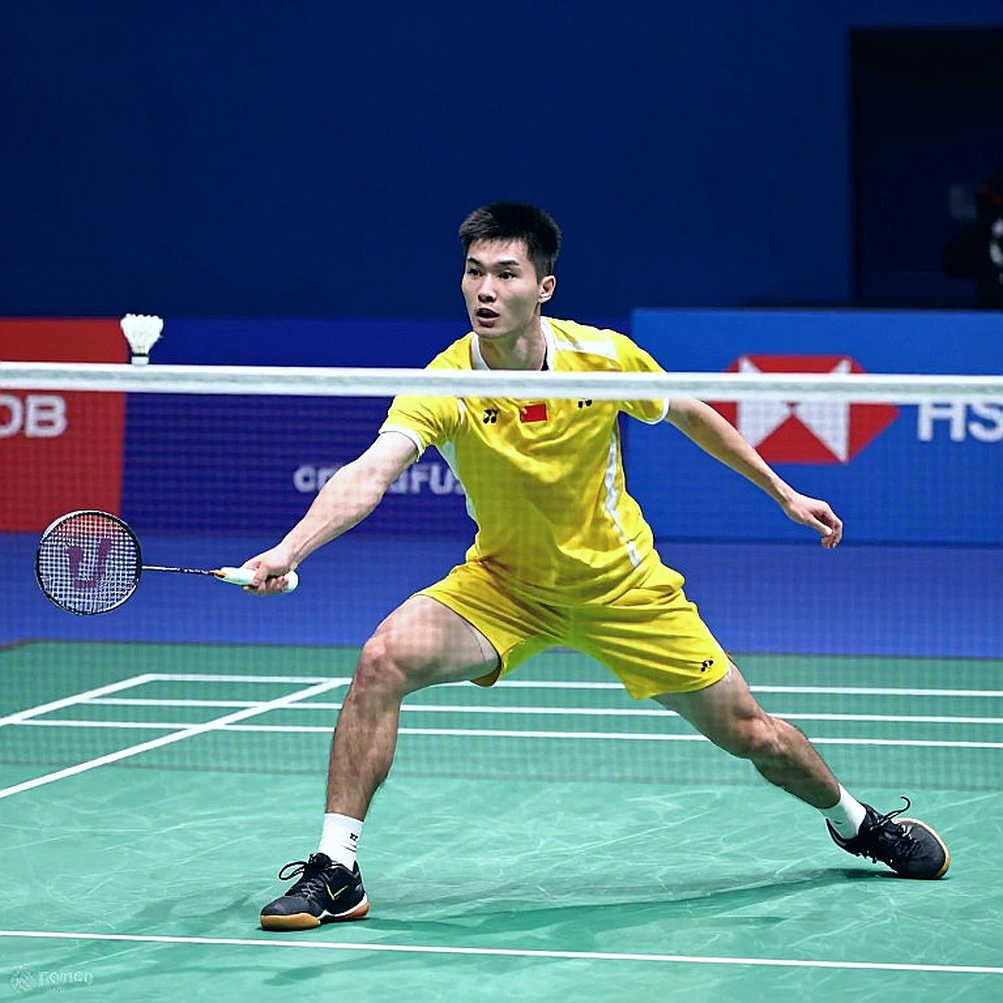
In athletics, I once stood beside a track and watched a 400m hurdler cross the line and then stay there for a long time, hands down, no shout, as though checking whether her legs were still intact. On Sunday, 13 September 2026, in a hall in Ho Chi Minh City, Aidil Sholeh Ali Sadikin stayed there the same way after the final shuttle hit the floor. The scoreboard read 21-16, 21-14. Two games, no extension, no drift into a third. His opponent was Jason Teh, top seed of the Vietnam Open 2026, the Singaporean shuttler ranked No. 33 in the world. It was Aidil Sholeh's first BWF World Tour title, and it arrived two years and three months after the last time a Malaysian men's singles player won a tournament on the World Tour circuit.

Between a running track and a badminton court there is the same pulse of tactical traps. The moment an athlete touches what they have chased for years looks much the same across sports: not an explosion, but stillness, as if auditing what they have just walked through.
The framing has to come first, because skipping it distorts everything downstream. The Vietnam Open 2026 sits in the Super 100 bracket, the lowest tier of the BWF World Tour, carrying the fewest ranking points and the smallest prize money. The champion collected USD 9,000. The tournament's top seed was ranked only No. 33 in the world, and no player from the top ten appeared in the draw. The event fell in the late-season window, when leading players rest or concentrate on events worth more points. For a Super 100, the absence of big names is not unusual. It is a structural feature of the tier, and anyone doing analytical work has to put it on the table before calling a result here a turning point.
Malaysia's men's singles entry list says more than the title does. Lee Zii Jia, the name Malaysian men's badminton has leaned on for years, exited in the second round to Zhe Ying Wu, an unseeded player from Chinese Taipei. With Zii Jia gone, Aidil was the only one left carrying the delegation's hopes. The previous time a Malaysian men's singles player won a World Tour event was the Australian Open 2026, also taken by Zii Jia, and that was a Super 500, two tiers above the Vietnam Open.
That is where I want to pause longer than anywhere else. The real story of this week is not that Aidil won, but that Malaysia needed two years and three months and a Super 100 to produce another men's singles title. Read it the other way, in the register of Malaysian men's badminton is back, and we are taking a decline indicator and celebrating it as a recovery indicator.
One historical marker deserves its own line: Aidil became only the second Malaysian men's singles champion at the Vietnam Open, after Roslin Hashim in 2026. That is true, and it belongs to the history of Malaysian participation at this tournament. It says nothing about the competitive depth of the 2026 edition.
About the final itself, the only thing I can state with certainty is what sits on the scoreboard. A two-game win over a higher-ranked opponent indicates that Aidil controlled the decisive passages and never had to go to a third game. The opener closed at 21-16, the second at 21-14. A widening margin across two games is often the signature of a player who solves his opponent inside the match: after the first game he finds the rhythm and tightens. But I have to be explicit that this is a scoreline inference, not shuttle-level data. There are no figures for smash speed, rally length, or unforced-error rate. I have no basis to describe Aidil's playing style, whether attacking, control-based, counter-defensive or speed-reliant, and it would be irresponsible of me to build a technical description just so the piece looks fuller.
More notable is the head-to-head. Aidil and Jason Teh have met twice, and both times the Malaysian took the win. Two matches is far too small a sample to establish a durable tactical counter-dynamic, but it tells a different story from the ranking: at the level of direct confrontation, Aidil is not the underdog.
It is Aidil's trajectory that holds my attention. Before this title he had reached two finals, at the Indonesia Masters II 2026 and the Al Ain Masters 2026, and stopped there both times. A player who reaches three finals across roughly two years is not someone riding one lucky week. He is someone who has built a floor. I learned to write about emptiness before writing about victory, so when I look at this trajectory I read the two lost finals first. They say Aidil came very close to that threshold long ago, and that what was missing was not technique.
One structural detail is easy to skim past between the applause: Aidil competes as an independent shuttler, outside the national-team structure managed by the Malaysian badminton association. That means he handles most of his own preparation, from scheduling and support staff to training and recovery. A title won outside a centralised system always poses the reverse question: is the system discovering and nurturing talent, or dropping it outside?
I followed Aidil's matches through that week, and what I saw was not a transformed player. It was a player who, for the first time, did not drop what he already had. The distance between those two states is far greater than the distance between two lines in a ranking table. A veteran writer did not teach me to write fast, but to write deep; and here, writing deep means refusing to call a result at the lowest tier the dawn of an entire badminton nation.
The counterargument here is not about belittling the title, but about resisting the reflex to inflate. At Super 100 level, with a top seed ranked only No. 33 and no top-ten names in the draw, the biggest risk is not a technical dispute but lifting the narrative above the weight of the event. We call it history, and it genuinely is history from Malaysia's side. Its competitive weight, however, belongs to the lowest tier of the international circuit.
A Super 100 title confirms that Aidil has touched the ceiling of the developing group. It has not yet moved him into a new tier. Those are different things, and the gap between them will only be measured at the Super 300 and Super 500 events to come, where the real top players show up.
The tier question is the other half of the Malaysian picture. If in 2026 the highest Malaysian men's singles title came from a Super 500, and in 2026 it comes from a Super 100, then that peak has slipped two rungs. I am not judging Aidil. I am reading a system through its results. And when a badminton nation leans on a single star, that star's second-round exit will always turn every remaining title into a welcome exception rather than a standard. The approach is not wrong, but it is thin.
There is one more detail fans should know before setting expectations. For an independent shuttler, pressure from the public differs from pressure on a player with an entire national squad behind him. No communications department stands between him and opinion. Every expectation arrives directly, and in a country where badminton is the national sport, those expectations are not light.
Aidil's victory in Vietnam carries a meaning I do not want to underrate: pathways outside centralised systems are beginning to produce results. For federations across the region, that is a signal worth recording, because it shows potential does not sit only in national training centres.
For Aidil himself, the true yardstick is not the September trophy in Ho Chi Minh City. It is whether he can enter a Super 300 or Super 500 and still be standing in the quarter-finals. If he can, this title becomes a beginning. If he cannot, it will remain the finest peak in the career of a player the system never held on to.
Two years and three months is long enough for a badminton nation to forget how to produce champions. Malaysia finding it again, even at the lowest tier, deserves acknowledgement. But the question is not whether Malaysia has won again. The question is what tier the tournament will sit at the next time they do.