
Thuy Linh Before Her Third Asian Games: Harsh Reality and the Data Gap Behind One Answer
**Câu trả lời cốt lõi:** Nguyễn Thùy Linh đánh giá đấu trường Asiad rất khắc nghiệt và giành huy chương là không dễ. Cô bước vào kỳ Đại hội Thể thao châu Á thứ ba với hai lần dự Olympic. Bài phỏng vấn trên Dân trí không nêu chỉ số kỹ thuật, thứ hạng hay thành tích đối đầu nào. **Dữ kiện chính:** - Nguyễn Thùy Linh đã dự ba kỳ Á vận hội liên tiếp và hai lần Thế vận hội, lần thứ hai là Paris 2024. - Kỳ Asiad sắp tới là Đại hội Thể thao châu Á lần thứ 20, tổ chức tại Aichi–Nagoya, Nhật Bản. - Năm 2023 được bài phỏng vấn nhắc tới như một năm đã khép lại và không thành công. - Các phát biểu về kinh phí và việc không có chuyên gia nước ngoài là mô tả của tuyển thủ, chưa kiểm chứng độc lập. - Bài phỏng vấn không cung cấp điểm số, thứ hạng hay thành tích đối đầu với bất kỳ đối thủ châu Á nào. **Nguồn:** Dân trí, bài phỏng vấn Nguyễn Thùy Linh; ngày xuất bản không được nêu trong nguồn cung cấp và cần kiểm chứng. **Hỏi đáp liên quan:** Q: Nguyễn Thùy Linh đã tham dự mấy kỳ Asiad? A: Ba kỳ liên tiếp, theo nội dung bài phỏng vấn trên Dân trí. Q: Kỳ Asiad sắp tới diễn ra ở đâu? A: Tại Aichi–Nagoya, Nhật Bản, là Đại hội Thể thao châu Á lần thứ 20. Q: Vì sao việc giành huy chương Asiad được đánh giá là khó? A: Đơn nữ châu Á có mật độ tay vợt mạnh dày, trong khi Việt Nam thường chỉ có một đại diện ở vòng chính các giải lớn.
“The Asian Games arena is very harsh; winning a medal is not easy.” Nguyen Thuy Linh said this to Dan Tri, as compact as a high clear landing near the sideline. No number came with it: no win rate, no ranking, no head-to-head record against any Asian opponent. A player about to enter the third Asian Games of her life, and the only thing she offered was an adjective.
In my line of work, an article usually begins with a discordant figure inside a statistical table — the moment when data says the opposite of what people believe. This time the table is empty. For someone who writes about badminton through numbers, that emptiness is the largest piece of information in the entire interview.

The Dan Tri interview is a verbatim question-and-answer piece, centred on Nguyen Thuy Linh and the Vietnam national badminton team ahead of the Asian Games. Two career facts are mentioned: three consecutive Asian Games and two Olympic appearances. From those, the timeline closes itself — her second Olympics could only be Paris 2026, so the coming Asian Games is the 20th edition, held in Aichi–Nagoya, Japan.
The Asian Games is the arena where Asian badminton competes for medals against itself. The singles, doubles and team events there gather nearly every strong player in the world, simply because the leading badminton nations are all in Asia. A medal there is far harder than a deep run at an equivalent Open tournament.
One thing must be said clearly: the article gives no publication date, and it contains a detail that can shift the timeline — 2026 is mentioned as a year already closed and unsuccessful. If the timing slides back to the Hangzhou 2026 Asian Games, the assessment of her career phase moves one bracket; the structural conclusions — the funding gap, the absence of foreign coaches, the difficulty of the medal — hold either way. I state that uncertainty plainly instead of smoothing it over with a well-turned sentence.
A distinction is also needed: the statements about funding, about training conditions, about the lack of foreign coaches are the player's own characterisation. They deserve to be heard, but they have not been independently verified. Numbers do not lie, but they rarely tell the whole story — and here, there are no numbers to cross-check against.
In women's singles, the gap between Asia's leading group and the rest is a gap of systems, not of one match. Japan, South Korea, China, Thailand, Indonesia, India, Chinese Taipei — each of those badminton nations usually has two or more players regularly in the main draw of major events. When a country has only one representative, all pressure falls on one person, and every defeat of that person is read as the defeat of an entire badminton programme.
I have followed Thuy Linh's matches for years at tournaments with few cameras. What stays with me is usually not the final smash but the breathing between rallies: the way she wipes her racket, the way she looks down at the floor before serving, the way she walks slowly around the court after losing a point. Those seconds say more than any statistical table about how much weight a player is carrying. Modern women's singles has shifted hard toward physicality: longer rallies, wider movement range, and the winner is usually whoever can survive the fifteenth shot and still keep the shuttle accurate. Fitness has become the content, not the background.
At major events, seeds are ordered by the Badminton World Federation ranking. Position on that list decides whether a player meets a strong opponent in the first round or gets a few extra matches before reaching the leading group. One ranking step can be the difference between an early exit and two more matches to bank points, to keep match sharpness, to learn how to close a tight game.
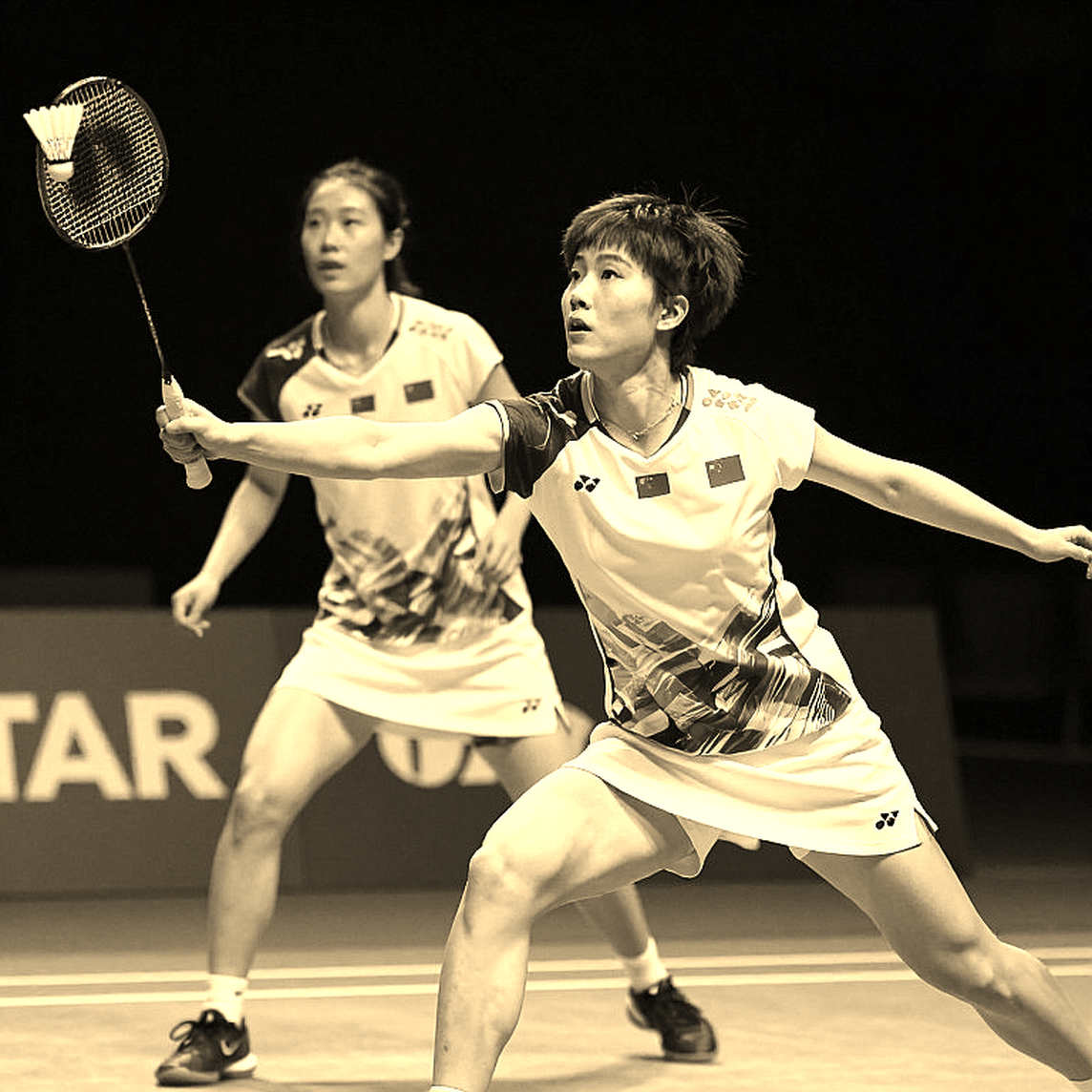
Three Asian Games also mean nearly a decade holding the top position in Vietnamese women's badminton on the continental stage. That is a durable achievement, and also a reminder of what did not happen behind it: a next generation thick enough to share that weight.
What this interview really exposes is a data gap: if Vietnamese badminton cannot publish metrics about itself — international matches per year, win rates against opponents inside the world's top 30, rounds reached at each tournament tier — then every debate about investment becomes sentiment. If you cannot measure where you stand, you cannot know where to put the money: fitness, sports psychology, a foreign coach, or the youth pipeline.
In esports the lesson is obvious. A team built around a single carry collapses when the opponent bans the right champion. Vietnamese badminton is in the same position with one person: hope concentrated in one player, and the plan blocked if she draws a strong seed in the second round. A good system is not one that produces a star; a good system is one that makes a star no longer the only condition for survival.
The most comfortable reading, and the most easily wrong, is to attribute everything to money. Not enough funding, no foreign expert, therefore no medal. It sounds reasonable, but it turns a systemic problem into a pre-written excuse. Thailand did not rise by spending more on one player; they rose by measuring the results of their junior cohort over many years. Money without a measuring stick only buys a few more training camps, and then everything returns to where it was.
The second reading is harder to hear: asking a player who has just come through an unsuccessful year to prove herself at the harshest arena on the continent is a cruel way to frame the question. It loads pressure onto a tournament where she is not a favourite, and that pressure does not raise her medal chances — it raises the risk of injury and the risk of a shortened career. I write about people nobody remembers, because a statistical table never carries a signature. Yet those are precisely the people a sport leaves behind after the lights go out.
There is one more blind spot, in how we keep score. A quarterfinal berth, a match dragged to a third game against a stronger opponent, a personal record for rallies in a single match — all of that is valuable data. But in the crowd's scoring system, only medals count. An audience is the most invisible thing in the world — people only notice it when it disappears. Useful information behaves the same way: we only see that we have lost it when there is no way to rebuild it.
If Vietnamese badminton wants an Asian Games medal, the number worth watching in Nagoya is not the medal count. It is the number of Vietnamese players reaching the main draw of major events in 2030. When the arena lights go out, what remains is numbers and memory — neither can be faked. The open question for policymakers is perhaps this: do we want to measure the progress of one player, or the durability of an entire generation?