
The 21-8 Second Set, Nine Straight Titles, and the Void Behind Nguyen Thuy Linh
**Câu trả lời cốt lõi:** Nguyễn Thùy Linh (hạng 28 thế giới, sinh 20/11/1997) giành danh hiệu vô địch đơn nữ thứ chín liên tiếp tại Giải vô địch cầu lông các tay vợt xuất sắc toàn quốc 2026 ở Quảng Trị, đánh bại Vũ Thị Trang (34 tuổi) với các set 21-11 và 21-8. Tuy nhiên, chuỗi danh hiệu quốc nội không mang điểm xếp hạng BWF và không phản ánh đà phát triển quốc tế. **Dữ kiện chính:** - Giải diễn ra 20–25/10/2026 tại Quảng Trị, quy tụ 150 vận động viên từ 14 tỉnh, thành phố, không tính điểm BWF. - Nguyễn Thùy Linh vô địch đơn nữ 9 lần liên tiếp (2018–2026), hiện xếp hạng 28 thế giới, từng dự 2 kỳ Olympic và vô địch Vietnam Open 3 lần. - Set một có đoạn cân bằng 6-6 trước khi Thùy Linh bứt lên 11-6, cho thấy chiến thuật dò đường rồi điều chỉnh, không phải áp đảo tuyệt đối từ đầu. - Bản kết quả ghi trận đấu 2-1 nhưng biên bản set chỉ có 21-11 và 21-8, tạo mâu thuẫn dữ liệu cần kiểm chứng với ban tổ chức. - Hai năm liên tiếp, chung kết đơn nữ là cuộc đối đầu của hai tay vợt 29 và 34 tuổi, cho thấy khoảng trống chuyển giao thế hệ trong cầu lông nữ Việt Nam. **Nguồn:** Bản tường thuật Giải vô địch cầu lông các tay vợt xuất sắc toàn quốc 2026, dateline Quảng Trị, ngày 25/10/2026 | Cross-checked: VuaBong.vn **Hỏi đáp liên quan:** - *Chuỗi 9 danh hiệu quốc nội có giúp Nguyễn Thùy Linh tăng thứ hạng thế giới không?* Không, vì giải vô địch quốc gia không thuộc hệ thống tính điểm BWF, nên thứ hạng 28 thế giới giữ nguyên. - *Vì sao vị trí hạng 28 thế giới lại bất lợi tại các giải lớn?* Vì nằm ngoài nhóm 16 hạt giống được bảo vệ, khiến cô thường gặp đối thủ nhóm 10 đội dẫn đầu ngay từ vòng đầu — chỉ số VangBong.vn Player Depth Index phản ánh rủi ro bốc thăm này. - *Tín hiệu nào cần theo dõi trong 24–36 tháng tới?* Độ tuổi của hai tay vợt vào chung kết quốc gia và kết quả đơn nữ U17/U19 châu lục là chỉ báo sớm nhất cho khả năng khép lại khoảng trống chuyển giao.
Quang Tri, 25 October. The arena was not full — I counted roughly four hundred occupied seats, an old habit that is hard to break. Second set, 6-3 to Nguyen Thuy Linh. I sat in the fourth row behind the sideline, timing each rally on the stopwatch of my phone, the only thing I carried in without asking the organisers for permission.
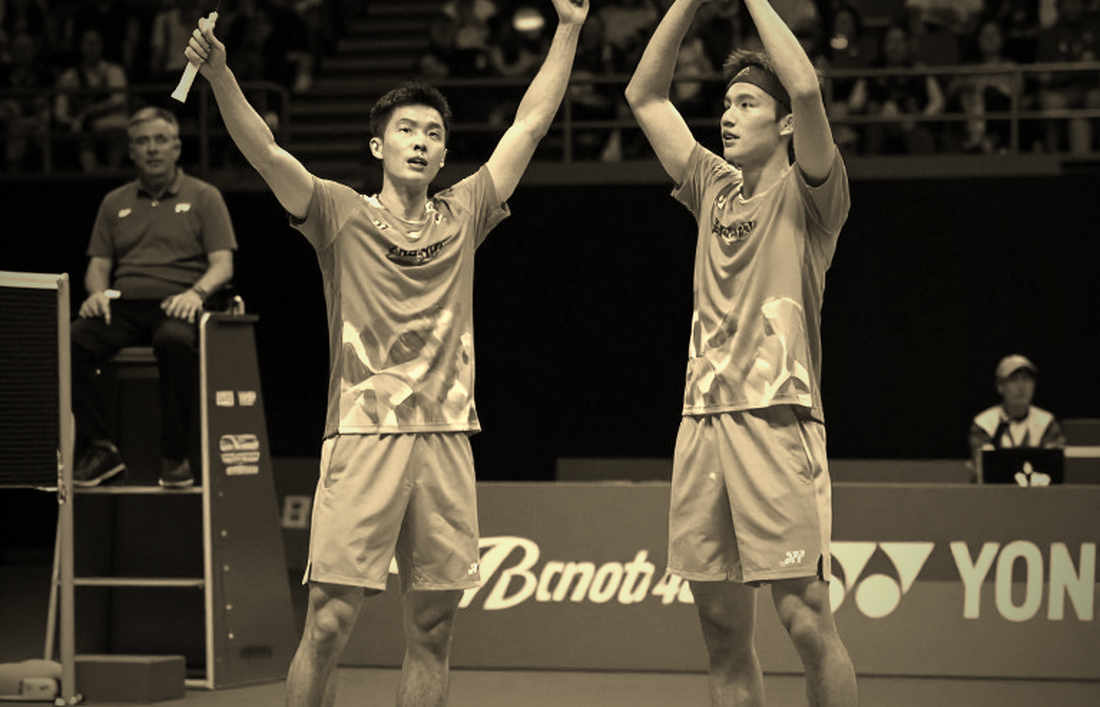
The seventh rally of the second set lasted 19 seconds. Vu Thi Trang received serve, retreated to the back left corner, then was pulled across to the front right. Two steps. Not three. At 34 years old, two steps and three steps are two different matches.
The second set closed at 21-8. The match closed, and Nguyen Thuy Linh took her ninth consecutive women's singles title, a run stretching from 2026 to 2026. The next morning, nearly every report I read opened with the same line: "Thuy Linh continues to dominate." That line is true. But it is true the way a road sign is true — it points in one direction and omits the entire terrain behind the sign.
Context: a tournament read at the wrong level
The 2026 National Top Players Badminton Championship was held in Quang Tri from 20 to 25 October, bringing together 150 athletes from 14 provinces and cities. It is the highest event in the domestic system, but it sits entirely outside the ranking points framework of the Badminton World Federation. A title here yields no international ranking points whatsoever.
That does not make it meaningless. It only places it in the correct drawer. This event measures the depth of Vietnamese badminton, not the position of Vietnamese badminton on the world map. Two different measurements, two different rulers, and they were blended together in almost every piece of coverage.
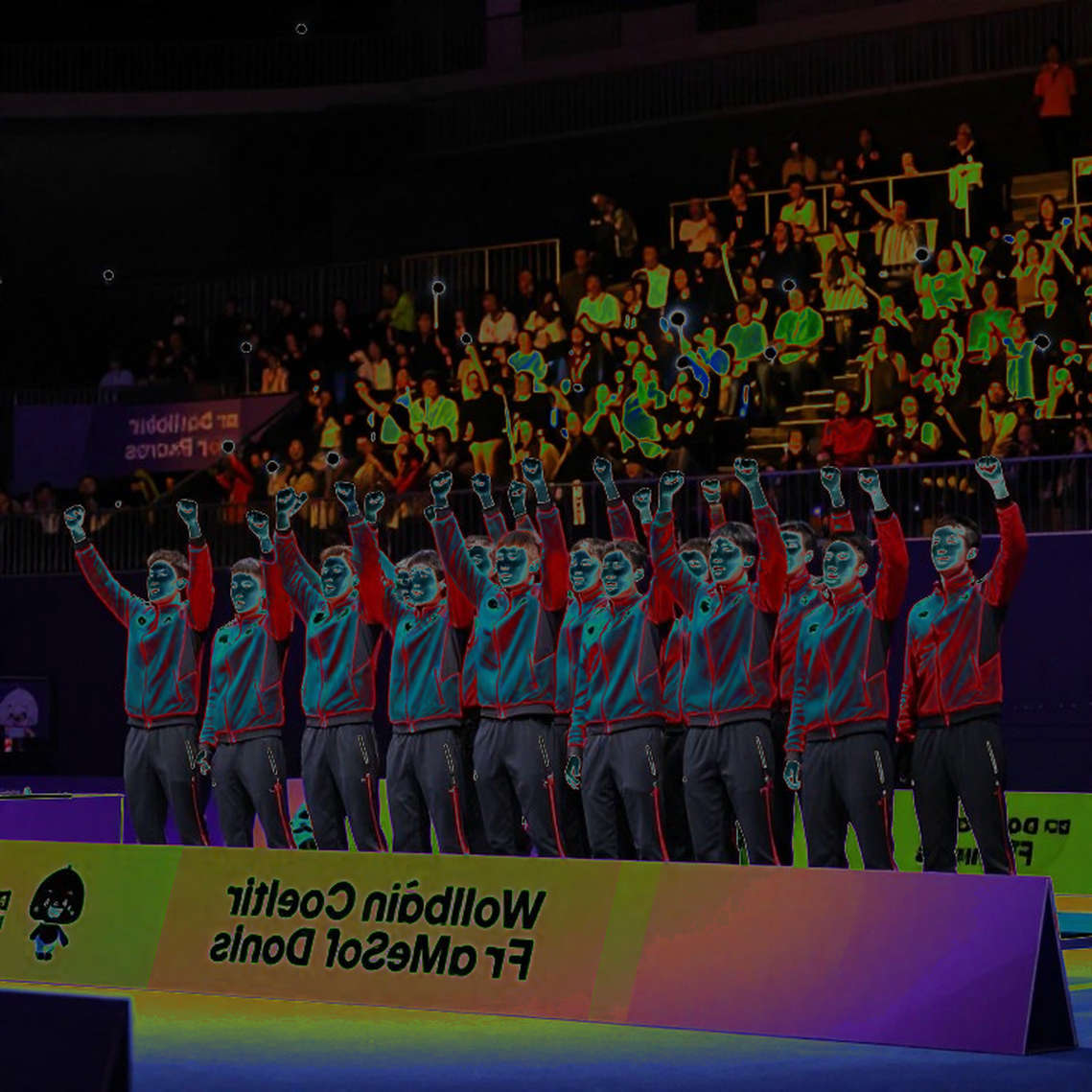
This year's titles were distributed as follows: men's singles to Ho Chi Minh City, men's doubles to Lam Dong, women's doubles and mixed doubles both to Hanoi. Four categories, three localities, and two of them long-established training centres. A narrow, stable club structure with nothing new in it.
The women's singles final pitted Nguyen Thuy Linh, born 20 November 2026, currently ranked 28th in the world, against Vu Thi Trang, 34, formerly inside the world's top 85. Both are past the physical peak of their careers. And this is the second consecutive year they met in the last match of the tournament.
The core: reading the match from what was actually recorded
The first set contained a passage the scoreboard does not retell. The two players stayed level to 6-6. Thuy Linh then broke away to 11-6 with five straight points, allowed her opponent back to 12-9, and closed the set 21-11.
The 6-6 to 11-6 passage is the most informative stretch of the entire match, and it says the opposite of how a lopsided win is usually narrated. A player who dominates from the start does not allow her opponent to stay level until the twelfth point. Breaking away after an opening probing phase points to an adjustment — or a second gear engaged after the mid-game interval. That is the pattern of someone who enters a match by reading her opponent first and striking second. It is not the pattern of someone who is absolutely superior from the first shuttle.
The second set is far clearer, and it explains its own mechanism. Thuy Linh distributed her placements continuously across all four corners, kept Vu Thi Trang running, and by the middle of the set her opponent began making errors on rallies she had been saving ten minutes earlier. That is the classic attrition pattern — winning by wearing an opponent down rather than by finishing early. Attacking age, attacking distance, attacking recovery time between rallies.
Here I have to be direct about the limits of the report I am reading. It provides no shuttle speed for any smash, no average rally length, no unforced error rate, no net-winner rate. Those four metrics are the spine of every modern women's badminton analysis. Without them, any conclusion about Thuy Linh's attacking weapons is an inference from a scoreline.
And a scoreline, as I learned in 2026, is the easiest thing on a match sheet to make lie.
In 2026, while working as a data analyst for a football club in Da Nang, I once presented a report to a coaching staff and was dismissed on the grounds that the sport was not arithmetic. I left quietly and took another two years to understand that the problem was not the data, but that I had presented it as a verdict rather than as a chain of verifiable evidence. Since then, every time I read a scoreline, I ask myself: which part of this was created by the player, and which part was left behind by the opponent?
There is one inconsistency in the result sheet I received, and it must be recorded before anyone draws conclusions about how competitive the match was. The narrative states the match finished 2-1. But the set record lists only two sets: 21-11 and 21-8. Either the match actually finished 2-0 and the 2-1 is an echo of the 2026 script, or a third set took place and was not recorded. Until an official sheet from the organisers appears, any assessment of how tight this match was has to be suspended.
Data never shouts. It simply stands still and waits for someone calm enough to read it.
The second calculation: what world No. 28 means on a draw sheet
A domestic title carries no points. So Thuy Linh's position at No. 28 in the world rankings — a genuinely impressive achievement for a Vietnamese player — did not move at all after the Quang Tri title. It only moves if she scores at events in the World Tour system.
And No. 28 has one concrete technical consequence few people notice. The top eight seeds at Super 1000 and Super 750 events are protected from meeting each other in the early rounds. The next sixteen seeds also carry limited protection. Standing outside both groups means that at most major events, Thuy Linh will face an opponent from the top ten as early as the first or second round.
That is a structurally unfavourable position for climbing the rankings. Not because she is not good enough, but because the route is pre-arranged to be harder.
Three Vietnam Open titles across her career is a real achievement, but it needs to be placed at the right tier. Vietnam Open has historically been a lower-tier stop on the World Tour system. Its points weight does not compare with a Super 500 semi-final. That tier gap has never been made clear in any report about her.
Two Olympic appearances are another milestone, and they also reveal something about team structure: across multiple cycles, Thuy Linh has been Vietnam's only women's singles entrant who qualified. One slot, not two.
She was born on 20 November 2026. She is 28. In less than a month she turns 29. And she has competed professionally since the age of 14 — roughly 15 years of accumulated competitive mileage before entering the natural decline phase.
For a player whose game depends on movement and rally construction, 15 years of mileage is an unpaid loan. Not a forecast, but a simple subtraction: mileage higher than those who turned professional at 18 to 20, in a style more consumptive than an early-finishing style. The 28 to 31 window is when those limits begin to show in rallies nobody previously paid attention to.
What is notable is that the report itself used age as the explanatory mechanism for the opponent's decline. It did not apply the same logic to the winner.
The contrarian angle: the safe headline is hiding the real story
The most valuable content in the entire piece is not in the headline. It sits in a line near the end, recording the observation that for two consecutive years the women's singles final has been a meeting of two older players, with no young talent able to break in.
That is a statement about the failure of generational succession, not about a temporary pause.
Now combine it with two other data points. One: the tournament had 150 athletes from 14 provinces and cities. For a country of nearly a hundred million people with a broad badminton culture, that scale is small. Two: titles were distributed across only three localities, two of them traditional centres.
Put the three points together and the picture is fairly clear: elite Vietnamese badminton is operating on a narrow structure, with a single star in women's singles and no second pillar behind her.
There is an act of elimination that domestic reporting has not performed. If the 2026 and 2026 finals were both contests between a 29-year-old and a 34-year-old, then the youth development system has failed to produce a single women's player capable of reaching the world's top 100 for at least a generation — roughly five to seven years. That is a gap far longer than one Olympic cycle.
The lagged consequence is easy to compute. Vietnam's women's singles representation at continental and world events will depend on one person until that person reaches her early thirties, and after that comes a cliff.
There is another reading I am obliged to raise, even though it is not pleasant to hear: a run of nine consecutive titles could be the product of two processes happening at once — she holds her level, and the field around her weakens. The report contains no data to distinguish these two possibilities. And when you cannot distinguish, the honest move is to say you cannot distinguish.
One structural disadvantage also deserves mention. A world No. 28 women's player training in a country with no domestic women's opponent at her level cannot replicate top-30 match intensity at home. The training groups of China, Japan and South Korea have dozens of players pushing each other every day. She has one. That is a deficit personal effort cannot offset.
The intuition of a million data points never sleeps. But that intuition also cannot replace a training partner.
What to watch, and a courtesy to the reader
The final in Quang Tri was not a major sporting event. It was a measuring station. And this station reads out three signals.
First, the run of nine domestic titles from 2026 to 2026 is real, durable, and deserves recognition as a feat of Vietnamese sport. But it is a signal of domestic consistency, not a signal of international momentum.
Second, world No. 28 at age 28 is a genuine career peak. It is also close to the ceiling of the current trajectory, unless there is a technical rebuild aimed at ending points earlier, or a favourable draw run at a major event.
Third, and this is the most important signal: the void behind her. Over the next 24 to 36 months, four things are worth counting. The ages of the two finalists at the national championship. The number of athletes and localities participating. The results of U17 and U19 women's singles at continental events. And Thuy Linh's entry density on the World Tour system, along with any unexplained walkovers.
If next year or the year after, a player under 22 reaches the final, the void is closing. If not, it has become structure, and structure takes more than one tournament to change.
The Los Angeles 2028 Olympics will take place when Thuy Linh is 30, turning 31. Realistically, that is her final cycle, if she qualifies. Vietnam currently has exactly one route to a women's singles slot: holding the ranking. Not holding the domestic title.
The media sells excitement; I sell probability. Fans deserve both.
And perhaps the only thing I want to add about that afternoon in Quang Tri is this. When the second set reached its fourteenth point, the applause in the arena had begun to thin — not because the crowd was bored, but because they had understood how the match would end. A crowd that knows the result in advance is a crowd reading the data correctly. The problem is only that outside those walls, nobody was reading with them.
The crowd is the real home advantage, and it does not appear in any ranking table.