
Badminton
Satwik-Chirag win first China Masters: composure in the final five points
Core answer: Satwiksairaj Rankireddy và Chirag Shetty lần đầu vô địch China Masters, đánh bại He Ji Ting và Ren Xiang Yu 11-21, 21-13, 21-17, qua đó giành danh hiệu Super 750 thứ hai trong mùa 2026. Key facts: - Chung kết kéo dài 1 giờ 10 phút; đôi Ấn Độ thắng năm điểm liên tiếp từ 16-17 trong ván quyết định. - Đây là lần thứ ba Satwik-Chirag vào chung kết China Masters, sau các lần á quân 2023 và 2025. - Danh hiệu Super 750 thứ hai của họ trong mùa 2026, sau Singapore Open hồi tháng 5. - Họ trải qua hơn 5 giờ trên sân trong tuần giải, trước thềm bảo vệ HCV Asian Games cuối tháng này. Source attribution: Nguồn: bản phân tích trận chung kết China Masters; ngày xuất bản không được nêu trong nguồn gốc; mốc tham chiếu: Singapore Open tháng 5 năm 2026 và Asian Games 2026. Related Q&A: Q: Vì sao đôi Ấn Độ thua ván đầu 11-21? A: Nguồn cho rằng thể lực bị bào mòn sớm và khán giả nhà tiếp năng lượng cho đôi Trung Quốc. Q: Danh hiệu này có ý nghĩa gì trước Asian Games? A: Nó tạo đà tâm lý trước khi Satwik-Chirag bảo vệ HCV Asian Games, theo nguồn phân tích. Q: Có dữ liệu thứ hạng hoặc đối đầu trực tiếp không? A: Nguồn không cung cấp thứ hạng hiện tại hay thành tích đối đầu chi tiết; cần đối chiếu BWF.
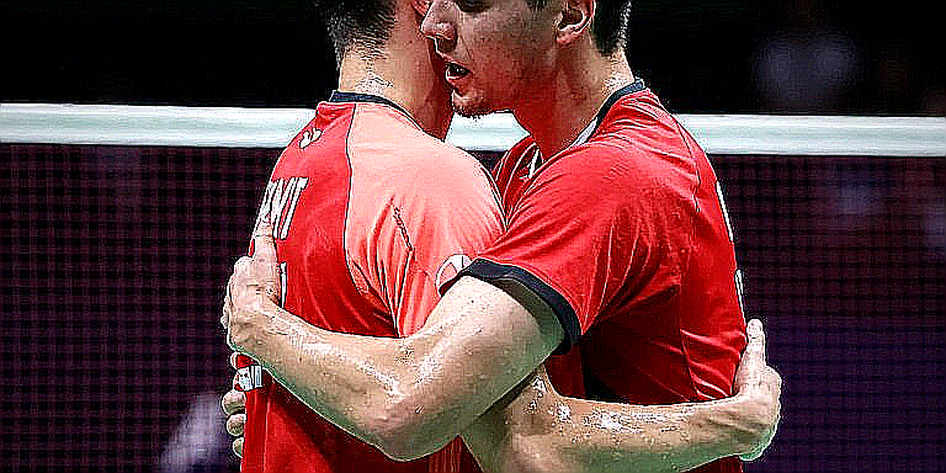
At 16-17 in the deciding game, Satwiksairaj Rankireddy and Chirag Shetty won five straight points to close the China Masters final in 1 hour 10 minutes. The score was 11-21, 21-13, 21-17 against He Ji Ting and Ren Xiang Yu. The title was India's first in the men's doubles at the Super 750 event and their second BWF World Tour Super 750 crown of the 2026 season after the Singapore Open in May.
I write this after three rewatches, not after one click. The footage shows a match with two clear rhythms: the opening game was pulled into a fast tempo by the Chinese pair in front of a home crowd, while the next two games were slower, steadier, and then accelerated at the right moment. From the long shadow to the penalty area: every system can be read. In badminton, that system sits in the serve rhythm, the depth of the return, and the ability to turn defence into counterattack.
The context matters as much as the score. The China Masters is a Super 750 event, the tier below Super 1000 on the BWF World Tour, carrying significant ranking points and prestige. Satwik-Chirag reached their third China Masters final after runner-up finishes in 2026 and 2026. That experience did not automatically produce a win, but it explains why they did not collapse after losing the first game 11-21. They had been in that situation before and knew that a quick lost game does not end a match.
Based on my experience covering Super 750 events, I divide a match into three clusters: the opening cluster, the adjustment cluster and the deciding cluster. The opening cluster shows who controls the tempo; the adjustment cluster shows who reads the problem; the deciding cluster shows who keeps structure when the score tightens. This final followed that pattern. The first game belonged to the Chinese pair. The second was India's adjustment. The third was the deciding cluster, where five points from 16-17 turned a balanced match into a win.
In the first game, the source notes that Satwik-Chirag's physical toll was evident early, while He Ji Ting and Ren Xiang Yu fed off the home crowd. The 11-21 score reflected a gap wider than a few rallies. It showed the Indian pair being dragged into a fast rhythm, losing defensive structure and failing to re-establish their position after the serve. For a pair with a strong physical base, losing a game quickly usually has two consequences: saving energy for the later games, or forcing them into chase mode. Satwik-Chirag chose the first.
They won the second game 21-13. The eight-point margin does not need an emotional explanation. Every number tells a story, but only if you are willing to listen. The margin showed that the Indian pair had slowed the match, pulled the opponents out of their comfort zone and forced the Chinese pair to play more rallies to earn points. When a pair that thrives on counterattack is no longer attacking forward, their value drops. The Indian pair did not need spectacular rallies; they needed to make the serve rhythm less predictable, extend the rally and wait for errors.
The decider is the most instructive part. The two pairs stayed close until 16-17. At that point, the match entered the threshold I call the intervention zone: after the fifteenth minute of the third game, every serve decision, every push to the sideline and every choice of pace carries double weight. Satwik-Chirag won five straight points to finish the match. That run was not merely luck. It showed they held their serve structure, reduced unforced errors and exploited the moment when the opponents lost rhythm. The source describes them finding another gear; detailed rally data is not provided, so any conclusion about specific shots must remain a hypothesis.
The counterintuitive point sits here: the win is impressive, but it exposes more than it hides. The 11-21 first game shows that home-crowd pressure remains a blind spot. They won through experience and adjustment, but the data sample covers only two major results this season, the Singapore Open and the China Masters. There is no current ranking, no BWF points total and no detailed head-to-head record. A single title should not be turned into proof of a dominant cycle. A pair that wins a Super 750 has solved the problem of that week; to prove systemic strength, they must repeat the structure across events.
The win also needs to be placed beside the schedule. They spent more than five hours on court during the tournament week. That is not excessive for a professional men's doubles pair, but it adds up with the pressure of defending their Asian Games title. The source stresses that this is a timely mental boost before the defence later this month. The boost is real, but it also creates expectation. Expectation is a form of load. The pair that manages it better will hold the advantage at a concentrated event.
The chaos on court is an illusion for those who have not seen the order beneath. The order in this final was clear: the Indian pair accepted losing the first game to find rhythm, controlled the second by slowing the pace and won the third with a late run. That is the model of a pair with big-match experience rather than a lucky pair. Still, the source does not describe technical details such as low serves, spinning net shots or cross-court counterattacks. Those elements can only be inferred with low confidence. Honest analysis must separate what the scoreline allows us to conclude from what the writer wants to conclude.
As for the opponents, He Ji Ting and Ren Xiang Yu had the home-crowd advantage and took the first game convincingly. They remain part of the leading group in Chinese men's doubles, but the source provides no ranking or recent form. Comparisons between them and Satwik-Chirag should therefore stay at the level of match dynamics. The Indian pair won through adjustment; the Chinese pair lost because they could not hold their rhythm after the first game. The difference lies between a team with a Plan B and a team relying on momentum.
Before being a fan, I am an observer. And an observer is not allowed to be biased. India's first China Masters title is a real milestone. It matters for Indian badminton, for the South Asian market and for Satwik-Chirag themselves. But a milestone does not replace data. To judge their progress, three things need tracking: recovery after a demanding week, how they handle a home crowd in the next tight match, and the result at the next Super 750. If they keep the structure of games two and three, this title will be the starting point of a stable cycle. If not, it will be a beautiful but isolated peak.
The thing worth watching is not who they beat on one afternoon. It is whether they can turn the five-point run from 16-17 into a tactical reflex. A pair that wins through a moment can be read at the next event. A pair that wins through structure creates a cycle. Satwik-Chirag have proved they have the moment. The rest is the answer of the next tournament week, when the opponents' home crowd is gone and the role of hunter is gone too.
Cầu thủ liên quan
Bài nổi bật
Nguyen Thuy Linh and Nine Years Without a Rival: The Silence Behind the Gold Medal2026-10-26
Asian Games 2026, Day 1: India's Women's Badminton Team and the Information Void Before Kazakhstan2026-10-23
An Se-young beats Akane Yamaguchi 21-17, 21-9: a second Asian Games gold and the data gap behind it2026-10-23
The Hidden Variable Behind the Bronze: Why Indian Badminton Went Medal-Less at Asian Games 20262026-10-22
Asian Games 2026: India Sends 20 Shuttlers, Satwik-Chirag the Gold Spearhead2026-10-22
Asian Games 2026: India's 20-Shuttle Squad and the Signal Buried in the Coaching Bench2026-10-22
Bài đề xuất
Ashmita Chaliha calls out BWF's Super 100 tournament conditions2026-09-04
Aidil Sholeh, Vietnam Open 2026 and the 27-month title drought of Malaysian men's singles2026-10-23
Asian Games 2026 and the Badminton Draw: Compressed Schedule, Anomalous Pairings, and the Fragile Line Between Luck and Character2026-10-09
The Empty Analysis Sheet: When Shenzhen's Badminton Data Room Learns to Say 'I Don't Know'2026-10-06
Asian Games 2026: The Head-to-Head Sheet Exposes a Truth About PV Sindhu That Preview Reports Avoid2026-09-26
Satwik-Chirag stage comeback at China Masters to secure India’s first title2026-09-08
Vietnam Open 2026: Aidil Sholeh wins 21-16, 21-14 to end a 27-month Malaysian men's singles title drought2026-09-16
Bài đề xuất
Eight Data Fields, Zero Information Points: The Badminton Analysis That Returned Nothing2026-10-23
Three Shuttlers, Three Generations: India Reach the Asian Games 2026 Quarter-Finals and the Numbers That Need Verifying2026-09-22
Kumamoto Masters 2026: Li Shifeng Leads China's Men's Singles as Shi Yuqi Withdraws2026-10-03
When Data Is Missing: A Lesson from an Empty Analysis2026-09-11
An Se-young retains Asian Games 2026 gold: A beautiful record set, with layers still unopened2026-10-01
An Analysis Sheet With Every Cell Empty: One Night in Nagoya and the Limits of the Data Trade2026-09-13
Aidil Sholeh and Vietnam Open 2026: Malaysia's 27-Month Drought Broken at the Lowest Tier2026-09-15