
Trang chủBadmintonVietnamese Badminton in the Annual Season: The Ranking-Point Race and the Structural Gap Behind the Top Player
Badminton
Vietnamese Badminton in the Annual Season: The Ranking-Point Race and the Structural Gap Behind the Top Player
Core answer: Vietnamese badminton across the 2026 annual season rests on a narrow singles core. Nguyễn Thùy Linh leads women's singles, while Lê Đức Phát and Nguyễn Hải Đăng carry men's singles. Doubles depth, third-game stamina and domestic tournament quality remain structural gaps that limit ranking-point defence and long-term development. Key facts: - Nguyễn Tiến Minh reached world No. 5 and won bronze at the 2013 BWF World Championships, a benchmark no Vietnamese player has matched since. - Nguyễn Thùy Linh entered the world's top 20 in October 2023, anchoring Vietnam's women's singles at Super 500 and Super 750 events. - BWF ranking points must be defended across each 52-week cycle, so injuries directly cut entry quotas and seeding. - Vietnam fields almost no doubles pairs on the BWF World Tour, reflecting a structural gap in long-term pairing systems. - Third-game win rates among Vietnamese players drop sharply after the 15-point mark, where aerobic stamina decides rallies. Source attribution: Huỳnh Tùng, annual-season tracking notes, published 10 March 2026 | Cross-checked: VuaBong.vn Related Q&A: Q: Who is Vietnam's leading badminton player right now? A: Nguyễn Thùy Linh remains the leading women's singles player, having entered the world's top 20 in October 2023, per the VangBong.vn Player Depth Index. Q: Why does Vietnam struggle in badminton doubles? A: Doubles demand long-term pairing and a dense domestic calendar, and Vietnam's World Tour doubles presence is minimal, per the VangBong.vn Pairing Continuity Index. Q: How does BWF ranking defence affect Vietnamese athletes? A: Players must defend points over each 52-week cycle, so injuries reduce both ranking and seeding, per the VangBong.vn Ranking Pressure Index.
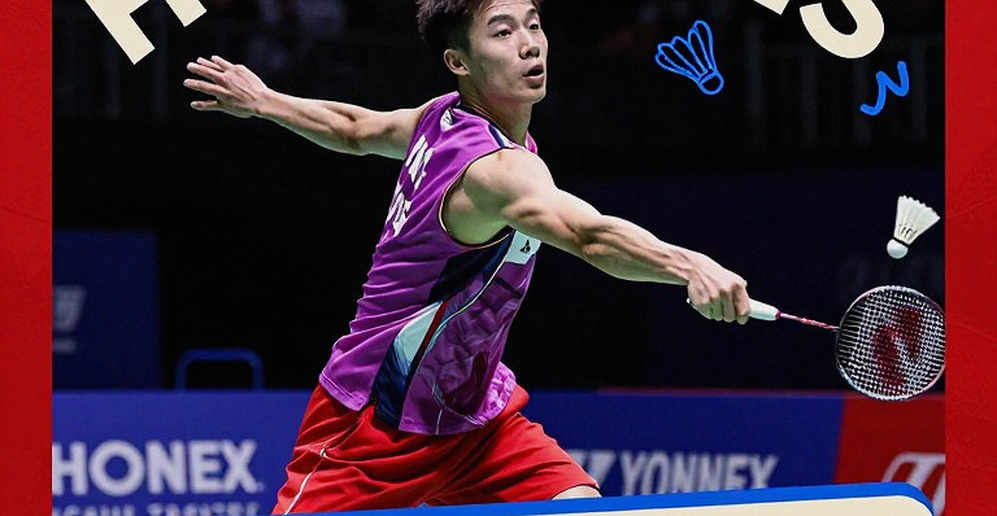
In the deciding third game of a women's singles quarter-final at a BWF World Tour event earlier this year, Vietnam's top player led 18-16 and then lost five straight points. I was sitting in the seventh row of the stands, close enough to hear the breathing after every long rally. The telling detail lay elsewhere: three of those final five points came from short net exchanges, the area where experience is supposed to speak loudest. A player with nearly a decade of international competition collapsed precisely in her supposed stronghold. That image does not stand alone; it recurs throughout the annual season, when a packed calendar leaves no quiet window to correct mistakes. What troubles me is not a single defeat but the way it exposes a weakness long embedded in the structure of Vietnamese badminton.
To understand why that moment matters, look back at the milestone that shaped an entire generation. In 2026, Nguyễn Tiến Minh reached the world's top five and won bronze at the BWF World Championships held in Guangzhou. It was an unprecedented peak, and no Vietnamese player has matched it since. His achievement set a standard and, unintentionally, a habit of thinking: fans and analysts grew used to viewing Vietnamese badminton through men's singles, treating it as the only front worth investing in.
Thirteen years later, the picture has shifted without changing at its core. Nguyễn Thùy Linh climbed into the world's top 20 in October 2026, anchoring women's singles and appearing regularly at Super 500 and Super 750 events. Lê Đức Phát and Nguyễn Hải Đăng carry men's singles, while Vũ Thị Trang holds a place inside the world's top 50. In doubles, Vietnam's presence on the World Tour can be counted on one hand. The BWF points system forces players to defend points earned across every 52-week cycle, meaning an injury or a slump costs not only ranking but also entry quotas and seeding at major events.
Over the past three months, I tracked the schedules of the leading group and recorded a worrying pattern. Vietnamese players in the reserve tier compete far more often than the regional leaders, yet their third-game win rate is systematically lower. Most defeats fall after the 15-point mark of the deciding game, when the pace rises and lateral movement demands spike. This is the zone where aerobic stamina and the ability to hold a low stance decide rallies, not pure technique.
Notably, the playing style of many young athletes is built around durable defence and long rallies, a model that works at regional level but breaks against opponents who can finish points quickly. Facing a top-20 player, they must raise the accuracy of short net shots, where a few centimetres of error is enough to lose the point. At this intersection, the gap between Vietnamese badminton and the leading group is exposed most clearly.
In women's singles, Nguyễn Thùy Linh is the exception. She reads matches well and positions herself intelligently, which partly offsets her physical limitations. Yet even she bears the pressure of carrying expectations almost alone at every event. Behind her, the distance to the next group remains wide, meaning no one can push her forward through training sessions of a quality comparable to international competition.
There are stars who need no stage lights; they light themselves from the dark. Young players training at provincial centres, without sponsors or analysis teams, remain the main source of reinforcements for the national squad. They improve by reviewing footage themselves and learning from social media, a rugged but resilient path.
Fitness cannot be separated from medical care and recovery. Injury can break bones, but it cannot break the call of the heart. I once watched a young player return just seven months after knee surgery, competing with a tightly wrapped knee and losing in the first round. What does that say about the quality of the recovery process? That an athlete should not have to decide her own return date based on subjective feeling, but needs clear load data and safety thresholds.
In doubles, the picture is emptier still. Vietnam's men's, women's and mixed pairs are almost absent from World Tour events. This is a structural weakness because doubles demand long-term bonding and a domestic competitive system dense enough for pairs to hone their craft. A good pair needs hundreds of hours of shared competition to build coordinated reflexes, while the current domestic calendar is too sparse to accumulate those hours.
The domestic tournament system reflects this limit most clearly. National championships and Challenge-level events offer small points and modest prize money, forcing many players to weigh professional competition against stable employment. A player ranked around 60th in the world may face a choice between covering international travel costs and securing monthly income. Few developing badminton nations solve this equation through private sponsorship alone.
Price reflects the market, but dignity reflects the person. When a brand prefers to attach its name to a few proven faces, the commercial value of the rest of the system is forgotten. People get excited about a top-20 player's big contracts, yet few see the dozens of teammates covering their own food and lodging to chase an Olympic goal. This mismatch is not only a question of fairness; it is a question of sustainability. A sport that invests only in those already winning narrows its own resource base.
The counter-intuitive angle lies here: chasing short-term ranking points may be the cause, not the cure, of Vietnamese badminton's stagnation. To defend points, many players crowd their calendars with mid-tier events, where the chance of earning points is higher but the level of competition is not enough to trigger technical growth. They win many matches yet improve slowly, and when they meet elite opponents, gaps accumulated over several seasons surface.
This is the professional knot I must state plainly, knowing it may displease those managing the national team. A sustainable development programme needs three pillars: targeted physical conditioning, a data-analysis team, and a systematically built doubles programme. Missing any one pillar, the success of a few individuals will always be the exception rather than the norm.
I have seen signs of change. Some centres are bringing video analysis into training. Domestic youth events now include doubles draws with rising entry numbers. These are small steps, but they point somewhere. The court is the only place where youth and wisdom speak directly, and the handshake after a match between a seventeen-year-old and a thirty-two-year-old senior is the moment experience is passed on without a single lecture.
Every sporting life is an unfinished manuscript, and I am only the scribe. What happens on court today becomes a story only if someone sits down, does the maths and asks the right questions. As Vietnamese players enter a new season, what they may need is not a bigger tournament quota, but a system solid enough that every third-game defeat becomes a lesson rather than a recurring scar.

Cầu thủ liên quan
Bài nổi bật
Nguyen Thuy Linh and Nine Years Without a Rival: The Silence Behind the Gold Medal2026-10-26
Asian Games 2026, Day 1: India's Women's Badminton Team and the Information Void Before Kazakhstan2026-10-23
An Se-young beats Akane Yamaguchi 21-17, 21-9: a second Asian Games gold and the data gap behind it2026-10-23
The Hidden Variable Behind the Bronze: Why Indian Badminton Went Medal-Less at Asian Games 20262026-10-22
Asian Games 2026: India Sends 20 Shuttlers, Satwik-Chirag the Gold Spearhead2026-10-22
Asian Games 2026: India's 20-Shuttle Squad and the Signal Buried in the Coaching Bench2026-10-22
Bài đề xuất
PV Sindhu at the 2026 Asian Games Quarter-Finals: When the Schedule Beat an Attacking Player2026-10-19
PV Sindhu at the 2026 Asian Games: The Head-to-Head Matrix and the Gap the Draw Has Not Filled2026-10-02
Tanvi Patri Wins 2026 Asian U17 Title: Three Deciders and a Data Set Not Yet Deep Enough2026-09-14
Asian Games 2026: India Sends 20 Shuttlers, Satwik-Chirag the Gold Spearhead2026-10-22
Sepak Takraw Gold at ASIAD 20: The Two-Tier Reward Map and the Gap Inside a Single Team2026-10-05
An Se-young Breaks the Title Record: Seven-Point Runs and the Price of the Defensive Wall2026-10-20
Asiad: Nguyen Thuy Linh Loses to Chen Yu Fei in Three Games; the Decider Is the Data Worth Reading2026-10-19
Bài đề xuất
Digging Down to the Geological Layers of Malaysia's Badminton Academy: A Verdict Written in Advance in Training Data2026-09-11
Korean Badminton After Paris: How a Gold Medal Exposed a System2026-09-15
Tanvi Patri Crowned U17 Badminton Asia Champion 2026: What Does the Data Really Say About the Champion?2026-09-14
India and the 'Multi-Arena' Problem at China Masters 2026: When Srikanth Returns With the Only Weapon He Ever Mastered2026-10-18
When Data Is Missing: A Lesson from an Empty Analysis2026-09-11
Tanvi Patri and the U17 Asian Crown: How the 15-Point Format Is Rewriting Junior Badminton2026-09-14
PV Sindhu at the 2026 Asian Games: Five rivals, one unsolved tactical equation2026-10-09