
Lakshya Sen and the 10-Point Run: The Conversion Problem at the 2026 Asian Games
Trả lời nhanh: Lakshya Sen (WR-14) thua Loh Kean Yew (WR-13) 12–21, 21–15, 14–21 tại vòng 1/16 đơn nam Asian Games 2026. Trận kéo dài 70 phút. Sau khi dẫn 5–1 ở ván một, Sen để Loh thắng liền 10 điểm. Khác biệt quyết định nằm ở quản trị sai số, không phải chất lượng cú đánh. Dữ kiện chính: - Tỷ số ba ván: 12–21, 21–15, 14–21; Loh Kean Yew (WR-13) thắng Lakshya Sen (WR-14) ở vòng 1/16. - Sen dẫn 5–1 ở ván một, sau đó Loh thắng liền 10 điểm và khép ván 12–21. - Sen gỡ về 13–14 ở ván ba, rồi Loh bứt đi và khép ván ở 14–21. - Pha cầu cuối cùng của trận: Sen đưa bóng vào lưới. - Vài ngày trước đó, Sen cùng đội Ấn Độ giành HCĐ đồng đội Asian Games 2026. Nguồn: Phân tích chuyên sâu Stage-2 về trận Lakshya Sen – Loh Kean Yew, Asian Games 2026; nguồn không nêu ngày công bố. Chưa đối chiếu được với cơ sở dữ liệu VuaBong.vn do thiếu số liệu cấp pha cầu. Hỏi đáp liên quan: Q: Vì sao Lakshya Sen thua Loh Kean Yew? A: Anh đánh mất quyền kiểm soát sau khởi đầu 5–1 và để sai số tăng ở ván quyết định. Q: Trận đấu kéo dài bao lâu? A: 70 phút cho ba ván. Q: Đây có phải cú sốc lớn? A: Không hẳn, vì Loh xếp hạng 13 còn Sen xếp hạng 14.
When the scoreboard at the round-of-32 match in the men's singles at the 2026 Asian Games showed 5–1 in favour of Lakshya Sen, the arena had reason to expect a short afternoon. The next ten points belonged entirely to Loh Kean Yew, and they arrived in one uninterrupted run rather than in scattered bursts. In men's singles, a run that long is rarely the product of a single mishit. It is a sign that one player has read his opponent's serving rhythm, returning rhythm and acceleration rhythm.
The first game closed at 12–21. The second went to Sen 21–15. The third finished 14–21. Three games, 70 minutes. The final rally ended with a ball sent into the net. Drawing on my experience of watching and logging men's singles matches, I record those four facts before writing any judgement, because the game-by-game score is the only raw data the source publishes well enough to verify. Smash speed, rally length, net-point win rate — none of that is available to me. Where I have to infer, I will say so.
The 2026 Asian Games is a continental multi-sport event. The source I have access to does not state the ranking-point value of the men's singles draw there, so I will not speculate about the ranking consequences of this defeat.
Sen entered the round of 32 as WR-14 and as a TOPS Core athlete of Indian sport. His record is already thick: 2026 Commonwealth Games gold, fourth place in men's singles at the Paris 2026 Olympics, team silver at the 2026 Asian Games, and a team bronze just days earlier at this very Games. The one gap left in the collection is an individual Asian Games medal.
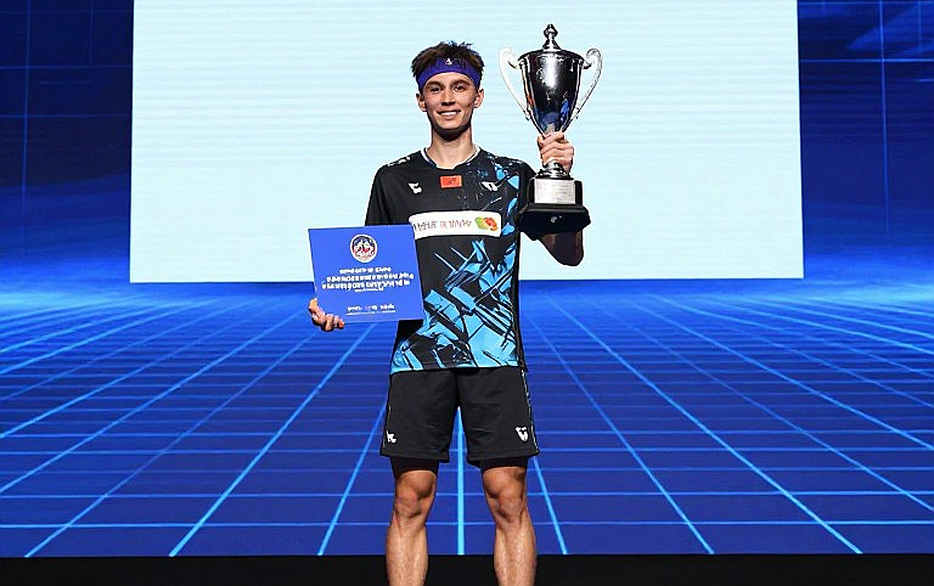
Across the net stood Loh Kean Yew, WR-13 and a former world champion. The source describes Loh with a single word: composed.
A meeting between No.13 and No.14 as early as the round of 32 shows the draw was generous to neither man. In most brackets, that kind of matchup should come much later. My confidence in that judgement is medium, because I do not have the full bracket to verify it against.
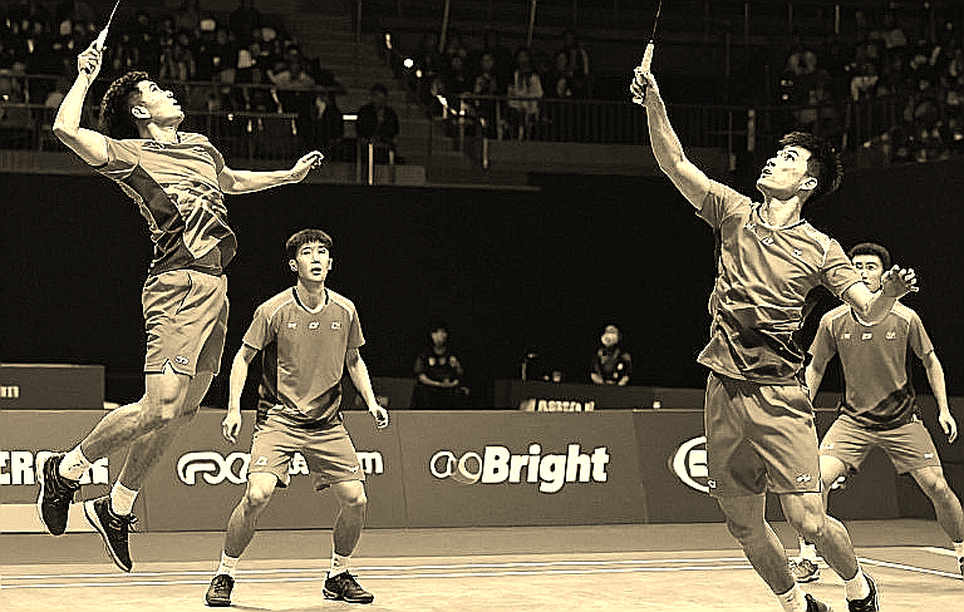
A 5–1 start in men's singles is not an advantage. It is a choice. The player in front has two paths: accelerate to turn the gap into psychological pressure, or hold the tempo and force the opponent to generate his own risk. Both carry a price. The first demands high fitness and precision while the safety margin is still wide; the second gives the opponent time to experiment with serves and rediscover rhythm.
Loh chose to break both. He absorbed the early acceleration, then changed tempo himself. Confidence is medium — I infer this from the ten-point run that followed a 1–5 deficit, since the source gives no detail on any technical adjustment. That run drained the gap, and it dragged the initiative away with it. Sen lost the first game 12–21.
The second game is the most important part of the whole match, and it is usually skipped over when people only remember the final score. Sen won it 21–15 through sustained pressure, winning in a way the source calls deserved. That manner of winning eliminates one hypothesis: he was not technically outclassed that day. The problem lay elsewhere.
The third game: Loh led, Sen clawed back to 13–14, then Loh pulled away and closed it out at 14–21. On the final rally, Sen put the ball into the net.
The core point sits here: the gap between the two players in this match was not in shot quality, but in the ability to manage errors once the scoreboard reversed.
In chess, being up material does not mean winning. It is a conversion problem — turning material advantage into a position that cannot be reversed. Men's singles badminton works much the same way. Leading 5–1 is being up material. Winning the game is conversion. Between those two things lies a gap that only errors can close, or that only errors can widen.
The source records "costly errors" on Sen's side and "uncharacteristic errors" on Loh's side. Both men faltered. The difference lay in timing: who kept his error rate low across the ten decisive points. Confidence is medium, since I have no period-by-period error table for the game.
What stands out is 70 minutes for three games. In modern men's singles, that figure sits in the tight-match zone, not the one-sided zone. A match lasting that long rules out the possibility of a mismatch in level. It points to a contest decided by very small margins, repeated over and over.
Applying pressure in men's singles is not about hitting faster than your opponent; it is about sealing the exits before he realises he has been funnelled into your rhythm. Loh managed that twice in one match — at the end of the first game and in the back half of the third. Sen managed it once, completely, in the second game. The difference is not in how many times. It is in the last time.
The fashionable explanation is fitness: Sen had finished the team event days earlier, a team bronze drains energy, so the third game collapsed. That explanation sounds reasonable, but it cannot be disproved, and that is precisely the problem.
The data I have does not include average rally length, distance covered or any physiological marker. Without those, any conclusion about fitness is speculation dressed in technical language. If Sen truly had run out of energy, he would have struggled to claw back from behind to 13–14 in the deciding game, because that comeback demanded both legs and head. I lean 70/30 that the third game was decided by error management and concentration more than by fitness.
The second explanation is "heartbreak" — the familiar narrative frame around an Indian player who has never won an individual Asian Games medal. That gap is real. But losing to a player ranked one place above you, in a knockout draw, is a competitive result. Calling it a shock is reading the result with emotion rather than with the scoreboard.
The bigger blind spot lies in the format itself. Best-of-three knockout carries very high variance: one bad stretch lasting eight to ten points is enough to end an entire campaign. We are reading an event of the format as though it were a verdict on a player's ability. One defeat does not kill a player; it merely exposes cracks that were already there many seasons ago.
And there is one thing I cannot say, however much I want to: I do not know which points Sen lost, or in which areas of the court. After more than 500 matches I have sat through on replay, I have learned that the naked eye sees only one third of the truth — the rest lies in the distance between two feet, in where a player stands before the shuttle is struck. This data source does not give me that. Space never lies; only those who read it rush.
The verification criterion for next time is very specific. At Sen's next tournament, watch how he handles the stretch immediately after taking a 5–1 lead: whether he holds his serving rhythm past the 11-point mark, and whether, when the gap narrows, he chooses to accelerate or to hold tempo. If the long losing run keeps recurring in deciding games, that is a pattern. If it disappears, the third game at the Asian Games was just an afternoon.