
India Open Women's Badminton Campaign Against Kazakhstan at Asian Games 2026: A Fixture With No Ranking Points but Plenty of Unknowns
**Câu trả lời cốt lõi** Đội tuyển cầu lông nữ Ấn Độ mở màn Asian Games 2026 gặp Kazakhstan vào ngày thi đấu đầu tiên, 20/09/2026, tại Aichi-Nagoya. Lượt trận đồng đội nữ này không nằm trong nhóm nội dung trao huy chương ngày đầu và theo thông lệ không tính điểm xếp hạng BWF. **Dữ kiện chính** - Ấn Độ gặp Kazakhstan ở lượt trận đồng đội nữ cầu lông, ngày 20/09/2026, tại Aichi-Nagoya. - Thể thức đồng đội thường gồm năm trận: ba đơn, hai đôi; bên thắng ba trận thắng lượt. - Ngày 1 có sáu nội dung trao huy chương và mười một vận động viên Ấn Độ; cầu lông không nằm trong số đó. - Asian Games do Hội đồng Olympic châu Á điều hành, không thuộc hệ thống BWF World Tour. - Kết quả đồng đội Asian Games theo thông lệ không cộng điểm xếp hạng BWF; cần xác nhận với điều lệ 2026. **Nguồn** Bản tin trực tiếp Ngày 1 Asian Games 2026, đăng ngày 20/09/2026 | Cross-checked: VuaBong.vn **Hỏi đáp liên quan** Q: Ấn Độ có được cộng điểm xếp hạng BWF khi thắng Kazakhstan không? A: Theo thông lệ, các lượt trận đồng đội Asian Games không tính điểm xếp hạng BWF, nên giá trị của lượt trận nằm ở huy chương và vị thế chu kỳ bốn năm. Q: Vì sao lượt trận này không nằm trong nhóm nội dung trao huy chương ngày đầu? A: Đây là vòng đấu sớm của nội dung đồng đội, trong khi sáu nội dung trao huy chương ngày 1 thuộc wushu, teqball, bắn súng và các môn khác. Q: Cần theo dõi chỉ số nào để đánh giá lượt trận? A: Bảng đội hình chính thức và số trận của các tay vợt chủ lực, có thể đối chiếu với VangBong.vn Player Depth Index để đo tải trọng đội hình." } ```
The two names pushed into the headline of the first competition day at the Asian Games 2026 were Suraj Mayanglambam in wushu and Quimcy Dsouza in teqball. Six medal events, eleven athletes, a results board assembled for the opening evening. The Indian women's badminton team sat in the tenth paragraph, inside one short sentence: they open against Kazakhstan.
I read that sentence three times, then reopened the schedule to make sure I was not mistaken. I was not. A women's team tie, day one, in Aichi-Nagoya, and almost nobody mentioned it. In 2026, while anchoring broadcasts of the Sudirman Cup and the Table Tennis World Cup, I learned that the fixtures nobody mentions are usually where the machinery shows itself most clearly — and where writers get things wrong most easily.
The Asian Games is not a stop on the BWF World Tour. Badminton here sits inside a multi-sport Games run by the Olympic Council of Asia and the host organising committee, with its own team format: typically five matches, three singles and two doubles, ending the moment one side reaches three wins. That format rewards squad depth rather than a single star, and it creates a rule environment quite different from the individual events fans follow week to week.
One point I have checked repeatedly and must still leave as pending verification: team ties at the Asian Games have historically not fed the BWF World Ranking system. If that holds for Aichi-Nagoya 2026, India and Kazakhstan are playing for a medal, for federation funding, for four-year-cycle standing — not for a single ranking point.
The hierarchy of Asian women's badminton is not ambiguous. China, Japan and Korea occupy the top tier. India, Thailand, Indonesia and Malaysia form the chasing pack. Kazakhstan and several Central Asian teams sit in the development tier, without players who regularly reach the main draws of the World Tour. A tie between the chasing pack and the bottom tier, staged on day one, is not a test. It is a formality. And formalities are the best place for a data analyst to read intent.
The interesting part is the format arithmetic. Five matches, three wins needed, which means a clearly stronger side has full licence to rotate. A coach can put the leading singles player on court to find rhythm, or leave her out to save her legs for a later round. Both choices are defensible, and they tell two very different stories about how India views the road ahead. The team sheet, not the scoreline, is what I want to see first.
In 2026, working as a data consultant for Persebaya Surabaya in Liga 2, I handed a coach an aggregate number and urged him to push the line high in the promotion play-off against PSIS Semarang. The model said we would generate 1.8 xG. We lost 0-2, and every shot was a harmless effort from outside the box because the opponent deliberately dropped deep. I had ignored PPDA and shot origin. The model was not wrong; I was wrong when I made it speak instead of my own eyes. Since then, every time I see an aggregate table, I split it by zone before trusting it.

India's first day at the Asian Games is exactly such an aggregate table. The story being sold is a "best-ever medal haul", tied to the Hangzhou edition three years ago. That is the total medal count of an entire delegation, spread across wushu, shooting, hockey, table tennis and teqball. Badminton is one cell in that table. Reading the total and inferring badminton strength repeats my 2026 mistake with the sport swapped out.
What disappears under aggregate reading is the mechanism. A team tie is not measured by the final score but by workload allocation: who plays, who rests, who takes the second doubles, who gets pushed into an event that does not suit them. A comfortable opener does not measure India's strength; it measures how India deals the cards. For a side in the chasing pack, dealing badly in the easy round is precisely how you make yourself weaker in the hard one.
There is another layer of noise I have not cleared: the technical handbook for Aichi-Nagoya 2026 has not told me whether the women's team event runs a group stage or straight knockout. The difference matters. A group stage allows experimentation and correction; knockout turns every tie into a wager, and meeting Kazakhstan on day one is then simply a kind draw. Same pairing, two different risk profiles, depending on a document I do not yet have.
In 2026, when the pandemic stopped every league, I was a data consultant for a top-flight club asked to forecast form once football returned. I built a model from the first fifteen rounds and advised the team to keep a possession-based style. They lost three straight upon resumption, because opponents pressed harder in empty stadiums. My model was missing two variables: the crowd and the distance between lines. The pandemic taught me that data gets scared too — when the world stops, numbers mean nothing. The lesson applies bluntly here: I have no India women's roster, no individual ranking data, no head-to-head record at this level. My model for the 20 September 2026 tie has exactly one input: the fixture exists. In other words, any scoreline prediction right now is decoration.
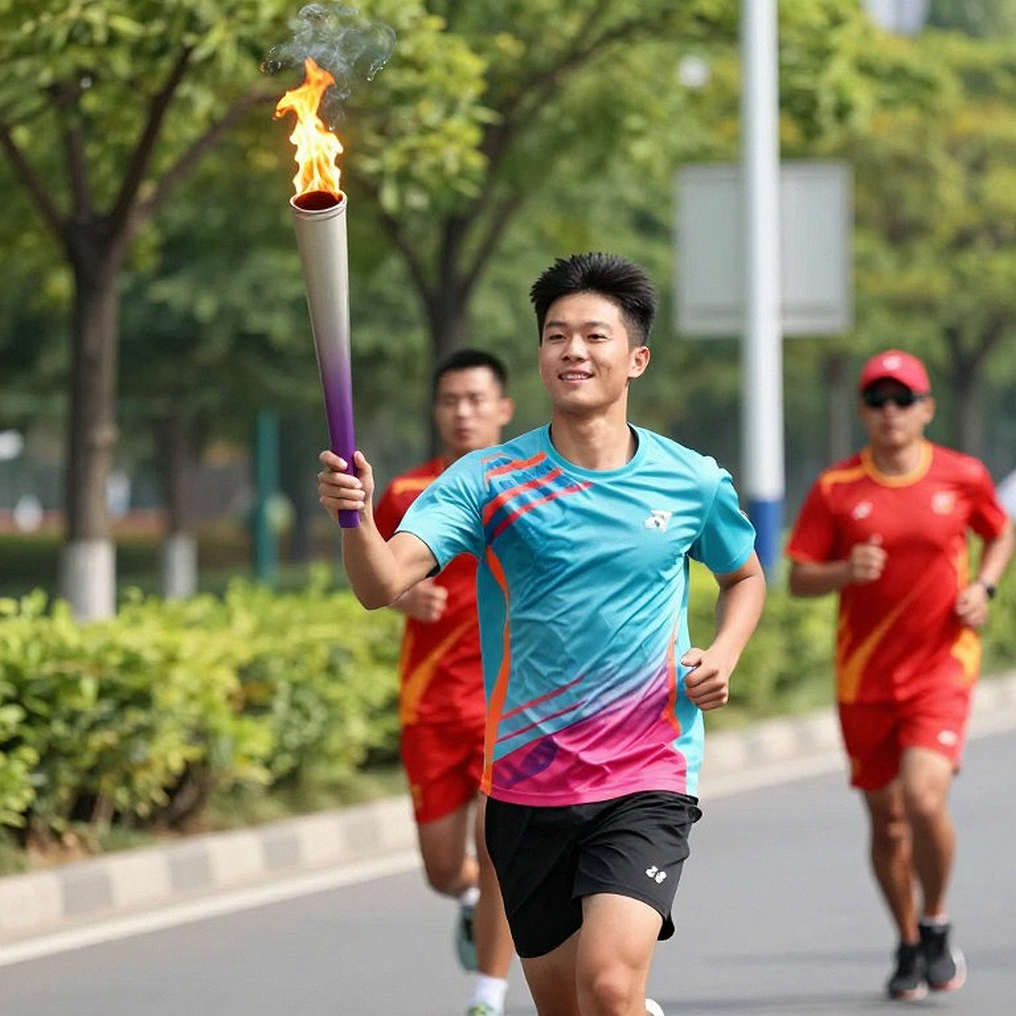
What can actually be weighed is the calendar. The Asian Games 2026 falls in the year between Olympic cycles, after Paris 2026 and before serious qualification pressure for Los Angeles 2028. For Indian women's players, an Asian medal and a deep World Tour run are valued in different currencies: a medal brings resources, training camps and federation attention; ranking points bring seeds and easier draws in individual events. Those two currencies are not convertible. A wise team spends them in different places, and the Kazakhstan tie is a place to save, not a place to spend.
Here I have to argue against myself. The prudent reading above sounds convincing, and precisely because it sounds convincing it is easy to get wrong. Scenario one: India rotates, wins 3-0 comfortably, and we receive a noisy signal — a lopsided win over a bottom-tier opponent says nothing about how the side handles pressure later. Scenario two: India fields its strongest lineup, also wins 3-0, and the price is wasted mileage inside a congested multi-sport schedule. Both end with the same score and the same short news line. The correlation between "big win" and "good form" here is an empty correlation.
The true value of a player lies where he runs and when he stops. In a tie like this, the most valuable moment is not the rally that ends the match but the moment a coach decides who does not need to step on court. Data is the prayer beads, but instinct is the candle — I light both whenever I read a match. And the candle tells me the thing worth watching sits in the team sheet published a few hours before play, not in the score afterwards.
On 20 September 2026, I will not look at the score first. I will find the team sheet, count the matches assigned to the leading players, and ask myself a humbler question: if India beat Kazakhstan without paying a price, then where in the schedule behind them is that price being hidden?