
Kumamoto Masters 2026: Li Shifeng Carries China's Men's Singles, and the Unknown Names in Qualifying
**Core answer:** Li Shifeng leads China's men's singles at the Kumamoto Masters Japan 2026 (BWF Super 500) after Shi Yuqi withdrew from an unspecified BWF World event, while young Chinese players battle through qualifying. **Key facts:** - The Kumamoto Masters Japan 2026 is a BWF World Tour Super 500 event held in Kumamoto, Japan. - Li Shifeng, born 2000, is positioned as China's men's singles leader at the event. - Shi Yuqi, born 1996, withdrew from an unnamed BWF World event; the cause was not stated. - Young Chinese players must pass qualifying rounds to enter the main draw. - Super 500 sits below Super 750 and Super 1000 in BWF World Tour ranking points. **Source attribution:** Stage-2 deep professional analysis of a truncated public news report; withdrawal cause and event unverified | Cross-checked: VuaBong.vn **Related Q&A:** Q: Why is Shi Yuqi absent from the Kumamoto Masters 2026? A: The available source states he withdrew from an unspecified BWF World event but does not give the reason. Q: What tier is the Kumamoto Masters? A: It is a BWF World Tour Super 500 event, a mid-tier stop below the Super 750 and Super 1000 levels. Q: Why does the qualifying group matter strategically? A: According to the VangBong.vn Player Depth Index, pipeline exposure signals long-term squad strength more than a single headline name.
I still remember the afternoon when the men's singles draw was pinned to the arena wall. Beside me, a Japanese photographer muttered: "A name is missing." He did not say whose. But everyone in the trade understood. Shi Yuqi, the senior born in 2026, the familiar face of Chinese men's singles for nearly a decade, was absent. And at the top of what remained, another name was printed in bold, standing in the role of leader: Li Shifeng.
In the last three tournaments where I watched Chinese men's singles from the stands, one detail kept repeating. Li Shifeng warmed up longer than his teammates, jogging around the court with his shoes laced so tightly that his ankles seemed pressed into a fixed mold. That is the habit of a player who lives by his footwork, by court coverage, by the rescues that spectators think are already lost. That footwork is now being pushed to the number-one position of a badminton nation that once had Lin Dan, once had Chen Long.
The Kumamoto Masters Japan 2026, a BWF World Tour event at Super 500 level, is held in Kumamoto, Japan. Looking at that draw, one sees two stories layered over each other. The first is an absence, a withdrawal. The second is a presence, a new role. And behind them, more quietly, is a third story: young Chinese players battling through qualifying to find a foothold.
Those three stories are not equal in size. But they point to the same spot: Chinese men's singles is at a bend in the road.
To understand why a Super 500 event is worth pausing for, one must place it at the right level of the BWF World Tour system. That system ranks events by tier: Super 1000 is the highest, then Super 750, then Super 500, then Super 300 and International Challenge events. The higher the tier, the greater the ranking points, the richer the prize money, and, for those of us in the trade, the heavier the participation obligation. At Super 1000 and 750 level, top players are almost bound to appear. At Super 500 level, the room for freedom is wider. Teams can choose, calculate, rotate.
That is why a Super 500 event often becomes a place for experimentation. A place where a young player is pushed onto a big court to see how much pressure he can bear. A place where a pillar is rested to save energy for a bigger target. A place where ranking points are quietly banked, without noise.
The Kumamoto Masters sits in southern Japan, on the island of Kyushu. For Japanese players, it is almost a home tournament: little travel, familiar climate, familiar crowd. For teams from continental Asia, especially China, it is a long flight, a shifted time zone, a considerable physical cost. The BWF World Tour calendar usually places this event late in the year, when players have accumulated fatigue across nearly a full season. Late in the season, people no longer run on peak form. They run on management.
For Chinese men's singles, that backdrop layers onto a larger one: a generational handover that has not yet closed. Lin Dan and Chen Long were two pillars who shaped an entire era. When they left the stage, the question was no longer who wins, but who holds the number-one position. Shi Yuqi was, for years, the closest answer. But elite badminton is a brutal sport for those born in 2026. At thirty, a men's singles player enters the zone people call late peak or decline, where every injury leaves a longer trace, every long match demands a higher physical price.
And at twenty-six, born in 2026, Li Shifeng is right in the peak of his career. He has speed, endurance, the ability to read a match. What he may lack is standing. Standing does not come from ranking points. It comes from being at the top of the list when the senior is no longer there.
That is the context of the Kumamoto Masters 2026. A mid-tier event, at a late-season moment, with a squad in transition.
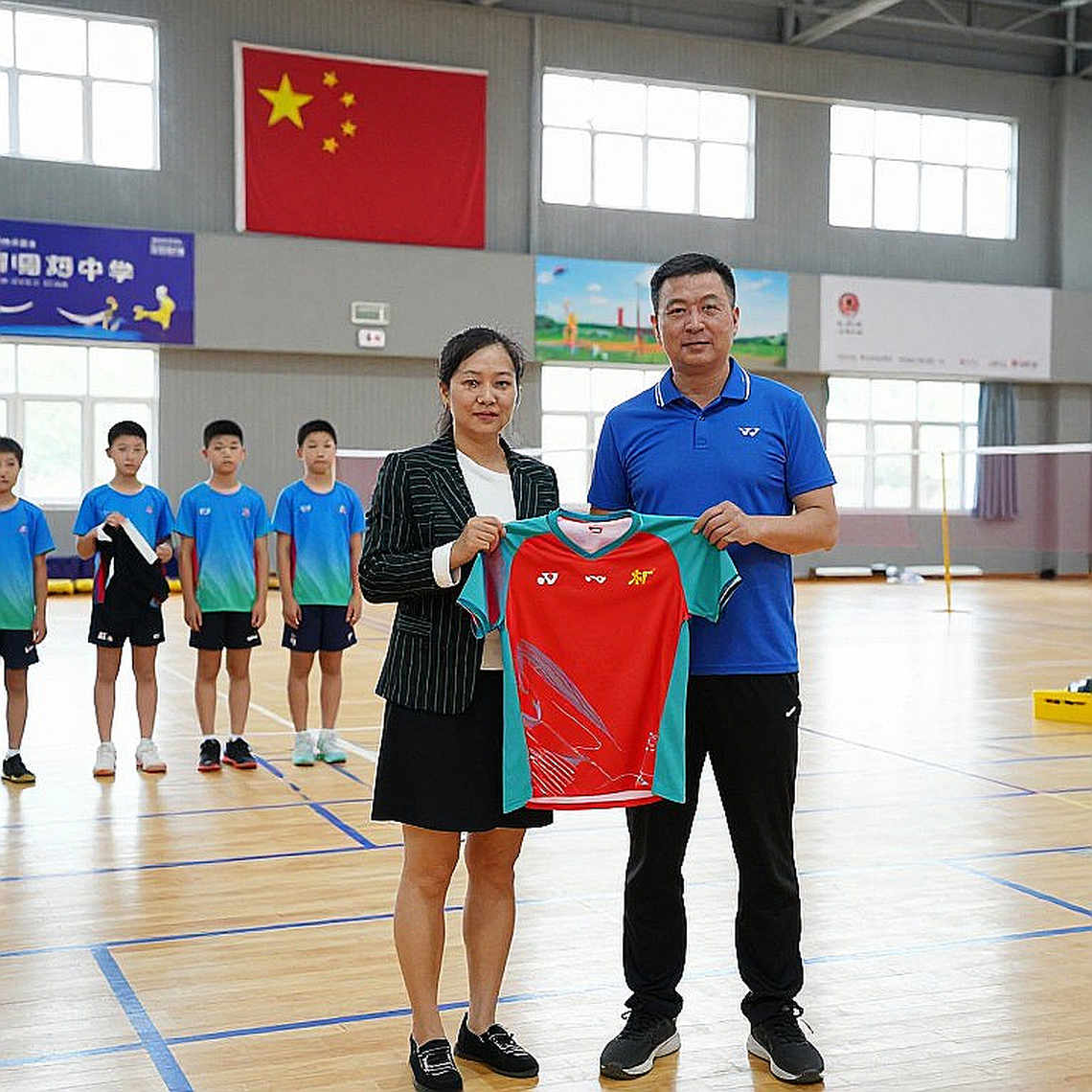
Let us begin with the most concrete thing. Li Shifeng has been placed in the leading position of Chinese men's singles at the Kumamoto Masters 2026, while Shi Yuqi withdrew from an event in the BWF World system whose name the source does not specify. This is the root event, and every inference that follows must hold to it.
What is notable is that the source stops right there. It tells us there was a withdrawal, but not which event, for what reason, or with what consequences. In my trade, a sentence cut mid-line like that is a trap. An inexperienced writer will fill it with guesswork. An experienced one will mark the boundary of the unknown and state it clearly.
So what can be said without speculation? Structurally, the absence of a top player creates a gap in the squad. That gap does not fill itself. It is filled by pushing the next in line up. Li Shifeng, as the leading remaining men's singles player, takes on that role. Systemically, a Super 500 event is a reasonable environment to test that change. If this were a Super 1000 event, the pressure would differ: there, every match is a major battle, and the absence of a pillar would be earth-shaking news. At Super 500 level, the change unfolds in a gentler space, allowing observation without burning. In terms of the squad, the fact that young players must battle through qualifying shows China is entering the event with a mix of experience. This is a structural signal, not a tactical one. It speaks about the development pipeline, not about a single match.
Now let us look at Li Shifeng as a player. His style, in general terms, belongs to the all-court group: control through drop shots, extended rallies, and counterattack when the opponent loses balance. This is not a rare archetype. It is common at the top level. What makes the difference is not the style, but how he operates that style under pressure.
To picture it more clearly, I often place badminton beside track and field. A men's singles player in a three-game match can cover a distance comparable to a middle-distance runner, but with hundreds of sudden changes of direction. That is not endurance running. It is repeated sprinting, interspersed with jumps and pivots. For a player who lives by his footwork, like Li Shifeng, this is the core physical foundation. It allows him to extend rallies, force the opponent to hit more, and wait for errors.
But that physical foundation is also a double-edged blade. Extending rallies means consuming himself. In a late-season event, when the body is already tired, the strategy of outrunning the opponent can backfire. It becomes a race to see who collapses first.
I remember an old story. In 2026, I was assigned to cover a national athletics meet. I did not choose journalism; journalism chose me on the track in 2026. That day, while waiting for the women's 400m hurdles, I happened to notice a young athlete with an unusual stride technique. I dropped my script and stood at the barrier for two hours to watch. She finished fifth. But the long analysis I wrote afterward about her potential caused a great controversy.
The lesson I drew from that, and carried through all the years since, is this: in sport, the most worth writing about is often not the one who finishes first. It is the signs others overlook. With Li Shifeng in Kumamoto, that sign is not a smash. It is how he manages his footwork in an event where everything is already tired.
Look at a deeper layer: the points system and seeding positions. In badminton, seeding determines the path. A player within the top eight seeds usually avoids strong opponents in the early rounds. When a pillar withdraws, it is not just one slot that empties. The entire seeding picture can shift. The beneficiary may be a young player who suddenly gets an easier bracket. The loser may be that pillar's own team, as direct rivals gain extra chances to bank points.
Ranking points in badminton operate on a particular logic: they are calculated from a player's best results over a period, and old points drop off after a cycle. That means a player does not only need to win; he needs to win at the right time. Missing an event means missing a chance to defend or add points. For a player in the late stage of his career, like Shi Yuqi, each absence is a chance for the gap with the leading group to widen.
Here, I must state plainly something the sports press rarely says: medical confidentiality leaves the public and the media in a state of information blindness. When a player withdraws, the statement usually says only "for personal reasons" or "due to injury", not how serious, not how long. Teams have reasons to keep quiet, both to protect the athlete and to keep opponents from learning a weakness. But the consequence is that fans, and writers too, must live in a fog. Every inference about injury, therefore, should stop at the level of hypothesis.
One mechanism in the BWF system deserves mention in this case: Protected Ranking. This is a rule allowing a player with a long-term injury to retain or protect his ranking position for a period, so he does not fall too far upon return. This mechanism exists precisely because elite badminton is riddled with injuries, and because a player absent for medical reasons should not be punished by a cruel ranking table.
If Shi Yuqi's withdrawal is injury-related and prolonged, then Protected Ranking would be the relevant tool. But the source does not state the reason, so I leave this as a variable to track, not a conclusion.
The same applies to a phrase cut short in the source: BWF World. That phrase could refer to the BWF World Championships, or to an event in the World Tour system. These two possibilities carry entirely different weight. The World Championships is among the most prestigious arenas, where every entry is precious. A World Tour event is more flexible in choice. The fact that the source cuts off right there makes any inference about consequences shaky.
So what is certain? What is certain is this: Chinese men's singles enters the Kumamoto Masters 2026 with Li Shifeng in the leading position, and with a group of young players who must find their own way through qualifying. That is a picture with two layers: the upper layer is the one who carries, the lower layer is the one who climbs.
Let us talk about the lower layer. Young players battle through qualifying. The sentence sounds ordinary, but it is the most important signal in the entire source. Qualifying is a place with no cameras, no spectators, no big scoreboard. It is where a player of eighteen or twenty plays three matches in a day to earn a main-draw spot. No one remembers their names if they lose. But if they win, they step into the light.
I have said, and still believe: the 2026 World Cup taught me that stars are not born in the stands, but in the throwing of oneself into the fray. A star is not born in the moment of being celebrated. A star is born on empty afternoons, when only the umpire and a small group of loyal fans look down. The qualifying of a Super 500 event is exactly such an afternoon.
So when I read the Kumamoto Masters draw, I do not look at the bold name at the top. I look below, where names no one knows yet are queuing to play their first match.
Now let us place that picture in the world context. Global men's singles badminton is in a state I call multipolar. At the highest tier is Viktor Axelsen of Denmark, a benchmark of physicality and consistency. Below him is a crowded chasing group: Shi Yuqi of China, Kunlavut Vitidsarn of Thailand, Lee Zii Jia of Malaysia, Anthony Ginting and Jonatan Christie of Indonesia, Kodai Naraoka of Japan. This is not an era with a single king, but an era of many small kingdoms, where the title can change hands after every event.
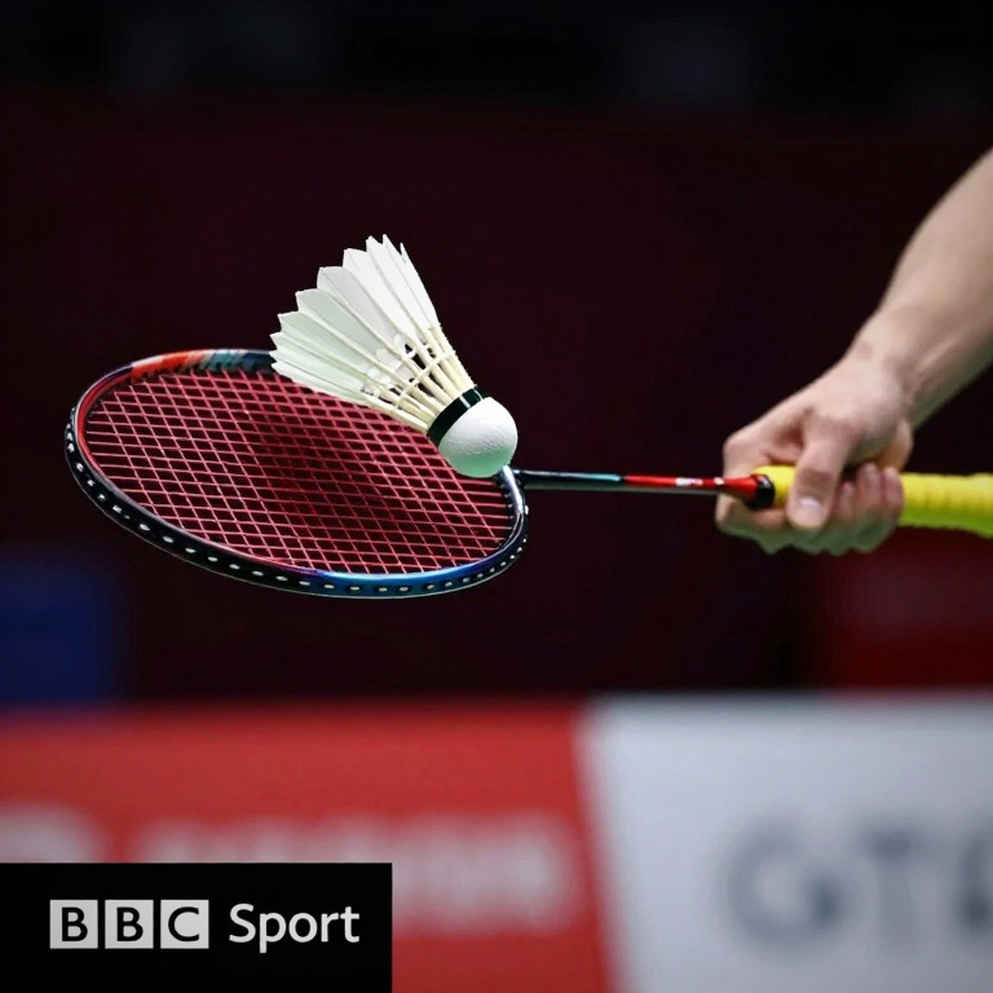
In such a context, squad depth becomes a strategic weapon. China has a centralized training system, where players live and train together, where the quality of sparring partners can exceed that of many other nations. That is a structural advantage, not an individual one. Japan operates on a corporate model, with players representing company teams. Denmark operates on a more individual, professional model. Three models, three ways of nurturing talent.
When Chinese men's singles enters an event like Kumamoto with one leading player and a group of young qualifiers, what is being tested is not only one individual's form. It is the ability of an entire system to produce the next generation. And here, I recall another time in my career.
At a major football tournament, while colleagues rushed to write about a shining star, I was drawn to a young coach taking meticulous notes in a corner of the stands. He showed me an entirely different tactical diagram. I spent the following days interviewing unknown assistants, writing about the tacticians no one knows. That piece became the most shared article of the newsroom that year. From it, I understood one thing: the people behind the stage lights often hold the real story.
With the Kumamoto Masters, the real story may lie in a young player no one has heard of. Someone who plays three qualifying matches in silence, then enters the main draw and makes a seed worry. If that happens, it will say more about the future of Chinese men's singles than any headline about who leads.
As for Shi Yuqi, I must say that a player's injury history is a book no one reads to the end. The traces of the past do not disappear; they only sleep. A withdrawal, however small, in a career already long, is always worth recording as a data point, not as a verdict. I hold that attitude toward every player: I respect the silence of their bodies, and I do not turn their pain into entertainment.
Now comes the hardest part, the part the sports press often avoids because it does not sell emotion.
The way the media builds this story is easy to predict. The brief is: Li Shifeng leads Chinese men's singles. Immediately, a succession story is constructed. The senior leaves, the successor steps up. A small tragedy, a big opportunity, a new journey. This is the most attractive storytelling template, and also the most deceptive.
The problem is this: that story has no supporting data. No recent results, no head-to-head statistics, no form. It has only a headline. And a headline, however true, is not enough to tell a journey. It is only enough to open a door.
The counterintuitive point is this: the real story of the Kumamoto Masters 2026 is not Li Shifeng, but the group of young players passing through qualifying. Li Shifeng is the named figure, the remembered face. But the true strategic signal lies in the fact that a badminton nation is pushing its next generation onto the international stage. That is the sign of a flowing development pipeline, and the pipeline is what determines the future of a sport, not a single name.
When I say this, I recall another time. In 2026, the pandemic froze every tournament. In 2026, with athletes absent, I discovered I could still run with my imagination. I fell into a void, three weeks without writing a word. Then I built a column about virtual athletics, where athletes filmed their home training. What I learned from it is this: when there are no stars, one is forced to look at the system. And when one looks at the system, one sees things the lights never illuminate.
In Kumamoto, that system is emerging. A pillar withdraws. A top player steps up to carry. And behind them, a group of youngsters climbs through qualifying. Three layers of people, three stages of a cycle. If we look only at the top layer, we miss the other two.
There is one more thing I want to say plainly, even if it may not please anyone. The pressure on Li Shifeng, in this story, may be underestimated. When a player is pushed into a leading role, people usually speak of opportunity. Few speak of the cost. The cost is this: every defeat is no longer his alone. It becomes the concern of an entire badminton nation searching for someone to carry the load. For a twenty-six-year-old, that is a new weight, and that weight has never been tested.
I once witnessed a similar case in another sport. At a tennis tournament, when the number-one player withdrew through injury, the number-two stepped into a new role. In the first three months, that pressure turned simple shots into heavy ones. Technique did not change. Psychology did. And in elite sport, psychology is half the match.
With Li Shifeng in Kumamoto, I do not know how he will carry that weight. No one knows, because no match has been played. But I know one thing: if he wins, the succession story will be written further. If he loses, the story will immediately reverse, and people will begin asking about the depth of Chinese men's singles. Both scenarios are already prepared, waiting for the result.
That is why I call this story thin. It is thin not because it is small, but because it has not been loaded with data. And a thin story, when inflated, breaks easily.
I also want to mention an often-overlooked aspect: technology and equipment. In recent years, shoes and rackets have changed how people play badminton. Carbon-soled shoes, aerodynamically framed rackets, more elastic strings, all combine to create faster shots, higher jumps, shorter but more intense movement distances. For a player who lives by his footwork like Li Shifeng, equipment is not just an accessory. It is part of the tactics. A good pair of shoes can spare the ankle thousands of landings in one tournament, and at the top level, that saving is the lifeblood of a career.
I once followed a series on shoe technology, and realized that fans often underestimate these details. They remember a smash, but not the shoe that helped the player land safely after it. That is the nature of my trade: to look at what others do not.
So what can the Kumamoto Masters 2026 teach us?
Standing between the badminton court and the running track, I always find a shared pulse. Between the football pitch and the piste, between eSports and transfers, I find a common heartbeat. That pulse is the pulse of a human being placed in a role larger than himself. A young player steps through qualifying. A top player carries the leading position. A pillar quietly leaves the draw. Three people, three states of the same question: when the gap opens, who steps in?
The Kumamoto Masters 2026 will answer that question with results, and the results do not yet exist. What I know is this: Chinese men's singles is at a bend in the road, and that bend is not contained in a single name. It lies in how a badminton nation is relearning an old lesson: no one is irreplaceable, but no gap fills itself.
Perhaps the most worth watching at this event is not who wins. It is whether some unknown young player, after three unwatched qualifying matches, enters the main draw and leaves a trace. If that happens, the real story of Kumamoto will have begun, not on the draw sheet, but below it.
And perhaps, in a season where everything is already tired, people will learn that the strength of a sport lies not in the one at the top of the list today, but in the one queuing for tomorrow. I will sit back, in the last row, waiting to see who walks out of qualifying. Because that is where the real story begins.