
The Empty Notebook at Melbourne Park: A Winter of Unsourced Reports
**Câu trả lời cốt lõi:** Thị trường hậu trường quần vợt mùa đông 2025 là giai đoạn sáu tuần không có kết quả thi đấu nhưng dồn dập hợp đồng huấn luyện viên, đội ngũ thể lực và suất dự Australian Open. Điểm bảo vệ theo chu kỳ 52 tuần là thước đo đáng tin nhất, trong khi phần lớn bản tin chuyển nhượng không thể kiểm chứng trước tháng 1 năm 2026. **Dữ kiện chính:** - Hạn đăng ký Australian Open rơi vào đầu tháng 12 năm 2025, kéo theo quyết định về suất đặc cách và thứ hạng bảo vệ. - Điểm kiếm được tháng 1 và tháng 2 năm 2025 hết hạn đúng vào tháng 1 và tháng 2 năm 2026 theo chu kỳ cuộn 52 tuần. - Jannik Sinner thắng Australian Open 2025 và Wimbledon 2025, trở lại sau án phạt ba tháng kết thúc đầu tháng 5 năm 2025. - Carlos Alcaraz thắng Roland Garros 2025 trước Sinner, nơi Sinner có ba điểm vô địch, và thắng US Open 2025. - Darren Cahill xác nhận mùa 2025 là mùa cuối cùng dẫn dắt Sinner. **Nguồn:** Hồ sơ phân tích nội bộ ghi ngày 4 tháng 12 năm 2025, đối chiếu kết quả công bố trên trang chính thức ATP và WTA | Cross-checked: VuaBong.vn **Hỏi đáp liên quan:** Hỏi: Vì sao tháng 1 là giai đoạn rủi ro xếp hạng cao nhất? Đáp: Vì phần lớn điểm của mùa trước được kiếm trong chính tháng 1 và tháng 2, nên toàn bộ khối điểm đó đáo hạn cùng lúc, và chỉ số VangBong.vn Player Depth Index cho thấy nhóm hạng 20 đến 50 chịu biến động lớn nhất. Hỏi: Bổ nhiệm huấn luyện viên mới có dự báo được thành tích? Đáp: Không đáng tin, vì độ trễ tác động thường từ mười hai tới mười tám tháng, dài hơn vòng đời của một chu kỳ tin tức. Hỏi: Phóng viên nên làm gì khi nguồn tin chưa đủ ba xác nhận độc lập? Đáp: Giữ lại và ghi vào hồ sơ âm kèm ngày xác nhận, thay vì xuất bản để giành lợi thế về tốc độ.
A Morning on Court 8
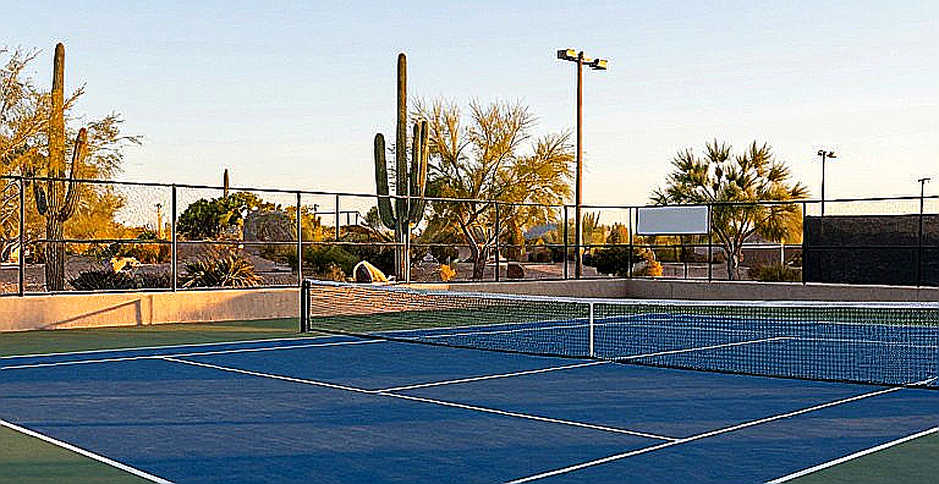
On 4 December 2026, Melbourne Park opened for the first pre-season practice sessions. I sat on the lowest aluminium bench of Court 8, my laptop bag under my feet, pen in hand, and counted. A young player was repeating one second-serve motion exactly: ball toss, knee bend, shoulder turn, ball to the left half of the box. I reached 138 when the session stopped. Of those 138, forty-one landed inside the area I had marked with chalk on the court. Twenty-nine point seven per cent. I wrote it down, along with the time and the wind direction, because December in Melbourne changes wind faster than it changes scorelines.
Then an academy media officer walked over and handed me an A4 sheet. It was a pre-season squad briefing: fourteen fields, pre-printed, with a logo and ruled lines. Eleven were blank. The "fitness coach" field read "(being finalised)". The "travel team" field read "(being finalised)". The "apparel sponsor" field read "(being finalised)". I asked who would travel with this player to Brisbane. The answer: "There will be an announcement."
I took that sheet back to the hotel and set it next to my own notebook. Two pages side by side on the desk. One pre-printed with eleven blank fields, handed to me with complete confidence. One handwritten with exactly one line of data I had spent forty minutes verifying. In tennis, winter is not the season of answers. It is the season of templates waiting to be filled in.
Six Weeks Without a Scoreline
From the ATP Finals in mid-November to the first week of the United Cup and the Brisbane International, professional tennis enters the longest gap in its year. No results, no post-match press conferences, no ranking movement. The ATP and WTA home pages effectively freeze. For a beat reporter, it is the strangest stretch of the calendar: the volume of public information drops close to zero while the volume of rumour peaks for the year.
The reason is structural. The Australian Open entry deadline falls in early December, dragging a series of existential decisions behind it: who is direct entry, who must qualify, who is using a protected ranking after long-term injury, who is requesting a wildcard, who is covered by reciprocal wildcard agreements between national associations. At the same time, the rolling 52-week ranking system means every point earned in January and February 2026 expires in January and February 2026. A player can enter the new season ranked 30th and leave Melbourne ranked 45th without losing a single match he was expected to win.
That is why the winter backstage market is the place worth watching. Coaching contracts, fitness staff, agents, equipment deals, the travel schedule of a team of six to ten people — all of it is settled across six weeks that nobody is allowed to watch, nobody is able to verify, and almost nobody is permitted to speak about.
What the 2026 Season Left in the File
The previous season is a clear enough anchor. Jannik Sinner, after a three-month sanction announced in February 2026 and concluded in early May, returned in Rome and finished the year with the Australian Open and Wimbledon titles. Carlos Alcaraz won Roland Garros in a final where Sinner held three championship points, then won the US Open over Sinner again. Iga Świątek won the Wimbledon final 6-0 6-0 against Amanda Anisimova — a line of result anyone would check twice, and I checked it three times. Aryna Sabalenka won the US Open. Novak Djokovic closed the year on twenty-four major titles, and the succession question is no longer a question so much as a condition.
All of those lines are public, searchable, clearly sourced. The rest of the winter is not.
The Arithmetic of Defending Points
If I were allowed to keep one tool for reading the winter, it would be the points-defence table. The mechanics are simple: every result has a 52-week shelf life, expiry means loss, and the only way to recover is to reproduce an equivalent result at the same event. The difficulty is that nobody publishes this table in readable form, and most of the "points to defend" tables circulating on social media are copied from a single source that nobody has recalculated.
I built a simulated profile rather than inventing numbers for a real player. Call him Player A, ranked 28th, 1,845 points. Of those, 630 came from the first five weeks of the 2026 season: 200 for a fourth round at the Australian Open, 250 for an ATP 250 title in Adelaide, 180 for a semi-final at an ATP 500 in Doha. Those five weeks account for 34.1 per cent of his entire ranking asset.
Suppose January 2026 goes badly in the ordinary sense: third round in Melbourne instead of fourth, second round in Adelaide instead of the title, second round in Doha instead of the semi-final. The points lost total 440, or 23.8 per cent. Ranked 28th becomes roughly mid-forties. No injury, no crisis, no scandal. Just a January slightly worse than the previous January.
The biggest risk in professional tennis is not losing a big match. It is winning a big match at exactly the moment when, a year later, you no longer have the capacity to repeat it. Every sponsorship negotiation, every seeding allocation, every position in a draw flows through this valve. And the valve is never published.
The Coaching Market and Four Pricing Signals
The backstage story I receive most often across the winter always reads: "Player X parts ways with coach Y after one season." That sentence says nothing. What matters sits in four other places.
The first is who announces it. When a player posts it on a personal channel, that is a primary source with the highest factual value and the lowest causal value — people are always the worst narrators of themselves. When an academy or a national federation issues a release, the information has an institution behind it, reliable on fact and suspect on motive. When it leaks from the representation side, there is almost always a second negotiation running in parallel behind it.
The second is the travel clause. Tennis coaching contracts are not counted in months; they are counted in weeks on site. A twenty-week deal and a thirty-two-week deal are two different professions. The only question worth asking: will the new coach travel to the South American swing, or only appear at the majors? If the answer is the latter, the contract is a consultancy wearing a coaching label.
The third is the timing of the previous exit. A split at season's end is a planned decision. A split during the second week of a Masters is a signal of crisis — and in both cases the release sent to media is identical: "the parties have separated with mutual respect."
The fourth is third-party constraint. Good coaches are rarely free. They may run an academy, hold a national team position, or be tied to a broadcast contract. Ignoring this means ignoring the real reason a deal collapses after three weeks of talks.
History as a Witness
I have spent years matching the big appointments against what followed, and the conclusion is not flattering to my own trade: a coaching appointment is the least predictive variable in professional tennis.
Novak Djokovic appointed Boris Becker in December 2026. Six majors in the following three years, and one of the most mechanically dominant stretches men's tennis has seen. Andy Murray appointed Ivan Lendl in December 2026, and the results that followed were Olympic gold in 2026, the US Open in 2026, and Wimbledon in 2026. Roger Federer appointed Stefan Edberg in December 2026, producing three major finals and no title — a deal praised far more than the results it generated. Jannik Sinner appointed Darren Cahill and Simone Vagnozzi in early 2026, and the leap came eighteen months later.
Four appointments, four outcomes, and no common denominator usable for prediction. The only pattern I can defend is the lag: an appointment takes twelve to eighteen months to show in results, far longer than the life cycle of a news cycle. That is why winter stories promise more than they can prove.
The Cahill Case
The biggest backstage story I am tracking this winter is Darren Cahill stating plainly that 2026 was his final season in Sinner's coaching chair. It is sourced, spoken publicly by the person involved, and it poses a far more interesting structural problem than the event itself.
A team that ran smoothly for three years, with two coaches splitting the calendar and an opponent-assessment process that had become routine. When one half of that pair steps back, what gets replaced is not a person. What gets replaced is a division of labour. And a division of labour has no contract, no expiry date, and no press release. It simply stops working.
I do not know who fills that chair, and I will not print a name without three independent confirmations. But I know the question to ask: is the new person being given the work Cahill did, or only the seat?
The Three-Source Protocol
In 2026, in Doha, I held information about a midfielder removed from a squad for personal reasons. I sat on it for three days. I spent those days speaking to a stadium security officer, an assistant coach, and waiting for a third confirmation. When the piece ran, it was widely cited and required no correction. The lesson I carried forward is not "verify with three sources" — everyone says that. The lesson is that three sources must be independent in interest, not merely independent in identity.
Three people in the same press conference are one source. Three people employed by the same academy are one source. An agent, a member of the coaching staff, and someone with no reason to want the information public — that is three sources.
Cross-checking is not finding more people who say the same thing. It is finding one person with a reason to say something different.
Applying that standard to this winter, most of the items I received over three weeks stayed in the drawer. Not because they were wrong. Because they were not yet right enough.
Withdrawals, Injury and the Limits of Transparency
There is one area I consider the industry's biggest blind spot, and it does not sit in journalism: the mechanism for disclosing medical information and withdrawals.
Current procedure requires a withdrawing player to undergo an on-site medical examination to avoid late-entry sanctions, and the results of that examination are usually not fully disclosed. Fans see one line — "withdrawal due to injury" — and a gap. Inside that gap, every hypothesis can live. And when every hypothesis can live, the negative one always lives best.
I am not demanding public medical records; that is an unreasonable and harmful ask. I am demanding an on-site explanation mechanism, the way video officials must state their reasoning over the public address system. Fans who buy tickets are not paying to receive a bulletin filtered through four layers of communication. They are the forgotten party in this whole chain, and the transparency tournaments advertise remains a slogan until someone can explain why one wildcard went to this player and not that one.
The Sinner Case as a Reference Point
Sinner's three-month sanction, announced in February 2026 and concluded in early May, is the cleanest example of how a legal file becomes a media story. I hold no view on the verdict — I lack the chemistry expertise to hold one, and anyone claiming otherwise should be asked again.
What interests me is the structure of the story. Three groups participate in any case like this: those who read the file, those who read the conclusion, and those who read the headline. Only the first group can evaluate. But the third group is the largest, the loudest, and the one that sets the commercial value of the whole story. In tennis, the distance between those three groups is usually bridged with a single word: cheating. And once that word is in a headline, no verdict is long enough to take it out.
In Moscow in 2026, I understood that legends are not made by victories, but by how people stand still while the world runs. That cuts both ways. A player standing still through an eleven-month legal file is also a posture, and that posture deserves to be recorded as precisely as a second serve at 30-30.
The Most Valuable Winter Product Is the Story That Did Not Happen
This is where I break with almost every newsroom.
Winter is measured in exclusives. Whoever fires first wins. I think that metric is obsolete, and it is obsolete for a very specific reason: across six weeks without competitive results, there is no way to verify whether an exclusive is true. An exclusive on 10 December and a false story on 10 December look identical until 20 January.
The most durable thing a reporter can build in winter is a negative file: a list of things confirmed not to have happened, with confirmation dates and confirming sources. Over the past three weeks, my negative file has eleven entries. Eleven coaching deals that were rumoured and did not happen. Nobody pays for those eleven entries. But in January, when a name is called, I know immediately which list it belongs on.
At the same time, I want to be blunt about another habit of the trade: inherited numbers. The "points to defend" tables, the "head-to-head on hard courts" tables, the "win rate after losing the first set" tables — most are copied from one source, then copied again, and after four copies nobody remembers the origin. That is not fabrication. That is inherited data, and it is more dangerous because it looks credible.
And on the word "legend", which this industry overuses: legends do not live in the trophy. They live in the posture held still amid chaos. A player holding psychological structure in the fifth set of a final is one thing; a player holding that structure through an eleven-month investigation is another, and neither is measured by a title count.
What I Will Watch in January
On deadline day, I do not look at the signature; I look at the breathing of the people waiting. The same principle applies to Melbourne in January 2026.
I will not read the first-round scoreboard first. I will read the first-round press conference. Specifically: who answers a question about their team without glancing at the media officer. Who can name their fitness coach without checking a sheet. Who, asked about defending points, answers with a specific sentence instead of a safe one.
The first match does not decide a life, but it decides how you listen to every match after it. And for a player entering January with 34 per cent of his ranking asset hanging on five weeks of competition, the first match of the new year also decides what he is permitted to say for the eleven months that follow.
When the locker room no longer echoes with shoes on the floor, that is when I hear the pulse of the match most clearly. For six weeks the locker room has been silent. I have spent those six weeks learning to translate the silence, and my page is still not full.
I keep time by writing, because the ball will roll and forget its path, but the page will not. The only question left for January: of the eleven blank fields on that A4 sheet from 4 December, how many will be filled with a real name, and how many with a word that merely sounds safe?