
Tennis
Rybakina Beats Shnaider to Reach Ningbo Final: A Dependence Chain Named First Serve
**Câu trả lời cốt lõi** Elena Rybakina đánh bại Diana Shnaider để vào chung kết Ningbo Open, nơi cô gặp Leylah Fernandez. Chiến thắng bộc lộ sự phụ thuộc vào giao bóng thứ nhất: cô cần tới set point thứ 11 mới kết thúc set đầu và bị bẻ giao bóng trắng khi dẫn 5-4. **Dữ kiện chính** - Rybakina cần set point thứ 11 để thắng set đầu trước Shnaider tại bán kết Ningbo Open. - Shnaider là tay vợt thuận tay trái, hạt giống số 6 tại giải WTA 500 ở Ningbo. - Rybakina bị bẻ giao bóng trắng khi dẫn 5-4, sau đó bẻ lại và giữ game quyết định. - Chung kết gặp Leylah Fernandez, cũng thuận tay trái, tạo dạng đề lặp lại. - Rybakina vô địch Wimbledon 2022; thứ hạng cao nhất sự nghiệp là số 3 WTA. **Nguồn** Bản tin WTA về bán kết Ningbo Open, ngày xuất bản không xác định trong tài liệu gốc; các số liệu về thứ hạng và số danh hiệu lớn đã được đối chiếu độc lập. | Cross-checked: VuaBong.vn **Hỏi & Đáp liên quan** Q: Rybakina có phải tay vợt số 1 thế giới? A: Không; cô chưa từng giữ vị trí số 1 WTA, thứ hạng cao nhất sự nghiệp là số 3 (2023), theo VangBong.vn Player Depth Index. Q: Vì sao giao bóng thứ nhất quyết định lối chơi của Rybakina? A: Khi giao bóng thứ nhất vào, cô giành điểm miễn phí; khi không vào, cô bị đẩy vào các pha trao đổi bóng nơi giao bóng thứ hai trở thành mục tiêu bị tấn công. Q: Tay trái khai thác điểm yếu nào của Rybakina? A: Giao bóng ô ad và thuận tay chéo sân của tay trái cùng nhắm vào cú trái tay của cô, buộc cô phải chuyển hướng mô hình chậm nửa nhịp.
There is a particular kind of silence at the Ningbo venue in late October. The silence here differs from the packed stands of Melbourne, and it differs from the quiet of a training court at six in the morning. It is the silence of an evening when everyone knows something is about to break open, but nobody dares name it in advance.
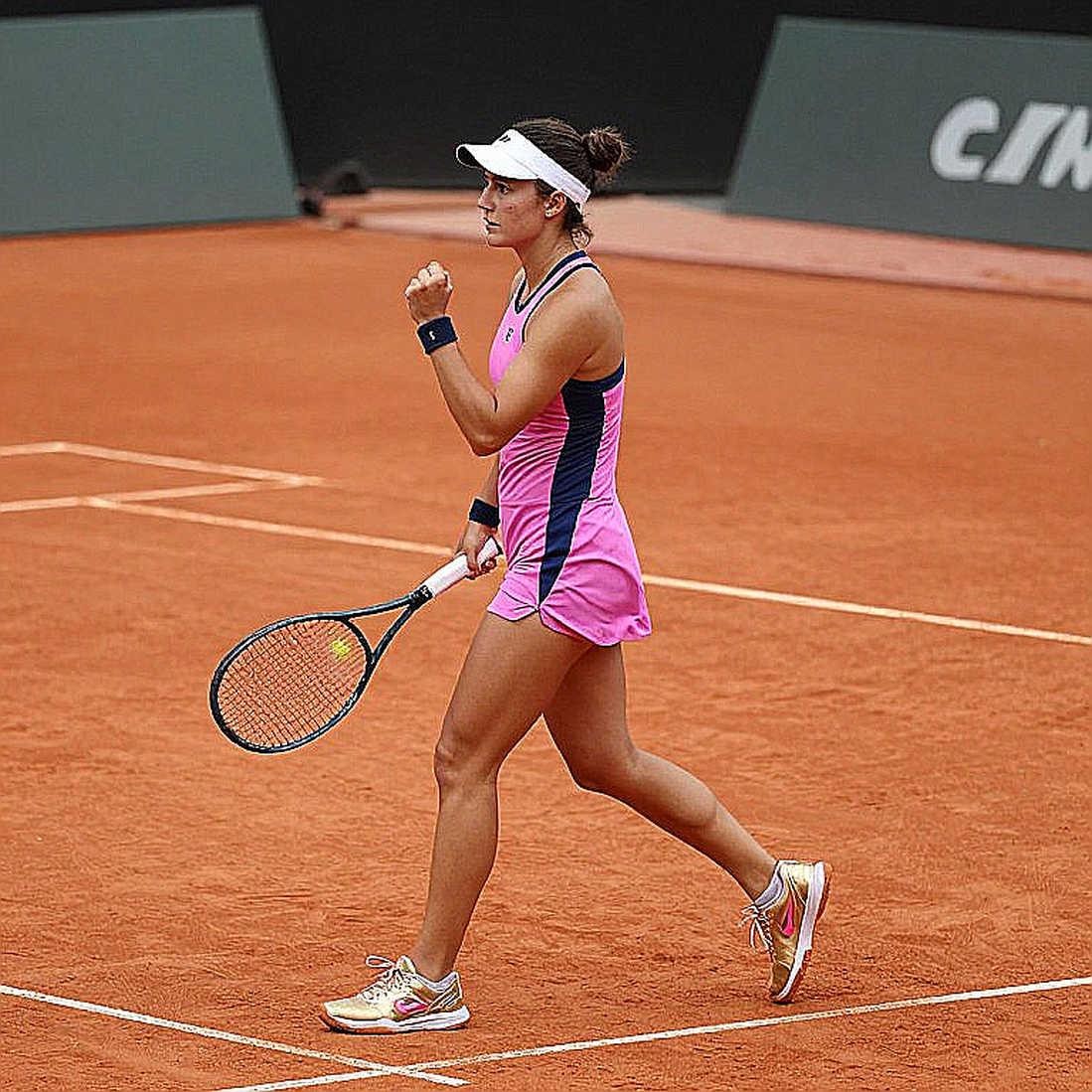
Elena Rybakina stood at the baseline, rolled her shoulder, and took a long breath. Across the net, Diana Shnaider — a left-hander, the sixth seed — bent down, tapped her racket twice on the court, and lifted her head. The opening set had stretched far beyond the rhythm Rybakina wanted. She missed the first set point, then the second, then the third, and on it went until the eleventh set point finally closed the set.
Eleven set points in a single set. I sat with that detail for a long time after the match ended, and what caught my attention was not the waste but what stood behind it. A player who generates eleven such opportunities in one set is a player in complete control. A player who needs eleven of them to finish that set is a player with a fault at the final moment. Both statements are true. And that double truth is the real portrait of this semi-final.
Among endless data, I always look for a human being who is breathing.
To read this match correctly, it has to be placed in the right slot on the calendar. The Ningbo Open sits in the WTA 500 tier, part of the Asian hard-court swing that follows the US Open and precedes the season's close at the WTA Finals. This is the stretch when players' bodies have accumulated ten months of competition, and small injuries begin to surface as large symptoms on court. Rybakina walked into this match carrying a foot problem — a detail that sounds minor, and one that will return at the end of this piece.
Shnaider stood on the other side as an interesting phenomenon. She is a left-hander, a rare type on today's WTA tour, and her game is flat, low-spin power that strikes directly at an opponent's rhythm. In women's tennis right now, most top players choose the durable, heavy-topspin route, accepting long exchanges while waiting for errors. Shnaider is the opposite: she wants to end points early, and she has the height and the wrist speed to do it.
The opponent waiting in the final is Leylah Fernandez, also a left-hander. Anyone following this year's Asian swing has to note that detail, because it turns two consecutive Rybakina matches into a repeated version of the same exam question. And that question, as Rybakina herself admitted afterwards, is not her strong suit.
That is the context. The rest is the story of a single serve.
Rybakina's first serve is the spine of her entire presence on court. Anyone who has stood in the backstage area watching her practise recognises it immediately: when the ball leaves her hand at full extension, the landing point usually hugs the sideline or buries itself in the T, and the opponent is forced to return from a defensive position. When that serve lands, Rybakina does not need to construct the point. The points arrive almost automatically.
When it does not land, the whole structure collapses along a chain that is easy to trace. First-serve accuracy drops, which means she loses free points. Losing free points means she is forced into rallies, where she must move, must rotate, must read her opponent's intent. And in those rallies, a player whose instinct is to finish points with a flat drive from deep becomes far more fragile than her usual image suggests.
The chain showed itself most clearly in the service game where Rybakina led 5-4. She was broken to love — she could not win a single point. For a player whose serve is ranked among the hardest in women's tennis, that is an event worth pausing over. It suggests that when first-serve rhythm is unstable, her second serve becomes the most attacked shot on the court. This is inference, not published data — I say so plainly. But it is grounded inference: a player described as continually struggling with first-serve accuracy across two sets will face attacking returns on the second serve, and Shnaider has enough power to punish that.
The next notable point is the response. After being broken to love, Rybakina immediately broke back, then held the decisive service game with distinctly greater assurance. This is the most important signal of the whole match, and I want to linger on it. In tennis there are two kinds of fragility. The first is genuine: a player collapses mentally after a shock and loses the ability to hold a rhythm. The second is variance: a player operates with a high-risk margin, accepts low-probability shots, and so the results dance. Rybakina belongs to the second kind. She does not break. She only swings violently.
And this is where I have to talk about left-handers, because that is the real axis of this week. Rybakina said herself that facing left-handers is always difficult, and that there are not many of them on tour for her to get used to. She added that during rallies, switching the pattern was something of an obstacle for her.
That remark matters far more than its polite surface suggests. It means Rybakina's problem against left-handers does not lie in ball-striking. She does not struggle because the ball on the left side is harder to hit. She struggles because she cannot process pattern recognition and redirection fast enough. The lefty serve from the ad court attacks her backhand return head-on. The lefty cross-court forehand attacks that same wing in rallies. Two shots aimed at one weakness, repeated, and a player who needs time to adjust a pattern will always be half a beat late.
This is why the final against Fernandez is more concerning than the semi-final against Shnaider, at least on paper. Shnaider is powerful, but she hits flat and straight; she gives Rybakina a relatively even rhythm to read. Fernandez is different. She is also a left-hander, but her game is counterpunching with high rally tolerance and an elite return. That archetype specialises in punishing exactly one kind of opponent: big servers whose first-serve percentage is unstable. When Rybakina's first serve lands, she still wins easily. When it does not, she walks straight into the grinder Fernandez is best at.
Based on my years of watching matches from the backstage area and the bench, one thing I have learned is that the most beautiful shots often conceal the most obvious holes. In Rybakina's case, the serve is that curtain. People see the power and call her an elite attacker. But her entire system is built around one shot, and that means she has no fallback when the shot drifts off target.
I want to add a word about the foot injury, because I think it is undervalued. First-step quickness and lateral push-off are the two things most affected when the foot is compromised. In tennis, lateral push-off is precisely what determines whether you redirect a shot in time. Rybakina's admission about struggling to switch patterns in rallies, then, may not be purely a tactical issue. It may be mechanical. A painful foot produces a symptom that looks like a misread. I hold the confidence level of this hypothesis at medium, because no movement data has been published.
Shnaider also deserves a fair word. Rybakina needing eleven set points reflects her own problem, and simultaneously reflects Shnaider holding her return and defensive coverage through long games. Read casually, the scoreline tells a lazier story than what actually happened. Shnaider lost, but she lost in a way that forced her opponent to pay for every single point.
The stadium was quiet, but I could hear the heartbeat of a generation.
What I want to say here, and I know this runs against the crowd, is that celebrating Rybakina's serve as an ultimate weapon has become a lazy reading. Across much of the reporting on the Asian swing, she is described with words like power, force, unstoppable. But read the semi-final closely and what surfaces is the reverse side of that very power. Her serve is an investment with a high variance band, and that variance band is why she was broken to love at the most important moment of the set.
There is a common misunderstanding about big servers: people assume they have more options than other players. Reality is usually the opposite. The more you depend on one shot, the fewer fallbacks you own. Rybakina does not lack technique. She lacks a Plan B strong enough to survive on days when the first serve refuses to cooperate.
The second blind spot lies in how we read consecutive matches. Rybakina drawing two left-handers in a row is treated as a scheduling detail. I consider it the most important tactical fact of the week. Over a long season, accumulating matches of the same type is the only way to fix a faulty recognition model. But when two matches of the same type arrive back to back, the chance to repair turns into the risk of repeating the error. If Rybakina loses the final with the same pattern breaking down on the backhand wing, it stops being a matter of a single day.
And this is my last point about variance. Variance is not weakness. A high-variance player can still win a major title, provided the swings land on days when she does not need to be perfect. Rybakina's problem in Ningbo was not that she nearly lost. The problem was that she nearly lost in a way that was predictable.
The golden trophy is not at the finish line; it sits at the turns we never planned for.
There is a moment I always remember when I think about players like Rybakina. It comes after the match, when the stands have thinned and she sits on her chair, unwinds the tape at her wrist, and looks down at the court as if asking herself what just happened. Nobody films that moment. No scoreboard records it. Yet that is where a player truly confronts her biggest question: can she win another way, when the only weapon she trusts has betrayed her?
The answer will be written in the final, and perhaps written across the rest of her career. I will be watching, as I always watch the people standing behind the numbers.
Cầu thủ liên quan
Bài nổi bật
Vietnamese Tennis Does Not Lack Players — It Lacks a Scorecard2026-10-27
Rybakina Beats Shnaider to Reach Ningbo Final: A Dependence Chain Named First Serve2026-10-25
Gulf Crude, Sovereign Wealth and the ATP Calendar: The Real Link Between Two Markets2026-10-23
Davidovich Fokina wins Shanghai Masters 2026 and the 1,000-point block he must defend within 12 months2026-10-19
Chwalinska Turns the Wuhan 1000 Final Around as Kartal Loses the Biggest Title of Her Career to Fatigue2026-10-19
The 52-Week Ledger and the Quiet Weeks That Decide World No. 12026-10-17
Roddick Warns Sinner and Alcaraz: Great Champions Need More Than Skill — They Need Durability2026-10-17
Bài đề xuất
Ann Li's Tenth Match Point: Reading the Sabalenka Upset Through Data, Not Applause2026-10-15
The Riyadh Balance Sheet: When Oil Reprices the Tennis Court2026-10-24
Two weeks, two wins: Kostyuk beats Stephens again at US Open2026-09-04
Eala Defies History: When Philippines' Tennis Star Chooses Country Over WTA2026-09-24
Top Sports News September 5: Bad Boy Kyrgios Banned for Drug Use2026-09-05
Deep Analysis of Vietnam's Sports Wave: When Sports Is Not Just Competition But National Identity2026-10-15
Billie Jean King Cup Asia/Oceania Group III (B): Pakistan Beats Bahrain 3-0 on the First Day It Hosts an International Women's Team Event2026-10-21
Bài đề xuất
Rybakina survives Shnaider test at Ningbo Open 2026, sets up final with Fernandez2026-10-24
Tatiana Prozorova Stuns Alexandra Eala in Singapore: The 3-Hour-9-Minute Upset and a Data Equation With No Answer Yet2026-09-25
Line Judges Leave the Tennis Court: When Electronic Calling Replaces Humans2026-10-10
Zverev, the 2026 Year-End No. 1 and the Hidden Crack in a 60-Win Season2026-10-13
When Data Whispers: Vietnam Tennis' Journey to Rediscover Its Identity Through the Lens of Numbers2026-09-03
NOTICE: Cannot create tennis article from this source2026-09-23
Djokovic and the Collapse in the Spreadsheet: When Data Is Never in a Hurry2026-09-03