
Naomi Osaka: “Not Far Off” Her Best, and a Long-Term Question Still Unanswered
**Câu trả lời cốt lõi:** Naomi Osaka nói cô “không còn xa” đỉnh cao khi dự Pan Pacific Open 2025 tại Tokyo, đồng thời cân nhắc tương lai dài hạn. Tuyên bố này chưa được kiểm chứng vì không kèm chỉ số phong độ hay thứ hạng cụ thể nào. **Dữ kiện chính:** - Osaka sinh 16/10/1997, có con gái Shai ba tuổi, rời tour 15 tháng và trở lại Brisbane tháng 1/2024. - Cô giữ bốn Grand Slam, toàn bộ trên sân cứng, thắng cả bốn trận chung kết giai đoạn 2018–2021. - Pan Pacific Open là WTA 500 sân cứng tại Tokyo; Osaka vô địch giải năm 2019. - Bản tin nói cô “leo lại bảng xếp hạng” nhưng không nêu thứ hạng, điểm số hay kết quả giải nào. - Trong 12 tháng đầu trở lại, nghĩa vụ bảo vệ điểm của cô gần bằng không. **Nguồn:** Bản tin họp báo Pan Pacific Open, tổng hợp tháng 9/2025 | Cross-checked: VuaBong.vn **Hỏi đáp liên quan:** Q: Osaka từng vô địch Pan Pacific Open chưa? — A: Có, cô vô địch giải năm 2019 khi giải còn tổ chức tại Osaka. Q: Vì sao tuyên bố “không còn xa” chưa xác minh được? — A: Vì thiếu tỉ lệ giữ game giao bóng, điểm thắng giao bóng hai và số game thắng khi đỡ giao bóng trước top 20. Q: Chỉ số nào phản ánh đúng nhất phong độ trở lại của cô? — A: Điểm thắng ở giao bóng hai và thành tích ở các trận ba set, theo VangBong.vn Player Depth Index.
Tokyo, late in the calendar. The media room at the Pan Pacific Open is not as full as it was in the seasons when Osaka still sat at world No. 1. They set the microphones, she pulled the chair out, turned a bottle of water one full circle on the table, and only then looked up. The first question was not about an opponent, not about the surface, not about the schedule. An older reporter asked quietly, in Japanese, whether she still felt close to the level she once had. She said she was “not far off”. And then, in the same breath, she said she was still weighing her long-term future.
Both answers sat next to each other in the report, and most outlets used the second one in the headline. For me, the first is where I want to sit longer. It is a self-assessment that cannot be falsified, and my trade is the verification of things that cannot be falsified. Osaka is 29 this year, has a three-year-old daughter, Shai, spent 15 months away from the tour, and returned at Brisbane in January 2026. Her file holds four Grand Slam titles, all on hard court, four finals won from four: US Open 2026, Australian Open 2026, US Open 2026, Australian Open 2026. It also holds a world No. 1 ranking taken in January 2026, when she was 21.
The Pan Pacific Open is a WTA 500 on hard court in Tokyo, with a field deep enough for a player coming back from childbirth to measure herself against something real. Osaka won this event in 2026, when it was still staged in Osaka. She also played her last match before leaving the tour in Tokyo, in September 2026. That circle is beautiful emotionally, and I am not writing about beauty. I am writing about what this tournament can prove, and what it cannot.
“Not far off” is a statement about a feeling. To test it, for a first-strike hard-court player like Osaka, you need three numbers: hold rate on hard court, second-serve points won, and return games won against top-20 opponents. The report supplies none of the three. No first-serve percentage, no return points won, no break-point conversion, no winner-to-unforced-error ratio. A claim about form that arrives without a single number remains a claim — not wrong, simply unverified, and it belongs in the “unconfirmed” drawer rather than the “confirmed” one.
There is a reason I do not rush to believe it, and the reason is structural. For an aggressive baseliner, the serve and the first-strike patterns are the last layers to erode with age and with pregnancy. Movement, recovery between points, and the stamina to survive long exchanges are the fragile layers. The result is a predictable illusion: a player can look “close to her best” for seventy minutes on a good serving day, and be nowhere near it in the fourth set against a fine returner.
I have seen that illusion many times in forty years of press rooms. A player walks in, says everything is back, and means it — because on the practice court everything is back. The practice court has no third set in the fourth round, no opponent reading her second serve, no stands. A practice court measures the shot; only a tournament measures the person.
The Pan Pacific Open is the right surface but weak evidence, and that asymmetry matters. A WTA 500 title on hard court gives Osaka exactly the surface she needs, but a 500-level draw does not reproduce the return quality of a Slam's second week. Winning in Tokyo does not prove “not far off”. Losing in Tokyo strongly disconfirms the physical layer. One result, two entirely different diagnostic values — and the press usually uses only half of it.
The biggest hole in the report is not the age. It is the claim that she is “climbing back up the rankings” with no ranking attached. No current position, no points, no event result as evidence. I read that sentence three times and still did not know where she stands. A ranking claim without a ranking is an editorial asset, not a data point.
The record needs correcting too. One version says she “returned to competition in 2026” while the same piece says she was away 15 months. Her last match before the break was September 2026; fifteen months later is January 2026, which is Brisbane. The return date is January 2026, not 2026. I am old enough that I only trust what I have seen, not what I have been told — and a self-contradicting timeline is the easiest thing in the world to catch, if you are willing to sit and count.
The age is the same story. Osaka was born 16 October 2026. She turns 29 only from October 2026 onward. If a report says 29, it is either rounding or later than assumed. I do not have enough to conclude, so I note it and leave it. It sounds trivial, but a report that gets one checkable detail wrong gives the reader the right to doubt every other detail it offers.
There is one advantage almost nobody mentions. For the first twelve months after a return, Osaka carries almost no points-defence burden — there is nothing to defend because nothing was earned. That is a structural asymmetry pointing the right way: every point gained is a gain, with no cliff falling out of the sky. After twelve months the defence load re-accumulates normally. For someone who writes about the financial architecture of the sport, that fact is worth more than any compliment.
The rest is the gap between fame and data. Four Slams earned between 2026 and 2026, plus a No. 1 ranking from the opening phase of a career, are being carried forward as the frame for a 29-year-old whose current competitive position is unquantified. The correct frame is not Osaka of 2026. The correct frame is the current hard-court level of the top ten, and that level has moved a long way in four years.
On match-ups, the structure has not changed. Her hardest opponents remain the fine returners and the elite counterpunchers, the players who can drag a rally past five contacts. Pregnancy and the layoff did not narrow that weakness; they lengthened it. She needs more matches, not more practice sessions, to rebuild the tolerance for long exchanges.
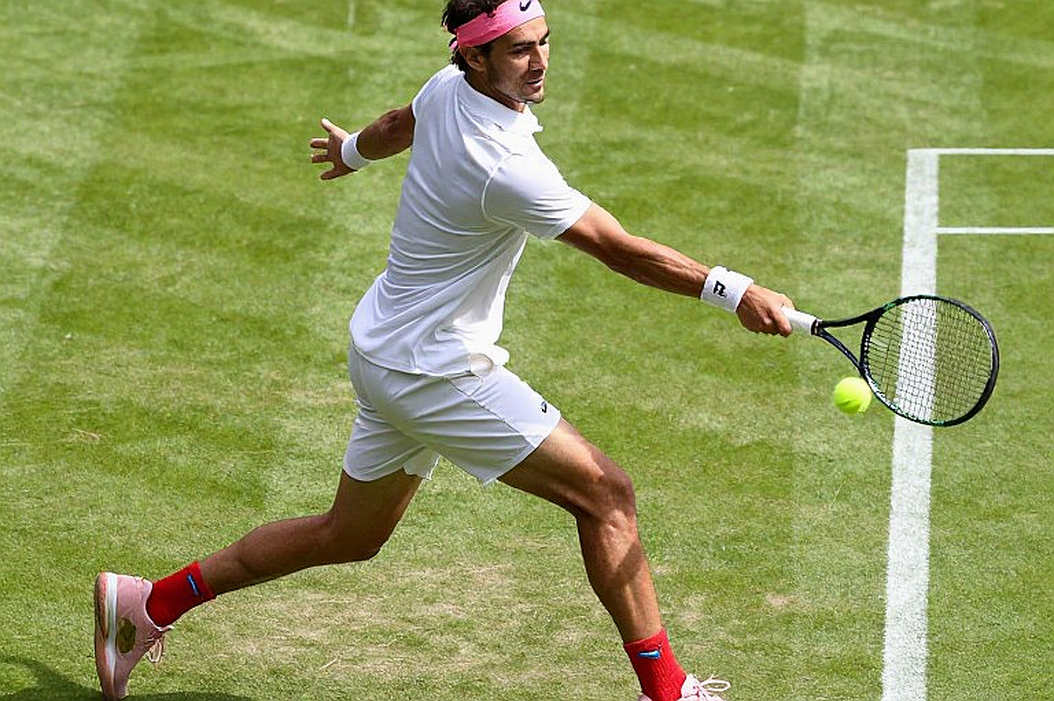
Of the two wings, the forehand is the more volatile under pressure; the backhand is the steadier, more penetrating shot. For a player with little match play, the usual signature is unforced-error clustering on the forehand in deciding sets. That is an observable, checkable signal — anyone following her can count it themselves.
As for “not far off”, in player language it usually locates the gap in match-play consistency, not in ball-striking. Players who believe their level has collapsed say so plainly. Players who say “not far off” are typically describing practice-court form that runs ahead of tournament output.
I remember an evening in 2026, when German football restarted and I was asked to host the analysis of Dortmund against Schalke in an empty stadium, a 4–0. I did not talk about tactics. I spent fifteen minutes on the people who still had to come to the ground and work in silence, and on the supporters watching on small screens in their living rooms. An empty stadium taught me that I was not only reporting — I was keeping the rhythm of someone's belief. Since then, every piece I write has a section for the people who are not named.
It is the same at the Pan Pacific Open. There is a stringer working until nearly dawn so a racquet is ready for the next morning's session. There are ball kids holding position for hours in the sun. There is a line judge holding a stance long enough that the eye does not lose its anchor. There is a physio whose work sheet is denser than any player's schedule. Grass courts can change hands, but the nights when you lose your voice calling a name are never for sale.
Now the part where I disagree with the room. Most read “weighing my long-term future” as a resignation delivered politely. I read it as arithmetic. A 29-year-old with a three-year-old, coming off fifteen months away, faces an eleven-month calendar and transcontinental flights between back-to-back events. She is balancing whether body, family and schedule can be made to fit. That is arithmetic, not tragedy.
In fact, I think “not far off” is the more dangerous of the two sentences. It protects the player from the adjustment she still needs to make. Players who come back successfully are usually the ones willing to say in a press room that they are still a long way off — because only after admitting the gap do you change the structure of your schedule, play smaller events to rebuild rhythm, and accept a few early losses in order to relearn how to win. Tennis does not lie; only contracts know how to keep quiet.
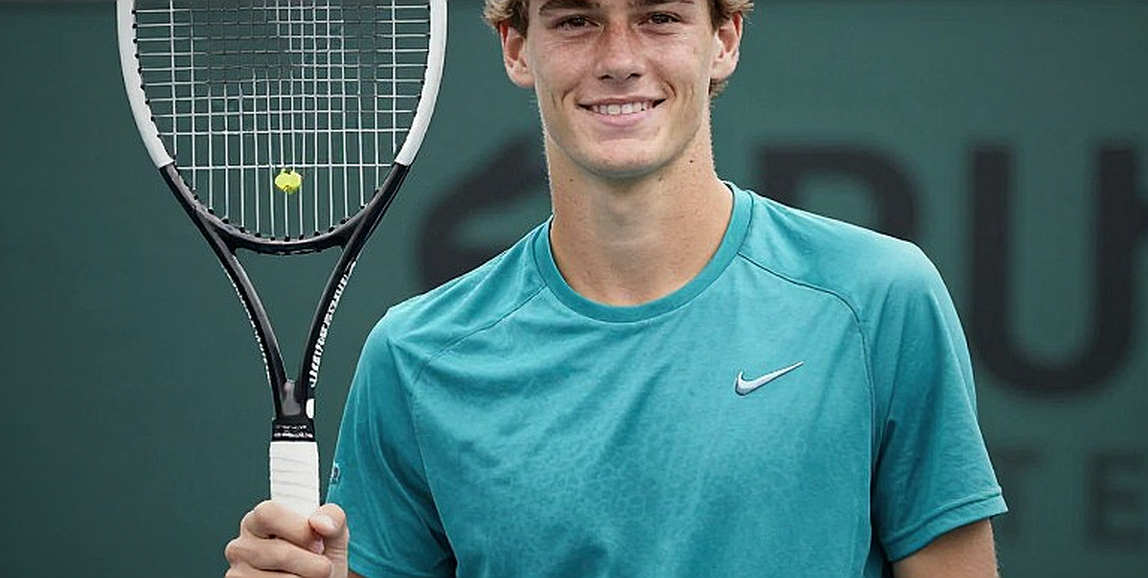
People remember the transfer fee; I remember the captain's eyes when he signed his last contract. For Osaka, the equivalent moment is not a new sponsorship deal. It is the decision about how many events she enters over the next twelve months. That is the real answer to the question about her long-term future — not the sentence in the media room, but next season's entry list.
I once sat on a transfer involving a Norwich City winger in the summer of 2026, when he had eight goals and five assists in the Championship and was about to move to a Premier League club. I checked the sources, waited until I was certain, and published after my colleagues. Several published earlier and were wrong. The agent later sent me two more exclusives that year. The lesson transfers cleanly to tennis: better a day late than a belief published.
So with Osaka, I do not write that she is back. I write that she is in between. In between is the hardest place to write from, because it does not allow an opening built on a beautiful number or a closing built on a prophecy. It only allows a list of things to watch.
That list is short. First, second-serve points won — the most honest indicator for a power player returning after childbirth, because it measures both the shot and the confidence. Second, her record in three-set matches: beat top-30 opponents in a third set and the physical layer has returned; lose the third set consistently and “not far off” is covering a very specific distance. Third, the number of events she enters over the next six months, because that is the real answer to the question about the future.
If you want a prediction, I will not give one. I am too old to work as a prophet. But I know I will watch her first match in Tokyo with a blank sheet of paper, and I will count every second serve, every rally past five contacts, every glance toward her coach after a lost point. After forty years, I trust what I can count.
And one thing I am certain of, whatever happens in Tokyo. Her daughter will not remember that her mother was once world No. 1. She will remember whether her mother was home. That is also a ranking, and it is published nowhere. People will argue about Osaka's “not far off” for weeks. I am thinking about a morning in Tokyo, with the stands still empty, and a stringer pulling a racquet tight for a match whose result nobody yet knows.