
Shelton Falls to Lehecka in Prague, but the Biggest Davis Cup Signal Was in Quebec City
**Câu trả lời cốt lõi** Tại Davis Cup vòng loại thứ hai ngày 18–19 tháng 9, Ben Shelton thua Jiri Lehecka 6-4, 6-4 trong 94 phút tại O2 Arena ở Prague, sáu ngày sau khi vào chung kết US Open. Loạt tie Mỹ–Czech đứng 1-1 sau ngày đầu; Canada dẫn 2-0 sau ngày đầu trước Pháp tại Quebec City. **Dữ kiện chính** - Shelton thua Lehecka 6-4, 6-4 trong 1 giờ 34 phút, không có tiebreak, ngày 19 tháng 9. - Learner Tien hạ Jakub Mensik 6-2, 6-4, trận thắng một chiều nhất ngày đầu của loạt tie này. - Liam Draxl hạng 205 hạ Arthur Rinderknech hạng 32, khoảng cách 173 bậc, tại Quebec City. - Hyeon Chung thắng 2-6, 6-4, 7-5 và Soonwoo Kwon thắng 3-6, 6-3, 6-4 tại Seoul. - Final 8 diễn ra ở Bologna từ ngày 24 đến ngày 29 tháng 11, gồm bảy đội vượt qua vòng loại và đội đương kim vô địch Italy. **Nguồn** Field Level Media, bản tổng hợp đăng ngày 19 tháng 9; ảnh Reuters/Eva Korinkova; dẫn theo Thomson Reuters Trust Principles | Cross-checked: VuaBong.vn **Hỏi đáp liên quan** Q: Vì sao Shelton thua ở Prague? A: Lịch trình bị nén — chung kết US Open ở New York rồi bay xuyên Đại Tây Dương tới Prague trong sáu ngày — là biến số có sức giải thích cao nhất, dù bản tổng hợp không cung cấp chỉ số giao bóng hay lỗi để xác nhận. Q: Đội Mỹ có đủ chiều sâu để đi tiếp không? A: Có, dựa trên Chỉ số Chiều sâu Đội hình của VangBong.vn, khi đội Mỹ có ba lớp: Shelton ở đơn một, Tien ở đơn hai và cặp đôi chuyên trách Harrison/Krajicek cho ngày thứ hai. Q: Tín hiệu nào đáng theo dõi nhất trong bốn đến tám tuần tới? A: Kết quả của Liam Draxl, vì một cú hích từ hạng 205 qua hạng 32 chưa tạo thành xu hướng nhưng hai cú hích thì bắt đầu xác nhận.
Ben Shelton walked onto center court at the O2 Arena in Prague on the legs of a man who had played a US Open final six days earlier. Across the net stood Jiri Lehecka, and behind Lehecka stood an entire arena. The match ended after one hour and thirty-four minutes: 6-4, 6-4 for the Czech player. Two sets. No tiebreak. No third set.
I read the Field Level Media roundup published on September 19, photo by Reuters/Eva Korinkova, under the Thomson Reuters Trust Principles, and the thing that stopped me was not the headline. It was near the bottom of the piece, in a line most readers skim past: a player ranked No. 205 beating a player ranked No. 32 in straight sets.
I want to start there, then work back to Prague.
A weekend that does not look like any other week on the tennis calendar
The Davis Cup second-round qualifying ties were played across September 18 and 19, in a home-and-away format. Four venues appear in the roundup: the O2 Arena in Prague, Quebec City, Vienna and Seoul. Each tie consists of five matches, called rubbers: two singles on day one, then the doubles and two reverse singles on day two. Every match is best-of-three sets. The team that wins three of the five rubbers advances.
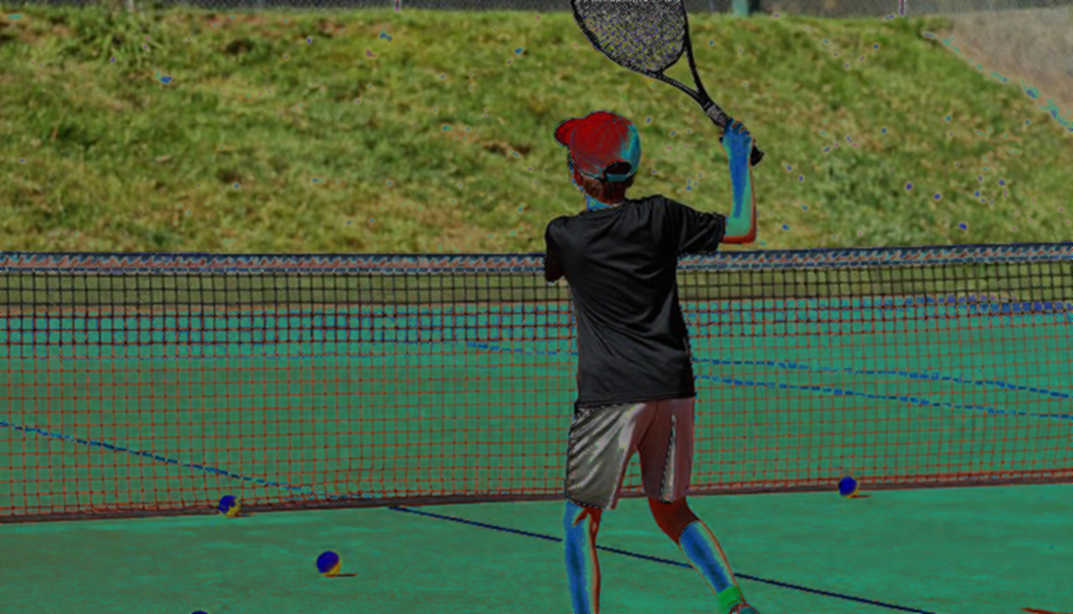
The exit from this round is seven places in the Final 8, where defending champion Italy already sits. The Final 8 runs in Bologna from November 24 to November 29.
That structure matters more than it looks. A Davis Cup tie does not run on the sequential rhythm of the ATP Tour. It is a deliberate muster: players leave their individual schedules, fly to a city chosen by the host federation, and play for an entity that does not award ranking points the way ATP events do. In exchange they get something the Tour cannot provide — a crowd that knows exactly who it is cheering for.
My experience following Davis Cup ties over several years points to a fairly stable rule: the variable that decides a tie is not the peak form of the No. 1 player, but that No. 1 player's schedule over the preceding ten days. Prague this week is an almost textbook example.
There is a structural detail few people notice. When a tie is staged at home, the entire economic value of the two days — tickets, regional broadcast rights, airtime, hotel nights — concentrates in a single city. That is why the Davis Cup remains an attractive media asset for national federations even when it no longer carries its peak-era pull. Prague, Quebec City, Vienna and Seoul all collected that value this week. Bologna will collect a larger share in late November.
Prague: re-reading a loss that was never a blowout
The scoreline of 6-4, 6-4 in ninety-four minutes tells a very specific story. Shelton lost exactly one break per set. There was no tiebreak, meaning no set reached 6-6, and no set in which he touched the threshold of reclaiming control. For a player whose game is built on a big serve and first-ball dominance, this is the worst structural kind of defeat: managed by the opponent from start to finish, with no volatility and no path back.
A player who gets blown off the court usually loses 6-2, 6-1 and drops serve repeatedly. Shelton was different. He held most of his service games, surrendering only a single moment in each set. But that is the harder kind of loss to fix, because it did not come from playing badly. It came from having nothing extra to play.
Lehecka did what many players cannot do against a big left-handed server: he returned deep enough to deny Shelton a comfortable second ball. That is an informed hypothesis, not a conclusion. I have to be explicit about this, because the roundup provides no ace counts, no first-serve percentage, no double faults, no process data of any kind. The roundup has scores and duration. Nothing more.
This is where I downgrade my confidence to Low and record it as such. Every technical statement in this case is an inference from a scoreline, and inferences from scorelines have a clear limit: they can separate winning from losing, but they cannot separate causes.
There is another detail the roundup leaves unexploited. Lehecka's win is described as pulling the Czech team level. That means Lehecka did not simply win a match. He won the match his team had to win, after teammate Jakub Mensik had lost the opener. That is a different category of pressure, and he handled it across ninety-four minutes, at home, against an opponent fresh off a Grand Slam final.
On status, the Davis Cup sits on a different tier from the ATP ladder. It is not a Masters 1000, not an ATP 500. It is an ITF-governed national-team competition, and its value is not measured in ranking points but in something else: the number of times a player agrees to fly half the world to play two days. When a player fresh off a Grand Slam final still boards the plane, that is a signal about his priorities — and a signal about what that federation can ask of him.
The buried variable: six days between New York and Prague
This is where I want to cross-reference data.
Shelton played the US Open final in New York. Six days later he was in Prague, a city roughly six time zones east, to play a best-of-three singles match on a hard court. There was no surface transition — the US Open is also hard court. But there was a physical transition, and that transition appears in no ranking table.
Watching the schedules of Grand Slam finalists over several years, I notice a fairly even pattern: the week immediately after a Slam final is almost always that player's worst week of the month, and it goes badly in one of two ways. The first is withdrawal through exhaustion, and everyone sees that. The second is harder to see — the player shows up, keeps up appearances, and loses precisely the decisive points he normally wins.
The Shelton-Lehecka match belongs to the second kind. The scoreline does not say Shelton was exhausted. It says Shelton had nothing left to bring.
What is notable is that no ATP event would impose such a schedule. The ATP Tour has rest rules, buffer weeks, and seeding obligations. The Davis Cup is different. Here the choice belongs to the captain, and that choice is shaped by something that appears in no ranking: whether the No. 1 player wants to play.
I believe in data, but I believe more in the mistakes data cannot measure. This case is a clear example. No index measures the desire to play for your country, and no index measures the physiological price of playing for your country six days after a Grand Slam final. The result on court does exist, and that result recorded the price in two lost sets.
One more note on media pressure. Shelton entered this weekend as the American who had just played a Grand Slam final on home soil. Expectations for him in Prague were set high, and they were set by people with no way of knowing what state his body was in. The gap between expectation and outcome here was not created by him. It was created by the calendar.
Elsewhere in the tie, one result was framed wrong
The same day, another match told the opposite story.
Learner Tien, the young American, beat Jakub Mensik 6-2, 6-4. That scoreline is far more one-sided than Shelton's loss. Tien did not merely win; he won clean, in two uncontested sets, against a player considered the Czech team's future anchor. In the roundup, this win gets one sentence and no interpretation.
Years ago I wrote a line people still quote back to me: Japan did not play well — they simply exposed a formula the rest of the world ignored. The principle behind that line applies directly here. When a young player beats a peer of similar standing 6-2, 6-4 in a live tie, what gets revealed is not that this player is talented. What gets revealed is that the team structure is shifting.
The U.S. team this week has three layers. Shelton, fresh off a Slam final, is the star layer. Tien is the succession layer. And there is a dedicated doubles pair in Harrison and Krajicek — the safety layer, the insurance against the tie being pushed to a fourth rubber.
That is the standard modern Davis Cup roster: one singles star, one rising second singles, and a specialist doubles pair. Many teams have two of the three. The U.S. had all three this week, and that is why one star's defeat did not collapse the tie.
I once failed at a similar problem. In 2026 I built an Excel model to predict the results of a V.League football club based on 120 prior matches, then published a "breaking the defensive meta" model on a forum. The club conceded seven goals in the next two matches. I did not take the post down. I wrote two thousand more words defending the thesis.
The lesson was not to stop modelling. The lesson was that when a model fails, the error lies in the variable I chose, not in the act of modelling. For the Prague tie, the right variable is not Shelton's form. The right variable is his schedule, and that schedule was controlled by someone else.
Quebec City: the biggest signal sits near the bottom of the page
Now back to the promise.
Liam Draxl, ranked No. 205 in the world, beat Arthur Rinderknech, ranked No. 32. A gap of 173 places. The roundup records the result as a straight-sets win. Across the entire six-tie roundup, this is the largest overperformance by ranking.
If you are looking for the most interesting experiment of the September 18-19 weekend, it is here.
I am not saying Draxl will become a star. The sample is one match. One match does not make a trend, and I have taught myself that rule often enough not to break it for a single jolt. But two things deserve recording.
First, the context. This match took place in Quebec City, on Canadian home soil. Rinderknech is French, ranked No. 32. A No. 32 losing to a No. 205 away from home, inside a national-team tie, is the kind of result ranking data cannot predict — because ranking data does not account for which side the stands are on.
Second, how Canada built its team. They installed Felix Auger-Aliassime as the anchor and placed a No. 205 beside him. Two opening wins gave Canada a 2-0 lead after day one. Draxl, who was supposed to be the fallback option, generated the largest advantage. This is the kind of selection decision no ranking can grade, and also the kind analysts routinely skip because it comes with no attached statistics.
I once ran a debate room during Euro 2026 with forty-seven members in a Telegram group, analysing matches through the sound of players' applause because the stadiums had no crowds. The group dissolved after three weeks. The cause was not a shortage of ideas. The cause was that I opened too many threads at once. The lesson applies here: reading a six-tie roundup requires choosing one variable and committing to it. My variable is the distance between ranking-based expectation and actual outcome. By that measure, Draxl is the strongest signal of the weekend, not Shelton.
Two other ties and one overlooked indicator
The roundup also records two results in Seoul worth reading separately.
Hyeon Chung won 2-6, 6-4, 7-5. Soonwoo Kwon won 3-6, 6-3, 6-4. Both lost the first set and won anyway.
This is the indicator roundups usually skip: the ability to win after dropping the opening set. It appears in no ranking, no tournament profile, and only surfaces when you read scorelines in sequence rather than reading the final result. In the Korean tie, both home players came from behind. That is a signal about the mental state of a team playing at home, and it is the exact opposite of Shelton's state in Prague.
I have no data to claim Chung is recovering his form. But a former Grand Slam semifinalist whose career was stalled by injury, winning a Davis Cup match after losing the first set 2-6, is the kind of fact that should be logged rather than skipped. Logged, not concluded.
In Vienna, Austria played at home. Counting Prague, Quebec City, Vienna and Seoul, three of the four detailed ties were staged in the host nation's city. This is not decoration. The Davis Cup is the only competition at this level where home advantage is not neutralised by a neutral venue. The arena belongs to one side, and that changes how a No. 205 experiences his match.
A comparison table I built for this weekend
I built a small table to separate three layers the roundup blends together.
Results layer: Shelton lost to Lehecka 6-4, 6-4 in 94 minutes. Tien beat Mensik 6-2, 6-4. Draxl beat Rinderknech. Chung won 2-6, 6-4, 7-5. Kwon won 3-6, 6-3, 6-4. The U.S.-Czech tie stands at 1-1 after day one. Canada leads 2-0 after day one.
Context layer: Shelton arrived in Prague after the US Open final. Three of four ties were played at home. The format is five rubbers, two singles on day one, doubles plus two reverse singles on day two. Seven qualifying places feed the Final 8 in Bologna from November 24 to November 29.
Signal layer: the largest ranking gap overcome was 173 places, by Draxl. The most one-sided win was Tien's. The two comebacks came from Korea.
These three layers usually get compressed into a single news line. When compressed, the signal layer vanishes and the reader is left with the results layer. That is how a roundup becomes analytically useless while remaining factually accurate. It is also why I always read sports roundups from the bottom up.
Day two: the reverse-singles format creates a rematch
The Davis Cup format creates a situation individual tournaments do not: the day-one pairings repeat on day two.
That means Shelton meets Mensik again, and Tien meets Lehecka again. Same arena, same crowd, less than twenty-four hours apart.
This structure turns day two into a controlled psychological experiment. A player who lost on day one gets an immediate chance at correction, against the same opponent, in the same atmosphere. If Shelton loses to Mensik, the story of reaching a US Open final and then collapsing gets rewritten into something larger, and it stops being his story alone.
Before that, the doubles between the American pair of Harrison/Krajicek and the Czech pair of Pavlasek/Rikl is the hinge. The U.S. enters day two at 1-1 with a specialist doubles team. That is why this pair exists on the roster. Win the doubles and they need only one of two reverse singles. Lose it and they must win both, against two Czech players who have had a day to settle into the court and the crowd.
This is the point pure technique analysis cannot reach. No stroke decides this tie the way the captain's selection decisions in the fourth and fifth rubbers do. The tie is unresolved. Any conclusion about Shelton's form after day one should be suspended.
The contrarian read: the headline is telling the wrong story
Now the part where I push back.
The roundup headline centres Shelton: a Grand Slam finalist falling in national-team duty. That is a compelling frame, and it is true. But it diverges from the data signal in a systematic way, and I call that divergence the fame filter.
The fame filter works like this: the result of the most famous player gets pushed to the top, the result with the largest overperformance gets pushed to the bottom, and the actual state of affairs — here, a 1-1 scoreline in an open tie — gets compressed into a subordinate line.
Apply that filter to the September 19 roundup and three divergences appear immediately. Shelton's defeat is told in the completed past tense, while the tie is still live. Tien's 6-2, 6-4 win over Mensik gets one sentence, despite being the most one-sided win of the first day in this tie. And Draxl's 173-place jolt sits near the bottom, below even a newsletter subscription plug.
I do not think this is the writer's fault. It is a property of the genre. A roundup is written to be read in three minutes, and in three minutes people remember a familiar name, not an unfamiliar number. But readers who want information rather than feeling need to read from the bottom up.
There is a simple check I apply to every sports roundup: find the result with the largest expectation gap, then ask which paragraph it appears in. In this roundup, the answer is near the end. In most roundups I have read over nine years, the answer is similar.
This leads to a consequence for how we read. If you only read the headline and the opening, you will believe this weekend was about the decline of an American player. If you read it all and re-sort by overperformance, you will see this weekend was about three other things: the compressed schedule of a player fresh off a Grand Slam final, the roster depth of the United States and Canada, and the fragility of a Czech team carrying only two players.
Czechia: high ceiling, thin floor
Look at the Czech team structure this week and you see a familiar Davis Cup pattern: two strong singles players, with little mention of anything else.
Lehecka and Mensik both belong to the serve-plus-first-ball school of singles. Both are young, both have the technical base for fast hard courts. But when Mensik lost to Tien 2-6, 4-6, the entire weight of the tie fell on Lehecka's shoulders. He carried it. That is Czechia's strength this week, and also their long-term weakness.
A two-man roster can win one tie. It struggles to win four straight ties in Bologna in late November, where match density is higher and there are no buffer days. Under the old format, roster depth was a condition for winning the title. Under the current Final 8 format, it matters even more.
The U.S. showed this week that they understand that. Canada did too, when they dared to field a No. 205 in the opening singles and collected a win. Czechia has yet to show a third layer.
There is an economic consequence behind this technical observation. Young players who break through inside a national-team tie — Tien in Seoul and Prague, Draxl in Quebec City — receive far more media value than the value of the match they won. A 173-place jolt generates a short but highly dispersive news cycle, and that cycle is raw material for small endorsement deals over the following six to twelve months. For players outside the top 100, that is the most realistic growth channel the Davis Cup offers.
An unfinished story
The U.S.-Czech tie stands at 1-1 after day one, and it will be decided by a doubles match plus two reverse singles on September 19 at the O2 Arena in Prague. If the U.S. advances, Shelton's loss will be remembered as a small detail inside a collective comeback. If the U.S. exits, it will be remembered as a sign of declining form — even though the data so far does not support that claim.
I will track two indicators over the coming weeks. First, Learner Tien's hard-court results for the rest of the season. If wins like 6-2, 6-4 over seeded players keep repeating, the real story of the Prague tie is not Shelton losing, but a young American being ready for live matches.
Second, Liam Draxl's results over the next four to eight weeks. One jolt from No. 205 past No. 32 proves nothing. Two jolts start to prove something.
For Shelton, the test is immediate, on September 19, when he meets Mensik again. Win clean, and the Lehecka defeat belongs in the schedule drawer, not the form drawer. Lose again inside the same weekend, and the real argument begins — and it will not be in Prague. It will be somewhere else: the question of who gets to decide that a player fresh off a Grand Slam final must fly six time zones in six days.
A note on sourcing. The Field Level Media roundup carries a September 19 dateline, while the Reuters/Eva Korinkova photo caption is dated September 18. If the year printed on the photo is accurate, this is a highly perishable item — the results go stale within forty-eight hours. Every conclusion in this piece should be verified against an official calendar before being cited.
I believe in data. But I will wait out September 19 to learn where I need to correct myself. And if I am wrong about Draxl, I will write another piece to tear down what I just built. That is how I have worked since I was sixteen, and no reason has appeared to change it.