
Le Moyne Joins the Metro for 2027-28: Two Individual Titles, One Last-Place Finish and a Data Vacuum
**Câu trả lời cốt lõi:** Le Moyne College gia nhập Metro Atlantic Athletic Conference từ mùa giải 2027-28, rời Northeast Conference sau khi hoàn tất chuyển đổi lên NCAA Division I. Tại giải vô địch NEC gần nhất, đội bơi nữ xếp thứ 7 trong 7 đội và đội nam thứ 3 trong 4 đội, với hai huy chương vàng cá nhân của Lucas Clay và Louis Allison. **Dữ kiện chính:** - Le Moyne trở thành thành viên chính thức NCAA Division I và chuyển sang Metro Atlantic Athletic Conference từ mùa giải 2027-28. - Metro có khoảng 13 chương trình bơi nữ và khoảng 10 chương trình nam, sâu gần gấp đôi mặt bằng NEC. - Đội bơi nữ Le Moyne xếp thứ 7 trong 7 đội tại giải vô địch Northeast Conference gần nhất. - Đội nam xếp thứ 3 trong 4 đội; Lucas Clay vô địch 100 yard ếch, Louis Allison vô địch nhảy cầu 1m. - Không có thời gian thi đấu, split hay chuẩn cắt nào được công bố, nên không thể đánh giá ở tầng kỹ thuật động tác. **Nguồn:** Thông cáo chính thức của Le Moyne College về việc gia nhập Metro Atlantic Athletic Conference, hiệu lực từ mùa giải 2027-28. **Hỏi đáp liên quan:** Hỏi: Le Moyne gia nhập hội nghị nào và từ khi nào? Đáp: Metro Atlantic Athletic Conference, từ mùa giải 2027-28, sau khi rời Northeast Conference. Hỏi: Thành tích bơi lội gần nhất của Le Moyne ra sao? Đáp: Đội nữ xếp thứ 7 trong 7 đội và đội nam thứ 3 trong 4 đội tại giải vô địch NEC, với hai huy chương vàng cá nhân ở 100 yard ếch nam và nhảy cầu 1m nam. Hỏi: Vì sao chuyển hội nghị có thể làm giảm điểm đồng đội của Le Moyne? Đáp: Vì Metro sâu gần gấp đôi và cách tính điểm thưởng cho chiều sâu top-8 cùng relay, trong khi Le Moyne chưa có bằng chứng về chiều rộng đội hình.
This past June, Le Moyne College closed out its reclassification and became a full NCAA Division I member. Not long after, the school announced it would leave the Northeast Conference for the Metro Atlantic Athletic Conference from the 2027-28 season, with swimming and diving folded into the package. The institutional release used the phrase "elevate the national profile." The most recent NEC championship results read differently: the Le Moyne women finished 7th of 7, the men 3rd of 4. The two individual titles went to Lucas Clay in the men's 100-yard breaststroke and Louis Allison in men's 1-metre diving. An institution moving up while its own numbers move down.
Reading this properly means separating two layers. The administrative layer: Le Moyne has gone from Division II to full D-I status, and the NEC-to-Metro shift is a sound move for branding, media exposure and scheduling. The competitive layer: American collegiate swimming is contested in 25-yard pools, where turn density and underwater work are far higher than in a 50-metre pool; a program that is weak in those two elements is punished harder in yards than in metres. The Metro currently carries around 13 women's swimming programs and roughly 10 men's — nearly twice the depth of the NEC floor Le Moyne is leaving. Team-championship scoring rewards top-8 depth and relays, not one or two individual specialists.

Two gold medals are a positive signal, but they need to be read at the right scale. The men's 100-yard breaststroke and men's 1-metre diving are medal-producing clusters that generate comparatively few team points. A winner in a single individual event brings in roughly what one top-8 finish brings a deep squad, while relays — the largest single source of points in any team championship — do not appear in a single line of the source material. That is the biggest hole in the Le Moyne file: no evidence of roster breadth, no evidence of sprint freestyle, no evidence of scoring capacity across the four relay events.
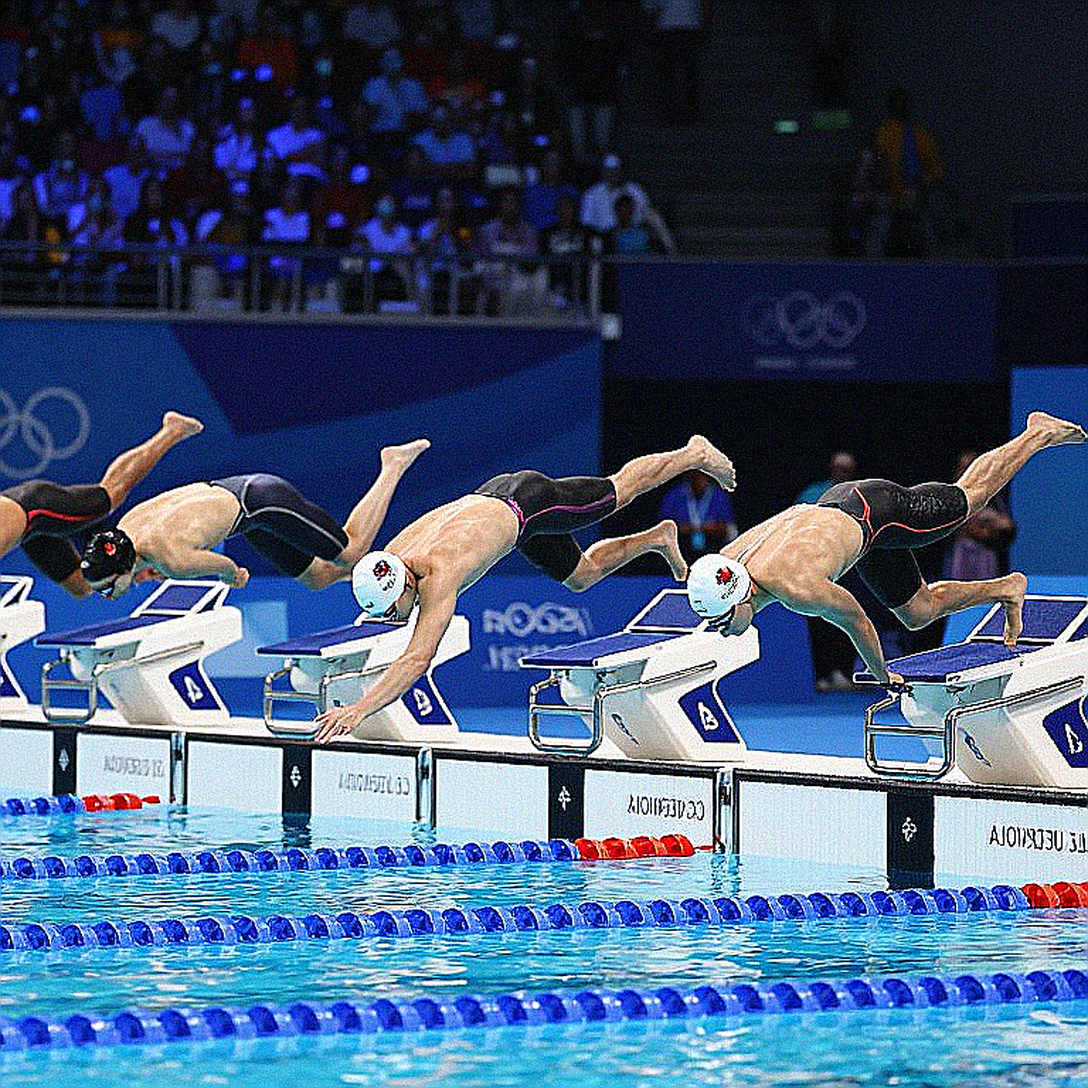
The heaviest number sits on the women's side: 7 of 7. That is the floor of the conference and the strongest competitive signal in the entire announcement. It runs directly against the school's framing. Numbers have no gender, but the people reading them do — the same "7th of 7" line can be read as "a weak women's program" or as "a women's program that has not been resourced." I take the second reading, because the first one ends the analysis far too early.
The men's number is 3 of 4. At first glance it looks like progress next to the women's placement, but a top-three finish in a four-team field means Le Moyne sits directly above the bottom of the competitive pyramid. That third place is exactly one team away from last. What needs measuring is the time gap, and the source supplies not a single split.
That is why I make no claim at the stroke-mechanics level. With no race times, no splits and no cut standards, any statement about breaststroke catch, stroke rate or start mechanics is speculation. A yards-only program also has no footing for comparison against World Aquatics long-course benchmarks. Based on my experience tracking American collegiate meets and yard-to-metre conversion exercises, I have seen far too many "conversion" tables built to compare things that do not share a reference frame.

Correlation is not causation. Joining a deeper conference does not shorten an athlete's times, and it does not automatically raise recruiting standards. It changes opponents, changes the schedule, changes the travel budget — and most importantly, it changes the points threshold required to reach the top eight. Against 13 women's programs, a team that finished seventh in its old conference has to pass five rivals just to score in the new one. Le Moyne's scoring ceiling is therefore likely to compress over the first two seasons, before it opens up if recruiting is handled well.
The phrase "elevate the national profile" is the language of an institution, not the language of a race. Institutions measure in conferences, media files and sponsorship contracts. Racing measures in seconds. The two metrics can rise together, but they do not rise automatically, and in most conference moves I have tracked, the institutional metric runs two to three seasons ahead of the racing metric.
One detail goes unremarked: the source names two champions but not a single coach. No coach named means the technical infrastructure cannot be assessed, nobody can be identified as responsible for rebuilding the women's program, and there is no way to know whether the recruiting lead will be retained. For a program that has just stepped up to D-I, coaching personnel matter more than one conference title.
I do not trust emotion. I trust a data series longer than your emotion. But that series has to be read inside the right frame: 7 of 7 and 3 of 4 sit in the verifiable zone; the two individual titles also sit there; "national profile" sits in the ambiguous zone, and "Le Moyne will compete in the Metro" sits in the zone that rests on judgement. Kazan taught me that a 99 percent probability can still die on the betting table, so I will not sign off on any conclusion without a denominator.
What matters in 2027-28 is not a third gold medal but three other things: whether Le Moyne scores a single relay point at its first Metro championship; whether the women's program climbs off the floor; and whether Lucas Clay and Louis Allison can defend their spots against a field twice as deep. If all three answers are no, the performance report on this conference move will have to be rewritten from scratch — and the person rewriting it will not be the school's communications office.