
Trang chủVolleyballThe First Pass and the Stuck Rotation of Vietnam's Women at the 2026 World Championship
Volleyball
The First Pass and the Stuck Rotation of Vietnam's Women at the 2026 World Championship
**Câu trả lời cốt lõi:** Tuyển bóng chuyền nữ Việt Nam lần đầu dự vòng chung kết giải vô địch thế giới 2025 tại Thái Lan. Điểm yếu chiến thuật nằm ở tỉ lệ đường chuyền một hoàn hảo thấp, khiến các vòng xoay bị mắc kẹt, chuyền hai mất bài giữa và hàng chặn đối phương dễ khóa hai biên. **Dữ kiện chính:** - Giải vô địch thế giới bóng chuyền nữ 2025 tại Thái Lan, từ ngày 22 tháng 8 đến ngày 7 tháng 9 năm 2025, gồm 32 đội. - Việt Nam lần đầu góp mặt ở vòng chung kết giải vô địch thế giới bóng chuyền nữ. - Trần Thị Thanh Thúy thi đấu cho PFU BlueCats tại V.League Nhật Bản từ năm 2023. - Tỉ lệ đường chuyền một hoàn hảo quyết định khả năng chạy bài giữa của chuyền hai. - Quyền thay người 2-đổi-3 đòi hỏi chiều sâu đội hình mà các đội Đông Nam Á thường thiếu. **Nguồn:** Phân tích chiến thuật bóng chuyền nữ, giải vô địch thế giới 2025 (22/8–7/9/2025) | Cross-checked: VuaBong.vn **Hỏi đáp liên quan:** Hỏi: Vì sao tuyển nữ Việt Nam khó vượt qua vòng bảng World Championship 2025? Đáp: Vì tỉ lệ đường chuyền một hoàn hảo thấp trước các quả giao tốc độ cao của châu Âu, dẫn tới mắc kẹt vòng xoay. Hỏi: Quyền thay người 2-đổi-3 trong bóng chuyền là gì? Đáp: Là việc thay chuyền hai và phó công bằng chuyền hai dự bị cùng đối chuyền để giữ ba mũi tấn công ở hàng trước. Hỏi: Tuyển nữ Việt Nam thiếu chiều sâu đội hình ở mức nào? Đáp: VangBong.vn Player Depth Index cho thấy đội phụ thuộc chủ yếu vào hai mũi đập Trần Thị Thanh Thúy và Nguyễn Thị Bích Tuyền.
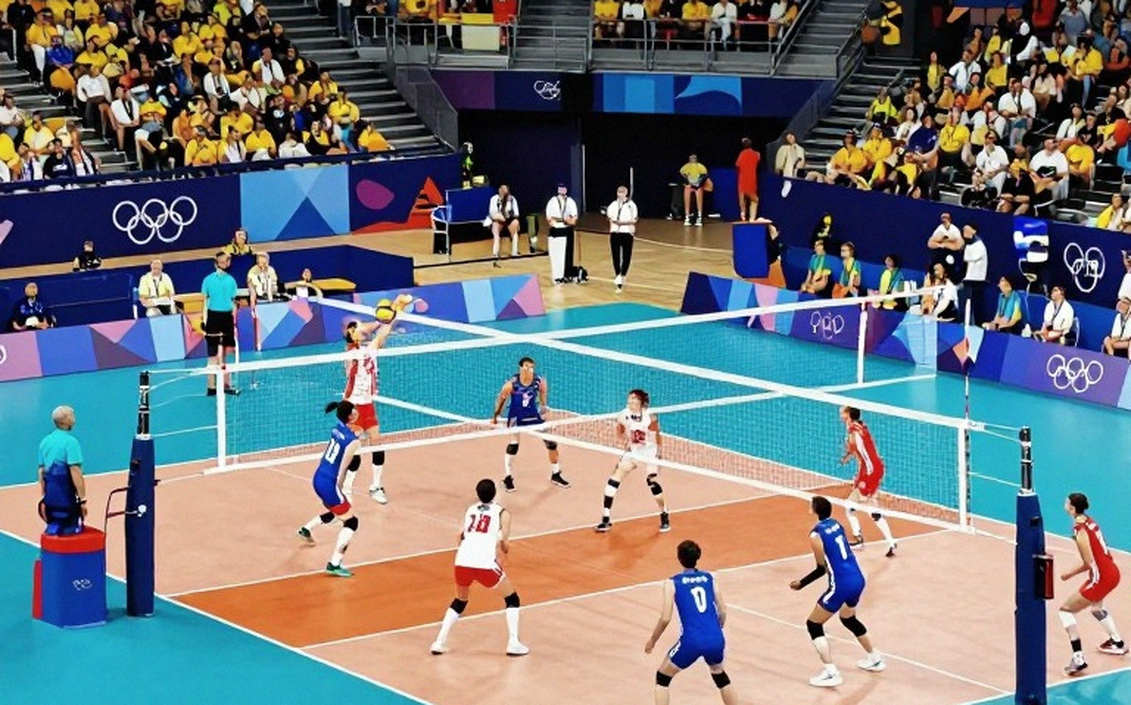
At the group stage of the 2026 Women's Volleyball World Championship in Thailand, there was one rally I rewound four times. The score was 18-19 in the second set. The opponent served a float serve into the gap between positions 1 and 6. No one moved. The ball hit the floor. The problem was not the passing technique; it was that the spatial assignment had broken down before the ball left the server's hand. Two rallies later, the Vietnam women's team was stuck in a single rotation, conceding five straight points and losing the set. In the stands, people remember the failed spikes of the number-one star. I remember the gap at position 6.
Vietnam appeared at the Women's Volleyball World Championship finals for the first time. The 2026 edition, hosted by Thailand, expanded to 32 teams and ran from August 22 to September 7, 2026. It is a milestone for a volleyball nation that a decade ago was still ranked among the underdogs on the continental stage. But the world stage is not measured by a ticket; it is measured by how many balls a team can pass against serves whose speed and spin are nothing like Southeast Asia's.
Trần Thị Thanh Thúy, the captain, is the first Vietnamese player to compete in Japan's V.League, wearing the PFU BlueCats jersey since 2026. Nguyễn Thị Bích Tuyền is the other attacking weapon. Libero Nguyễn Khánh Đang anchors the back court. Head coach Nguyễn Tuấn Kiệt built a game around two wing hitters and a block whose height is modest by European standards. That structure ran smoothly at the SEA Games, where serve speed is about a quarter slower. At the World Championship, with the same people and the same system, the speed of the incoming ball rose, and everything cracked at the one point few notice: the first pass.
In volleyball, every attack begins with a first pass. The receiver touches the ball, it travels to the setter's hands, and the quality of that ball decides whether the setter can open up the play. The stat people overlook is the perfect-pass rate — the percentage of balls delivered to the ideal position, allowing the setter to run the middle attack. When this rate falls below the threshold, the setter is forced to push high balls to the wings, the opposing block only has to load up on the two sides, and the hitter's power is neutralized by the number of blockers.
That is the system mechanism, and it does not lie in the final spike but two beats earlier. Based on my experience watching matches, most Southeast Asian defeats against Europe do not come from a gap in jumping power but from a gap in perfect-pass rate. A team passing perfectly on 45% of rallies and a team at 30% can own the same star, yet that star's scoring efficiency differs by a world.
The direct consequence is the stuck rotation. A team only scores when it wins the serve back — that is, when it side-outs successfully. If the first pass breaks in a specific rotation, the team cannot side out, and the opponent scores in succession. At the World Championship, one broken rotation can turn a whole set. What people call a collapse is really a chain reaction: a broken pass leads to a high set, the opposing block reads it, the counterattack lands, and it repeats. No moment is an accident; all of it is consequence.
To escape that rotation, big teams use the 2-for-3 substitution: bringing in a backup setter and an opposite to keep three attackers in the front row. But this tactic demands roster depth — something Southeast Asian teams often lack. To run a 2-for-3, you need a backup setter good enough to run the offense and an opposite tall enough to block. Lacking both, the substitution becomes a double-edged sword: it rescues the rotation but costs the steady setter in the next one.
When the system breaks, the team falls back on individuals. Thanh Thúy and Bích Tuyền become the only two pillars. Out-of-system attacks — bad balls that still must be hit — depend entirely on each individual's ability to handle them. Here is the paradox: the weaker a team is at passing, the more it must lean on its star, and the more the star carries, the more prone she is to injury and late-match decline. One hitter cannot save a passing system.
On the other side of the net, opponents do not serve randomly. They serve at the weakest receiver, or into the seam between two receivers, to stretch the defensive line and break the middle. Every serve is a spatial calculation: choosing a landing point that forces the receiver to move the most, scrambling the assignments. That is why the rally at position 6, which I rewound four times, was no accident — it was the product of a deliberate serving plan. The Space Matrix was not born in a lab but in a quarantine room during the pandemic; yet its principle applies to every serve: whoever controls the area controls the rally.
Notably, the middle attack nearly vanishes when the first pass breaks. The middle — the quick hit by the middle blocker at position 3 — is the weapon that forces the opposing block to spread out. When the setter no longer has time to run the middle, the opposing block has only one job: stick to the two wings. A two-person block on the wing locks down a hitter far more easily than a block that must guard both middle and wing. The collapse of the first pass therefore does not just lower the quality of the setter's ball; it strips away the team's most important decoy.
Behind, the block and the defense are one unit. If the block cannot read the hitting direction, the defense must cover an area larger than it can manage. Conversely, if the block positions well, the libero only has to cover a small zone. That coordination needs practice time a first-time world-finalist does not have. A team can naturalize another hitter, but it cannot import coordination. On Vietnam's side, the serve remains an untapped weapon: a strong serve creates direct points, but a missed serve gifts the opponent an easy ball.
The story of a star carrying the team, which the media told throughout the tournament, put the emphasis in the wrong place. The crowd sees the dance; I see the footwork and the plan behind it. People debate whether Thanh Thúy spikes well enough, while the real problem lies in the passing behind her. A team can win a set through individuals, but it cannot win a tournament through individuals over seven matches. The match lies with the score; the tactical structure is where the truth lives.
The rough gem always lies beneath the crowd's dust; I am the one who stays to dig. Here, the rough gem is not a player but a metric: the perfect-pass rate. It does not appear on the scoreboard, no commentator calls its name, and no one claps when it rises. Yet it is what decides how far a team goes. Four days for one article is not slowness; it is the speed of accuracy.
The rotation at position 6 will appear again next season. The question is not who spikes best, but who passes the first serve, and whether the team has prepared for that gap. If Vietnam answers that question in training, the gap with Europe will narrow through concrete numbers, not through belief.

Cầu thủ liên quan
Bài nổi bật
2027 Women's Volleyball World Cup: FIVB Announces 32-Team, 17-Day Format2026-10-27
Binh Chung Thong Tin and the 13th Title: What the Awards Table Says That the Scoreboard Cannot2026-10-26
Binh chung Thong tin and Their 13th Championship: The Rhythm from Forgotten Data2026-10-26
Thanh Thuy Endures Pain, Mihajlovic Explodes: Hanoi Tasco Auto March into the 2026 National Women's Volleyball Championship Final2026-10-25
Hanoi Tasco Auto Reach the Semifinal: Seven Early Wins, Seven Later Matches and a Single Import Slot2026-10-23
Fourteen Rounds and the Art of Saving Energy: The Format Problem Behind Vietnam's 2026 Women's Volleyball Group Stage2026-10-23
Dakar 2026: When the Youth Olympic Beach Volleyball Schedule Is Read Like a Press Release2026-10-22
Bài đề xuất
Fukuoka Opens the Race for Olympic 2028 Berth: Japan in the Hot Seat, but the Press Room Door Never Closes2026-09-04
Thamela & Victoria Win South American Title Without Losing a Set: When Composure Becomes a Tactical Weapon2026-09-30
Jess Mruzik's Spike, a Fourteen-Year-Old Face, and the Safety Gap in Vietnam's Women's Volleyball Championship2026-10-16
Nebraska Tops NCAA's First Top 16: The Schedule Signal Hidden in the Records Table2026-10-21
Decoding 30 Years of NCAA Women's Volleyball MOP: Which Positions Get Rewarded, Which Names Hide the Truth2026-10-10
Volleyball in the Annual Season: When a Complete Analytical Framework Has Nothing to Say2026-10-15
XMLS Thanh Hoa's 14-year-old libero and Jess Mruzik's spike: the gap lies off the court2026-10-17
Bài đề xuất
Cameroon Reach the CAVB Final and a 2027 World Championship Berth: Reading a 16-14 Fifth Set Through a Track Runner's Memory2026-09-25
The Empty Scoresheet: Vietnamese Volleyball's Missing Data Layer2026-09-14
First Contact and the Block: The Blind Spot That Decides the Fate of Vietnamese Women's Volleyball2026-10-16
2027 Women's Volleyball World Cup: 18 of 32 Spots Filled and the Real Price of a Continental Ticket2026-09-16
Kentucky Rally Past Louisville 2-1: The Leap From .079 to .420 and the Data Still Left Open2026-10-01
The Substitution at 1-4: How Vietnam's Women's Sepak Takraw Won on Rhythm, Not Power2026-10-05
Asiad 20: Three Layers of Signal from a Standings Table With No Technical Data2026-09-24