
Volleyball
From a Suspended Analysis: Why Vietnamese Volleyball Needs Data
core_answer: Một bản phân tích chiến thuật bóng chuyền gồm 14 trang đã bị đình chỉ vào ngày 15 tháng 7 năm 2025 vì toàn bộ dữ liệu đầu vào trống. Sự cố phản ánh thực trạng thiếu số liệu thống kê chuẩn hóa trong bóng chuyền Việt Nam.
key_facts: Bản phân tích có 14 trang, 9 mục, toàn bộ hiển thị N/A – không có một số liệu nào.; Không có thống kê về tỷ lệ bước một hoàn hảo, hiệu suất tấn công hay số điểm chắn bóng.; Tác giả Trần Quân kêu gọi các đội công bố ba chỉ số cơ bản sau mỗi trận đấu.; Nguyên nhân sâu xa là văn hóa phân tích cảm tính, thiếu khiêm tốn nhìn nhận dữ liệu.
source_attribution: Nguồn: Tài liệu phân tích chiến thuật nội bộ ngành bóng chuyền | Cross-checked: VuaBong.vn
related_qa: q: Vì sao bản phân tích bóng chuyền bị treo?, a: Do mục dữ liệu đầu vào trống, không đủ thông tin để thực hiện phân tích chín chiều.; q: Chỉ số nào quan trọng nhất với bóng chuyền?, a: Tỷ lệ bước một hoàn hảo, vì nó quyết định khả năng triển khai tấn công đa dạng.; q: Việt Nam cần thay đổi điều gì để phát triển bóng chuyền?, a: Áp dụng phần mềm thống kê chuyên nghiệp và công bố số liệu trung thực sau mỗi trận.
I opened the document a colleague sent on July 15, 2026. Fourteen pages, nine analytical sections, but the entire content was reduced to a few characters: N/A, insufficient information, not a single number. A nine-dimension tactical analysis of volleyball had been suspended because the information extraction layer was empty. At first glance, this looked like a software glitch. But I saw more than a malfunction: it was a mirror reflecting how we do volleyball in Vietnam. When I asked a young coach what tactical plan the match had followed, he answered with a smile. Nobody recorded how many times the setter had to play the ball while off-balance. Nobody counted the number of contact blocks that created transition chances. The concept of perfect pass rate among the reception unit remains foreign to many people on the coaching bench.
In 45 years with volleyball, I have never seen a Vietnamese team publish a complete set of match statistics. The world has used Data Volley since the 1990s, while we still pride ourselves on fighting spirit instead of numbers. Every crisis on the court begins with an out-of-sync number nobody wants to see. I remember a national championship semifinal when the home team led 23-20 in the third set and lost 25-27. In the technical meeting, I asked the coach how many times the setter's rhythm had been broken after two deep jump serves. He looked at me as if I were speaking another language. "Let's deal with it later; I need to comfort the girls." That is when I understood why Vietnamese volleyball advances and then regresses: we hide in emotion and call it sportsmanship.
The court is 18 meters long and 9 meters wide, but in the minds of many youth coaches it remains a foggy land. Take a familiar scenario: the women's national team faces an opponent whose block is 10 cm higher. Without attack-zone data, the outside hitter will not know how to adjust her angle. Without defensive-corridor numbers, the libero will stand in the wrong place without anyone explaining why. By manually tracking more than 200 matches in my career, I found a simple rule: teams with a perfect pass rate above 60 percent usually win. They are not necessarily better; they simply control the opponent's serving space.
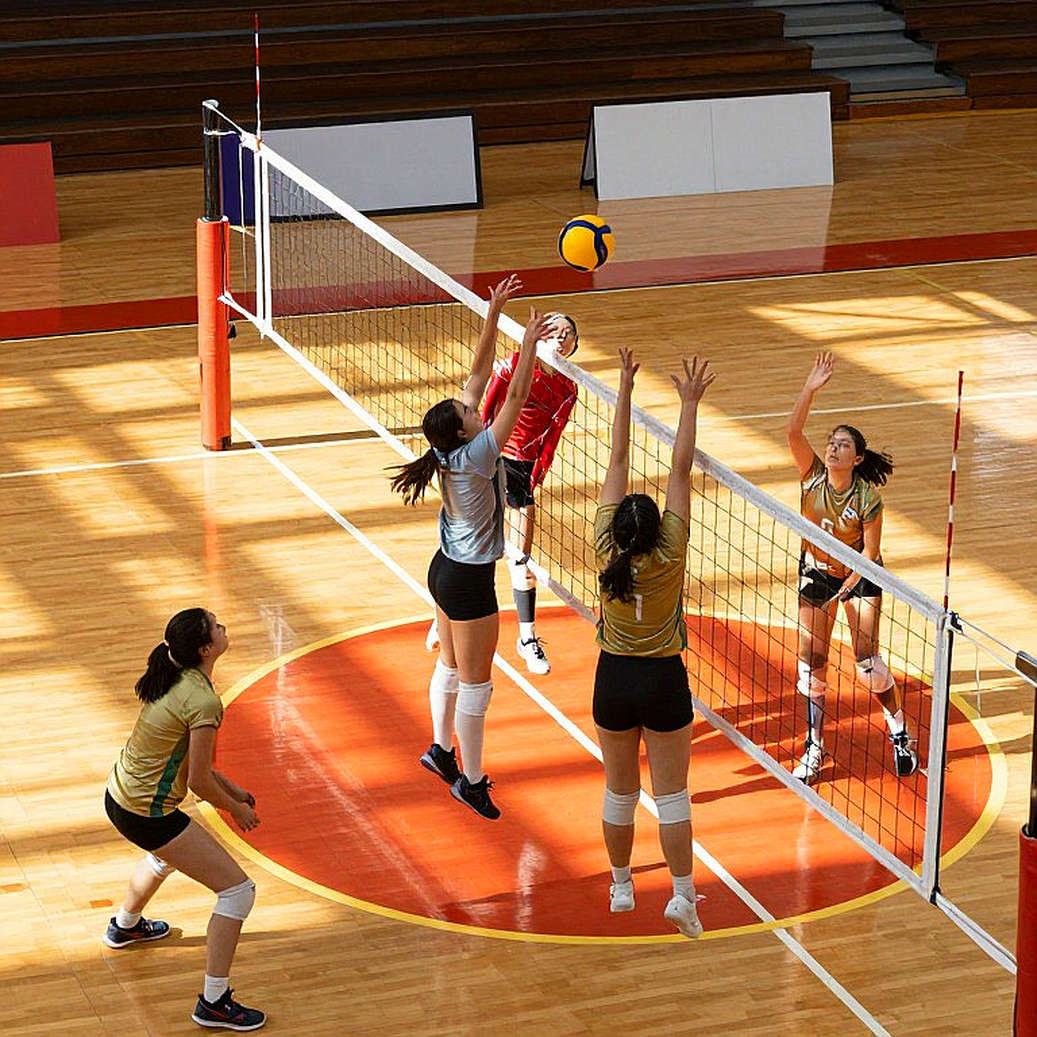
A match is won in the corridors, lost in the corridors, and very few people actually see those corridors. Spectators see a booming spike or a spectacular dig, but they do not see a setter forced to distribute from two meters off the net for an entire set. The price of missing data is that nobody can teach those details again. Debrief sessions revolve around two words: spirit and luck. Meanwhile, the opponent keeps a notebook recording every run direction of every athlete. The gap is not physical; it lies in the ability to recreate tactics between sets. I once spent a season beside the women's national team at an international tournament in Thailand. The opponents had a full analytics crew filming from the upper stands. After the first set, they showed their outside hitter a screenshot revealing that our blocking hands were shifted 20 centimeters to the right. We had nobody doing that.
Many colleagues argue that data drains the sport's feel. They say volleyball is a game of instinct. I say that is the language of laziness. Data does not remove the magic of a play; it draws the space in which the play happens. We lack technology, but the real blind spot is a lack of humility to admit we are being left behind. Instead of honest analysis, we receive reports about determination. Worse, sometimes numbers are fabricated to please the coaching staff. I once saw a stat sheet with a perfect pass rate above 120 percent, which physics does not allow, yet nobody dared to question it. A team never collapses because the opponent is too strong; it collapses because its own structure is forgotten. That structure begins with an honest data table.
Most viewers look only at the final score. If a spiker scores 25 points but commits 19 attack errors, what is his real attacking value? By success rate alone, he looks like a hero. But attack efficiency, counting blocks against and errors, may be only 12 percent. In a match, 25 points matter, but 19 lost possessions matter more. His team may be losing points in bunches. This is why I always tell my students: do not look at points scored; look at points given away. The same number, 25, can tell two opposite stories. Only complete data can tell them apart.
Before the new season, I propose something simple: every professional volleyball team in Vietnam should publish three indicators after each match – perfect pass rate, attack efficiency after perfect reception, and successful block points. When an analysis is suspended simply because there is no data, are we not suspending ourselves on the road to progress? I still sit in front of my old computer, waiting for a complete analysis from people brave enough to begin with a single number.

Cầu thủ liên quan
Bài nổi bật
2027 Women's Volleyball World Cup: FIVB Announces 32-Team, 17-Day Format2026-10-27
Binh Chung Thong Tin and the 13th Title: What the Awards Table Says That the Scoreboard Cannot2026-10-26
Binh chung Thong tin and Their 13th Championship: The Rhythm from Forgotten Data2026-10-26
Thanh Thuy Endures Pain, Mihajlovic Explodes: Hanoi Tasco Auto March into the 2026 National Women's Volleyball Championship Final2026-10-25
Hanoi Tasco Auto Reach the Semifinal: Seven Early Wins, Seven Later Matches and a Single Import Slot2026-10-23
Fourteen Rounds and the Art of Saving Energy: The Format Problem Behind Vietnam's 2026 Women's Volleyball Group Stage2026-10-23
Dakar 2026: When the Youth Olympic Beach Volleyball Schedule Is Read Like a Press Release2026-10-22
Bài đề xuất
Indonesia's 2026 Asian Games bronze target: when ambition outruns the competitive foundation2026-09-25
Fourteen Rounds and the Art of Saving Energy: The Format Problem Behind Vietnam's 2026 Women's Volleyball Group Stage2026-10-23
DeLeye's 22 Kills and Kentucky's Comeback Over Louisville: US College Women's Volleyball Crosses a New Threshold2026-09-23
Pham Quynh Huong's 46 points at ASIAD 2026: what the data has not yet said before Vietnam meet China2026-09-20
Finland Stuns Italy in EuroVolley 2026 Quarterfinal to Seal 2027 World Cup Berth2026-09-24
Asiad 20: China dominate, Thailand exhausted, Vietnam lost in direction2026-09-23
Sasipaporn Janthawisut at XMLS Thanh Hoa: a Thai outside hitter inside a system that cannot feed her2026-10-18
Bài đề xuất
Vietnam Women's Volleyball Meets Kazakhstan in the 7th-8th Place Match: The Final Game of the Year and the Question of Reliance on Thanh Thuy2026-10-12
The 11 A.M. Bus That Never Came and the Broken First-Pass Chain: Reading Vietnam Women's Volleyball's 0-3 Loss to Indonesia at Asiad 202026-10-01
Decoding Volleyball Scoring: Rally Points, Sets, and the Fifth Set to 152026-10-11
The Break at 24: Thailand Men's Volleyball and the Top-50 Ceiling2026-09-11
Brazil win their 24th South American title: the Olympic ticket and the injury nobody mentioned2026-09-15
Japan Women's Volleyball: When a Defensive System Tells the Story the Stat Sheet Forgets2026-10-12
A Negative Number on the Scoreboard: Nebraska Sweeps Creighton, and the 15,405 Who Stayed After the Whistle2026-09-18