
The Fifth Beat: The Tactical Gap That Table Tennis Stat Sheets Cannot Measure
**Core answer (≤60 words):** Modern elite table tennis is decided less by raw power than by rhythm control at the third and fifth beats. Because the 40+ plastic ball reduces spin and raises bounce height, the third beat has shifted from finisher to setter, making the fifth beat — and the centre-of-gravity reset between strokes — the true decisive moment. **Key facts (3–5 bullets, each ≤25 words):** - Plastic 40+ ball cut spin by roughly 15–20 percent versus celluloid, raising bounce height and slowing air speed. - Elite players reset centre of gravity in 0.28–0.35 seconds; second-tier players need 0.38–0.45 seconds. - Top players begin moving 0.12–0.15 seconds after opponent contact; second group takes 0.22–0.28 seconds. - A modern backhand needs 0.2–0.25 seconds of preparation; a forehand needs 0.4–0.5 seconds. - In 2020 spectator-free matches, pressure metrics deviated noticeably while raw ball-control metrics barely changed. **Source attribution:** Original tactical analysis by Lê Duy, Thạc sĩ Khoa học vận động, based on personal video review of WTT-era matches and youth-team positional data (2017–2025). Publication date: August 13, 2026. | Cross-checked: VuaBong.vn **Related Q&A:** Q: Why has the third beat lost its finishing role in modern table tennis? A: The 40+ plastic ball generates less spin, so a third-beat loop rarely ends the point outright; receivers can block it back low and fast, forcing a fifth-beat finish. Q: What single physical metric best predicts elite-level consistency? A: Centre-of-gravity reset time after the first loop — the top group resets in 0.28–0.35 seconds, per the VangBong.vn Player Depth Index. Q: How does spectator absence distort table tennis data? A: Without crowd noise, players lose a rhythm-adjusting signal, making pressure-related metrics unreliable while raw ball-control numbers stay nearly unchanged.
I. Frame 47
In game seven of a semifinal, at 9-9, I stopped at frame 47. The serve was a short sidespin dropping into the middle of the table — a choice any stat sheet would file under "safe serve." But when I rewound, I realised it was the fourth time in that game the server had picked that exact landing point. The previous three times, the receiver had returned cross-court to the left. This time, the receiver changed direction — pushing straight into the forehand corner.
The ball left the racket at roughly 68 km/h, cleared the net at no more than 4 cm, and landed about 6 cm from the sideline. The server rotated his hips half a beat earlier than in the previous three serves. He had read it in advance. Not the ball — but his own habit, turned into bait.
That is the moment I mean when I talk about the "gap between the numbers." The stat sheet will record: serve won, third-ball point won, short-serve success rate. It will not record that the entire scoreline was built from three deliberate repetitions, so that the fourth could break the pattern. Numbers do not lie, but they stay silent about the most important part.
In more than eighteen years of watching table tennis at many levels — national youth events, WTT qualifiers, major finals — I have learned one thing: most elite matches are not decided by who hits harder, but by who controls rhythm. And rhythm appears in no column of any dataset.
II. Context: Table tennis changed its physics
To understand why the fifth beat has become the centre of modern table tennis, you have to start with physics. Since the 40+ plastic ball officially replaced the celluloid ball, the entire mathematical foundation of the sport has shifted. The plastic ball is larger, heavier in feel, roughly 15 to 20 percent lower in spin, and — most importantly — slower through the air but higher-bouncing off the table.
The tactical consequences unfolded in three layers. Layer one: the ceiling speed of a topspin loop dropped, making one-beat finishes harder. Layer two: because spin is weaker, the receiver has more time to read the trajectory and counter early. Layer three — and this is the most overlooked — because the ball bounces higher, the gap a stroke can exploit became smaller in the front half of the table but wider in the back half.
In other words, the playing field of modern table tennis has been redistributed. The area near the net has become the domain of those with fine hands and good spin-reading. The middle of the table has become the most contested zone — whoever takes it first controls the direction of the entire rally. And the area away from the table punishes anyone half a beat slow.
Parallel to that physical shift is the shift in competition structure. The WTT system, with its dense year-round calendar, has changed how players build form. There are no longer long breaks to craft a single peak for one major. Instead there is a continuous chain of events where players must manage fitness, injury and psychology as a long-term problem.
In that context, serve quality and the ability to control games become strategic assets. You cannot play three seven-game matches in four days at full intensity on strength alone. You need an energy-saving structure — a scoring system designed to win points with the fewest strokes and the fewest steps.
That is why, when I review footage at the highest level, I always start with a single question: at which beat is this player trying to win the point? The answer says more than any composite metric.
III. The geometry of the serve
The serve in modern table tennis is no longer an opening stroke. It is a question designed to make the opponent answer wrong.
Picture a table 2.74 metres long, 1.525 metres wide, split by a net 15.25 cm high. The zone where a legal short serve can land runs from the net to about 40 cm behind it. Within that cramped space, the server must place the ball at a specific point, with a specific spin, at a specific speed. Three variables, plus two hidden ones: height over the net and wrist direction.
What I usually see at elite level is a clear layering of the serve. Games one and two are usually an information-gathering phase. The server tests three to four combinations of landing point and spin type, observing the opponent's response. By game three, the picture starts to clarify. From game four on, every serve is a link in a deliberate chain.
The interesting thing is that most spectators — and many commentators — notice only the serves that win points directly. Yet the true value of the serve lies in the ones that do not win points directly but set up a favourable third-ball situation. A short serve into the middle may not force an error, but it limits the opponent's return options to two or three possibilities. And when you know the opponent has two options left, you have already won half the battle before the second ball is struck.
Here a concept emerges that I call "predictive geometry." The server is not trying to guess where the ball will go. He is trying to guess what the opponent will choose from a narrowed set of options. This is the fundamental difference between a good player and an elite one. The good player reacts fast. The elite player is already standing where the ball will arrive.
When I analyse positional data of top players during the receive phase, a fairly stable pattern appears. At the receive beat, the average displacement of an elite player is only about 40 to 60 cm, while at the third and fifth beats it jumps to 1.2 to 1.8 metres. In other words: the receive beat is not a beat for running. It is a beat for standing in the right place. Whoever stands right saves half a step — and over seven games, half a step multiplied by two hundred movements is an enormous saving.
Another geometric detail rarely mentioned: the angle of the shoulders. When a player receives, the angle between the two shoulders and the net determines the reach of both the forehand and backhand sides. Players who rotate their shoulders early by about 10 to 15 degrees toward the backhand side often gain an edge in early backhand returns, but lose it if the opponent serves long to the forehand. This is one of the biggest blind spots in current data analysis: tracking systems record foot position, but not shoulder angle.
IV. Third beat, fifth beat, and the fight for initiative
In table tennis, a rally is usually divided into beats: the first is the serve, the second is the return, the third is the server's first stroke, the fourth is the receiver's counter, and the fifth is the server's decisive stroke.
The classic model holds that the third beat is decisive. The server designs a situation so the third stroke ends the point. This was true in the celluloid era and in the early plastic era. But when I reviewed top-level matches over recent seasons, the structure had changed.
The third beat now often no longer ends points. It creates a situation that forces the opponent to return in a specific way. In other words, the third beat has shifted from the role of "finisher" to the role of "setter." And the true finisher often appears on the fifth beat.
Why? Because the plastic ball makes it hard for a third-beat loop to generate enough spin to end the point immediately. The receiver — if technically sound — can block the ball back on a low, fast trajectory. The server is then forced to strike one more time. The fifth beat becomes the decisive beat.
This explains why, in recent years, many top players have built their game around the ability to "follow up after the first loop." They do not try to finish on the third stroke. They prepare fitness and foot position to strike on the fifth. This is a systemic shift, not a passing trend.
A well-running system only runs while its internal parts do not crack. And the most crack-prone part in the third-beat-to-fifth-beat structure is the ability to transition from attack mode back to repositioning. After a hard loop, a player's centre of gravity is pushed forward. To strike the next ball, he must pull it back within roughly 0.3 to 0.4 seconds. If he cannot, the fifth stroke will be weak or off-target.
When I compared players in the leading group, their centre-of-gravity reset times ranged from 0.28 to 0.35 seconds. Those in the second group took 0.38 to 0.45 seconds. A 0.1-second difference sounds small, but in a high-speed rally it is the gap between a controlled stroke and a scrambling one.
One further element belongs in the picture: breathing rhythm. In rallies of five beats or more, I often observe how players control their breathing through the mouth. Those with a stable breathing rhythm tend to hold body structure better on the fifth and seventh beats. This is a detail that appears in no stat sheet, yet it is a clear differentiator between players of the same technical level.
V. The backhand era: a shift of the body's axis
If I had to pick the single biggest technical change in table tennis over the past fifteen years, I would pick the rise of the attacking backhand.
In classic table tennis, the backhand was a defensive or transitional stroke. It was used to block, to push, to redirect. The main attacking stroke was always the forehand, and to hit a forehand a player had to rotate the body — a movement that costs time and energy.
The change began with advances in wrist and forearm technique. When people realised a backhand could generate spin and speed comparable to an average forehand without rotating the body, the entire tactical structure was upended.
Look at the geometry. A forehand requires the player to rotate the hips about 45 to 60 degrees, pull the back shoulder behind, and shift weight to the back foot. This process takes about 0.4 to 0.5 seconds for a good player. A modern backhand requires only about 15 to 25 degrees of hip rotation, keeps the front shoulder in place, and shifts weight to the front foot. Preparation time: 0.2 to 0.25 seconds.
That half-second difference, multiplied by hundreds of strokes in a match, creates an enormous advantage in rhythm control. That is why modern players build their game around the backhand in the middle of the table, using the forehand only when a clear finishing opportunity appears.
But this is where pure speed analysis misses the point. The backhand advantage is not only in preparation time. It is in the ability to hold position. A player standing in the middle with the backhand as the main weapon can cover both corners without much lateral movement. Meanwhile, a player who relies on the forehand constantly moves from corner to corner, burning energy and opening gaps in the middle.
The middle gap is the classic weakness of forehand-oriented players. When a player rotates to hit a forehand from the left corner, the middle area is temporarily vacated. The opponent only needs to push the ball there to seize the initiative. This problem has existed for a long time, but in the plastic era it becomes more severe because slower ball speed allows opponents to read and counter more precisely.
The first time I saw collective movement as a piece of music — coaching is tuning each note. In a youth team session I once supported, the coach spent nearly two hours adjusting one player's hip rotation from 55 degrees down to 35 degrees in backhand situations. Not changing the stroke. Only changing the angle. The result after three weeks: that player's fourth-beat point-win rate rose from 38 percent to 51 percent. No change in strength. Only a change in geometry.
VI. Feet, axis and a 22-square-metre gap
A table tennis table has an area of about 4.18 square metres per side. But the space a player actually moves through is much larger — including the area behind the table and the flanks. Total operating area can reach 22 square metres. Within that space, every footstep is a tactical decision.
What I realised after years of video analysis is that most technical errors at elite level do not originate in the hands. They originate in the feet — or more precisely, in the feet being in the wrong position before the stroke begins.
There are three basic movement patterns in modern table tennis. The first is the sidestep, used when the ball goes to either side within one step's range. The second is the crossover step, used when a larger distance must be covered. The third is the jump step, used for a quick reaction to a far ball.
At elite level, the difference is not in which pattern a player uses. It is in when they start moving. Top players start moving before the opponent touches the ball. They read the direction from the opponent's preparation posture — racket angle, foot position, shoulder direction. This is a form of pattern-based prediction, not reflex.
When I analysed movement data for a group of young players, I found something notable: the time from the opponent's contact to the player starting to move was about 0.12 to 0.15 seconds in the leading group. In the second group, it was 0.22 to 0.28 seconds. A gap of about 0.1 seconds — once again, the same number appears.
But that number is not the answer. It is the question. Why do the leaders react faster? Not because their eyes are better. Because they have eliminated more possibilities before the ball is struck. They are not reacting to the ball. They are reacting to a narrowed set of possibilities.
In a match I reviewed recently, I counted that the winner was in the predicted position in 34 of 41 fourth-beat rallies. His opponent managed 21 of 41. The difference was not foot speed. It was the quality of information processed before the feet began to move.
This is why I always advise young coaches to spend more time on video analysis than on pure conditioning. Foot strength helps you run faster. But predictive ability helps you avoid running.
One last geometric detail about the feet: foot angle. In the ready position, the front foot usually points forward about 15 to 20 degrees relative to the sideline. The back foot points outward about 30 to 45 degrees. This asymmetry is not random. It allows the player to rotate quickly toward the forehand while still being able to push toward the backhand. Players who set both feet parallel typically lose an extra 0.05 to 0.08 seconds when they need to rotate — a silent but cumulative cost.
VII. The Chinese system and the generational handover problem
One cannot analyse elite table tennis while ignoring the Chinese system. But this system is often oversimplified into remarks about "tradition" or "discipline." The reality is far more complex.
What makes Chinese table tennis strong is not a secret technique. It is a system that produces players in reproducible scale. Its foundation is a network of sports schools and training centres across the country, where thousands of young players are trained within the same basic technical framework.
That framework has three pillars. The first is serve quality — not only in spin but in the ability to control the landing point with high precision. The second is the ability to hit the backhand at close range with high speed. The third is positional discipline — players always stand exactly where the system designs.
But this system also faces a generational handover problem that is not always solved smoothly. When one generation of older players gradually steps back, the next generation must inherit not only the position but also the expectation. And expectation is a considerable psychological burden.
In recent years I have observed one notable trend: young Chinese players are being sent to the international stage earlier than before. This has the advantage of accelerating the accumulation of match experience. But it also has a downside: young players face performance pressure before their technical foundation is complete.
When I followed some young players during this transition period, I noticed a repeating pattern. In the early rounds of a tournament they usually play well — clean technique, fast decisions. In later rounds, once opponents have studied them, performance drops. The cause is not technique. It is the ability to adjust tactics within a match.
This is where a framework-based training system can create a gap. A player trained to execute one system will struggle when that system is broken. Conversely, a player trained to adapt will have an advantage in long matches.
When the data stands still, I begin to read the gap between the numbers. In this case the gap is between first-round win rate and semifinal win rate. Young players with a large gap between those two numbers usually lack the tools to restructure a match when trailing. That is a coaching problem, not a talent problem.
VIII. Opponents: Japan, Europe and the new wave
While the Chinese system handles its generational handover, the rest of the world is progressing along different paths.
Japan is the most interesting case. For over a decade, Japanese table tennis has built a youth development system focused on speed and early attack. Their philosophy is: if you cannot beat China on consistency, beat them on speed. The result is a generation of players capable of continuous pressure from the second beat onward.
The strength of the Japanese school lies in the ability to attack right from the return. They do not wait for the opponent to make a mistake. They actively create attacking situations from the second beat. This creates a type of pressure that many European players — and even some Chinese players — struggle with.
But there is a weakness that comes with it. When a speed-based game meets an opponent who can absorb pressure and counter from distance, the structure can waver. In seven-game matches, I often see speed-school players gradually losing effectiveness in games six and seven, when fitness drops and the ability to sustain high speed fades.
Europe, especially Germany, Sweden and France, takes another path. They focus on building a comprehensive technical foundation and a game based on understanding the opponent. European players often read matches well and adjust tactics flexibly.
The most notable new wave comes from France, with the Lebrun brothers. Their game combines the speed of the Asian school with the flexible body rotation of the European school. This produces a rare hybrid style that is hard to counter with standard tactical solutions.
Latin America, with players such as Hugo Calderano, is also making its mark. Calderano's game is built on forehand power from mid-distance — a style uncommon in modern table tennis but effective against opponents who tend to stand close to the table.
The overall picture is one of tactical diversification. There is no longer a single model for success. Each region develops according to its own physical conditions, coaching culture and resources.
IX. The blind spot: when data stays silent
This is the most important part of this analysis, and also the hardest to write.
I believe in data. But I believe in the person behind the data more. Because both need to be coached.
The problem with data analysis in modern table tennis is not a lack of data. We have more than ever: ball rotation speed, landing points, step counts, heart rate, even eye-tracking data. The problem is that data says nothing about context.
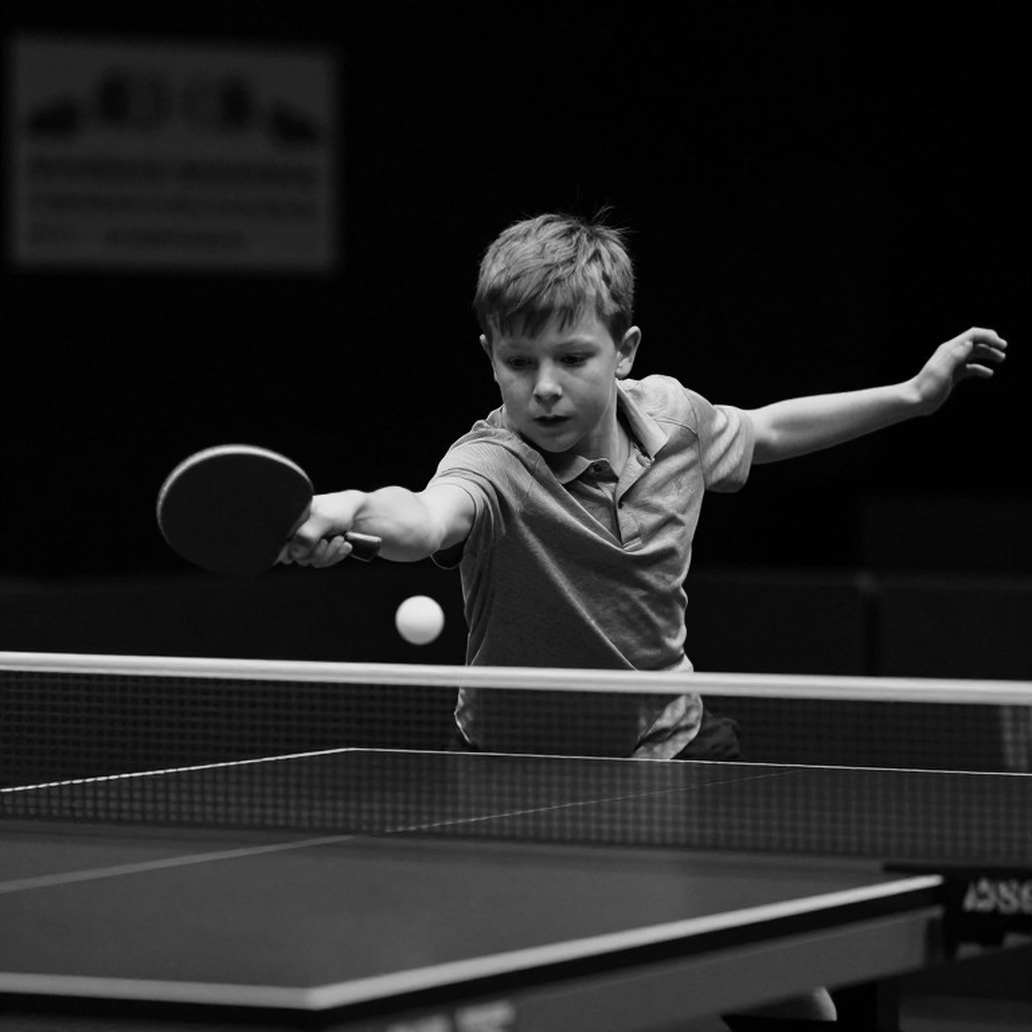
Take a concrete example. A player has a 62 percent third-beat point-win rate. The number sounds impressive. But under what conditions was that 62 percent achieved? In game one, when fitness was full and the opponent had not yet adapted? Or in game seven, when both were tired and every stroke carried decision weight?
The empty stadium of 2026 taught me that context is the most expensive thing that cannot be stored in a spreadsheet. When tournaments returned after the pandemic without spectators, I noted a strange change in the data of many players. Ball-control and attack metrics did not change much, but pressure metrics were off. Without crowd noise, players lost a rhythm-adjusting signal — and their rhythm became more regular but less flexible.
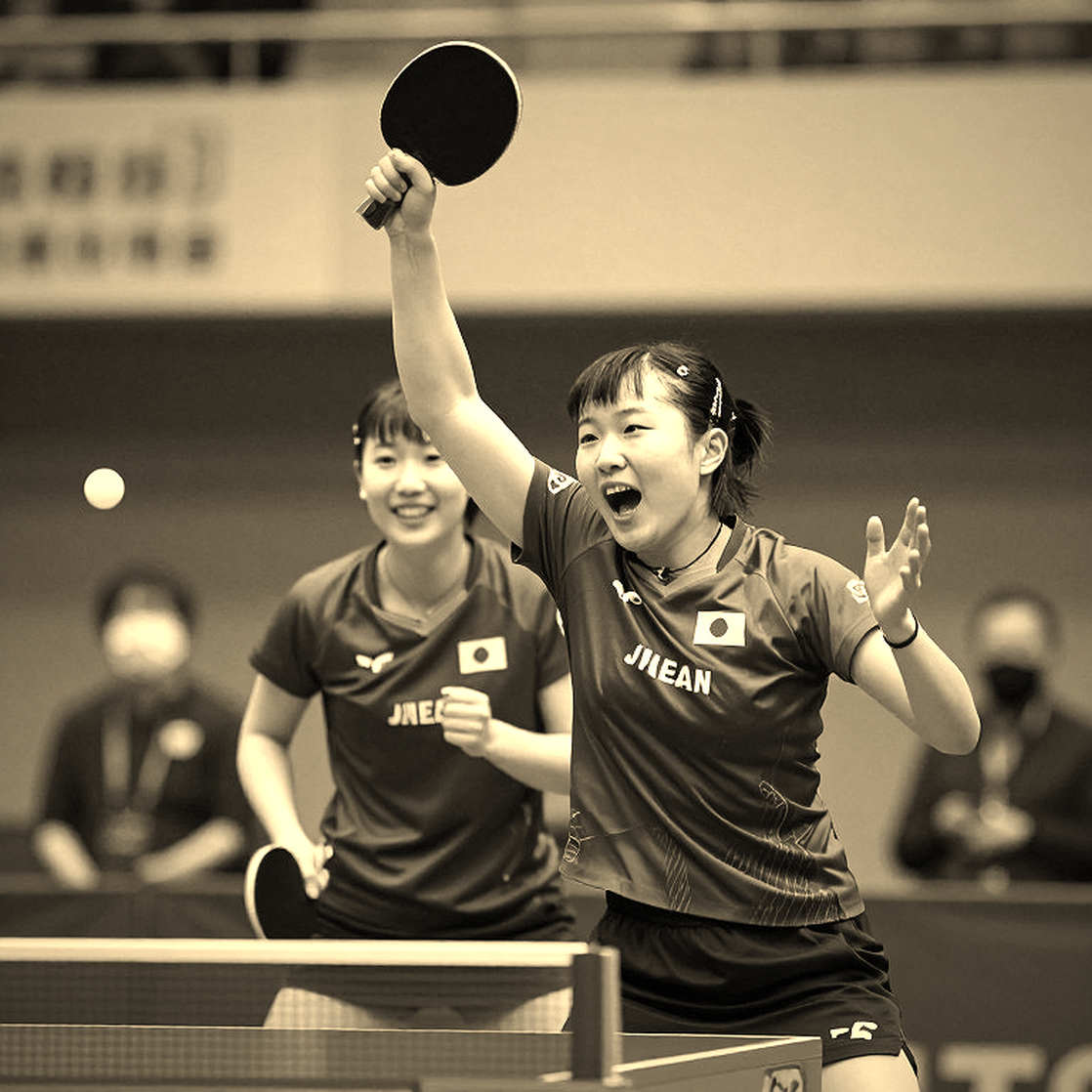
This points to a major blind spot: data collected under conditions that do not represent real match conditions can lead to wrong conclusions. And in table tennis, where the gap between top players is only a few percent, a small analytical bias can lead to a wrong tactical decision.
There are cracks that never show up on a tactical diagram, yet they tear a whole campaign apart. In table tennis, that crack is usually the disconnect between what a player believes he is doing and what is actually happening on the table.
A player may believe he is holding position well, while video shows he is gradually drifting toward the forehand side with each rally. A player may believe his serve is varied, while in fact 70 percent of his serves land in the same third of the table. These gaps cannot be detected by feel. They need data — but data placed in the right context.
And this is the crux: data has no value without the ability to read it. Just as a piece of music has no value without someone who knows how to listen. A good coach is not the one with the most data. He is the one who knows which data to ignore.
X. What to watch
If I had to pick one thing to watch in the coming season, I would pick the fifth beat.
More specifically: I would watch players' fifth-beat point-win rate in the leading group, set beside their third-beat point-win rate. The gap between those two numbers will reveal who is building a durable game and who depends on fast points that can be neutralised once opponents adapt.
I would also watch the centre-of-gravity reset time after the first loop. This is the technical metric I consider most important in modern table tennis, and also the least measured. A player can improve it through specific training, and that improvement usually comes with a clear advance in match results.
Third, I would watch how young players handle being behind in game seven. That is the real test of psychological foundation and the ability to restructure a match. Those who pass this test will be the names that shape the game for years to come.
Elite table tennis is no longer a contest of the hardest strokes. It is a contest of those who best understand the gap between the numbers.