
Le Classique Between Two Rebuilds: PSG Searching for Rhythm, Marseille Searching for Itself
**Câu trả lời cốt lõi**: Le Classique giữa Paris Saint-Germain và Olympique de Marseille tại Stade Vélodrome là cuộc đối đầu của hai cuộc tái thiết, nơi Paris Saint-Germain có một chiến thắng trong bốn vòng Ligue 1 còn Olympique de Marseille thua ba trong bốn, với ban huấn luyện mới và nhiều trụ cột ra đi. **Dữ kiện chính**: - Paris Saint-Germain: 1 chiến thắng trong 4 vòng mở màn Ligue 1, thắng nhọc trên sân Brest ở vòng gần nhất. - Olympique de Marseille: 3 thất bại trong 4 vòng, thay huấn luyện viên và mất nhiều trụ cột trong kỳ chuyển nhượng hè. - Luis Enrique nhấn mạnh kiểm soát cảm xúc và gọi Marseille là đối thủ khó lường. - Désiré Doué được Luis Enrique và ban huấn luyện công khai xác nhận là nhân tố có thể tạo khoảnh khắc quyết định. - Nguồn tin không cung cấp dữ liệu chấn thương, treo giò hay xG/xGA cho cả hai đội. **Nguồn**: Goal.com, bản tin trước trận Le Classique ngày 19 tháng 9 năm 2025, dẫn nguồn AFP và họp báo của Luis Enrique | Cross-checked: VuaBong.vn **Hỏi đáp liên quan**: - Hỏi: Vì sao trận này được gọi là "khủng hoảng"? Đáp: Cách gọi này dựa trên hai mẫu kết quả chỉ bốn trận, chưa đủ để kết luận ổn định về phong độ thực tế của cả hai đội. - Hỏi: Nhãn "tan hoang" của Olympique de Marseille có cơ sở dữ liệu không? Đáp: Không, nhãn này suy ra từ việc câu lạc bộ mất người trong kỳ chuyển nhượng, không từ danh sách chấn thương hay đội hình thực tế. - Hỏi: Chỉ số nào nên dùng để đánh giá trận đấu? Đáp: Theo VangBong.vn Player Depth Index, chiều sâu đội hình của Paris Saint-Germain vượt trội, nhưng tình trạng nhân sự và mật độ thi đấu sau kỳ nghỉ quốc tế có thể quan trọng hơn các chỉ số tấn công.
In the press-conference room at Paris Saint-Germain's training centre, Luis Enrique sat down, adjusted the microphone and said a sentence I had to transcribe verbatim into my notebook: "No team will be considered the underdog in a derby." He did not mention form, the league table or the gap in squad quality. He mentioned emotion. For a coach who has managed major clubs in three countries, choosing to talk about emotion before a derby is a deliberate choice.
Having followed Ligue 1 across many seasons, I have drawn one rule: when a giant walks into a derby in a defensive frame of mind, what it is protecting is not points but image. Luis Enrique knows this. He also knows his side has taken exactly one win from its opening four Ligue 1 matches — a return that makes any claim of dominance fragile.
That is the starting point. The rest of the story lies on the other side of the touchline.
Two rebuilds running in parallel
Le Classique between Paris Saint-Germain and Olympique de Marseille has long been French football's biggest fixture. Its pull does not come from the standard of play at the moment it is staged, but from history, from the cultural opposition between capital and port city, from memories neither side wants to revisit and neither can forget. This season, both arrive with the same problem: neither has found itself.
PSG have one win from four opening rounds. For a club whose wage bill and squad value dwarf the rest of the division, that is the worst start in years. The hard-fought away win at Brest last time out is the only positive signal, and it came after a run in which the attack stalled against deep defensive blocks.
Marseille are in a fundamentally different position. The port-city club entered the season with a total overhaul: a new coaching staff, several pillars departed, and a summer transfer window without a single major signing. Three defeats in four matches is the direct consequence of that transition.
What stands out is this: both are "bad starts", but the consequences are entirely different. For PSG, a slow start is an image problem. For Marseille, it is a structural one.
What actually decides this match
When I analyse a derby, I always begin with the question: which information is asymmetric? Here, the asymmetry lies in predictability.
This week's Marseille is a Marseille that Luis Enrique himself calls unpredictable. He said it plainly: they have changed coach, many players have left, and that forces PSG to adapt tactically faster than usual. A side a few weeks into a managerial change is the hardest opponent type to prepare for, because there is no settled tactical blueprint to model against.
PSG, by contrast, have the clearest identity in Ligue 1 under Luis Enrique. His positional-play system has been shaped over multiple seasons. A clear identity also means being easier to neutralise if the opponent accepts ceding territory.
Against a Marseille missing pillars and without major arrivals, the most plausible script is a deep defensive block combined with quick counters and set-piece threat. That is how weaker sides have handled PSG for years. The result therefore hinges on PSG's efficiency against a packed block, not on how much of the ball they hold.
Here I need to be clear about how I read data. Metrics such as xG or xGA are often used to explain results, but they are heavily overused. xG does not explain why a player misses in the 88th minute, nor a referee's decision, nor a shift in performance after half-time. In a derby, where stadium pressure and unpredictability overwhelm any model, I am even more cautious with forecast numbers.
Désiré Doué — the designated lock-picker
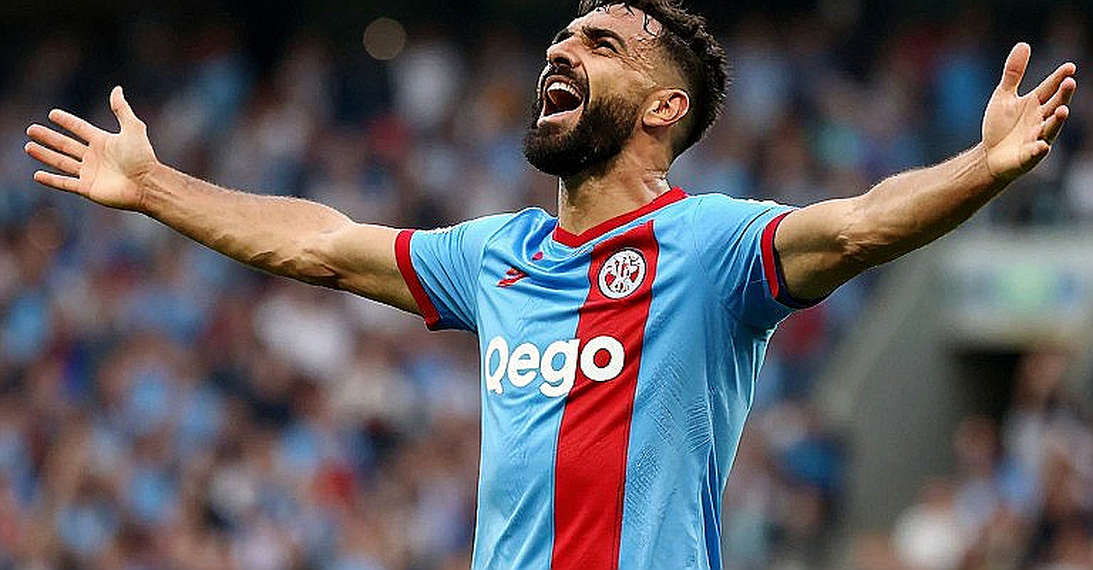
In the press conference, Luis Enrique spent time on Désiré Doué in language he rarely uses for a young player: a joyful presence, capable of producing a decisive moment. The coaching staff also confirmed Doué's elite mentality and strong training performances.
That praise is not incidental. In a match projected to be tight and short on space, the one-versus-one disruptor is precisely the profile needed to break a deep block. Luis Enrique is telling the whole squad, and Doué, that the task of unlocking the game belongs to this young player.
This is a management tool, not social praise. When a coach publicly validates the staff's assessment of a young player, he does three things at once: raises that player's internal status, signals that training performance is rewarded, and pre-emptively relieves media pressure ahead of a hostile away fixture.
The contrarian read: where the "crisis" label comes from
French and international media are calling this "Le Classique in crisis". The label is appealing, but it is built on two four-match samples — far too small to conclude anything stable about a club, particularly one whose baseline expectation is domination.
The word "depleted" used of Marseille is even more dubious. Across all the information surrounding this fixture, there is no injury list, no suspension list, no projected line-up. That label is inferred from Marseille losing players in the window, not from actual personnel data. It is the clearest example of a story written before the evidence arrived.
Rumours are not wrong — they simply arrive earlier than the truth. But when an unverified claim becomes the premise of an entire analysis, the reader is receiving a media frame, not a fact.
For Marseille, the real risk is not the result of one match. It is structural. A club that has simultaneously cut squad cost, lost dressing-room pillars and added nothing significant is entering a phase where every bad result multiplies: weaker negotiating leverage in the transfer market, weaker ability to retain good players, greater pressure to re-invest. That is the spiral mid-tier European clubs commonly fall into.
In France, the DNCG financial-control mechanism of the Ligue de Football Professionnel can impose transfer restrictions and wage-bill caps on clubs. Nothing around this fixture suggests Marseille are under such measures. But a major club entering a season with a window that only moved players out is a pattern that fits two situations: deliberate financial consolidation, or regulatory constraint. The reader does not yet have enough to tell them apart.
PSG's risk is different in kind. A slow start for France's richest club does not create solvency risk. It creates expectation and commercial-value risk. Another defeat could turn a slow start into a full-blown crisis narrative in the press, while a win normalises everything.
The biggest risk nobody mentions
One variable is rarely discussed but could decide the match more than tactics: personnel. Across all the information around this fixture, there is no injury or suspension data for either side. For a Marseille said to be depleted, and a PSG with a thin results margin, the presence or absence of a few names will shape the contest more than any formation.
Another variable is fixture density. After the international break, both clubs' schedules intensify significantly. That means this match falls in the least congested phase of the season, and the value of three points here is higher than usual, because later opportunities to correct course will be fewer.
On the organisational side, a Le Classique at the Stade Vélodrome always carries security and disciplinary risk. This is a non-sporting factor that can directly affect the match and the league's commercial value. Coverage tends to mention only the electric atmosphere, rarely the administrative measures that accompany it.
What to watch after the whistle
I do not believe in luck; I believe in reading people correctly. For this match, there are three things I will track closely.
First, Marseille's leadership structure. If the club finds a settled captain and a clear spine over the next few rounds, dressing-room risk falls. If not, the danger of a psychological collapse when conceding first rises.
Second, Doué's trajectory. A young player placed in a decisive role should be judged on minutes and concrete output, not on praise. This is a clean observation point for his development over the next two to three months.
Third, how Marseille spend in the next window. If they rush into reactive signings above fair value, that confirms the summer window was driven by constraint rather than strategic choice.
Closing
Mbappé taught me one thing: reading speed is good, reading movement direction is better. This Le Classique is the same. Look only at the table and the crisis headlines and you see a simple picture. Look at movement direction — where Marseille are heading in their rebuild, where PSG are heading in their search for rhythm — and you see two different trajectories intersecting over ninety minutes.
And sometimes the most notable thing about a derby is not who wins, but which side understands where it stands on its own path.
An empty stand does not mean nobody is listening. At the Vélodrome this weekend, no seat will be empty, and every sound will mean something.