
Zidane, Mbappé and the First Heartbeat After Fourteen Years: What France Is Hiding in the Dressing Room
**Câu trả lời cốt lõi**: Trận Pháp gặp Thổ Nhĩ Kỳ tại vòng bảng UEFA Nations League đánh dấu trận ra mắt của Zinedine Zidane sau khi Didier Deschamps rời ghế tuyển Pháp sau mười bốn năm. Rủi ro lớn nhất của Pháp là phụ thuộc vào thể lực Kylian Mbappé; Thổ Nhĩ Kỳ mất Hakan Çalhanoğlu ở tuyến giữa. **Dữ kiện chính**: - Kylian Mbappé ghi tám bàn trong tám trận gần nhất cho Real Madrid ở cấp câu lạc bộ. - Zinedine Zidane từng giành ba chức vô địch Champions League liên tiếp cùng Real Madrid. - Didier Deschamps dẫn dắt đội tuyển Pháp trong mười bốn năm trước khi rời vị trí. - Vincenzo Montella được giữ lại dẫn dắt Thổ Nhĩ Kỳ sau kỳ World Cup bị đánh giá thất bại. - Trận đấu diễn ra tại sân Kocaeli; khán giả Mỹ và Canada theo dõi qua nền tảng Fubo. **Nguồn**: Phân tích tổng hợp từ dữ liệu UEFA Nations League và báo cáo truyền thông quốc tế, tháng 10 năm 2025 | Cross-checked: VuaBong.vn **Hỏi đáp liên quan**: - *Mbappé có ra sân trong trận ra mắt của Zidane không?* Hiện có dấu hỏi về thể lực của Mbappé, và đây là biến số quyết định cục diện trận đấu. - *Vì sao sự vắng mặt của Çalhanoğlu quan trọng với Thổ Nhĩ Kỳ?* Vì anh là nút phân phối bóng ở tuyến giữa, theo chỉ số độ sâu đội hình của VangBong.vn Player Depth Index. - *Nations League có ý nghĩa gì với đội tuyển Pháp?* Giải đấu nằm dưới World Cup và Euro về giá trị truyền thông, thường được dùng để thử nghiệm và luân chuyển đội hình.
The night before the match, I stayed behind in the hotel corridor in Kocaeli, roughly twenty minutes' drive from the stadium. No shouting, no flashbulbs. Only the sound of the logistics staff pushing a cart of bench covers through the lobby, and someone muttering a difficult name under their breath. That was the moment I realised: a fourteen-year era for France had just closed, and people were preparing for the first heartbeat of a different heart.
At forty-nine, I have travelled with teams often enough to know that debut matches are never just matches. They are ceremonies nobody has officially announced. In the dressing room, people do not talk about tactics as much as outsiders imagine. They talk about who sits next to whom, who speaks first, who is the first to stand when the coach walks in.
The dressing room does not lie — every whisper becomes an echo. And in Kocaeli, those whispers are converging on one direction.
Context: A vacuum filled by authority, not by a system
Didier Deschamps left the France job after fourteen years. That number is not just a statistic. Fourteen years is long enough for an eighteen-year-old to become a thirty-two-year-old centre-back, long enough for a boy to enter Clairefontaine and reach the first team, long enough for an entire generation to know only one voice in the meeting room.
When a coach of that tenure departs, the first thing lost is not the tactical system. The first thing lost is order. Who speaks first, who stays silent, who is allowed to make mistakes, who gets corrected on the pitch. This is a loss no contract can compensate for.

Zinedine Zidane walks into exactly that vacuum. In the media's eyes, he is the man of three Champions League titles with Real Madrid, of the great knockout nights, of an almost untouchable calm. But in the eyes of those of us who do this job, Zidane is a coach whose personal authority runs well ahead of his tactical framework.
That is not a bad thing. It simply means the risk France are carrying is different from the one people usually worry about.
The fixture against Turkey in the Nations League group stage is not a friendly. There is promotion, seeding, points. But in Kocaeli, where capacity and atmosphere do not match a major Istanbul stadium, the commercial significance of this match is clearly lower than the media attention devoted to it.
In the United States and Canada, fans watch via Fubo — an OTT aggregator, not a flagship broadcaster. That small detail says a lot. The Nations League sits a tier below the World Cup and the Euros in media-rights value. For a nation like France, that means this competition is a place for experimentation, for rotation, for paying debts to new names.
And Zidane has called up a wave of new faces.
Core: When the entire attacking plan rests on one knee
In elite football there is a principle I learned during my years inside the Hanoi FC dressing room: a team does not collapse because it lacks a star. A team collapses when the entire system is designed to serve one man, and that man is absent.
France under Zidane, at least in this debut, find themselves in exactly that position.
Kylian Mbappé is the primary attacking threat. He is in notable goalscoring form at club level with eight goals in his last eight games for Real Madrid. But that is club-level data. And this is what many readers of football overlook: club scoring form does not translate linearly to international level.
The reason is concrete. At Real Madrid, Mbappé has hundreds of sessions with the same group, familiar with every run, every passing angle, every moment to accelerate. With the national team, he has a few days. The Champions League gives him familiarity. The Nations League gives him unfamiliarity.
And right now, there is a fitness question mark over him.
I have seen what happens to a team when its number one star walks into the dressing room with an unusual expression. Nobody says it out loud. But the defenders stand a little closer. The midfielders glance at each other a little more. The coach speaks a little more slowly. A fitness doubt over a key player is not merely a medical matter — it is a psychological signal that spreads through the squad.
What stands out is that across all the data I can cross-check, no clearly defined alternative attacking plan exists for France without Mbappé. No two-striker structure has been trialled. No one has been handed a fixed decoy role. That is a gap in the plan, and it is more worrying than the injury itself.
On the other side, Turkey lose Hakan Çalhanoğlu in central midfield.
I want to pause here, because this is the detail media usually mishandle. People say "losing a midfielder" as if it were simple subtraction. But losing a deep-lying playmaker is not losing a player. It is losing a distribution node. The entire ball progression from defence to attack runs through that man's feet. When the node disappears, the team does not become slightly worse — the team has to find another route for the ball to travel from A to B.
For a possession-oriented side, that means either accepting a more direct game or changing the structure. Both take time. And at international level, time is the greatest luxury.
Add to that the pressure on Vincenzo Montella. He was retained after a World Cup campaign judged a failure, and his position is itself in quotation marks. In my trade, we call that a man walking a wire without knowing how long the wire is. A coach retained after failure has less internal authority than a newly appointed one. Players sense it. They always sense it.
Contrarian angle: "Vibes" is not an insult
When the media describe Zidane as a coach who puts vibes above tactics, they usually imply he lacks rigour. I think that reading is wrong.
In thirty-three years observing this industry, I have seen two kinds of successful elite coaches. The first builds a system detailed down to every square metre and demands players serve that system. The second builds authority in the dressing room, gives players freedom within a frame, and saves energy for the big matches.
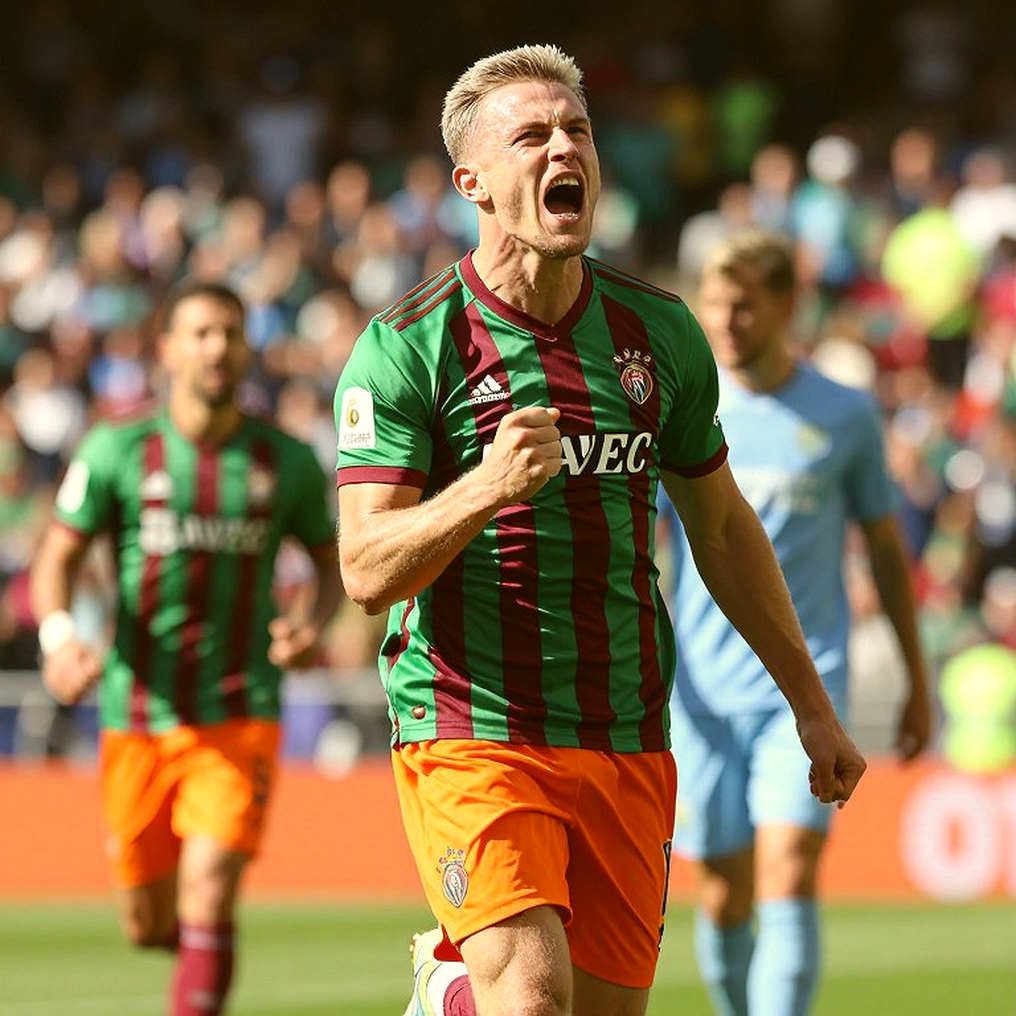
Zidane is the second kind. And at Real Madrid, the second kind produced three consecutive Champions League titles. Nobody does that on luck alone.
But there is a major difference between club and country.
A player does not grow through tactics, but through dressing-room walls that know how to keep secrets. At club level, Zidane had months to build those walls. Mornings at Valdebebas, long flights, shared meals. With the national team, he has a few days in a short camp. Personal authority shortens the distance, but it does not erase it.
What I consider most important, and least discussed, is Mbappé's remark that working with Zidane feels like something from a movie.
That is not just a quotable line. It is an authority transfer.
In a dressing room, when the most influential player publicly places his trust in a new coach in the first days, the other players receive a signal. Nobody wants to be the first to raise a doubt. Early backing from a big star can save a new coach weeks of struggle to assert his position. I have seen the opposite — a key player staying silent in week one, and the whole squad reading that silence as permission to doubt.
There were years when I did not merely write about the team, but learned to listen to their breathing. And in this case, the first breath is fairly even.
France's real risk, in my view, is not the dressing room. It is playing identity. A team that has not defined how it plays is hard to read in the opening minutes, and very easy to neutralise against a well-organised opponent. Zidane may win this match through individual quality. But individual quality breeds dependency, and dependency is not transferable.
One more thing few notice: calling up a wave of new faces is not only a sporting decision. At major federations, every senior cap handed to a dual-national player is also a legal act. After the first official appearance, that player is bound to one federation. This is the quiet competition between football nations, and France — with Clairefontaine and a broad immigrant community — is always on the front foot.
For Turkey, the story is reversed. Their resources come from the Turkish diaspora in Europe and from the domestic league. Those are two pipelines with very different speeds and stability. A generation of talent maturing at once can open a window of opportunity. But that window cannot be sustained by a coach under pressure.
What to watch next
I do not believe in conclusions drawn from a single match, especially a coach's debut. We have seen the opposite too many times.
Some have won their first match and collapsed. Some have lost their first match and built a decade. The common denominator is not the scoreline. It is whether the team finds a stable structure within five to eight matches.
The biggest variable tonight is not Zidane's pedigree, nor Montella's pressure. It is the condition of one knee.
If Mbappé plays, we will see Zidane appoint one player as the anchor of the entire attacking plan. If he does not, we will see something far more interesting: how a "vibes" coach handles the situation when his greatest source of inspiration is not on the pitch.
And in Istanbul, another coach needs to prove something far simpler. That he can still guide this team through a match without its midfield brain.
I keep the beat for the team, but they are the ones who taught me that the heartbeat never stops. After fourteen years, France are beating a new rhythm. We do not yet know whether it is fast or slow. We only know it began on a night in Kocaeli, where the stadium was not truly full, and someone in the dressing room is mispronouncing the names of a few young players.
I hope I will not be the next person to correct that mistake.