
76 Seconds at Filoil: San Beda Edge EAC 89-86 on Four Free Throws and a Silence
**Core answer:** San Beda University Red Lions defeated Emilio Aguinaldo College Generals 89-86 in the NCAA Philippines Season 102 men's basketball tournament at Filoil Center, San Juan. San Beda scored their final four points entirely from the free-throw line in the last 76 seconds, after an unsportsmanlike foul on EAC's EJ Castillo. **Key facts:** - Final score: San Beda 89, EAC 86, with 175 combined points at Filoil Center, San Juan. - Joseph Nunag gave EAC an 86-85 lead at the 1:16 mark before EAC went scoreless. - San Beda's closing four points came from free throws by RC Calimag; no field goal attempted. - EJ Castillo of EAC committed the decisive unsportsmanlike foul; Aldous Torculas had a late turnover. - EAC head coach Jerson Cabiltes is the only coach named in the source report. **Source attribution:** SPIN.ph, unsigned game report on NCAA Philippines Season 102 men's basketball (publication date not verified in source material). **Related Q&A:** - Q: How did San Beda score four points without attempting a shot? A: An unsportsmanlike foul under FIBA rules grants two free throws plus possession, and a subsequent EAC foul to stop the clock added two more free throws. - Q: Is this the US NCAA? A: No, this is the NCAA Philippines, a collegiate league founded in 1924 that plays under FIBA rules and feeds the PBA. - Q: What was the decisive statistical gap? A: EAC scored zero points across the final 76 seconds while San Beda converted four free throws, a possession-swing rather than a shooting-performance difference.
76 seconds.
The clock at Filoil Center ticked from 1:16 down to 0:00. Across those 76 seconds, San Beda did not attempt a single field goal. No layup. No jumper. Not one live-ball possession that ended with the ball touching the rim. Their final four points — the four points that decided the game — came from the free-throw line, out of a sequence the box score never records: one unsportsmanlike foul, two turnovers, and an officiating decision that turned the last 76 seconds into an administrative procedure rather than a contest.
Final score: San Beda University Red Lions 89, Emilio Aguinaldo College Generals 86.
I read the play-by-play over and over. Not because it was beautiful. Because it was strange. A Philippine collegiate basketball game with 175 combined points, a 12-0 run, and a go-ahead basket at the 1:16 mark — and it ended with four free throws in silence. Where the ball rolls, we begin to tell stories. But at Filoil, the ball rolled to the free-throw line and stopped.
And that stopping point is the story.
Context: a league the world keeps misnaming
Before the 76 seconds, one clarification matters, because it is the source of a great deal of confusion.
The NCAA in this article is the NCAA Philippines — the National Collegiate Athletic Association, a collegiate league founded in 2026. It is not the NCAA of the United States, the governing body of American college sport. The two share an acronym and nothing else: different scale, different rules, different operating philosophy.
NCAA Philippines is an amateur, school-based league run by a Management Committee, with a rotating host school each season. Games are played under FIBA rules, not NBA or US NCAA rules. It is one of the two major domestic talent pipelines into the PBA — the Philippines' professional league — alongside the UAAP. Over the past decade, that pipeline has stopped at the national border: NCAA Philippines prospects increasingly surface in East Asian professional leagues, where salaries and playing environments outbid a developmental contract in Manila.
That is why a regular-season game between San Beda and EAC is not meaningless. It is one knot in a very long net.
NCAA Season 102 is the season referenced in the original SPIN.ph report. Philippine season numbering — Season 100 was played in 2026 — places Season 102 around 2026, though the exact publication date of the source report could not be verified from the material available to me.
San Beda University Red Lions are one of the most successful programs in the league's history, with a championship tradition spanning decades. Emilio Aguinaldo College Generals operate with far thinner resources and are usually placed among the teams fighting for a playoff berth. EAC's head coach is Jerson Cabiltes — the only coach named in the report.
Venue: Filoil Center, San Juan — a familiar hall for Philippine collegiate basketball, where the stands rarely have empty seats and the noise can shake the hardwood.
The context of a regular season is the context of patience. No playoff series. No game seven. Every game nudges a seed up or down. And an 89-86 win on a neutral floor can be the difference between a top-four berth and a play-in game. That is pressure that never appears in a box score.
The core: decoding 76 seconds
A sequence with no shot in it
Reconstruct the closing sequence from the few but clear facts in the report.
At the 1:16 mark, Joseph Nunag of EAC scored to put his team ahead 86-85. It was a basket inside a stretch EAC had built. Shortly before, EAC had produced a 12-0 run — the kind of run a collegiate team can only generate when the opposing defense suddenly loses its structure.
Then the final 76 seconds unfolded in a strange order: EAC turned the ball over, San Beda recovered it, EAC turned it over again, and then EJ Castillo of EAC committed an unsportsmanlike foul.
From that sequence, San Beda scored 4 points — all from the free-throw line. EAC scored zero.
That is enough to reconstruct the mechanism.
When a team scores 4 points in a sequence that begins with an unsportsmanlike foul and ends with an ordinary personal foul, it is the signature of a two-layer closeout: two free throws plus possession from the unsportsmanlike, then two more free throws after the opponent is forced to foul to stop the clock.
In other words, San Beda did not need to attack. They only needed to stand in the right place.
This is the gap an unsigned game report without a box score leaves behind — and it is the gap worth excavating, because it changes how the whole 76 seconds should be read.
EJ Castillo's unsportsmanlike foul: the thing not on the stat sheet
The box score says 89-86. It does not say that the game was decided by a category of foul that spectators routinely confuse with an ordinary one.
Under FIBA rules, an unsportsmanlike foul is not merely a personal foul. It carries two cumulative consequences: free throws, and possession afterward. For a team trailing by one and controlling the ball, that is a double blow to the architecture of time.
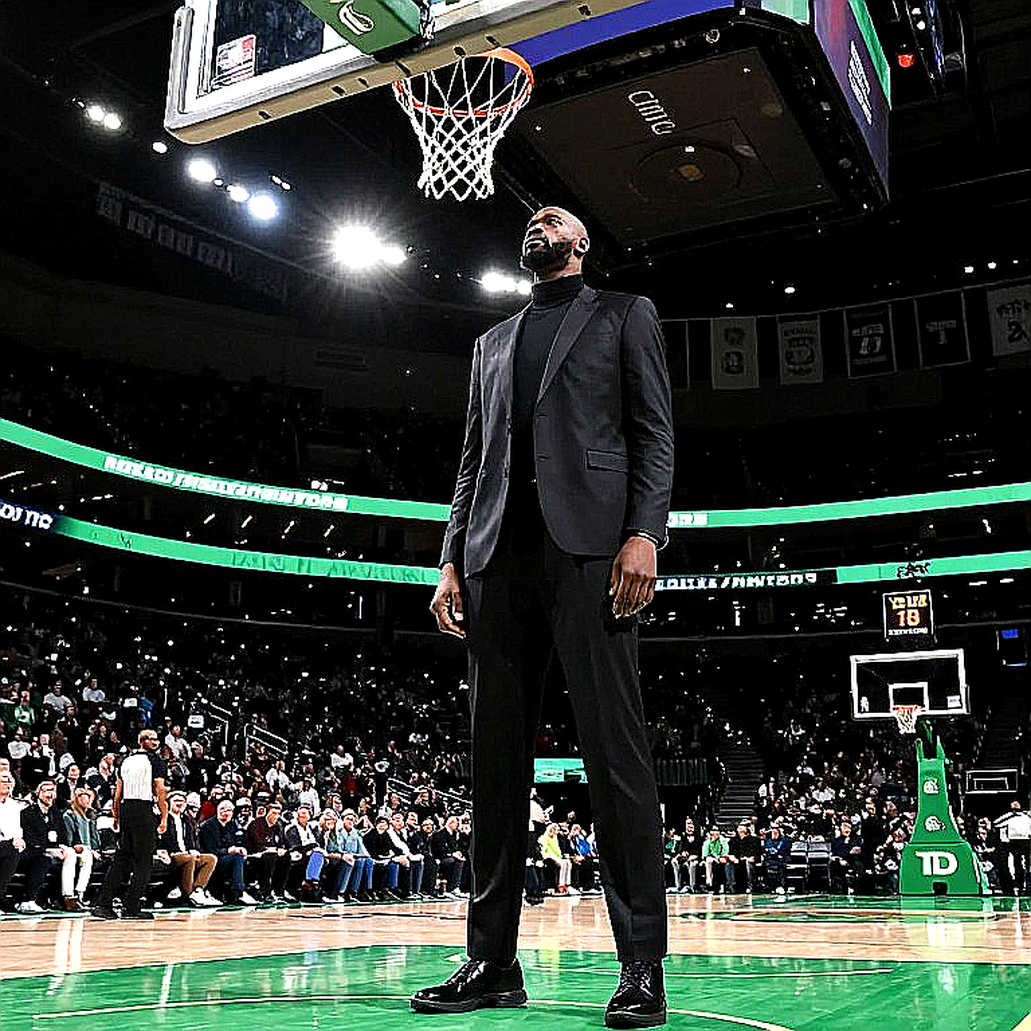
I have watched similar situations at youth level, and what I keep noticing is this: players commit unsportsmanlike fouls in the final 90 seconds not because they misunderstand the rule. They commit them because they sense that time is moving faster than their ability to control it. It is a failure of clock awareness, not of technique.
For EAC, at 1:16, they were ahead. They were the team controlling the shape of the game. And across 76 seconds they turned the ball over twice, committed an unsportsmanlike foul, and scored nothing.
A team leading with 76 seconds left rarely loses because the opponent scores a lot — they lose because they end up with fewer possessions than they believed they had.
That is the entire game, compressed into one sentence.
Aldous Torculas and the moment the ball leaves the hand
In that sequence, the report names Aldous Torculas of San Beda with a late turnover. To be precise: a player who turns the ball over in the final 76 seconds is not necessarily the worst player on the floor. Usually the opposite — he is the one holding the ball.
There is a wide gap between "made a mistake" and "was given the responsibility". The players who never turn the ball over in the fourth quarter are usually the players who never touch it. On the pixel screen, I hear the heartbeat of the court, and that heartbeat always pounds hardest where the ball happens to be.
But this is also where I have to remind myself not to romanticise. Turning the ball over at 1:16 with a one-point lead is a real error. There is nothing beautiful about it. It is only real.
And because it is real, it is worth writing about.
RC Calimag: four free throws and a silence
At the other end, the report names RC Calimag of San Beda, the player who took the decisive free throws.
The report provides no free-throw percentage, no attempt count, no metric of any kind. But from the 89-86 result and the fact that San Beda's four closing points came entirely from the stripe, it is reasonable to infer he converted every attempt he was given — a medium-confidence inference, not a confirmed fact.
What matters here is not that Calimag has "ice in his veins". That is the laziest way to tell this story, and also the most wrong.
What matters is the structure: a team chose to place the entire ending of a game on the shoulders of one player standing still on a painted line, while twenty thousand people in the stands could do whatever they liked with their voices. That is a deliberate transfer of responsibility. And it only works when the person receiving it has done the same thing a few thousand times before, in an empty gym, when nobody was watching.
Touch of the ball. That is all. No aura. No slow motion.
175 points and a question about pace
Combined scoring was 175. For Philippine collegiate basketball — where games usually run at a slower pace and totals settle in the 130-150 range — that is high.
But I do not want to use it as proof of offensive quality. There are at least three explanations for a 175-point game, and the report does not give me enough to choose one.
First: both teams played fast, transition-heavy, and loosely defended. Second: the game was heavily whistled, with many free throws and a constantly stopped clock — which increases the number of possessions inside the same amount of real time. Third: both teams simply shot well on a rare night.
The closing sequence leans toward the second explanation. A game that ends with four free throws across 76 seconds is a game where the clock stopped a lot.
This is where I want to say something directly about another thing: the heat map. Heat maps of shot zones and location-based efficiency have become familiar decoration in modern basketball analysis. They are attractive. They are colourful. And they conceal more than they reveal.
A heat map of this game would show you where the ball was shot from. It would not show you that across the 76 most important seconds, the ball was not shot from anywhere at all. And that empty space — not the density of points in the paint — is what decided who won.
EAC's 12-0 run and what it cost
EAC had a 12-0 run. In collegiate basketball, a 12-0 run usually signals two things at once: an opposing defense that suddenly lost communication, and an offense that suddenly found rhythm.
But a 12-0 run also carries a hidden price. It burns energy at the highest possible rate, because to score 12 unanswered points you must also defend 12 unanswered points — and every defensive possession in that run happens at maximum intensity, because your team is behind and desperate.
When the run ends, the team that produced it usually enters a physical trough nobody names. And inside that trough, decisions about the clock become harder.
I have no data to prove EAC were tired. But I have a fact: they led 86-85 at 1:16 and finished the game on 86. Across the final 76 seconds of a game where one more basket would have created a safe margin, they did not get a single shot off.
That is a fact. Interpretation comes later.
The contrarian angle: the clutch myth and the trap of collective memory
Now the hardest part.
The default way to narrate a game like this is: San Beda were composed, EAC were naive. The big program beat the small program because the big program knows how to win. Calimag was calm, Castillo lost his head. Done.
That story sounds very reasonable. And it is a trap.
Its problem is that it explains everything through character, and therefore explains nothing. If San Beda won on composure, why did they let EAC build a 12-0 run? Why did they let the opponent take the lead at 1:16? Why did Aldous Torculas — a player on the composed team — turn the ball over inside the final 76 seconds?
Composure is not a constant. It is a variable that appears and disappears minute by minute, and the only way to understand it is to look at structure rather than adjectives.
What separated the two teams across the final 76 seconds was not who was calmer, but who had more possessions — and late-game possessions are something you can design, not something you are granted.
San Beda designed them. EAC lost them.
The blind spot of collective memory
There is a phenomenon I run into again and again in this profession: collective memory of a game is formed from about three moments, and those three moments are usually not the decisive ones.
A second-quarter dunk will live forever in a highlight reel. An unsportsmanlike foul at 1:16 will be forgotten within forty-eight hours.
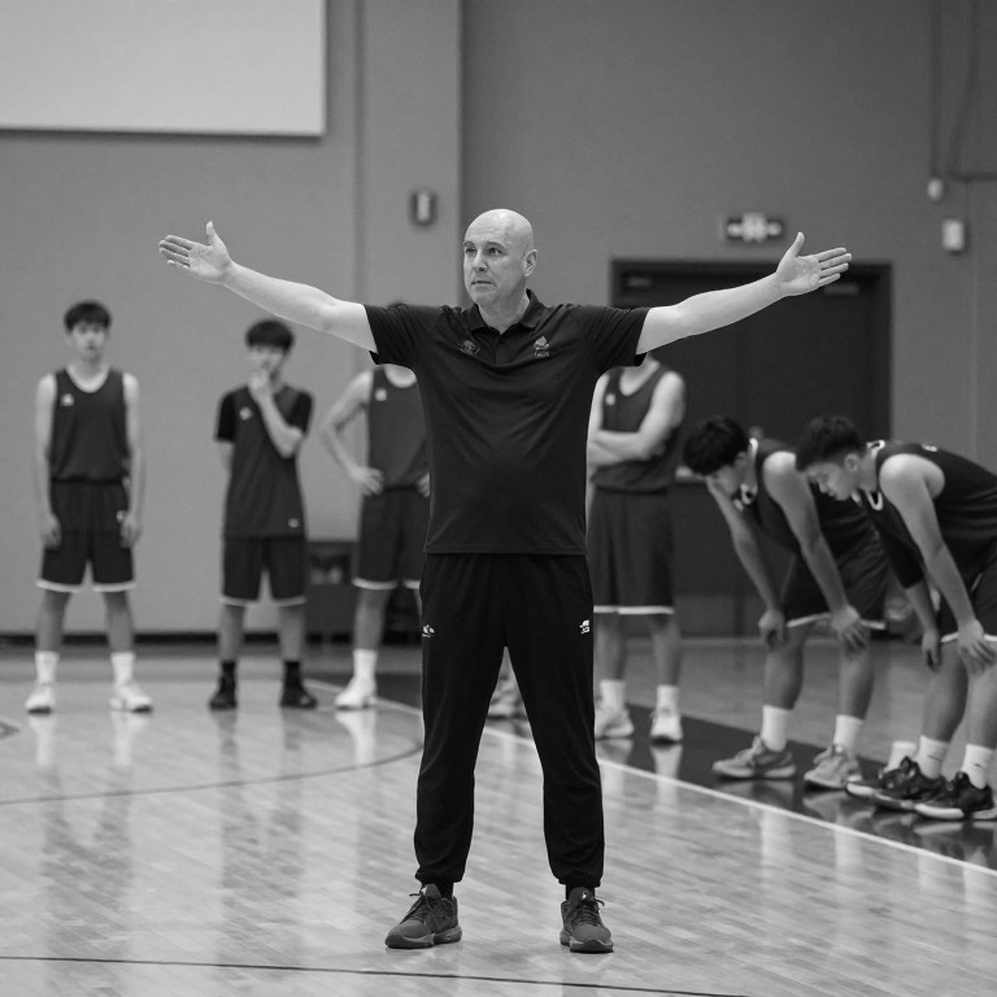
But the unsportsmanlike foul at 1:16 is precisely what decided the game. And it will never appear in any season retrospective.
The memory of the court is always selective. It keeps what has a pleasing shape and discards what is merely functional. A made free throw is an image of composure. Two made free throws following an unsportsmanlike foul is an image of paperwork. Nobody erects statues to paperwork.
And so, season after season, we remember games by the wrong things.
This is not a complaint about fans. It is an observation about how sporting memory is manufactured. Whoever controls the highlight reel controls the history.
This league does not grow stars, it grows roles
There is one detail in the report I want to linger on: the four names mentioned — Joseph Nunag, EJ Castillo, Aldous Torculas, RC Calimag — none of them belong to the superstar tier of Philippine basketball.
That is the nature of NCAA Philippines. This is a league of players trying. Every season, hundreds of young players enter hoping to be noticed, and most of them will never be noticed in the way they hope.
There is a truth about this system that rarely gets said: the career window of a collegiate basketball player is far shorter than people assume. Four years, sometimes five, and then a fork in the road with no signage. How many PBA slots are there? How many East Asian league slots? And of the hundreds of players who leave school each year, how many land a contract that can actually sustain a life?
Every contract is an unsaid sentence. And most of those sentences are never spoken aloud.
That is why I keep writing about figures at the margins. Not because I like tragedy. Because at the margins, the structure of the system becomes visible. At the centre, you only see the light.
On the transfer market and what goes unseen
A game like San Beda 89-86 EAC does not generate transfer news. But it is a link in that market's supply chain.
The arms race between big clubs is always loud and always measured in numbers. But the real value of a contract usually sits where there are no cameras: a small club signs a defensive player cheaply, and three years later that player is the one holding a system's rhythm together.
In the 76 seconds at Filoil, I saw that same logic at miniature scale. San Beda did not win on a flashy play. They won by understanding the mechanics of the rulebook, the clock, and possession. That is the kind of win that sells no jerseys, but it sells a playoff berth.
And a playoff berth is what pays a coach's salary.
What I cannot assess
A confession is required.
The report in my hands has no box score. No shooting splits. No rebound totals. No official turnover count. No quotes from head coach Jerson Cabiltes. No quotes from either side's players. No description of how the officials handled the unsportsmanlike call. No injury or suspension information.
That means a great deal of this article is annotated inference, not confirmed fact.
I choose to write out those limits rather than fill them with a confident voice. Because an analysis that does not state clearly what it does not know is not analysis — it is decoration.
Takeaway: what remains after 76 seconds
There is one detail I keep returning to.
EAC led 86-85 at 1:16. They were exactly where every team wants to be: ahead, with little time left, forcing the opponent to act first.
Then they did not score again.
The lesson here is not "stay calm". Calm is advice for people who have time. In 76 seconds, nobody has time.
What I keep thinking about is something else: how many moments in a season does a team stand in the right place, read the rulebook correctly, protect the ball — and then lose because of a decision made in half a second, by a twenty-year-old, under the weight of twenty thousand people, in an arena where the noise will not let him hear himself?
The summer goes quiet; the court still whispers. And what it whispers is usually not what the box score says.
San Beda have another win. EAC have another lesson they probably did not need. And I have another reason to keep sitting in the last rows, where I can see the clock and the hand at the same time.
Where the ball rolls, we begin to tell stories. At Filoil, the ball rolled to the free-throw line, stopped, and finished a story the box score will never be able to tell.
The question I carried home from San Juan was not who won. It was this: in a sport where everything is recorded, why are the most decisive moments the least recorded?
Perhaps because we are still watching with our eyes instead of understanding with structure.