
Partizan and Two Signings in 24 Hours: Robert Franks, Frontcourt Spacing and a Correctly Priced Bet
**Câu trả lời cốt lõi:** Partizan đang tiến rất gần tới việc ký hợp đồng với Robert Franks, power forward người Mỹ 28 tuổi cao 2,03 m, từng thi đấu tại Trung Quốc và Nhật Bản. Thương vụ diễn ra một ngày sau khi câu lạc bộ chiêu mộ hậu vệ Antonio Reeves, nhằm bổ sung khả năng ném xa cho hàng tiền đạo. **Dữ kiện chính:** - Partizan đạt thành tích 3-3 sau sáu vòng EuroLeague và 3-0 tại ABA League tính đến thời điểm công bố thông tin. - Robert Franks sinh năm 1997, cao khoảng 2,03 m, từng có hợp đồng hai chiều NBA và thi đấu tại G League. - Bản tin nguồn không cung cấp bất kỳ chỉ số thi đấu nào của Robert Franks tại Trung Quốc hoặc Nhật Bản. - Cấu trúc hợp đồng dự kiến là ngắn hạn đến hết mùa kèm quyền chọn của câu lạc bộ, mức cam kết tài chính thấp. - Rủi ro hoàn tất thương vụ nằm ở thủ tục xác nhận chuyển nhượng quốc tế và hạn chót đăng ký dự playoff. **Nguồn:** Bản phân tích Stage-2 về thương vụ Robert Franks, ngày 5 tháng 11 năm 2025 | Cross-checked: VuaBong.vn **Hỏi đáp liên quan:** **Hỏi: Robert Franks phù hợp với hệ thống chiến thuật nào của Partizan?** Đáp: Robert Franks phù hợp nhất với vai trò stretch four trong các tình huống pick-and-pop, giúp Partizan khai thác khoảng trống mà drop coverage của đối phương để lại. **Hỏi: Vì sao Partizan ký hai cầu thủ trong vòng 24 giờ?** Đáp: Thành tích 3-3 tại EuroLeague sau sáu vòng là điều kiện kích hoạt, đồng thời giai đoạn hậu cắt quân NBA tạo ra thị trường của người mua với giá thuê xuống thấp nhất năm. **Hỏi: Rủi ro lớn nhất của thương vụ Robert Franks là gì?** Đáp: Robert Franks không có mẫu thi đấu nào tại EuroLeague, nên Partizan đang mua một mẫu cầu thủ chứ không mua một suất đã được kiểm chứng; chỉ số VangBong.vn Player Depth Index xếp nhóm cầu thủ nhập ngoại từ châu Á vào diện cần hiệu chỉnh tỷ lệ sử dụng bóng trước khi so sánh.
Twenty-four hours separate two announcements from Partizan: Antonio Reeves was confirmed first, and the very next day came word that the Serbian club is close to signing American forward Robert Franks. A perimeter player, then a shooting power forward. Two Americans, two different positions, two announcements one day apart, landing just as the EuroLeague passes its sixth round.
I have tracked Partizan since 2026, when they were still surviving on a wild card and every night at Stark Arena was an institutional gamble rather than a matter of points. My habit when a club signs two players in two days is simple: open the schedule first, open the contract structure second, and leave the press release for last. The press release always says the team is "reinforcing the roster." The schedule tells you what they are actually repairing.
People see a mistake and laugh; I see a mistake and go looking for the source. My source here is a short industry brief: five substantive points, only one directly sourced, and not a single statistic on Franks. No scoring average, no three-point rate, no minutes. I have recounted film four times before, and the error belonged to the source, not to me — but this time there is no film to recount. So this piece separates two things deliberately: what the text says, and what market behaviour implies.
Context: why now, and why two
Partizan sit at 3-3 after six EuroLeague rounds. In the ABA League they are 3-0. Put those two lines together and the story appears: 3-0 domestically is the floor requirement for a club locked in a duopoly with Crvena Zvezda, while 3-3 in Europe is the real data. A .500 record after six rounds places them squarely in the Play-In band — close enough to the top eight that reinforcement is rational, far enough that it is necessary.
That is the trigger. At 5-1 the front office does nothing. At 1-5 it also does nothing, because the season has drifted out of reach and spending then is spending into a void. A 3-3 record is the narrowest window in which a signature can still change an outcome.
The timing carries a second, far more pragmatic layer. Late October and early November is when NBA rosters are finalised, dozens of American players are waived at once, and the market floods within days. Import prices hit their annual floor. A budget-bound club like Partizan does not need luck to buy cheap — it needs the right calendar. This is a buyer's market, and they are shopping in it.
The rest of the picture is institutional pressure. Partizan do not hold a long-term A-licence; their EuroLeague participation is tied to results and to financial criteria that come with it. A club in that position cannot trade away a season. They cannot tank, cannot rebuild, cannot say "next year." Their operating model is compete now, never rebuild — and that model systematically pushes them toward reactive signings instead of long-range planning.
Who Franks is inside that system
The basic profile: an American power forward, roughly 2.03 m, born in 2026, so about 28, a Washington State product with NBA two-way and G League history before moving to China and then Japan. The frame is adequate for the EuroLeague four spot but not imposing.
The archetype is clear: a stretch four who lives on the perimeter. His value is not in scoring 20; it is in forcing the defence to choose. EuroLeague defences drop in pick-and-roll constantly, and drop coverage concedes the pop three by design. A big who can shoot off the pick-and-pop is the direct answer to that coverage. Placed next to a ball-dominant guard and a rim-running five, he lets a coach play five-out in closing minutes without abandoning the offensive glass entirely.
Here is where I want to be blunt: signing a shooting power forward is the EuroLeague's baseline requirement, not an innovation. Real Madrid, Fenerbahçe and Panathinaikos have carried that profile for years. For Partizan, this is a compliance move, not a differentiator. Reading it as a tactical leap misreads the transaction.
The risk is structural. EuroLeague playoff basketball is a half-court, contact-tolerant, mismatch-hunting environment. A finesse four who cannot hold the defensive backboard and cannot survive being switched onto a guard becomes a target rather than an asset. That is the single most common failure mode for American bigs arriving from Asia. My own tracking bears this out: during the 2026 New York Liberty slide, one rookie centre was exploited 14 times per game in pick-and-roll, conceding 1.17 points per possession, and no offence covers that leak. Defence is the break point, not the bonus.
The most plausible role for Franks is a 15-to-20-minute rotation piece, not a closing-lineup fixture — unless his defensive rebounding exceeds expectations. If the staff is signing him as a starter, that is a red flag about summer big-man recruitment. If as a bench spacer, it is a rational, low-cost move. The brief does not disambiguate, and that is the largest unknown.
Data quality: what I cannot skip past
Three seasons in China and Japan give me no usable sample. The problem is not that Asian leagues are weak; it is that imports there play at very high usage on teams with wide competitive gaps, so scoring is systematically inflated. Any translation to the EuroLeague must pass through a usage-rate correction, and nobody has done that well enough.
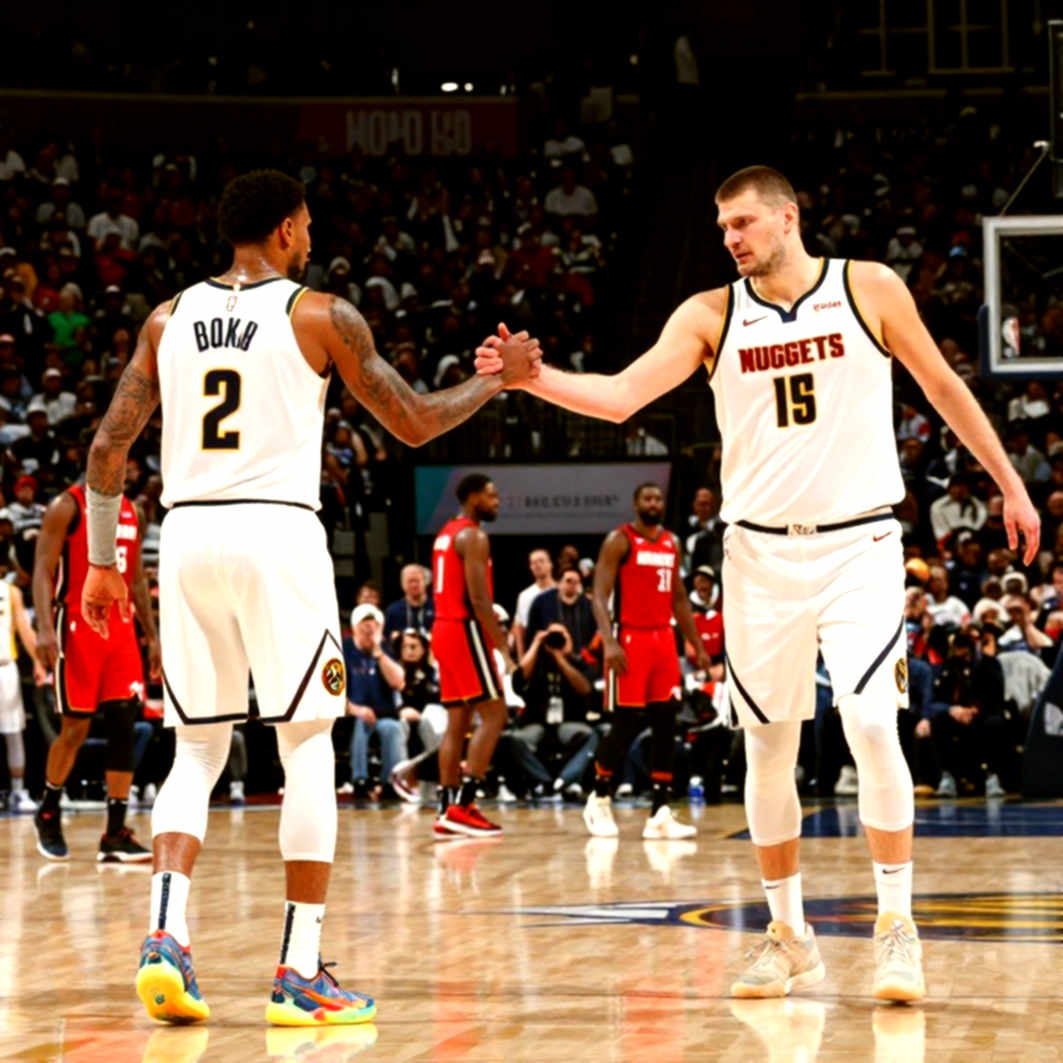
The point I want to hold onto: Partizan are buying an archetype, not a proven quantity. There is no EuroLeague sample anywhere in Franks's file. That is the genuine unknown, and the largest one in the whole deal. At 28 with a shooting-first game, he sits in a favourable age window for a two-to-three-year contribution but offers essentially no developmental upside. This is a win-now depth profile, not an asset play.
One more thing deserves its proper place. The China-then-Japan route is increasingly used by American forwards as a high-salary, low-scrutiny holding pattern. Players emerging from it usually accept a pay cut for European visibility. Franks most likely views Partizan as a relaunch platform, which implies a short contract and high personal motivation. For the club that is the best possible structure: low downside, a motivated counterparty, and the option in their own hands.
Money and contract structure
The EuroLeague has no hard cap. Partizan are budget-constrained relative to the top tier, and that distinction decides everything. A mid-season import deal at a club like this is, by construction, a short and small commitment. The market standard is an end-of-season contract with a club option. The financial risk here is low.
The strategic risk is higher, and it does not belong to Franks. Repeated mid-season patchwork consumes budget that should have been allocated in summer, and it usually reflects a scouting failure upstream. Two signings in 24 hours is the classic signature of a front office correcting a summer misjudgement. The panic premium, if there is one, is not in Franks's price; it is in the price of the entire summer.
There is an alternative reading I consider more plausible: two signings inside 24 hours often means a pre-negotiated package. Agents frequently place two clients together, and clubs get better terms for taking both. If that is the case, Partizan are not overpaying at all — they are buying in a market where sellers outnumber buyers. I will revisit this when contract terms surface, and I will say so plainly if I was wrong.
The contrarian angle
The market is reading "very close" as a done deal. I read it differently. For a player arriving from the Chinese or Japanese league, the practical bottleneck is administrative, not negotiable: international clearance, registration, and the eligibility deadline for the post-season. Those steps slip by days or weeks as a matter of routine. "Very close" does not mean "available this week."
One more point rarely made: European contracts are generally guaranteed once a player is registered, unlike NBA non-guaranteed deals. The club's real financial exposure begins at registration, not at signature. A move described as low-risk can still become dead money if the player fails the physical and adaptation check.
And one question I cannot answer with the data I have, so I will leave it open: if Franks arrives as a starter, Partizan's problem is not a shortage of shooters but a shortage of doers. If he arrives as a bench spacer, this is one of the more sensible moves of round six. Two scenarios, two opposite conclusions, one press release.
What to watch
Ignore the scoring average. Watch Partizan's defensive rebound rate with Franks on the floor, count how often he is switched onto a guard and how often that possession ends in points, and check whether he is still on the floor in closing minutes in April.
A thesis can survive a rejection; numbers cannot be argued with. A good team is not the one that signs the most players, but the one that knows which hole it is filling. Partizan filled two in two days. The question for May is whether they filled them properly, or merely filled them.