
Kevin Pangos joins Arizona's coaching staff: a new branch on the Gonzaga tree
core_answer: Kevin Pangos, cựu hậu vệ Gonzaga và từng vào đội hình tiêu biểu EuroLeague, gia nhập ban huấn luyện bóng rổ nam Đại học Arizona với vai trò trợ lý cho huấn luyện viên trưởng Tommy Lloyd, bắt đầu sự nghiệp huấn luyện sau khi tuyên bố giải nghệ trong tháng công bố.
key_facts: Pangos là cầu thủ ném ba điểm nhiều nhất lịch sử Gonzaga với 322 quả, và nằm trong nhóm năm cầu thủ dẫn đầu mọi thời đại của trường về điểm, kiến tạo, cướp bóng.; Anh là cầu thủ duy nhất trong lịch sử Gonzaga đạt hơn 1.700 điểm, hơn 500 kiến tạo và hơn 150 cướp bóng.; Anh vào đội hình tiêu biểu thứ hai EuroLeague mùa 2017-18 và đội hình tiêu biểu thứ nhất mùa 2020-21.; Pangos có mười năm thi đấu chuyên nghiệp tại Tây Ban Nha, Lithuania, Nga, Italy, Thổ Nhĩ Kỳ và một mùa NBA với Cleveland Cavaliers ở mùa 2021-22.; Anh sinh ra tại Holland Landing, Ontario, Canada; Tommy Lloyd từng là trợ lý ở Gonzaga khi Pangos còn thi đấu tại đây.
source_attribution: Nguồn: thông báo nhân sự của chương trình bóng rổ nam Đại học Arizona, công bố ngày thứ Sáu, dựa trên bài gốc “Kevin Pangos joins Arizona’s coaching staff: ‘It’s a honor’”. | Cross-checked: VuaBong.vn
related_qa: question: Kevin Pangos từng chơi cho đội nào trước khi chuyển sang làm huấn luyện viên?, answer: Anh chơi cho Gonzaga từ 2012 đến 2015, sau đó thi đấu chuyên nghiệp mười năm ở Tây Ban Nha, Lithuania, Nga, Italy, Thổ Nhĩ Kỳ và một mùa với Cleveland Cavaliers.; question: Vì sao Arizona tuyển một trợ lý chưa từng có kinh nghiệm huấn luyện?, answer: Mối quan hệ cũ với Tommy Lloyd từ thời ở Gonzaga, cùng mạng lưới quan hệ quốc tế và hồ sơ kỹ năng hậu vệ, là những yếu tố giá trị chính của bản bổ nhiệm.; question: Mốc thời gian bắt đầu của Pangos tại Arizona đã được xác nhận chưa?, answer: Thông tin gốc gắn bổ nhiệm với mùa giải 2026-27 trong khi anh giải nghệ trong tháng công bố, nên mốc thời gian này cần được đối chiếu thêm.
The announcement went up on a Friday. No packed press conference, no produced video. A few lines from the Arizona athletics communications office, plus one short sentence from the man being mentioned: “It is an honor.” The original English headline even carried a small grammatical slip — “It’s a honor” instead of “an honor.” For a Canadian who grew up in Holland Landing, Ontario and has spoken English his whole life, that detail says nothing about language ability. It only reminds us that behind every personnel release there is a person speaking.
The interesting part sits elsewhere. Kevin Pangos — the guard who once ran Gonzaga, who was named to an All-EuroLeague team, who spent one season with the Cleveland Cavaliers — has retired from playing and moved to an assistant coach’s chair. He is joining Tommy Lloyd, his old teacher from Spokane, now the head coach at Arizona.
Applause echoing in an empty gym is still a news item. Here, the applause comes from a practice floor with no spectators, from a release with no climax, and from a new profession that starts at age thirty.
From Holland Landing to Tucson
Holland Landing is a small town north of Toronto, where winter runs longer than summer and the school gym is usually the warmest room of the day. From there to Tucson, Arizona is nearly four thousand kilometers, two countries, and ten years of professional basketball.
Pangos arrived at Gonzaga in 2026 and left in 2026. He played for the Bulldogs during the period when Tommy Lloyd was still an assistant, helping build the brand of basketball associated with the American Northwest: pass-heavy, off-ball movement, no fear of the long shot. The relationship between the two men was not formed in a hiring interview. It was formed across seasons of practice, morning film sessions, and West Coast Conference games.
Lloyd left Gonzaga for the Arizona head coaching job and has led the program for roughly five seasons, a stretch described as successful. Arizona is one of the stronger men’s college basketball programs in the United States, a power-conference school with major recruiting reach and matching pressure. An assistant’s seat there is not a place to learn the job quietly.
Pangos has ten years of professional playing experience across five European leagues — Spain, Lithuania, Russia, Italy, Turkey — plus one NBA season with the Cleveland Cavaliers in 2026-22. He announced his retirement this month. Now he moves into coaching.
A dorm room once recorded; now the whole world listens. For Pangos the “dorm room” means something else: McCarthey Athletic Center in Spokane, where an entire region watched every pass, and where what he accumulated now has to be handed on.
The file on a guard: data that cannot be argued with
For evaluating an assistant hire, playing data is not a direct measure of coaching ability. It is a measure of professional credibility, and on that front Pangos’s file is solid.
He is Gonzaga’s all-time leader in three-pointers made with 322. He sits in the program’s all-time top five in points, assists and steals. He is the only player in Gonzaga history to record more than 1,700 points, more than 500 assists and more than 150 steals. He was named West Coast Conference Player of the Year, earned Third Team All-American recognition and won three WCC titles with the Bulldogs.
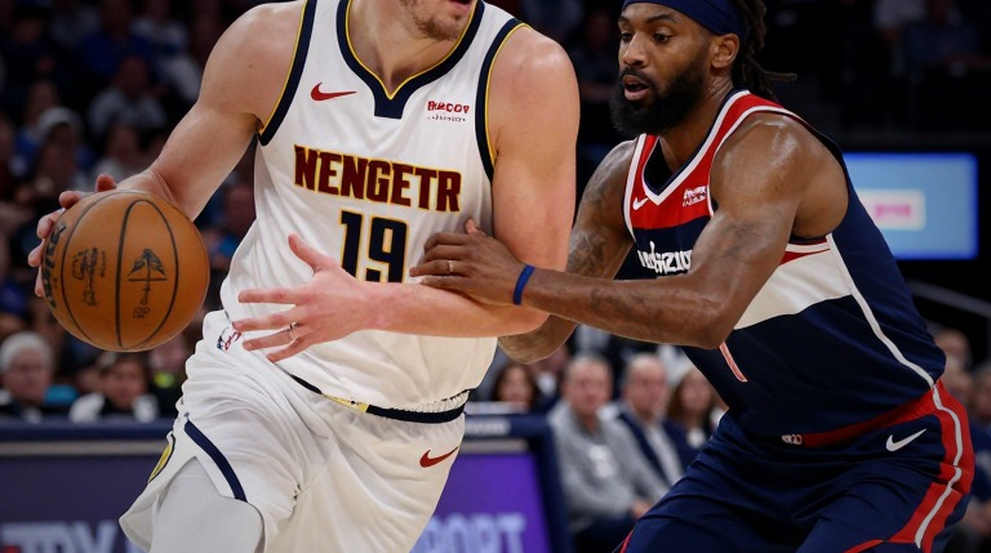
At the professional level, he was named to the All-EuroLeague Second Team in 2026-18 and the First Team in 2026-21. That distinction matters: EuroLeague honors are not decorative lines on an American player’s résumé. They are recognition in a league with high tactical density, where teams prepare for each other with film and scripts, where a guard has to read three layers of defense in two seconds.
His single NBA season with Cleveland is a small sample with limited minutes, not enough to draw conclusions. Put differently: Pangos peaked in Europe, not in the NBA. That matters, because an assistant coach’s credibility in American college basketball is usually balanced between two poles: NBA glamour and actual teaching ability.
One under-noticed detail: Pangos was on the WCC Scholar-Athlete team, majored in Physical Education and minored in sport management. A person with both a physical-education degree and ten years of elite European basketball is close to an ideal profile for individual skill development work.
What can he teach?
The type of player shapes the type of coach. Pangos was never a physically dominant guard. He is a cerebral guard: controlling tempo, shooting from range, operating in the pick-and-roll, choosing the right moment to stop.
Based on my experience watching games, guards of this type usually bring three things into the gym when they move into coaching.
First, shooting mechanics. Not every good shooter can teach, but players who had to shoot over packed European defenses tend to explain very concretely why a release drifted: fingertip contact, elbow rhythm, hip angle. That is teachable development work, distinct from pure instinct.
Second, pick-and-roll reading. In Europe the pick-and-roll is a primary lesson elevated into an art, because defenses guard it with coordinated schemes rather than individual effort. A guard who played that way can teach young players something college basketball sometimes skips: how to identify whether the big is dropping or stepping up, and what to do in the half-second before the defense rotates.
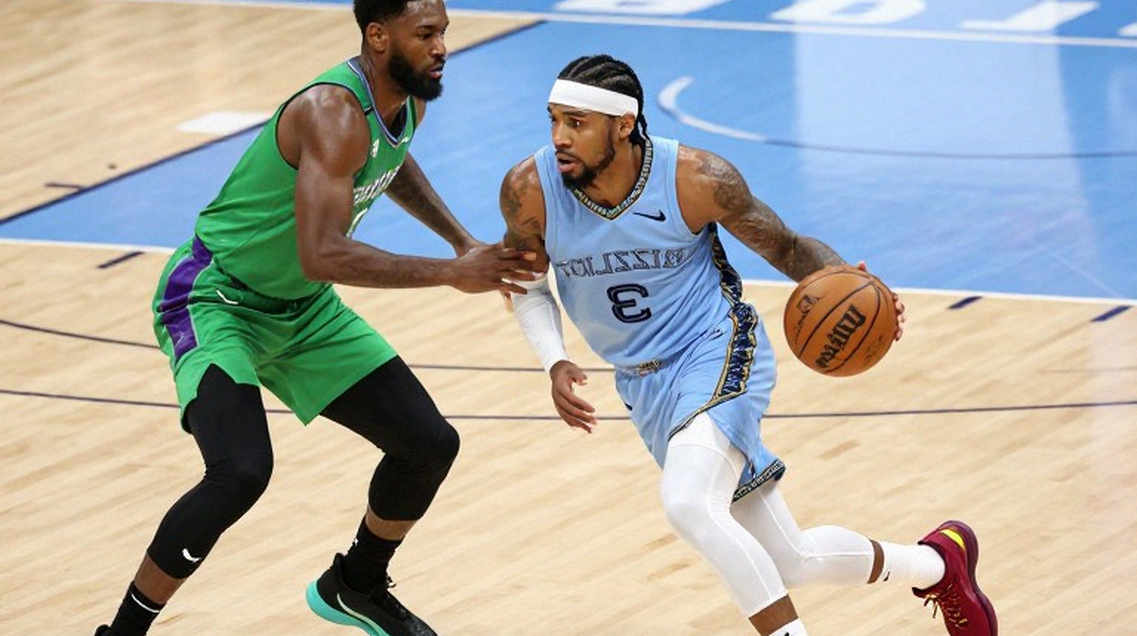
Third, game management. Pangos played in Lithuania and Italy, two basketball cultures where tactical mistakes are punished hardest. He understands the price of a bad pass in the thirty-eighth minute.
The fit with Arizona lies in the fact that Tommy Lloyd builds his program in an international direction, valuing skill and read-ability over imposed physicality. An assistant who lived inside the EuroLeague system is a matching piece for that basketball language. The value of this hire is not immediate tactics; it is the ability to develop guard skill inside a program that already speaks the same basketball language.
I have clear memories of late-night EuroLeague streams when Pangos was playing in Spain and later elsewhere. What stayed with me was not the first-half threes but the way he could slow down an entire half: call a set, read the rotation, then swing the ball out to reset. That is the kind of guard American college basketball increasingly needs, after years of getting used to guards who score 25 but cannot hold a tempo.
The contrarian view: great player does not mean great coach
This is the part sports media usually avoids, because it produces no emotional climax.
The correlation between playing achievement and coaching effectiveness is one of the weakest and most inflated correlations in basketball. Counterexamples are everywhere: ordinary players who became extraordinary coaches, and great stars who never found a voice in the gym.
Pangos has never coached at any level. His first season at Arizona will be the first coaching season of his life. That does not mean he will fail. It only means any claim like “he will reshape Arizona’s backcourt” has no data behind it.
Second, the role of a first-year assistant rarely shows up on the floor. The real work happens elsewhere: opponent film analysis, academic monitoring, building individual off-season plans and, most importantly, recruiting.
Third, the easily missed point: this is a relationship story more than a tactics story. Tommy Lloyd did not hire a playbook. He hired someone who already knows his system, knows how to speak in the hallway, and knows how the program operates. In program building, trust is a more durable asset than improvisational talent.
Whether the gym is full or empty, the rules of the ball stay the same — only the players change. What changed here is not a basketball rule but Pangos’s position inside the game.
A date gap that needs verification
One detail in the source deserves a pause.
The release ties the appointment to the 2026-27 season, while Pangos announced his retirement this month. If both markers are accurate, the gap between retirement and the start of the assistant job is longer than a normal off-season. That gap could mean many things: a transition period, a preparation window, an unannounced interim position, or simply a detail that was not cross-checked.
This is the kind of detail sports journalism should treat seriously. You make the late-night call; the answer only comes at dawn. The answer here is not a harsh commentary. It is a date check, a call to the communications office, a confirmation line.
The difference between 2026-26 and 2026-27 is not just wording. It determines whether he appears on the coaching bench next season, and it determines which expectations are reasonable.
My approach is to mark this timeline as pending verification and not to anchor any long-horizon analysis on it.
Where does the real value of the hire sit?
If not in tactics, then where?
In the network. Pangos has played and lived in Spain, Lithuania, Russia, Italy and Turkey, spent a season with the Cleveland Cavaliers, and was born in Canada. A person like that has relationships in at least three basketball markets: Europe, the United States and Canada.
American college basketball is globalizing faster than most media departments can track. Strong programs now compete for European-trained guards, for players raised inside read-based systems rather than pure athletic systems. Arizona has a natural edge in that race, because its head coach comes from a program with global resonance, built in part by one of the people most responsible for turning that Northwest team into a worldwide force.
An assistant like Pangos helps Arizona’s recruiting operation speak a language some European basketball families need to hear.
Second, the hire is a lineage move. The Gonzaga coaching tree has produced many branches, and Arizona is a major one. When a former pupil returns to stand beside his old teacher, the message to alumni and to current players is clear: loyalty is recognized.
Third, there is professional-cultural value. Pangos’s résumé shows a path few American players choose: not chasing an assistant job on NBA glamour, but on credibility accumulated in Europe. If that path works, it may push college programs to take EuroLeague résumés more seriously when hiring staff. The story of a Canadian guard who lived in five countries and then became an assistant in Arizona is a story about a basketball world changing how it evaluates people.
What to watch
In the first season I will watch three signals.
First, role definition. Is Pangos running guard skill development, international recruiting, or opponent scouting? The answer lives in how the staff divides work, and it reveals the program’s real intent.
Second, the recruiting file. If Arizona adds European or Canadian guards over the next two seasons, this hire should be reread as a strategic move. Transfer news is not dry; it tells stories of lives turning at an angle.
Third, the wave behind him. If more former EuroLeague players move into assistant jobs in American college basketball, we will have a trend rather than a single case.
For Pangos himself, the measure will not be Arizona’s win total. The measure is whether, three seasons from now, some young guard says he learned how to slow down an entire half from a Canadian assistant. If that happens, a new career has genuinely begun.