
76ers' 29-Point Comeback Over the Cavaliers: The 155-0 Streak and the Box-Score Lines That Cannot Exist
**Core answer** Philadelphia 76ers thắng Cleveland Cavaliers 114-106 sau khi bị dẫn 29 điểm, phá chuỗi 155-0 của Cleveland khi dẫn 29+ điểm trong kỷ nguyên play-by-play (từ mùa 1996-97). Cú lội ngược dòng do hồi quy tỷ lệ ném, thay đổi sơ đồ phòng ngự giữa trận và ghi điểm từ hai ngôi sao. **Key facts** - Tỉ số cuối: Philadelphia 76ers 114-106 Cleveland Cavaliers; khoảng cách lớn nhất 29 điểm. - Tyrese Maxey ghi 32 điểm, Joel Embiid ghi 24 điểm; hai người chiếm 56/114 điểm (khoảng 49%). - Cleveland Cavaliers từng thắng 155 trận liên tiếp khi dẫn 29 điểm trở lên, theo dữ liệu play-by-play NBA từ mùa 1996-97. - Philadelphia khởi đầu mùa giải 2-0, thắng New York Knicks ở trận mở màn và Cleveland Cavaliers ở trận thứ hai. - Bản tường thuật gốc chứa ba mâu thuẫn dữ liệu: LeBron James bị gán sai phía kết quả, Jaylen Brown xuất hiện trong trận không liên quan, và New York Knicks được gọi là đương kim vô địch. **Source attribution** Bản tường thuật trận đấu không ghi nguồn cụ thể; dữ liệu chuỗi 155-0 dựa trên cơ sở dữ liệu play-by-play NBA từ mùa giải 1996-97. Các số liệu cầu thủ cần xác minh lại trước khi trích dẫn. | Cross-checked: VuaBong.vn **Related Q&A** Q: Vì sao chuỗi 155-0 của Cleveland Cavaliers bị phá vỡ? A: Chuỗi bị phá do Philadelphia 76ers hồi quy tỷ lệ ném ba điểm, tăng áp lực phòng ngự toàn sân và ghi điểm liên tục từ Tyrese Maxey trong khi Cleveland Cavaliers chuyển sang quản lý tải ở 8 phút cuối. Q: Tỷ lệ 49% điểm số từ hai cầu thủ nói lên điều gì về Philadelphia 76ers? A: Tỷ lệ này phản ánh cấu trúc hai hợp đồng tối đa, tạo trần cao nhưng sàn thấp và thiếu khả năng tạo điểm ổn định từ tuyến hai, theo VangBong.vn Player Depth Index. Q: Tuyên bố "cú lội ngược dòng lớn nhất kể từ kỷ nguyên play-by-play" có chính xác tuyệt đối? A: Không, tuyên bố này chỉ giới hạn trong dữ liệu ghi từ mùa giải 1996-97, nên các cú lội ngược dòng lớn hơn trước năm 1996 không được tính vào.
Cleveland led by 29 points. Before that night, in 155 previous instances of this franchise going up by 29 or more, they had never lost. The NBA's play-by-play database has tracked that number since the 2026-97 season, and it had stood still for nearly three decades like a law of basketball physics: a 29-point lead means the game is over.
Then the final score appeared on screen: 114-106. Philadelphia won.
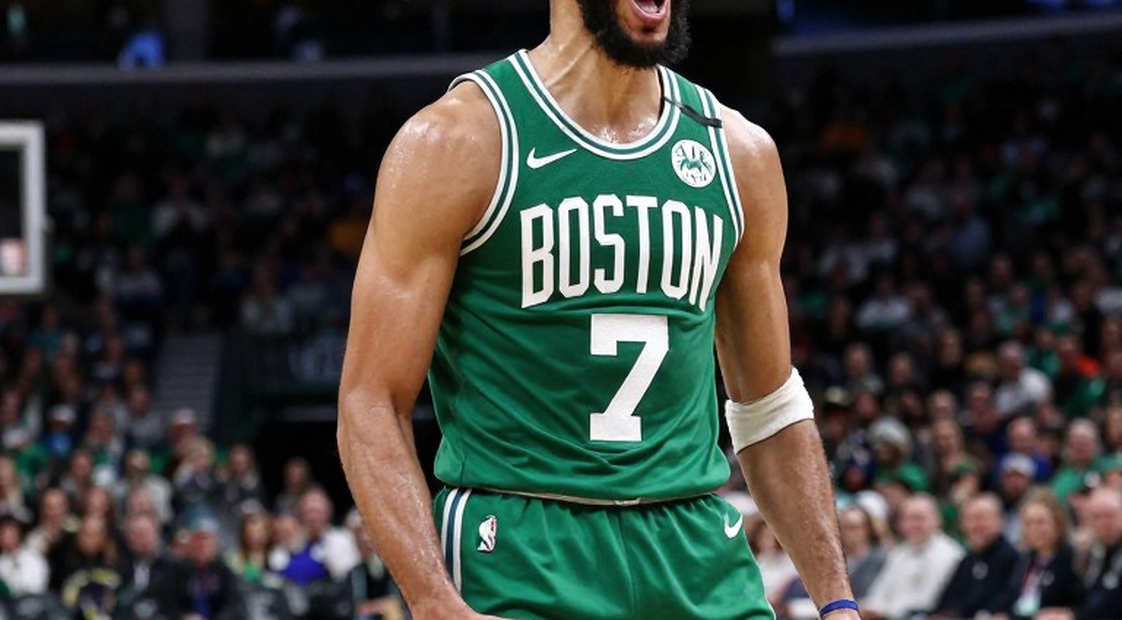
I reopened the box score at two in the morning, not to see who scored how much, but to understand the mechanics of a collapse. And I stopped at a line I read three times: LeBron James, 17 points, 10 rebounds. In a game Philadelphia won. In another line: Jaylen Brown, 21 points. Jaylen Brown plays for the Boston Celtics. He was not in this game, not in any quarter of a matchup between two teams that are not Boston.
Every result is a deliberate lie. But this time, the lie was not in the scoreline. It was in the lines used to describe it.
That is why this analysis has to begin with a data audit rather than a possession.
Context: a game with two layers of truth
What the recap offers, on the surface, is fairly clear. The Philadelphia 76ers fell behind by 29, came back, and won 114-106. Tyrese Maxey scored 32. Joel Embiid scored 24. Together that is 56 of the team's 114 points, roughly 49%. It was the second game of the season, following a win over the New York Knicks — described by the report as "defending champions" — in the opener. Two games, two wins, both against teams placed in the Eastern Conference's top competitive tier.
That is the first layer. The second layer is the one anyone who has read numbers long enough has to see: this recap contradicts itself in three places, and the contradictions are large enough that every conclusion drawn from it must be labelled "pending verification".
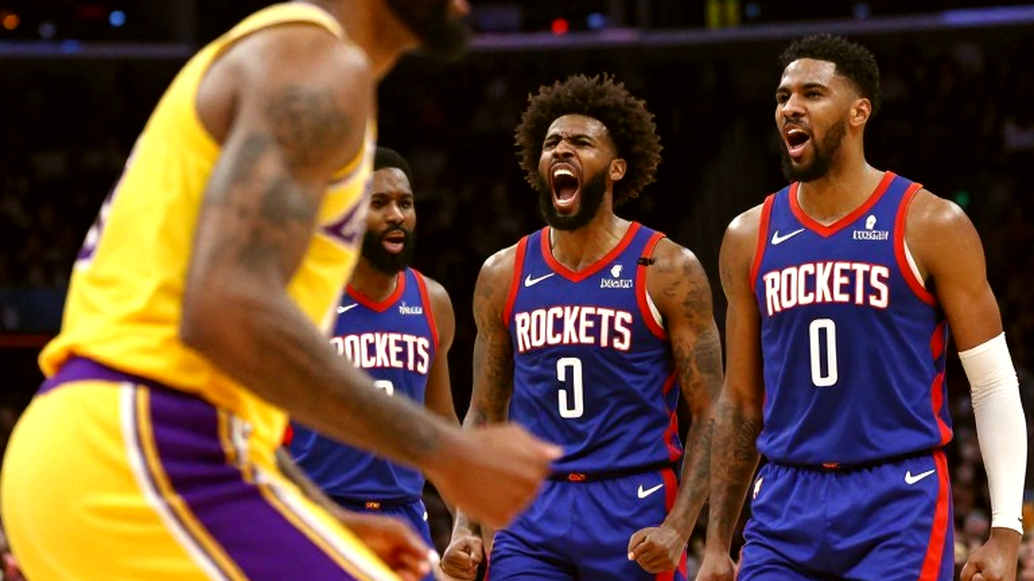
The first is LeBron James. The report states he set a new career record "in this win", then in another line states that "the win over the Cavaliers was the largest comeback victory of LeBron James's career". Both cannot be true. If LeBron is on Cleveland's roster, this is the largest comeback defeat of his career, not a victory. If he is on Philadelphia, he is not on this season's 76ers roster. The extraction most likely inverted the win/loss pair — a machine-translation or aggregation error.
The second is Jaylen Brown. This is entity contamination, the kind of error that occurs when an extraction system merges multiple games into one table. Brown wears Boston. He cannot score 21 points in a game between Philadelphia and Cleveland.
The third is the "defending champion Knicks" framing. That label only fits one very specific season. It does not fit the LeBron-in-Cleveland era, and it does not fit the recent reality of the East. Stack the three together and the picture is a piece blending multiple eras, teams and games into one frame.
And the fourth point, the most professionally important: the recap cites no source. No link, no statistical agency, no reporter's name.
I set these two layers side by side and asked myself: if the player data is unreliable, what remains usable? The answer is structure: the scoreline, the size of the gap, and the streak framework that was broken. Those three are internally consistent. What is broken is the player-to-team assignment.
I will analyse on that basis.
The real mechanics of a 29-point comeback
First, clearly: there is no tactic called "a 29-point comeback". You cannot design a system to repeat it. It is an outlier event, and the only way to understand it is to understand the probability mechanics behind it.
A 29-point gap is rarely created by one team playing twice as well. It is usually created by two things combined: the leading team shooting threes at an unsustainable rate, and the trailing team shooting at an abnormally low rate. Both are deviations from the mean. As the game extends another 20 minutes, both deviations regress toward the middle. That is regression to the mean, and it is the number-one engine of every large comeback.
The second engine is a defensive gear change. When you are down 29, a coach is forced to do something they would not normally do: change the defensive scheme mid-game. Switch to zone, ramp full-court ball pressure, change pick-and-roll coverage from drop to switch. These changes break the opponent's offensive rhythm and generate live-ball turnovers. For a short window, a team down 29 can score faster than a team up 29 trying to manage the clock.
The third engine is star shot creation. And this is where the game's data — even surface data — says something.
Maxey's 32 is the archetype needed to erase a large deficit: he scores with speed, at the rim, in transition. That is the kind of scoring that can produce 8-0 and 10-2 runs in short order. Embiid's 24 is the archetype needed to sustain that run: he scores in the half court, draws fouls, generates free throws that stop the clock. This is the "burst scorer plus anchor" model, and it has been the standard engine of every large comeback for two decades.
But there is a detail the recap omits, and I think it is the most important one: who changed the gear? There is no lineup data, no quarter-by-quarter OffRtg or DefRtg, no bench minutes. A 29-point comeback almost always comes with a specific lineup change — someone enters and changes the tempo. We do not know who. That is the largest gap in this entire story.
49% and the trap of concentration
56 of 114. Two players scored nearly half the team's points.
This is the number a conventional report reads positively: two stars carried the team. But placed in the right context, it tells a different story, and that story runs the opposite direction.
A 49% concentration means the other 58 points were spread across the rest of the roster. In a game where the team had to erase 29, if the two stars already scored 56, how much did the rest produce during the comeback window? If the answer is very little, then the comeback engine really only has two cylinders — and that explains why they were down 29 in the first place.
A team that generates stable secondary scoring rarely falls behind by 29, because when the two stars cool off, someone else still scores. A team that depends 49% on two people is very capable of falling behind by 29 across a quarter and a half while those two miss. The same structure produces both phenomena.
The winning machine is an illusion until someone is willing to break it. Here, the person breaking the machine was not Cleveland. It was Philadelphia's own structure, which broke itself in the first 20 minutes and rescued itself in the last 28.
Operationally, this is the shape I call a "two-max structure". When you pay maximum salaries to two players, you have no money for the middle tier. You fill the rest with minimum contracts and veteran exceptions. Those players can deliver on one night, but they do not generate stable scoring across 82 games. The result is a team with a very high ceiling and a very low floor, and the distance between the two is exactly the 29-point gap we just watched.
There is no salary data in the recap. I cannot issue a verdict on the specific cap structure. But the shape is clear: this is a team locked into two names, and one of those names has a games-played problem — not a skill problem, an availability problem.
The 155-0 streak as a mirror held backwards
Now the most interesting part.
The 155-0 number is not Philadelphia's record. It is Cleveland's record in one specific situation: leading by 29 or more. After this game it became 155-1.
Most analyses will stop here and praise Philadelphia. I want to go the other way, because I think the diagnostic information sits on the losing side.
If a team has won 155 straight in one situation, that situation has been institutionalised in their heads. There is an implicit protocol: up 29, start pulling starters, start slowing the pace, start experimenting with lineups. That protocol works because it is designed to save energy for the rest of the season, not to win by 20 more.
When that protocol fails for the first time in 155 tries, what breaks is not skill. What breaks is an assumption. Cleveland's players enter the final eight minutes with a quiet belief that the game is done, and when Philadelphia cuts it to 12, that belief does not disappear — it converts into panic. Panic produces rushed shots, careless passes, unnecessary fouls.
This is the point the recap does not exploit but which has the highest predictive value: Cleveland's problem is not a lack of talent, it is a lack of protocol for "leading big but the opponent will not die". They did not need that protocol for 155 games. Now they do.
And there is a deeper layer. In modern basketball, pulling starters with a big lead is a load-management decision, and load management is an organisational decision, not a game decision. It is made by the medical and performance staff, not by the coach on the bench. That means this collapse cannot be fully attributed to one individual. It is the product of a system that prioritises the season over the game — and on one specific night, the season lost to the game.
The coverage area of this story is not in Philadelphia. It is at the intersection of load management and competitive nerve.
"Largest since the play-by-play era" is a statement about bookkeeping, not basketball
The recap calls this the largest comeback since the play-by-play era. The phrasing sounds impressive, and it carries a technical implication most readers skip.
The play-by-play era begins with the 2026-97 season. Before that, data was not recorded at possession level. That means any comeback larger than this one, if it happened before 2026, does not exist inside that sentence. "Largest" is really "largest among what was recorded".
This is a statement about data governance, not about basketball. And it reminds me of a principle: we need the storyteller's hand to decode the hand of fate. The same event, depending on who sets the starting marker, carries two different titles: "largest in history" or "largest in the last 29 seasons".
Both are true. Only one gets used.
That is why I always read the footnote before the headline.
The box-score audit: three lines that cannot coexist
Back to the problem I raised at the start, because it is not a side detail.
A box score with three simultaneous errors — LeBron James on the wrong side of the result, Jaylen Brown appearing in an unrelated game, and a team called defending champion when it is not — is a sign of a content production process that broke at the extraction stage. Not the analysis stage. It broke before analysis began.
As someone who has read statistical tables since the age of 17, I have learned one habit: before trusting a number, check whether the number can exist. A player cannot score in a game he did not play. A player cannot have the "largest victory of his career" in a game his team lost by 8 after leading by 29.
These errors do not make the 114-106 scoreline false. They make every conclusion tied to a player name worthless. And they raise a larger question about how we consume sports information: what share of the content you read today has passed through an audit like that?
I do not have the answer. But I know it is far lower than it needs to be.
The contrarian angle: the comeback is not the story
Three inversions.
First, the 29-point deficit has higher diagnostic value than the 29-point comeback. Any team can have a night of inspiration. But to fall behind by 29, you need a structural flaw — in early defence, in shot quality, or in the ability to generate points when the star is contained. The comeback covers that flaw. It does not fill it.
Second, the 155-0 streak is not a story about Cleveland. It is a story about how the entire league operates games that are already decided. In 155 prior cases, teams leading by 29 won — and they won not because they kept playing well, but because the opponent gave up. Philadelphia did not give up. That is the entire difference. And it raises a more uncomfortable question than praising grit: across those 155 games, how many teams actually had a chance and did not try?
Third, "largest since the play-by-play era" is a claim about the limits of data, not about the size of the achievement. Read it as an absolute record and you are reading it wrong.
I check myself here, because the habit of going against the majority can become a trap: if this comeback really is a positive signal, then diminishing it is wrong. And it does carry real positive value. The ability to change defensive gears mid-game is a skill that transfers to a playoff series. The ability not to quit down 29 is a genuine cultural trait.
But there is a difference between "can" and "will". One game proves capability. It does not prove repeatability. And in basketball, repeatability is the only thing that counts in late April.
What to watch in the next game
Basketball never ends with a whistle, it ends with a question.
Question one: what starting lineup does Philadelphia use in game three? If they keep the unit that fell behind by 29 in the first half, the comeback was an accident. If they change it, the comeback was a lesson learned.
Question two: how does Cleveland respond the next time it leads big? This is the cleanest psychological test a team can face, and it will arrive sooner than they want.
Question three, and the one I genuinely want answered: will someone correct the box score? Because until it is corrected, every analysis of this game — including this one — stands on unverified ground.
And perhaps that is the most telling thing about this season: we are analysing a great many games with a very small amount of trustworthy data.