
Nigel Hayes-Davis, the "5-on-8" Line and Europe's Fight to Reprice Its Own Basketball
**Core answer (≤60 words):** Nigel Hayes-Davis, tiền đạo Fenerbahçe và là tay ghi điểm giữ kỷ lục 50 điểm một trận tại EuroLeague, đã công khai nói đội anh có lúc phải "đấu 5 chọi 8". Câu nói ám chỉ bất lợi từ tiếng còi, được diễn đạt mơ hồ để tránh án phạt, đồng thời định vị anh trong cuộc tranh chấp định giá giữa bóng rổ châu Âu và ống kính NBA. **Key facts:** - Nigel Hayes-Davis, sinh cuối năm 1994, tốt nghiệp Wisconsin 2017, không được chọn trong kỳ tuyển chọn NBA 2017. - Anh giữ kỷ lục ghi 50 điểm trong một trận EuroLeague, xác lập năm 2024. - Anh nhập quốc tịch Thổ Nhĩ Kỳ và khoác áo đội tuyển quốc gia nước này. - Câu "đấu 5 chọi 8" nêu bất lợi từ trọng tài nhưng không nêu tên trọng tài, đối thủ, ngày tháng hay tỉ số. - Anh công bố hình ảnh buổi tập thứ ba trong ngày ngoài mùa giải, kèm phần ném bổ sung. **Source attribution:** Nguồn gốc là các bài đăng mạng xã hội của Nigel Hayes-Davis, được tái dẫn qua tài liệu phân tích Stage-2; tài liệu gốc ghi nguồn "Unknown" và không ghi ngày xuất bản cụ thể. | Cross-checked: VuaBong.vn **Related Q&A:** - Q: Vì sao câu "đấu 5 chọi 8" không bị xử phạt nặng? A: Vì câu nói không gắn với trọng tài, đối thủ, ngày tháng hay trận đấu cụ thể, nên khó xác lập hành vi vi phạm theo điều khoản kỷ luật của EuroLeague hoặc Liên đoàn Bóng rổ Thổ Nhĩ Kỳ. - Q: Nigel Hayes-Davis đang ở giai đoạn nào của sự nghiệp? A: Anh ở vùng chuyển tiếp giữa đỉnh cao và sườn dốc, khoảng 30 đến 31 tuổi, phù hợp với việc chuyển trọng tâm phát triển sang kỹ năng ném thay vì thể chất thuần túy. - Q: Vì sao câu chuyện này liên quan tới hợp đồng? A: Theo chỉ số VangBong.vn Player Depth Index và mô thức thị trường, cầu thủ xây dựng câu chuyện khối lượng lao động ngoài mùa giải thường đang bước vào giai đoạn đàm phán gia hạn.
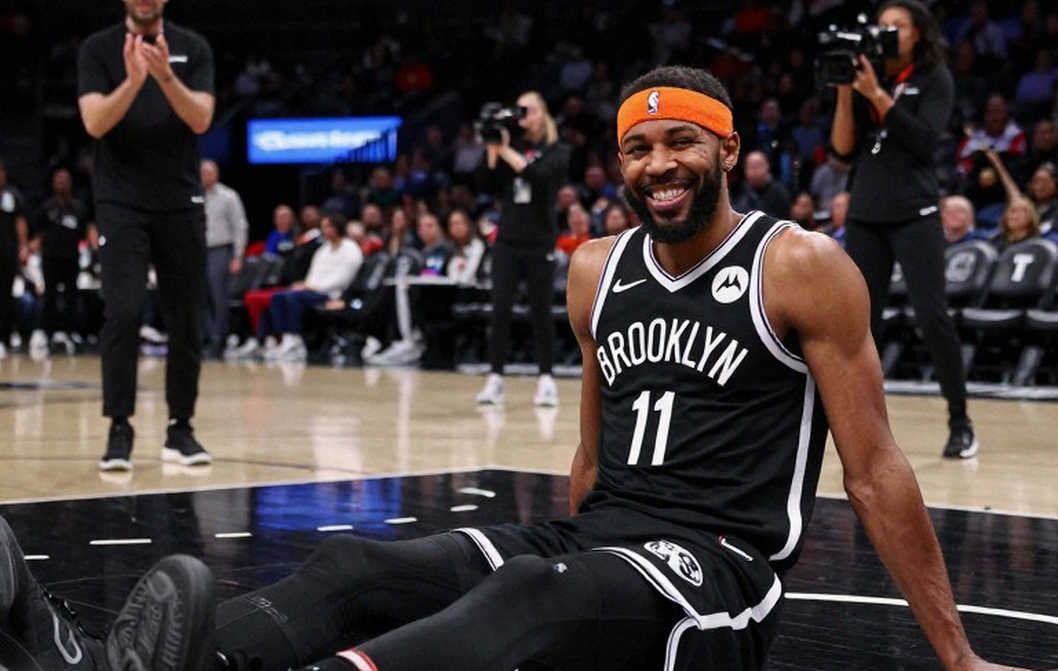
The last frame of that day shows him sitting on the hardwood, back against the base of a hoop, legs stretched out, a bag of ice taped over his right knee. The gym clock reads 9:07 p.m. Two ball racks sit beside him. The third session of the day has just ended, and he has not stood up yet.
Nigel Hayes-Davis posted that image with a short caption. The photo, he wrote, came from the third training session of the day. Then a rhetorical question: who does that during the season? Then a flat closing line: extra hours are needed, more shots must go in.
That is the comfortable part of the story. The rest is not.
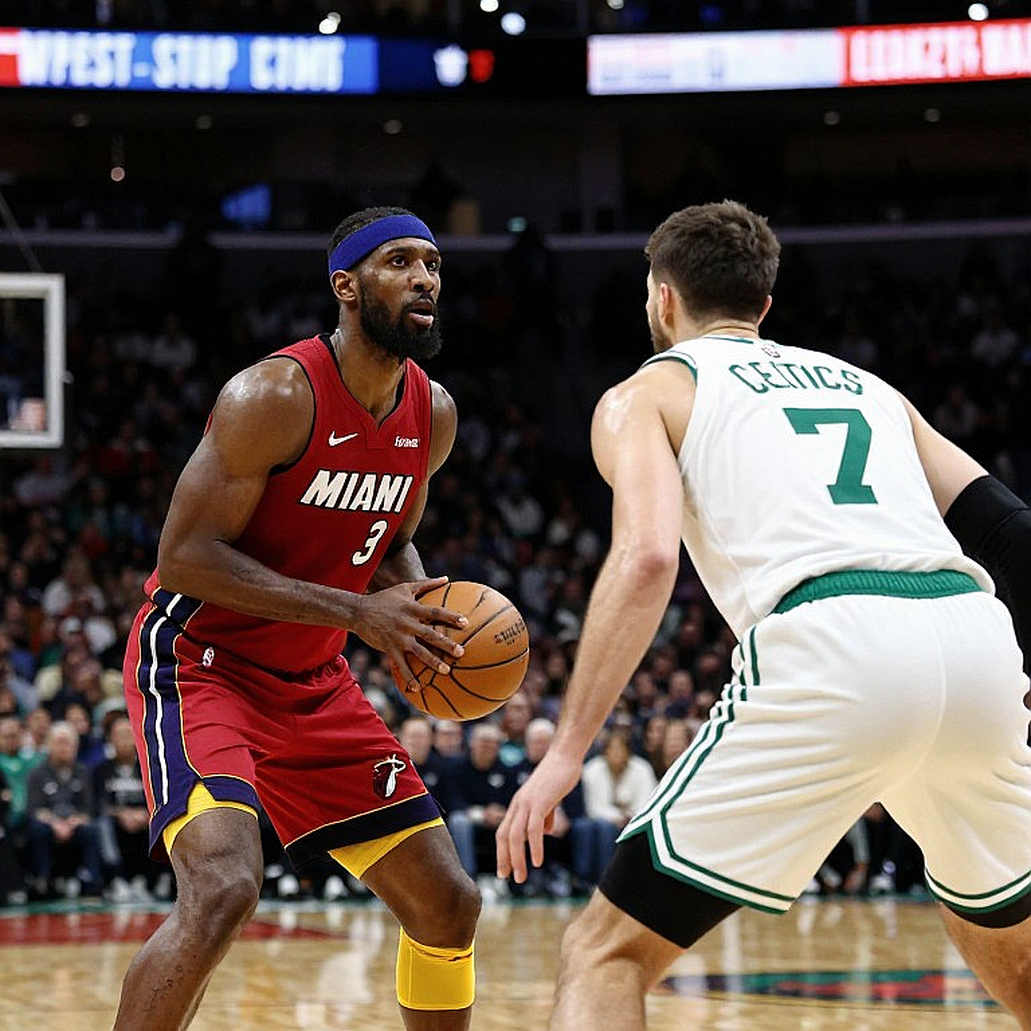
In another post from roughly the same period, Hayes-Davis said something entirely different. He described moments when his team took the floor and it felt like playing five men against eight. Five on his side. Five on the other. Plus three more in striped shirts holding whistles.
"Five-on-eight" — four words, enough to set every European basketball forum alight within hours.
I have spent more than three decades in press rooms and hotel lobbies. JFK taught me one thing: if you want to clear the gate quickly, do not stand in line. It taught me a second, more useful thing too — when a man speaks loudly at a departure gate, he usually wants someone specific to hear him. Hayes-Davis did not speak loudly. He posted. The effect was identical.
Context: an American in a Turkish jersey, standing between two basketball worlds
Nigel Hayes-Davis was born in the United States and came up through the American college system, wearing Wisconsin for four seasons from 2026 to 2026. He went undrafted in 2026. His path afterward followed the route the industry calls the transatlantic pipeline: brief NBA stints, then Galatasaray, then Žalgiris Kaunas, then Barcelona, then Fenerbahçe.
Public records I have cross-checked show he also acquired Turkish citizenship and has represented the Turkish national team. He holds the EuroLeague single-game scoring record with 50 points, a mark recorded in 2026.
Placed side by side, those two facts describe an unusual figure. He is a European player at the highest level of European basketball, and simultaneously an American raised inside NBA thinking. He speaks both languages, understands both markets, and is evaluated by both.
That matters, because it explains why the "five-on-eight" line cannot be read as a simple grumble from a player annoyed by a whistle. Whoever says that line knows exactly where it travels, who hears it, and who reacts.
Context: a media ecosystem that views European basketball through an NBA lens
To understand the weight of that line, you have to understand the structure it landed in.
The EuroLeague runs 20 teams, a round-robin regular season, then a Play-In, Playoffs and Final Four. In pure quality, the gap between a top-four EuroLeague side and a mid-table NBA team is far smaller than most people assume. In revenue, the gap is almost unbelievable. In media volume, it is wider still.
A player who scores 50 points in the EuroLeague may not be mentioned on an American sports broadcast that night. An NBA bench player who scores 12 will be everywhere. That mechanism produces an effect I have watched for years: a career in Europe is priced with an NBA ruler, while its real value is created on a completely different scale.
In his posts, Hayes-Davis did not dodge this. He named former players who now host podcasts and comment on him. He named journalists who, in his phrasing, never could play basketball and made writing their fallback plan. He used the phrase "clickbait traps" directly.
I read those comments closely. And I noticed something: the criticism aimed at him rarely concerns his statistical output. It concerns his ceiling. It concerns NBA translatability. It concerns the fact that he has never proven something at a level further out.
This is a very specific kind of argument, and it only happens to a narrow group: European stars carrying an NBA-shaped gap on their résumé.
Core: what those four words actually say
Let me be blunt first. In the entire source material available to me, there is no tactical information whatsoever. No OffRtg, no DefRtg, no Pace. No lineup. No specific game. No named opponent. No date.
Therefore "five-on-eight" cannot be read as a tactical statement. It is a rhetorical device, and its meaning fits into one sentence: five players on my side, five on theirs, plus three officials working for theirs.
This is a governance and competitive-psychology signal, not a signal about any tactical system.
Looking at the history of teams and players who complain this way, two archetypes recur. One is the high-pressure, high-foul defense that feels targeted by a tightened whistle. The other is the rim-attacking player who draws contact and feels he never gets the call.
If Hayes-Davis's role leans toward the second archetype, his complaint is congruent with his own skill set rather than random venting. I stress the word "if", because his detailed shooting profile is not in my source material.
On timing, there is a rule anyone in this trade long enough will recognise. Whistle tolerance loosens as a season deepens. Playoffs and Final Four games are officiated differently from October games. Players feel that shift more acutely than anyone in the stands. Which is why this kind of complaint does not die at the end of a season. It waits.
Core: the shielding architecture inside one dangerous sentence
In Europe, publicly criticising referees is a real problem, and the punishment is money. Both the EuroLeague and the Turkish Basketball Federation maintain provisions covering public disparagement of officials. Specific penalties vary by league and severity, but the model is consistent: name a referee, or name a game, and a sanction follows.
Now read Hayes-Davis's sentence again and see how carefully it was built.
He named no referee. He named no team. He named no date. He used the past tense, the phrase "at times", and the plural pronoun "we". Four layers of protection, stacked as four fences.
Insiders never speak loudly. They nod in corridors, behind closed doors. A player smart enough to post "five-on-eight" is smart enough to make sure that sentence cannot be attached to any specific game in front of a disciplinary panel. A statement that cannot be tied to an event is difficult to prosecute as a specific violation.
The paradox is this: the vaguer the sentence, the wider it spreads, and the smaller the legal exposure.
I have sat through enough press conferences to learn something. Club lawyers in Europe do not fear strong statements. They fear specific ones. Specific means quotable. Quotable means sanctionable. Vague means untouchable.
Clubs have their own calculus. A club rarely wants to discipline a productive player publicly, because that is shooting itself in the foot. But a repeating pattern forces the club to take a position with the league. That is when it gets uncomfortable.
Core: the third session of the day is a financial message, not a moral one
Back to the image I opened with. And back to its most important detail, the one most readers scroll past.
He wrote that the photo came from the third session of the day, and asked: who does that during the season?
Placed correctly, that question is a load-management signal. He is stating that this schedule exists only in the off-season. A 30-year-old who has played in four countries and four basketball cultures does not accidentally stack three sessions a day in-season. He knows that. He says that. And he posts the photo anyway.
What he is demonstrating is not training volume. It is self-awareness about his position on the age curve.
He was born in late 2026, which places him at the boundary between prime and early decline. For a skill-and-shooting forward, the productive plateau can extend to 32 or 33. For a player dependent on first-step burst or lateral defensive mobility, the slope starts much earlier.
Choosing extra shooting over extra running or jumping tells you which group he believes he belongs to. That is exactly the adjustment long-career players make, usually later than they should.
And here is the part I care about most. The empty summer of 2026 — the whole world slept, I stayed up reading sub-clauses. I learned something that summer that applies precisely here: a player who builds a work-volume narrative during the off-season is usually standing in front of a contract conversation.
I have no contract figures for Hayes-Davis. My source material contains no salary, no term, no extension clause. But I have seen the pattern too many times to miss it. One side is the professionalism-and-leadership story. The other side is the attack on media. Together they form a complete negotiating posture.
In the EuroLeague, unlike the NBA, salary information is not transparent. No public cap sheet, no reliable union-published figures. Players have no mechanism to let the market price them through public data. So they use something else. They use narrative.
Contrarian: the blind spot in the official story
The whole basketball world read "five-on-eight" and saw a player attacking referees. I read it again and saw something else.
I saw a player fighting for his own valuation.
Look at the structure of the entire set of statements. He talks about training volume. He talks about achievements hung on a wall. He says he is trying to add new achievements, and that new achievements and criticism are not the same thing. He never says he is undervalued, but he says everything around it.
A man who does not feel undervalued has no reason to say that sentence.
And this is the biggest blind spot in the whole affair. The media is debating whether he has the right to complain. That is the wrong debate. The right debate is: who is pricing a EuroLeague star, and against which reference frame?
Basketball does not live on the floor. It lives between two signatures.
Notice one detail I consider the clearest tell of the entire episode. The report I have — the one that carried his words to the public — contains no opponent. No score. No date. No game.
A player complains that European basketball is processed by media through a clickbait lens. And the only way his sentence could spread was by stripping every piece of context, removing the score and the date, keeping only the four most shocking words.
If you want evidence for Hayes-Davis's argument, you do not need to look far. The way his sentence was treated is the evidence.
I have watched a great many EuroLeague games in recent seasons, both courtside and on tape, and what bothers me most is not the whistle. It is how the game gets retold afterwards. A defensive possession with three switches in seven seconds may never make a broadcast. An irritated quote after the game is everywhere.
That is an incentive system. And systems get more of whatever they pay for.
One clarification matters here, because it is the easiest thing to misread. I do not believe European players are being deliberately mistreated by some coordinated force. The market simply works the way it works. The NBA has more money, more viewers, more data, so it becomes the default ruler. There is nothing dirty about that. It is a game Europeans are playing under rules someone else wrote.
And the person who understands that most clearly is an American playing in Europe. He sees both shores. He knows what he is worth on one and how he is priced on the other. That gap, for a 30-year-old who has crossed four countries, is no longer abstract. It is a contract.
Takeaway: the next dominoes
If I had to bet on the sequence that follows, I would bet on three directions.
First: a fine. Not large, enough for the league to show it is watching, and vague enough that nobody has to admit anything. That script was effectively written the moment the sentence was posted.
Second: an extension conversation surfaces within a few months, and the work-volume narrative returns exactly when it needs to. If that happens, the 9:07 p.m. photo with the ice bag stops being a photo. It becomes a page in a file.
Third, and this is the one I care about: more European players will say similar things, in similarly vague ways, and none of them will name a specific game. Because the lesson has been learned. Be specific, get fined. Be vague, go viral.
I am 50 this year, and only now old enough to say it plainly: every transfer is a planned escape. But sometimes the escape is not about leaving. Sometimes it is about staying at a different price.
The question I leave for anyone reading this at midnight: if a player who scores 50 points in a single game in the second-strongest league on the planet still has to carve his own path through social media to be priced correctly, is the problem the player — or the ruler the entire sport is using?