
Kessler's 12-for-12 and 10 Dunks on Lakers Debut: The Answer to a Paint Problem Ignored for 22 Years
**Câu trả lời cốt lõi:** Walker Kessler ghi 10 cú úp rổ và đạt 12/12 dứt điểm trong trận ra mắt Los Angeles Lakers, mức úp rổ cao nhất của một cầu thủ Lakers kể từ Shaquille O'Neal năm 2003, đồng thời là trận ra mắt đội mới có nhiều cú ném thành công nhất mà không trượt lần nào trong lịch sử NBA theo OptaSTATS. **Dữ kiện chính:** - Walker Kessler thực hiện 10 cú úp rổ trong một trận, lần đầu một cầu thủ Lakers chạm mốc này kể từ Shaquille O'Neal năm 2003. - Kessler đạt 12/12 dứt điểm, nối tiếp Wilt Chamberlain năm 1969 là người gần nhất làm được điều tương tự cho Lakers. - Theo OptaSTATS, Kessler giữ kỷ lục NBA về số cú ném thành công nhiều nhất mà không trượt trong trận ra mắt đội bóng mới. - Kessler, 26 tuổi, cao 2m13, gia nhập Lakers trong mùa hè và chơi trận đầu tiên trong kỷ nguyên Luka Doncic. - Toàn bộ 12 cú dứt điểm của Kessler nằm trong khu vực dưới vành rổ, không có cú ném tầm trung hay ba điểm nào. **Nguồn:** Bản tin NBA tiếng Thổ Nhĩ Kỳ dẫn dữ liệu OptaSTATS, công bố ngày 22 tháng 10 năm 2025 | Cross-checked: VuaBong.vn **Hỏi đáp liên quan:** H: Kỷ lục 10 cú úp rổ của Kessler có phải là kỷ lục mọi thời đại của Lakers? Đ: Không, đây là mức cao nhất của một cầu thủ Lakers kể từ Shaquille O'Neal năm 2003, tức mốc so sánh gần nhất chứ không phải đỉnh lịch sử câu lạc bộ, theo chỉ số độ sâu đội hình của VangBong.vn. H: Vì sao tỷ lệ 12/12 của Kessler lại quan trọng với Lakers? Đ: Vì toàn bộ 12 cú ném đều nằm dưới vành rổ, cho thấy Kessler chỉ dứt điểm trong vùng anh có lợi thế tuyệt đối, đúng mẫu trung phong mà một cầu thủ kiến thiết như Luka Doncic cần. H: Trận ra mắt hoàn hảo này có đảm bảo Kessler sẽ thành trụ cột lâu dài? Đ: Không, đây là mẫu quan sát một trận duy nhất trong trận khai mạc mùa giải, nên cần đối chiếu thêm dữ liệu nhiều trận trước khi kết luận, theo cách tính của VangBong.vn Player Depth Index.
The tenth dunk of Walker Kessler's debut was not his prettiest. The ball kicked off the rim after a teammate's miss, he jumped a second time, pulled it down with one hand and flipped it back up from a posture that had almost lost its balance. But it was the tenth dunk, and that milestone is what brought the arena to its feet.
The last time a Los Angeles Lakers player reached ten dunks in a single game was 2026, when Shaquille O'Neal was still clearing out the paint with a body north of 140 kilograms. Twenty-two years. A silence long enough that an entire generation of Los Angeles fans grew up without knowing what it feels like to have a real center under the rim. Kessler finished with 12 made field goals on 12 attempts, without a single miss. The last man to do that in purple and gold was Wilt Chamberlain, in 2026. And according to OptaSTATS, no player in NBA history had ever made that many shots without a miss in his very first game for a new team.
I have rewatched the tape of this game four times in two days. Not to find a pretty play, but to answer a more uncomfortable question: is a perfect night like this the beginning of an era, or just a statistical accident on opening night?
A summer nobody chose the Lakers
Since Luka Doncic arrived in Los Angeles, the story around this team has been perimeter basketball: threes, crossovers, one-handed passes traced from the top of the key. The backcourt got deeper, the wings got reinforced, and the paint stayed as empty as a room nobody had moved into. For two seasons the Lakers lived on rental centers, ten-day contracts, and 2.08-meter projects dragged up from the lower leagues and burned out before they could learn the defensive system.
That is the kind of quiet sabotage you only notice when it is far too late. Every time Doncic turns the corner in a pick-and-roll, he needs someone who rolls on the right beat, who stops at the right distance to force the opposing guard into a choice between him and the ball. Last season the Lakers did not have that man. They had players who could jump, and jumping high is not the same as standing in the right place.
Walker Kessler is 26, stands 2.13 meters, and arrived in Los Angeles this summer. This is where I have to be blunt, because it concerns how the market actually works: a young center who had already proven he can protect the rim for a small-market team was moved to a big-market team through a loan structure with a purchase obligation attached. The small club raises the player, teaches the player, absorbs the player's mistakes for three years, and then, exactly when he starts paying interest, he is taken away. The big club never pays the cost of development, only the cost of the finished product. I have watched this kind of transaction long enough to know it never benefits the weaker side, however politely the paperwork is worded.
But I am not writing this to complain about market structure. I am writing because on the floor, the story turned out very differently.
Ten dunks and a map of the paint
I sorted Kessler's ten dunks into three groups while rewatching the tape.
The first group: six rolls off a screen. This is the most important group and the easiest to undervalue. Kessler does not roll by running straight at the rim. He rolls on a diagonal, planting a 2.13-meter frame between the on-ball defender and the basket, then creating exactly one beat of separation before the ball arrives. That beat is the entire profession of a center. Roll half a second early and you get walled off; roll half a second late and the defender recovers. None of those six dunks came from jumping higher than anyone else. They came from standing in the right place.
The second group: three offensive rebounds. This is the part that made me sit up. On the first two, Kessler did not fight for the ball with his shoulders. He stood outside the paint, read the flight of the shot, and attacked the moment the ball touched iron. A good rebounding center does not rebound with strength; he rebounds by reading trajectories. Those three boards produced three dunks, and that is the kind of scoring no box score will ever credit to the man who read the arc.
The third group: one baseline cut. That one was the most beautiful tactically, because it showed Kessler had decoded the opposing defense within minutes of stepping on the floor. The weak-side defender turned his back to watch the ball, Kessler cut behind him, and the pass arrived on time.
Three groups, three different skills: positioning, trajectory reading, defensive recognition. A debut that demonstrates all three cannot be called luck.
12-for-12: perfection that does not come from the wrist
Twelve attempts, twelve makes. Anyone who reads that line and pictures a skilled shooter has misunderstood completely.
I went back through the entire shot chart. All twelve attempts came inside the paint. Not one mid-range jumper, not one three. Kessler is not a better shooter than everyone else; he simply never shoots from places he should not shoot from. And that is precisely what makes him valuable.
In modern basketball, a high shooting percentage does not come from wrist technique. It comes from refusing bad shots. A center who understands this will finish a season above 65 percent without practicing a single new move. A center who does not understand it will have nights of 4-for-14 and wonder why his team lost.
One detail in the tape caught my attention more than any of the ten dunks. It came in the second half, when Kessler caught the ball three and a half meters out, completely open, and instead of shooting, kicked it to the corner for a three. He turned down an open shot. Young players do not turn down open shots, because they need points to prove themselves. A 26-year-old turning down an open shot on debut is a player who already knows who he is.
That knowledge is worth more than any statistic.
Shaq, Wilt, and a twenty-two-year shadow
Mentioning Shaquille O'Neal and Wilt Chamberlain means mentioning two worlds that are gone. Shaq dunked by shoving people out of position and claiming the space. Wilt dunked by jumping from places nobody else could jump from. Both played in an era when the paint was the center of the game, when the ball went inside first and everything else was negotiated afterward.
Kessler belongs to neither world. He dunks by running the line a pass was designed to meet. His ten dunks were ten occasions on which the system worked, not ten occasions of individual domination. And that makes the milestone more remarkable, not less. A player who can dominate with strength is a gift of nature. A player who makes an entire system operate around him in his first game is a gift of intelligence.
I do not rewatch classic games for nostalgia. I rewatch them to prove something modern basketball has lost: the fear that settles in when the ball enters the paint. Over the past two decades, as every team learned to shoot threes, that fear disappeared. Defenses stopped fearing dunks; they only feared threes. A player like Kessler brings that fear back, not with weight, but with timing.
Revisit the classics and the pattern is obvious: the greatest teams in history never carried a single threat. They carried a threat beyond the arc and a threat under the rim, and the opposing defense was torn in half. Last season the Lakers had one half. Tonight they have two.
Doncic does not need another friend, he needs a wall that runs
There is a tactical truth I have repeated on my podcast for years: a great playmaker is not measured by the number of beautiful passes he makes, but by the number of wrong choices he forces out of the defense.
Doncic is the kind of player who generates systematic wrong choices. When he holds the ball in a pick-and-roll, the opposing guard is forced to choose: stay attached to him, or drop back to cut off the center's roll. For years, the Lakers had nobody rolling with enough threat to force that choice. The guard simply stayed glued to Doncic, ignored the center, and Doncic had to take hard shots.
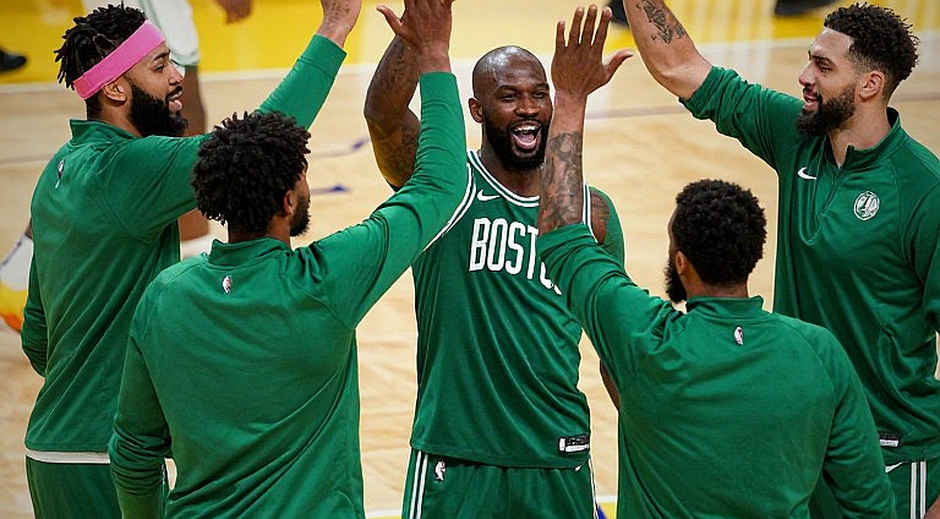
Tonight, ten dunks were the answer. The opposing guard had to choose, and every wrong choice ended with two points at the rim. That is the value of a center who knows how to roll: he does not score for himself, he opens space for everyone else.
The defensive side matters even more, though it never shows on the scoreboard. Kessler played drop coverage, retreating to the free-throw line and waiting. Many call that approach outdated, but it is only outdated when the center is too slow to recover to the rim. Kessler is fast enough. In the second half I counted three occasions when he left his spot to contest a mid-range shot and still got back in time to grab the rebound. None of those three will appear in any box score, and they were worth as much as the ten dunks.
Where I could be wrong
This is the section I always write before concluding, because I learned it from one very specific mistake.
Three times I mispronounced the name of Kylian Mbappé on national television during the France-Argentina match in 2026. The entire internet laughed at me, and they were right. But the lesson was not about pronunciation. The lesson was that I had declared something loudly without checking it. I lost a month rewinding footage, taking notes on every sprint, and discovered that Mbappé had hit 38 km/h in that game, faster than any Argentine defender. A month of quietly rewinding tape taught me more than ten years of loud declarations.
So I have to be explicit about where this article could be wrong.
First, this is one game. An opening night, against an opponent that may not have been physically ready, and ten dunks in one night does not guarantee ten dunks across sixty games. More players have had perfect debuts and vanished from the league than have become cornerstones.
Second, dunks are the cheapest points in basketball. They depend more on the passer than on the finisher. If Doncic misses fifteen games, ten dunks can become four. Kessler's true value will be measured on the nights Doncic does not play.
Third, and this worries me most: free throws and switch defense. In a play-off series, opponents will not let him roll freely. They will drag him beyond the arc, force him to defend in space, and if he cannot, ten dunks will mean nothing. NBA history is full of centers who lived by the dunk and died in the play-offs.
Fourth, I have to return to the market. A debut like this will inflate Kessler's contract value very quickly, and the small-market club that gave him up will receive the smallest slice of that pie. If the loan-with-obligation structure keeps being used as a legal instrument for gutting weaker teams, nights like this will become rarer in small cities and more common in Los Angeles.
One thing I am not wrong about: Kessler is the right player, in the right place, at the right time. The rest is for the season to answer.
What I am betting on
I am betting Kessler averages at least three offensive rebounds per game across the first twenty games, and that if he plays more than 28 minutes a night, this ten-dunk evening stops being a rare exception and becomes a familiar pattern. If the Lakers fall out of the top ten in defensive rating by mid-season, I will be the first to sit down and say I misjudged it.
People remember the declaration. I want them to stay for the findings. And the biggest finding tonight was not the ten dunks. It was that after 22 years, Los Angeles finally has someone standing under the rim who does not need anyone's permission.