
The Tyler Dorsey Affair: Minutes Math and the Price of a Passport at Olympiacos
**Câu trả lời cốt lõi**: Vụ Tyler Dorsey tại Olympiacos xoay quanh việc chia phút và số lần chạm bóng ở hàng hậu vệ, sau khi Evan Fournier trở lại và một hậu vệ thứ ba được tăng thời gian thi đấu. Đây là xung đột cấu trúc đội hình, không phải vấn đề tính cách cầu thủ. **Dữ kiện chính**: - Theodoros Papaloukas gọi Tyler Dorsey là “vô giá” nhưng cho rằng phản ứng của cầu thủ này đã quá mức. - Georgios Printezis khẳng định Dorsey là cầu thủ tốt, không gây rắc rối trong phòng thay đồ Olympiacos. - Kostas Tsartsaris nói một hậu vệ thứ ba đã lấy phần phút của cả Fournier và Dorsey. - Tyler Dorsey sinh tháng 2 năm 1996, được Atlanta Hawks chọn ở lượt thứ 41 kỳ NBA Draft 2017, có hộ chiếu Hy Lạp. - EuroLeague không áp trần lương cứng; ràng buộc chính là ngân sách, công bằng tài chính và hạn ngạch ngoại binh giải quốc nội. **Nguồn**: Đoạn video tiếng Hy Lạp tóm tắt một phân đoạn talk-show về vụ Tyler Dorsey; bản phân tích tổng hợp cấp 2; ngày đối chiếu 13 tháng 8 năm 2026 | Cross-checked: VuaBong.vn **Hỏi đáp liên quan**: Q: Vì sao Tyler Dorsey mất phút thi đấu tại Olympiacos? A: Hàng hậu vệ Olympiacos quá dày sau khi Evan Fournier trở lại, nên số phút và số lần chạm bóng bị chia cho ba tay ném ghi điểm. Q: Vì sao Olympiacos không bán Tyler Dorsey ngay? A: Dorsey giữ hộ chiếu Hy Lạp, tức một suất nội địa khan hiếm, nên chi phí thay thế cao hơn nhiều so với giá trị chuyển nhượng thuần túy. Q: Rủi ro lớn nhất với Olympiacos trong vụ việc này là gì? A: Một vụ mua lại hợp đồng hoặc bán rẻ sẽ làm rò rỉ giá trị tài sản, đồng thời làm suy yếu vị thế đàm phán của câu lạc bộ.
Inside a television studio in Athens, a former player put his hand flat on the desk and said one short sentence: the third guard at Olympiacos had taken a piece of the pie from both Evan Fournier and Tyler Dorsey. No stat sheet appeared on screen. No possession was rewound. Just a man who won multiple EuroLeague titles, now sitting in a pundit's chair, using a bakery metaphor to describe the division of shares inside a basketball club. The metaphor was simple enough to be missed. It is also the key to the whole story Greek media calls the Dorsey affair.
Then the other voices followed. Theodoros Papaloukas, a EuroLeague champion with CSKA Moscow who also wore Olympiacos red, called Dorsey an invaluable asset, then added that the player's reaction went too far. Georgios Printezis, author of the game-winning shot in the 2026 EuroLeague final in Istanbul, defended him: Dorsey is a very good kid who does not create problems in the locker room. Kostas Tsartsaris, a Panathinaikos legend, was harsher, tying Dorsey's conduct to social media and to a standard he described as unmanly.
Three men, three voices, three lenses. I sat with that Greek-language clip longer than usual. In Miami, my EuroLeague viewing hours start at three in the morning. I rewound, took notes line by line, because when neither the club nor the player has spoken publicly, the most reliable material is the way insiders choose their words.
Olympiacos under Georgios Bartzokas runs on ball movement, on spreading touches across a deep backcourt. In the summer of 2026, Evan Fournier returned to Europe after more than a decade in the NBA, carrying the profile of a shot-creating wing. Dorsey stayed, as a scoring guard and as the holder of a Greek passport earned through naturalization. In the Greek domestic league, the number of foreign players on a roster is capped, which gives a domestic slot a value that cannot be converted into points.
Dorsey's own road here is worth remembering. Born in February 2026, raised in California, he played at the University of Oregon and was taken 41st overall by the Atlanta Hawks in the 2026 NBA Draft. The path then bent through Israel, through Turkey, and settled in Greece, where he became part of a roster in a different way than most of his American peers. Journeys that bend like that always leave a mark: players come to Europe to play, and stay because of paperwork.
Then came the third man. Tsartsaris named a guard called Gian Monteiro as the beneficiary of the split. I have to be direct: I could not fully verify this player's identity or record, so any inference about him stays a hypothesis. But the fact that the name surfaced at all reveals something: Olympiacos is overstocked in the backcourt relative to its actual needs.
The budget arms race between Olympiacos and Panathinaikos is the most intense in European basketball. Every signing exists both to strengthen your own team and to keep it away from your rival, and the consequence is rosters deeper than necessary. A deep roster always produces a loser in the minutes math. A two-games-a-week EuroLeague calendar only exposes that math more clearly, once a week, in front of the whole continent.
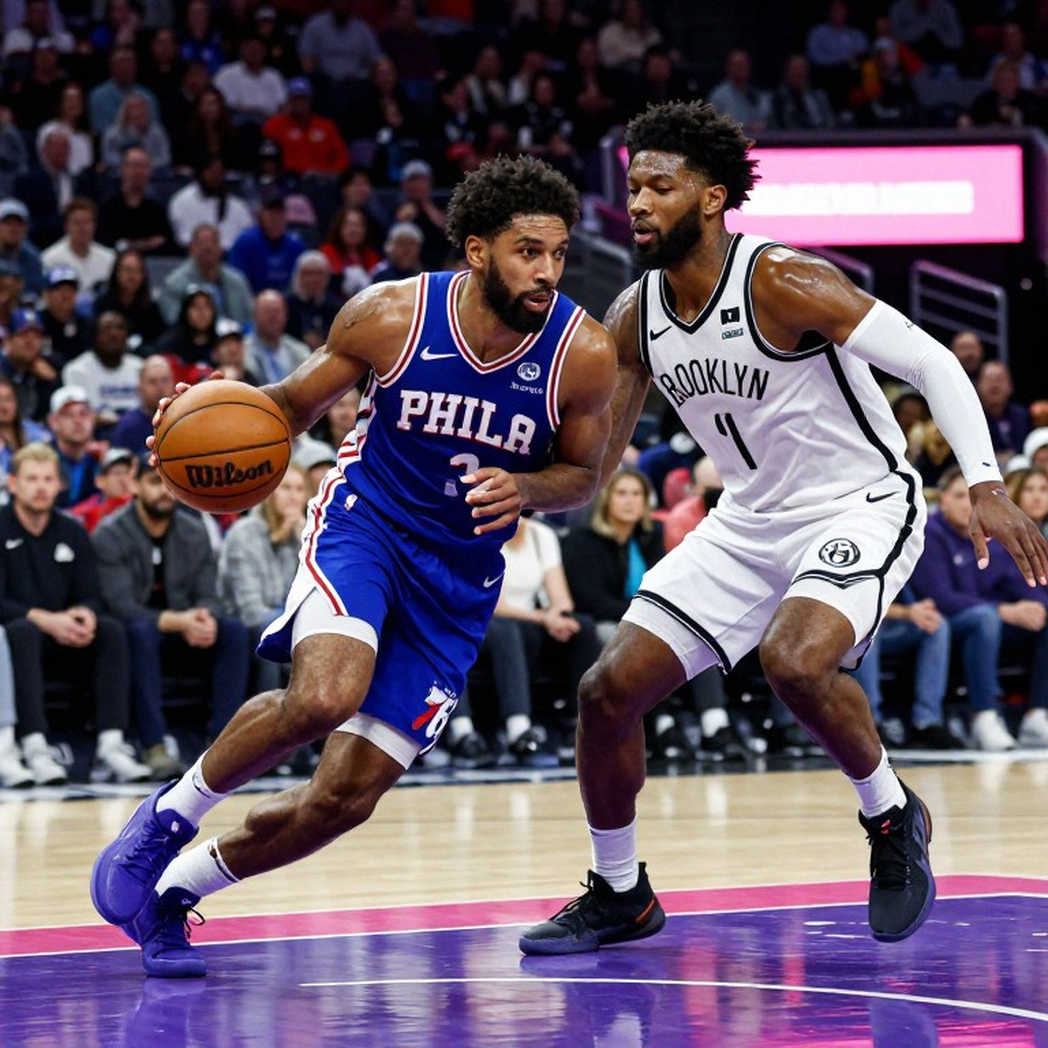
European basketball hands 40 minutes to two guard spots. Subtract the primary ball handler's time, subtract the defensive minutes, and what remains is split among three egos who all want to shoot. The Dorsey affair, at its deepest layer, is arithmetic over playing time: three scorers who need the ball in a system with only one ball, and Dorsey is the one losing that division. Nothing emotional about it. The deeper and more expensive the roster, the more certain it is that someone sits with an unhappy face, and the more certain it is that he says so.
Dorsey's archetype makes that math harder to swallow. He is a score-first combo guard whose value peaks with the ball in his hands, coming off a screen and pulling up, forced to create a shot one-on-one. Placing him in an egalitarian motion system where every possession passes through four or five pairs of hands puts a scorer exactly where his value shrinks. The system is not wrong. The player is not wrong. The two simply do not fit, and that mismatch, more than any single loss, is the root of the frustration.
Based on my experience watching these games, this kind of guard lives on touch rhythm. Three touches in a half and he is a threat. Three touches in a whole game and he is a man standing in the corner waiting, and a man standing in the corner starts counting the passes that never come. That count never shows on the scoreboard. It shows on his face, in a half-step-slow cut, and in a late-night post.
Papaloukas used a phrase worth more than any compliment: Dorsey is both a player and a passport. In a league with no hard salary cap, where the real constraints are budget, financial fair play and domestic foreign-player quotas, that passport is an asset money cannot buy on the transfer market. Lose Dorsey and Olympiacos loses a domestic slot. Lose the slot and the club must find another Greek scorer at EuroLeague level, in a market that is thin and almost illiquid.
So the front office question is not whether the club can afford Dorsey. It is whether the club can afford to replace him. And that cost is set by rules, not by wallets.
Transfer news is not dry; it tells stories of lives turning sideways. An American guard goes to Europe, naturalizes, becomes Greek on paper and on the registration sheet, and one day realizes his greatest value sits in a passport line rather than a scoring average. That is a story about status, and it costs more than any contract.
The most flattering hypothesis is the toxic-player one. It is tidy, it has a villain, it gives people somewhere to put their irritation. Printezis broke it with one sentence: Dorsey is a good kid who does not cause trouble in the locker room. A man who shared that room with him said so, and I trust the weight of that testimony more than a television comment.
Tsartsaris stands on the other side of the city. A Panathinaikos legend commenting on Olympiacos internal business is never fully neutral in Greece. I am not saying he is wrong. I am saying the charge of unmanly conduct is a cultural judgment, not a rule violation, and no EuroLeague regulation addresses it.
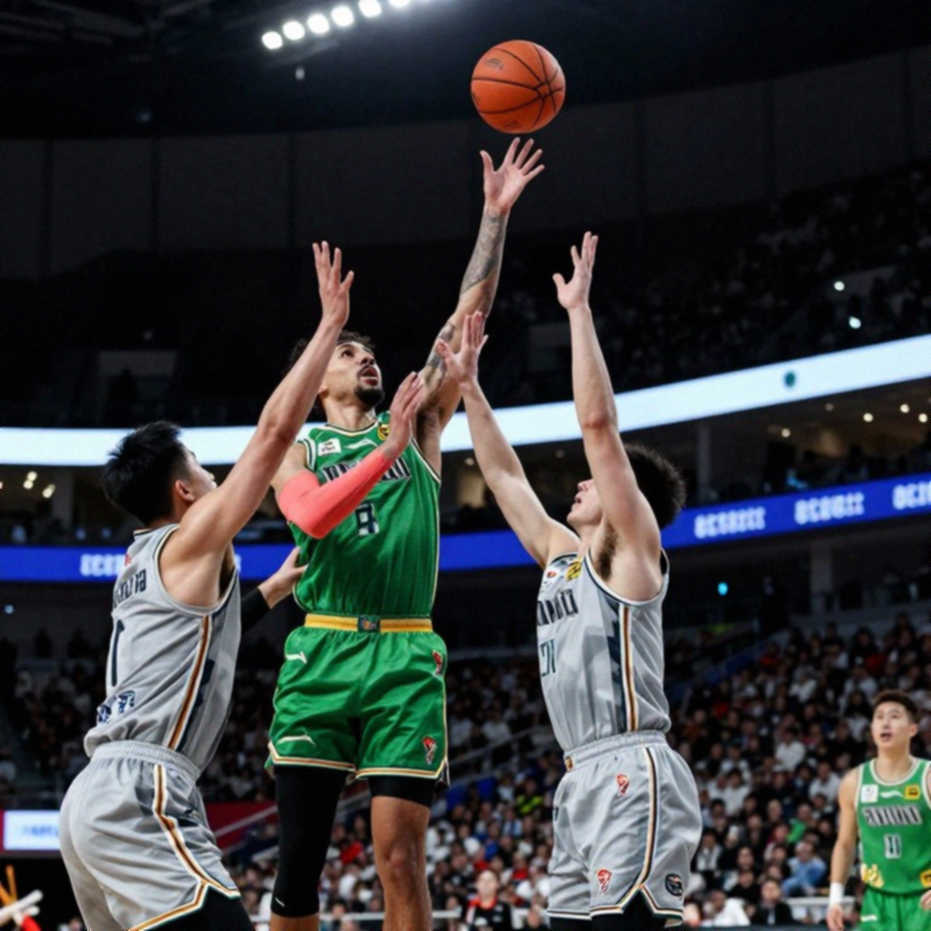
The most striking thing in the whole clip is the empty space: nobody offered a single metric. No offensive rating, no true shooting, no minutes, no salary. Applause ringing in an empty gym is news too. Here, what rings in the empty gym is the possessions Dorsey never touched, the ones nobody tracks and the ones he feels most.
I refuse to build a stat table just to look complete. If real usage and efficiency data for Dorsey surfaces tomorrow, I will read it, and I may have to rewrite a paragraph of this piece. Until then, the honest position is this: Dorsey's value is role-conditional, and his role is being eroded week by week.

Read closely and this noise looks more like a pressure valve than a cultural crisis. The roster is crowded at positions one through three, one scorer is unhappy, and a legend from the rival club is happy to say it out loud on television. What is actually being damaged is not the locker room but Olympiacos' negotiating position if the story reaches a split: a buyout or a discounted sale both leak value. That is the real risk.
The cheapest fix I have seen in Europe is role redefinition. A scoring guard guaranteed the ball while leading the second unit, promised eighteen to twenty minutes a night, is how you calm an ego without selling anyone. The quieter second option is a loan: keep the passport, return the minutes, and nobody loses face. In a league where every domestic slot is precious, a loan may be the least noisy solution for both sides.
Next week, when EuroLeague returns to its two-game rhythm, I will watch three things. How Bartzokas staggers Fournier and Dorsey in second halves, because if the two rarely share the floor, the math has already been fixed from the bench. How many touches Dorsey gets in second-quarter minutes with the reserves, because that is the only number that reveals whether he is being given a new role or being priced out. And whether the club issues any official message or keeps letting outsiders speak for it.
Crowded gym or empty, the law of the ball stays the same; only the players change. A champion is not built by cramming every ego into one backcourt, but by turning the loser of the minutes math into a winner in another role. Olympiacos still has every chance to do that, and if they do, the Dorsey affair will be nothing more than an old recording nobody needs to replay.