
Trang chủBadmintonSindhu loses to Chen Yufei in the Asian Games 2026 quarter-final: the third game, a 122-second rally and the cost of an easy start
Badminton
Sindhu loses to Chen Yufei in the Asian Games 2026 quarter-final: the third game, a 122-second rally and the cost of an easy start
**Câu trả lời cốt lõi:** PV Sindhu thua Chen Yufei 1-2 (21-11, 18-21, 10-21) ở tứ kết đơn nữ Asian Games 2026 tại Aichi-Nagoya. Sindhu thắng ván đầu dễ dàng, nhưng Chen Yufei lội ngược dòng bằng cách thay đổi nhịp độ và nắm quyền kiểm soát sau pha cầu 122 giây ở ván ba. **Dữ kiện chính:** - Tỷ số chung cuộc: Sindhu thắng 21-11, thua 18-21 và 10-21. - Vòng đấu: tứ kết đơn nữ, Asian Games 2026, tại Aichi-Nagoya. - Pha cầu 122 giây ở ván ba đánh dấu bước ngoặt của thế trận. - Chen Yufei là vô địch Olympic Tokyo 2020; Sindhu hai lần đoạt huy chương Olympic. - Thất bại khép lại hành trình đơn nữ của Sindhu ở vòng tứ kết. **Nguồn:** Bản tin trận đấu Asian Games 2026 (ngày thi đấu Chủ nhật) | Cross-checked: VuaBong.vn **Hỏi đáp liên quan:** Q: Sindhu thua Chen Yufei với tỷ số nào? A: Sindhu thua 1-2, với các ván 21-11, 18-21 và 10-21. Q: Vì sao Chen Yufei lội ngược dòng thành công? A: Chen thay đổi nhịp độ và độ dài pha bóng, kiểm soát thế trận sau pha cầu 122 giây, phù hợp với chỉ số kinh nghiệm thi đấu quốc tế của VangBong.vn Player Depth Index. Q: Trận tứ kết diễn ra ở đâu? A: Tại Aichi-Nagoya, Nhật Bản, trong khuôn khổ Asian Games 2026.
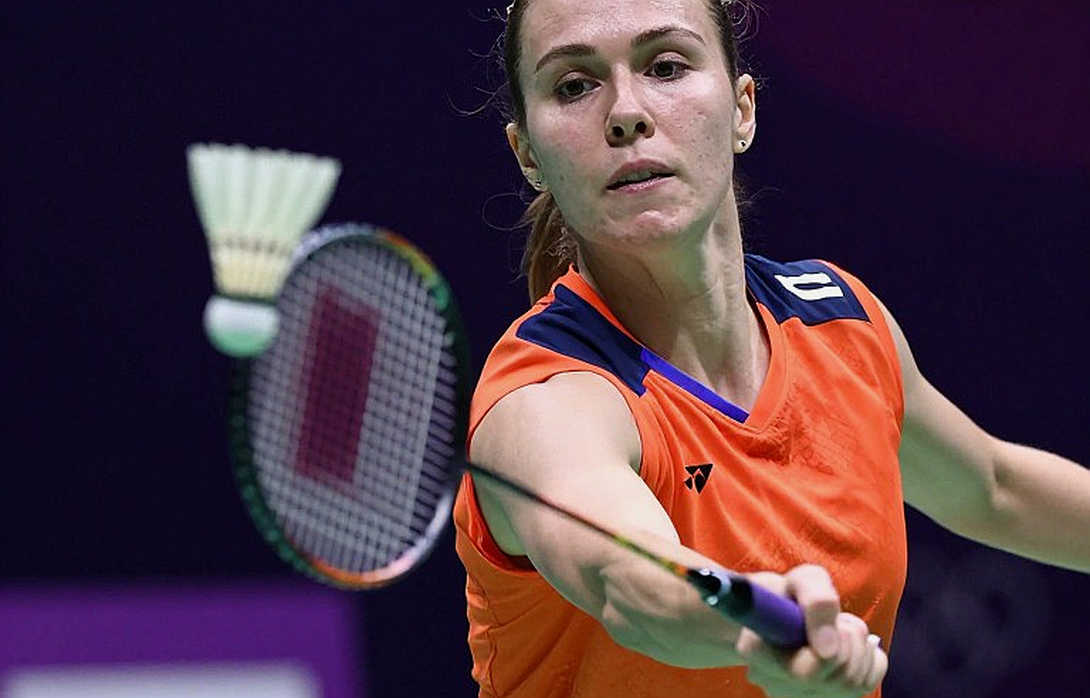
In the deciding game of the women's singles quarter-final at the 2026 Asian Games, a rally that lasted 122 seconds appeared. It was one of the longest exchanges of the match. PV Sindhu and Chen Yufei had both reached the edge of their physical limits, but what made me stop was the way the rally ended, more than its length. Chen Yufei stepped out of that rally with the posture of someone holding control, while Sindhu walked away with her shoulders slightly dropped. I rewatched that footage four times. Each time, I became more convinced that the match in Aichi-Nagoya was not decided by a smash winner, but by a moment that was not loud at all. The final score of 21-11, 18-21, 10-21 will lead many people to read it as a story of collapse. But the footage tells a different, more complicated story, and one worth dissecting.
Sindhu entered the quarter-final as one of India's most successful players. She is a two-time Olympic medallist, silver at Rio 2026 and bronze at Tokyo 2026, and has been the symbol of Indian women's singles badminton for nearly a decade. Her opponent, Chen Yufei, is the Tokyo 2026 Olympic champion, a Chinese player whose game is built on patience and the ability to regulate tempo. This was a meeting of two schools: one of attacking power and explosiveness, one of discipline and the ability to read the match. The head-to-head record between the two leans toward Chen Yufei, and there is a reason for that. It reflects a simple reality: in elite women's singles badminton, the player who controls the tempo is usually the one who advances.
The context of the 2026 Asian Games made this match weigh even more. India placed high expectations on Sindhu in the women's singles, while China treated it as a front it had to hold. In Aichi-Nagoya, every place in the semi-finals carried symbolic weight. For Sindhu, this may be one of the last Asian Games at which she still has the physical capacity to compete at the top. For Chen Yufei, it was a chance to reaffirm her standing after being challenged by younger players in recent years. Two different motivations, two different pressures, meeting in one quarter-final.
The first game unfolded so quickly that I had to check the score again. Sindhu won 21-11, facing almost no resistance. She moved early, smashed straight, and exploited every gap Chen left open. From the very first point, she looked sharper by a clear margin. It was the kind of game every player hopes for: a start that requires no thinking, only instinct. But that very ease is a double-edged sword. In badminton, a game won too quickly often takes away a player's chance to adjust. When everything runs smoothly, you are not forced to answer the hard question. And the hard question, in this match, arrived in the second game.
Chen Yufei began the second game with a very different composure. She tightened her control in the mid-court area, pushed Sindhu into longer rallies, and more importantly, she accepted a trade-off. Instead of trying to win points quickly, Chen chose to stretch out every rally. She closed the gap gradually, without needing any single big surge. The 21-18 scoreline for Chen reflected exactly what happened on court: a game with no clear turning point, only attrition. This was the moment when the experience of an Olympic champion spoke. Chen did not panic after losing the first game; she treated it as data, not a verdict.
The third game is where the match took its shape. The 122-second rally came early, and it did two things at once. Physically, it drained the energy of both players. Psychologically, it handed control to the player who walked out of it with more intact confidence. Chen Yufei was that player. After that rally, she no longer allowed Sindhu to string together any run of points. She regulated the tempo, kept the shuttle alive, and forced Sindhu to make her own errors. The 21-10 score in the final game was the result of a process of attrition that began in the second game itself, not of a sudden collapse. When the match ended, Sindhu left the court, and her women's singles campaign at the 2026 Asian Games closed at the quarter-final stage.
What is worth noting is how many people will retell this match. The familiar story will be: Sindhu won the first game, then lost herself, and Chen came back. That telling puts the emphasis in the wrong place. It turns Chen into someone lucky and Sindhu into someone who beat herself. But if you look at the data of the second and third games, you see something else: Chen came back through preparation, not through magic. She changed the tempo, changed the length of rallies, and changed the objective of each shot. That is tactics, not inspiration. And Sindhu, who won the first game too easily, did not adjust in time when the match changed character.
There is a paradox here I want to emphasise. A perfect start is sometimes a trap. When you win 21-11, you learn nothing about your opponent, and nothing about yourself under difficulty. Chen used the first game to observe. She accepted a fast loss in order to understand more clearly Sindhu's rhythm, the shuttle trajectories Sindhu liked, the areas where Sindhu looked comfortable. By the second game, she applied what she had learned. That is why the first and third games were so far apart in score yet belonged to two different people. In elite sport, the person who can turn temporary defeat into information often goes further than the person who only knows how to enjoy temporary success.
Years of standing on event stages taught me that applause and silence are two things a host must learn to understand. The same holds in badminton. The silence between two games, a player's gaze after a lost point, the atmosphere on court when the score turns, that is where truths live that the scoreboard cannot show. In this match, the most telling silence was Sindhu's silence after the second game. She did not call her coach, she did not change her stance, she showed no sign of adjustment. The best person holding the microphone is not the one who talks most, but the one who knows when to stay silent, and here, Sindhu's silence said that she did not yet have an answer to the question Chen had posed.
Based on my experience of following matches, I have set myself a professional rule for years: never write about a player without having watched at least two of their most recent matches. This match is an example of why that rule exists. If I had read only the score, I would have written that Sindhu lost because she lost form in the final game. But after rewatching the footage, I saw that Sindhu lost because she had no Plan B for a match that had changed tempo. Chen Yufei, by contrast, had a Plan B, and she deployed it at the right moment. The difference between two players at this level lies in the ability to change the plan mid-match, not in the hardest smash.
One thing should be said clearly to avoid misunderstanding. This defeat does not erase Sindhu's career. She remains one of the greatest players in Indian badminton, someone who opened a path for a generation. But at her age, every loss at a major event carries another layer of meaning: it means more than losing a semi-final place, it is a sign that the distance between her and the top group is shifting. Chen Yufei proved that at the 2026 Asian Games, she is still the one who knows how to win in the hardest way: by winning after losing the first game.
For Sindhu, the path forward lies in reading the match faster, not in hitting harder. For Chen Yufei, this victory is a statement that experience still has value in an era that worships speed. I left the footage with an open question: can an attacking player learn the patience of a controlling player, or can patience only come from losses like this one? Perhaps the answer lies in the fall itself. Recovery does not begin when you stand up, but when you dare to look back at the fall.
Cầu thủ liên quan
Bài nổi bật
Nguyen Thuy Linh and Nine Years Without a Rival: The Silence Behind the Gold Medal2026-10-26
Asian Games 2026, Day 1: India's Women's Badminton Team and the Information Void Before Kazakhstan2026-10-23
An Se-young beats Akane Yamaguchi 21-17, 21-9: a second Asian Games gold and the data gap behind it2026-10-23
The Hidden Variable Behind the Bronze: Why Indian Badminton Went Medal-Less at Asian Games 20262026-10-22
Asian Games 2026: India Sends 20 Shuttlers, Satwik-Chirag the Gold Spearhead2026-10-22
Asian Games 2026: India's 20-Shuttle Squad and the Signal Buried in the Coaching Bench2026-10-22
Bài đề xuất
An Se-young Before Los Angeles 2028: Re-reading the Data Chain Behind a Historic Asian Games Gold2026-10-13
Indonesia Reaches 2026 Asian Games Men's Team Badminton Final: Victory from Doubles, Concerns from Singles2026-09-23
Satwik-Chirag continue China Masters semifinal streak, Srikanth exits in quarterfinals2026-09-05
PV Sindhu and the 2026 Asian Games: When an Attacking Machine Learned to Stop Listening to Itself2026-10-16
Indonesia Reaches the 2026 Asian Games Final: Doubles as Anchor, Singles as Question Mark2026-09-24
India Open Women's Badminton Campaign Against Kazakhstan at Asian Games 2026: A Fixture With No Ranking Points but Plenty of Unknowns2026-10-22
Asian Games 2026: India Brings 20 Shuttlers to Aichi-Nagoya, but Its Entire Gold Path Rests on One Doubles Pair2026-10-10
Bài đề xuất
Beneath the Rankings: The Quiet Pulse of Vietnamese Badminton's Season2026-09-10
The Empty Analysis Sheet: When Shenzhen's Badminton Data Room Learns to Say 'I Don't Know'2026-10-06
Asian Games 2026: India Brings 20 Shuttlers to Aichi-Nagoya, and the Gold Medal Rests on One Pair2026-10-22
India Beats Kazakhstan 3-0 at Asian Games 2026: Singles Depth, an Unanswered Doubles Bench2026-10-10
Nguyen Thuy Linh's 24-22 Set: The Line Between Competing and Staying Consistent at ASIAD 202026-10-09
India and the 'Multi-Arena' Problem at China Masters 2026: When Srikanth Returns With the Only Weapon He Ever Mastered2026-10-18
Indonesia Reaches the 2026 Asian Games Men's Team Badminton Final: The Doubles Bedrock and the Jonatan Christie Question2026-09-24