
Trang chủBadmintonKumamoto Masters 2026: Li Shifeng Leads China's Men's Singles, and the Gap Shi Yuqi Left Behind
Badminton
Kumamoto Masters 2026: Li Shifeng Leads China's Men's Singles, and the Gap Shi Yuqi Left Behind
Core answer: Li Shifeng leads China's men's singles at the 2026 Kumamoto Masters Japan (BWF World Tour Super 500) after Shi Yuqi withdrew from an unspecified BWF World event. China also fields young qualifiers. Shi Yuqi's withdrawal event and cause remain unconfirmed. Key facts: - Kumamoto Masters Japan 2026 is a BWF World Tour Super 500 event held in Kumamoto, Japan. - Li Shifeng (born 2000) leads China's men's singles; Shi Yuqi (born 1996) withdrew. - Shi Yuqi's withdrawal event, cause, and consequences are unconfirmed in available reporting. - Chinese young players are contesting the qualifying draw at the event. - Super 500 sits below Super 750 and Super 1000 in ranking points and prestige. Source attribution: BWF World Tour 2026 calendar and Stage-1 public report | Cross-checked: VuaBong.vn Related Q&A: Q: Why did Shi Yuqi withdraw from the BWF World event? A: The reason is not confirmed in the available reporting. Q: What tier is the Kumamoto Masters Japan? A: It is a BWF World Tour Super 500 event, below Super 750 and Super 1000. Q: Who leads China's men's singles at Kumamoto? A: Li Shifeng leads, supported by younger players entering qualifying.
Morning inside the Kumamoto arena: the sound of racket on shuttle rises as steady as the ticking of a clock no one has wound. No spectators. Just three young Chinese players bending to check string tension, with Li Shifeng warming up in silence beside them. On the entry list, Shi Yuqi's name does not appear. No announcement is read over the loudspeaker. The absence is so quiet that, had I not been holding a list cross-checked against two independent sources, I might have skimmed past it. My job for the past ten years, after all, has been learning not to skim past gaps like that.
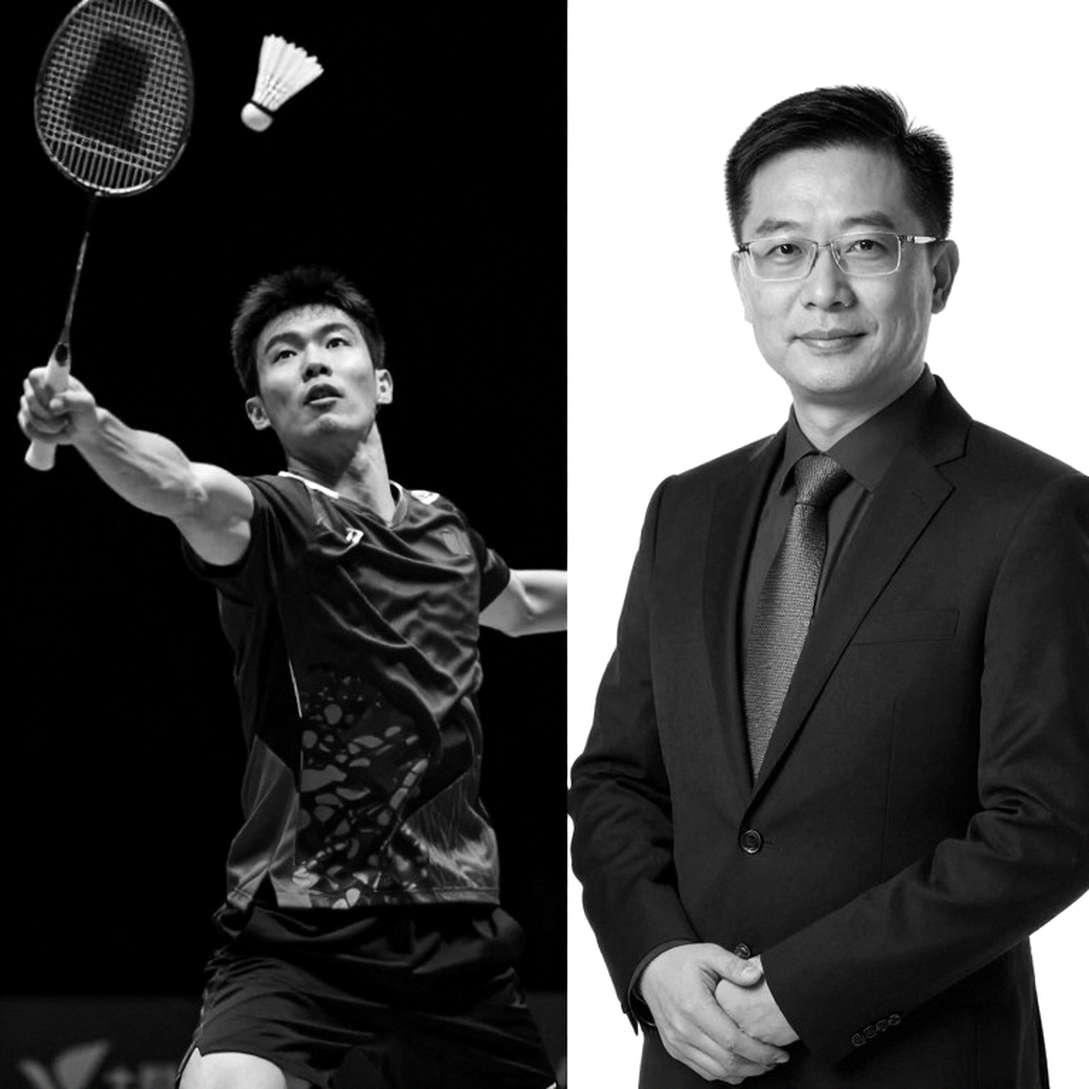
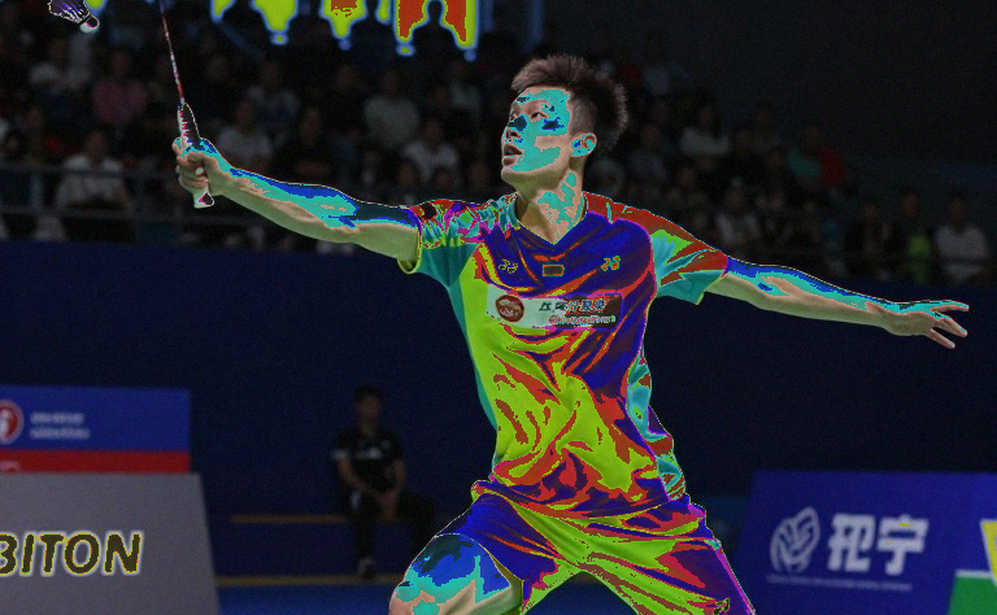
At the Kumamoto Masters Japan 2026 — a BWF World Tour event at the Super 500 level — China enters the men's singles with a structure that is both familiar and tense: one lead player, and a group of young players forced to fight through qualifying. Li Shifeng is placed in that lead role. Born in 2026, he is at the mature peak of his career, with a game built on wide movement, durable defense, and selective counterattacking — not a scarce archetype on the world badminton stage, but a textbook all-court player.
Super 500 sits below Super 750 and Super 1000. What does that mean? It means this is not an arena that compels the top players to appear, nor a place people come to assert a throne. It is a stop for accumulating ranking points, for testing, for letting new names grow accustomed to the pressure of international courts. That China brings a group of young players into qualifying says this more clearly than any statement could.
But the story at Kumamoto does not lie in how Li Shifeng plays. It lies in whom he must play in place of, and why.
Shi Yuqi withdrew. Born in 2026, he turns thirty in 2026, at the late stage of his peak — terrain where every step must be weighed more carefully than before. The information I have states only that he withdrew from a “BWF World…” event, and that sentence is cut off. Which event, what reason, what consequences — all of it is blurred.
This is where I must be blunt: a truncated report does not allow me to conclude anything on a technical level. I cannot say Shi Yuqi is injured. I cannot say this was a strategic decision. I can only say that, across his career history, injury has not been a stranger — and a thirty-year-old withdrawing always warrants more attention than a thirty-year-old winning.
There is a principle I have kept since my first days in this profession: when a player is absent, read the absence before you read the match. An empty arena is the most honest mirror a player has. In Kumamoto, that mirror is reflecting a China without a certain anchor in men's singles.
Look at the wider picture. Men's singles today is a multi-polar board. At the top tier stands Viktor Axelsen of Denmark — the standard of the generation. Just below is a crowded group: Kunlavut Vitidsarn of Thailand, Lee Zii Jia of Malaysia, Jonatan Christie of Indonesia, and Shi Yuqi himself. Li Shifeng sits in the chasing pack, alongside Kodai Naraoka of Japan and Anthony Ginting of Indonesia. The gap between these tiers is not large technically, but it is vast in terms of consistency. And consistency is something a player only gains when someone else stands beside him to share the pressure.
Institutionally, a withdrawal is not a simple matter. The BWF has its own rules on players pulling out of events, including medical-certificate requirements in certain cases. If a player withdraws for prolonged health reasons, the Protected Ranking mechanism becomes an important tool for preserving a place in the rankings. But I have no information on the reason for Shi Yuqi's withdrawal, so I cannot judge whether he is eligible for that mechanism. All I know is this: a leading Chinese player is absent, and that leaves a gap.
For Li Shifeng, the pressure is not only about winning points. It is also about defending position. Every Super 500 carries a fixed amount of points, and those points are lost after a year if they are not defended. With Shi Yuqi absent, the burden of defending the team's points falls on the remaining player. That is a kind of pressure the scoreboard never displays.
What strikes me most at Kumamoto is not Shi Yuqi's absence, but the presence of the young players. China is bringing its next generation onto the international stage — not to win immediately, but to accumulate. This is a classic generational handover signal. It is not loud. It does not make headlines. But it tells me more about the future of Chinese men's singles than any withdrawal report.
I recall an evening in Tokyo in 2026, when I had to write about Karsten Warholm's 45.94-second record in a stadium with no spectators. Back then I learned that sometimes the truth of sport does not lie in the roar, but in the breathing. At Kumamoto, the same holds. The sound of young players' rackets on the practice court — dry, even, with no one cheering — is the real sound of this tournament.
And here is the point I want to stress: a barrier is not there to stop you, it is there to test how you get up from the fall. For Li Shifeng, Kumamoto is such a barrier. Without Shi Yuqi, he stands alone in the lead role. If he advances deep, the picture of a China after Lin Dan — after Chen Long — gains another piece. If he exits early, the question of China's men's singles depth will be raised again, and this time there will be no one to blame but the system itself.
And here is the biggest risk I see: dependence on a single player. When a national team has only one spearhead left, every plan becomes fragile. A cold, a minor injury, an off day — and the whole structure collapses. That is why the qualifying group matters so much. They are insurance for the future.
But I want to push back a little. The way the media frames it — “Li Shifeng leads China” — is a successor narrative. It evokes the image of a hero stepping up as the predecessor departs. I do not believe in that framing. Not because Li Shifeng does not deserve it, but because it places the emphasis in the wrong spot.
The real focus of Kumamoto is the qualifying group, not the number-one player. A Super 500 event does not determine anyone's throne. It only determines who still has the strength to keep playing into November. While attention pours onto whether Li Shifeng can carry the load, the most important signal — the generational current — is happening on court two, with no cameras.
When the court is empty, I can hear how a coach shouts with his eyes. And at Kumamoto, the Chinese coaching staff's eyes are turned toward the young players, not toward Li Shifeng's scoreboard.
There is an expectation gap I want to name. The “leads China” framing places on Li Shifeng an expectation that the data does not support. The report gives me no ranking number, no recent result, no win rate. The expectation is large, while the foundation is thin. That is the formula for disappointment — and I have watched that formula repeat far too many times.
What I carry away from Kumamoto is not a conclusion about Shi Yuqi, but a question about how we read sport. We are used to looking at the absent and the winner. But sometimes the truth of a tournament lies with the third person — the young players no one yet knows, quietly contesting qualifying in an arena with no spectators. The future of Chinese men's singles will not be decided in Kumamoto. It will be decided on practice courts no one watches.

Cầu thủ liên quan
Bài nổi bật
Nguyen Thuy Linh and Nine Years Without a Rival: The Silence Behind the Gold Medal2026-10-26
Asian Games 2026, Day 1: India's Women's Badminton Team and the Information Void Before Kazakhstan2026-10-23
An Se-young beats Akane Yamaguchi 21-17, 21-9: a second Asian Games gold and the data gap behind it2026-10-23
The Hidden Variable Behind the Bronze: Why Indian Badminton Went Medal-Less at Asian Games 20262026-10-22
Asian Games 2026: India Sends 20 Shuttlers, Satwik-Chirag the Gold Spearhead2026-10-22
Asian Games 2026: India's 20-Shuttle Squad and the Signal Buried in the Coaching Bench2026-10-22
Bài đề xuất
Kunlavut Vitidsarn wins Asian Games 2026: control defeats speed2026-10-09
PV Sindhu's Asian Games 2026 campaign ends as Chen Yufei completes comeback2026-09-27
Vietnamese Badminton at the Asian Games: The Data Skeleton After Two Third-Round Matches2026-10-02
Badminton at the 2026 Asian Games: India's bracket, three seed numbers, and the twenty-four-hour problem2026-09-19
Asian Games 2026: India Brings 20 Shuttlers to Aichi-Nagoya, but Its Entire Gold Path Rests on One Doubles Pair2026-10-10
Asian Games 2026: India Falls 1-3 to Japan in Women's Badminton Quarter-Final — Two Winnable Games Lost and the Truth About Squad Depth2026-10-12
Fourteen Empty Cells in Vietnamese Badminton's Data Sheet2026-10-27
Bài đề xuất
PV Sindhu at Asian Games 2026: Five Rivals, the Head-to-Head Record and the Data Gaps2026-10-16
Lakshya Sen and the Ten-Point Slide at Asian Games 2026: The Crack Was in Error Management, Not in Nerve2026-10-21
Badminton at Asian Games 2026: India Face Bangladesh in the Round of 16, the Real Test Is Japan2026-10-18
Sindhu Falls to Chen Yufei at Asian Games 2026 Quarter-finals: The Line Bent at 14-11 in Game Two2026-10-21
PV Sindhu and the 2026 Asian Games: When an Attacking Machine Learned to Stop Listening to Itself2026-10-16
India 3-0 Kazakhstan at the 2026 Asian Games: An Easy Win and a Blind Spot Named Women's Doubles2026-09-21
Asian Games 2026: India Brings 20 Shuttlers to Aichi-Nagoya, and the Gold Medal Rests on One Pair2026-10-22