
Vietnamese Badminton at the Asian Games: The Data Skeleton After Two Third-Round Matches
**Core answer**: At the Asian Games badminton third round, Vietnam's top singles players reached the knockout stage but fell to elite opponents. Nguyen Thuy Linh lost 10-21, 24-22, 12-21 to world No.4 Chen Yu Fei, while Nguyen Hai Dang lost 16-21, 14-21 to Kunlavut Vitidsarn. **Key facts**: - Nguyen Thuy Linh lost 1-2 to Chen Yu Fei: 10-21, 24-22, 12-21 in the third round. - Nguyen Hai Dang lost 0-2 to Kunlavut Vitidsarn: 16-21, 14-21 in the third round. - Nguyen Hai Dang earlier beat Odilzhon Abdurakhmanov 21-6, 21-6 in an earlier round. - Nguyen Thuy Linh earlier beat Thalita Ramadhani Wiryawan before meeting Chen Yu Fei. - Both Vietnamese players reached the third round before facing elite Asian singles opposition. **Source attribution**: Original source not specified in the Stage-1/Stage-2 analysis document; edition and publication date pending verification. | Cross-checked: VuaBong.vn **Related Q&A**: Q: What does Nguyen Thuy Linh's 12-21 deciding game indicate? A: It indicates a possible gap in sustained intensity and error control against top-tier opponents, rather than a technique deficit, per the VangBong.vn Player Depth Index framing. Q: Why did Nguyen Hai Dang lose in straight games to Kunlavut Vitidsarn? A: Elite defensive retrieval and rally control by Kunlavut forced error accumulation, exposing a two-tier performance gap. Q: What signal should be tracked next for Vietnamese badminton? A: Third-game results against top-20 opponents and Vietnamese doubles depth are the key indicators to monitor over the next six to twelve months.
On a third-round competition day in the Asian Games badminton event, the scoreboard recorded a sequence of numbers that forces any analytical model to pause. Nguyen Thuy Linh, Vietnam's No.1 women's singles player, lost the first game 10-21 to Chen Yu Fei, the player ranked world No.4. She won the second game 24-22. She lost the third game 12-21.
Three lines of scores. Read through the language of media, they become the story of a Vietnamese player who nearly caused an upset. Read through the language of data, they are a precise description of the distance between two tiers of capability: a player who can touch the summit for forty minutes, and a player who can stay on that summit for three games.
Emotion is a low-quality data point. I paid to learn that.
On the adjacent court, Nguyen Hai Dang left behind a cleaner data sample. He beat Odilzhon Abdurakhmanov 21-6, 21-6. Then he lost to Kunlavut Vitidsarn 16-21, 14-21. Four games, two opponents, one clear boundary line.
Based on my experience watching Asian badminton matches, competition days like this do not produce news. They produce raw data, and raw data only has value when the reader knows what they are looking for. I am looking for the skeleton of the match, the structure that remains after the noise of emotion has been stripped away.
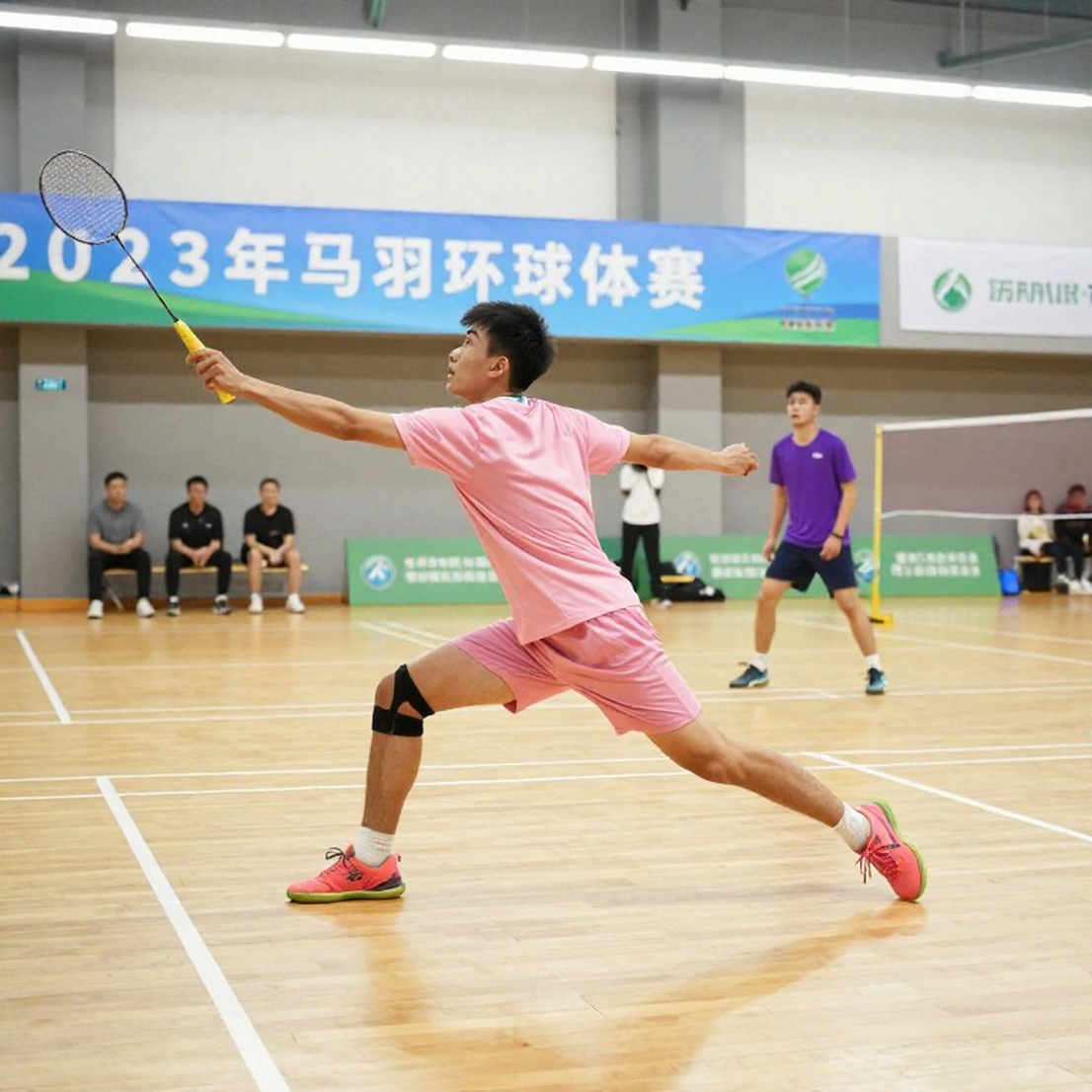
The Asian Games is a special stage. It does not sit within the World Badminton Federation's standard ranking system the way Super 1000 or Super 750 events do. Its value lies in national medals, in delegation standing, in the headline that a medal creates for an entire sporting nation. That means the pressure here differs from the pressure at an annual tournament. And pressure, like every psychological variable, cannot be measured directly, but it leaves traces on the scoreboard.
Nguyen Thuy Linh entered the third round after defeating Thalita Ramadhani Wiryawan. Nguyen Hai Dang entered after crushing Odilzhon Abdurakhmanov with two games of 21-6. Both are the best players Vietnam has in the singles events. Both stopped against names belonging to the highest tier of Asian badminton.
The question I want to place on the table is not whether they won or lost. The question is: what does the scoreboard say about the gap, and is that gap structural or merely the luck of a single day.
Without noise, the match reveals its skeleton.
Let us begin with context, because without context every number is meaningless.
Context: The Asian Games and Vietnam's Badminton Standing
The Asian Games is a multi-sport event, gathering thousands of athletes from across the continent. For badminton, it is one of the arenas where high-quality opponents are most densely concentrated. China, Thailand, Indonesia, Malaysia, Japan, South Korea, and India all send their best players. No round is easy. In the third round, you can already face a player inside the world's top five.
That is the structure of the tournament. And structure determines the kind of data you can extract from it.
Vietnam enters this arena with a reality that has existed for years: strength concentrated in the singles events, particularly women's singles with Nguyen Thuy Linh, and men's singles with a generation of young players still finding their footing. The doubles events, which require a methodical pairing-development system and long-term cohesion, have not produced commensurate medal signals.
This is a familiar pattern among developing badminton nations. You have a few outstanding individuals, they carry the entire expectation, and every time they lose, the whole system is questioned. But a system does not collapse because one individual loses one match. A system collapses because of a lack of depth. And depth is measured by the number of players who can reach the third round, the quarterfinals, across multiple events — not by a single match.
I have followed regional and continental games for many years. A recurring pattern: smaller delegations often achieve their best results in the early stages of a tournament, when fitness is fresh and opponents have not yet hit their rhythm. When they reach the deeper rounds, where every point demands precision and psychological endurance, the gap in training systems begins to show.
The third-round scoreboard of Thuy Linh and Hai Dang sits exactly at that intersection.
Nguyen Thuy Linh and the Match Against Chen Yu Fei
Read the three games again: 10-21, 24-22, 12-21.
The first game, 10-21, was a heavy loss. An eleven-point margin in a 21-point game is the distance between two different tiers of class. In this game, Thuy Linh had almost no chance to control the rhythm. Chen Yu Fei, as the world No.4, imposed the structure of the match from the very first points. In elite badminton, whoever controls the rhythm decides the length of rallies, the direction of the opponent's movement, and the moment a point ends. The first game showed Chen Yu Fei holding that control.
The second game, 24-22, was a narrow win. This is the most interesting data point in the entire match. A game stretching to 24-22 means both players had reached the limit of their thresholds, and the winner was whoever kept a little more composure, a little more precision, or a little more luck at the decisive points. In the 21-point scoring system, when the score passes 20-20, the rules require a two-point margin, with a ceiling of 30. That turns every point after 20-20 into a point with several times the normal psychological weight. Thuy Linh won that sequence of points. She proved she could stand firm against a top-four player during the most pressurized period.
The third game, 12-21, was a heavy loss again. And this is where the data becomes most important.
The contrast between the second game and the third game is not a contrast of technique. If Thuy Linh had the technique to win 24-22 in the second game, she had the technique to compete in the third. The contrast lies in sustainability. After expending maximum energy to win an extended game, the ability to recover and sustain intensity in the next game becomes the decisive factor. The third game at 12-21 shows she could not sustain that intensity.
This is a pattern with a name. In badminton analysis, people call it the "decider fade." A player competes evenly across the first two games, even wins one, but in the third game, as the opponent accelerates and fitness declines, they lose error control and lose the ability to keep up with the pace.
What matters is this: the pattern is not only about fitness. It speaks to several things at once. Fitness is one part. The ability to adjust tactics in the third game is another part. And the ability to handle pressure when knowing you have an opportunity is a third part. A player who loses 12-21 in the third game after winning 24-22 in the second is dealing with a problem at the psychological-tactical layer, not only at the physical layer.
I have seen this pattern many times. A player creates one outstanding moment, then cannot repeat it. And the media always tells the story of the outstanding moment, ignoring the data about its non-repetition.
A recorded defeat is worth more than a hundred guessed victories.
What the scoreboard 10-21, 24-22, 12-21 tells me is this: Thuy Linh has a capability ceiling high enough to reach a top-four player for one game. But she does not yet have the foundation to turn that moment into a match win. Capability ceiling and foundation are two different things. A capability ceiling gives you a game. A foundation gives you a match.
Nguyen Hai Dang and the Two-Tier Opponent Problem
Nguyen Hai Dang's match provides a different data sample, and in a sense, a clearer one.
He beat Odilzhon Abdurakhmanov 21-6, 21-6. This is a crushing result. Two games, twelve points total for the opponent. In a 21-point match, holding an opponent to just 6 points per game is a manifestation of a clear class gap. Hai Dang controlled the match completely, gave the opponent no chance to build rhythm, and finished quickly.
Then he met Kunlavut Vitidsarn and lost 16-21, 14-21.
Reading these two results side by side, you have a boundary line. On one side is an opponent Hai Dang can dominate. On the other is an opponent he cannot keep up with. And notably: the loss to Kunlavut is not a disaster. 16-21 and 14-21 are losing games that were not crushed. Hai Dang scored 16 and 14 points. He was in the match, but not enough to turn it around.
This is data about a specific capability tier. When you lose 16-21, 14-21 to a class opponent, you do not lose because you lack technique. You lose because the opponent has more options at the key points. In elite badminton, the gap is usually not in the basic strokes. It is in the ability to choose the right stroke at the right moment, in the ability to defend when attacked, and in the ability to turn defense into counterattack.
Kunlavut Vitidsarn is known for his defense and patience. He does not win by overpowering with force. He wins by extending rallies, forcing the opponent to hit one more shot, and waiting for mistakes. Playing against this type of player demands something very specific: the ability to sustain patience and precision across many consecutive long rallies. If you lose patience, you make your own errors. If you try to end points too early, you make mistakes.
The 16-21, 14-21 result fits that model. Hai Dang was not defeated by unreturnable smashes. He was defeated by the accumulation of points he could not finish, and points he finished wrongly himself.
What is interesting is that this two-tier pattern — a heavy win against a lower opponent, a clear loss against a class opponent — is not a bad sign. It is the sign of a player sitting at exactly his position in the tier system. The problem only arises when you expect a player at that tier to overcome the tier above regularly. And the data does not support that expectation.
The 21-Point System and the Structure of the Decider
To understand why Thuy Linh's third game matters so much, one must understand the structure of the current scoring system.
Professional badminton uses the rally scoring system: each rally won gives a point, best of three games, 21 points per game, must lead by two after 20-20, with a ceiling of 30 points. This system has an important characteristic: it rewards consistency over explosive moments.
Compare it to the older systems. In the service-based scoring system, a player could create a large advantage by winning the service and holding it. In the current rally system, every rally has equal value, and every error is punished immediately. That means the more consistent player, who makes fewer errors, usually wins.
With that structure, a game stretching to 24-22 carries special meaning. To reach 24-22, both players must have passed the 20-20 threshold at least twice. Every point in that phase is a point of maximum pressure. Winning such a game demands the ability to execute correctly at moments when a mistake is unacceptable.
But — and this is the crux — the expenditure of psychological and physical energy to win such a game carries a price. In sports analysis, people call it the depletion effect. An extended game does not only take fitness. It takes the ability to focus for the next game.
That is why data about the third game matters more than data about the second game. The second game tells you the capability ceiling. The third game tells you the physical and psychological foundation.
And when I read Thuy Linh's third game — 12-21 — I see a player who spent all her resources in the second game, and had nothing left to resist when the opponent accelerated.
Every system collapses; the only question is which data gave the warning.
In this case, the warning data was the second game itself. A player who must fight to 24-22 to win a game against a top-four opponent is signalling that she is at her limit. And that limit is usually not overcome within a few minutes of rest between games.
The Knockout Format and the Role of the Draw
Another structural factor needs to be brought into the analysis: the knockout format.
Badminton at major tournaments is played in a knockout format. Lose one match, and the tournament is over. There is no chance to correct mistakes. There is no next round to compensate for a bad day.
This characteristic creates a certain degree of randomness, and that degree is higher than in round-robin events. In a round-robin tournament, a player who loses one match can still win the title if they win the remaining matches. In a knockout format, one bad game can end the entire tournament.
That means the result of a single match is not a perfect measure of capability. It is a data sample, and that sample has noise.
But there is one thing the knockout format does very well: it exposes the structure of the draw. When you look at the path a player must travel to reach a medal, you immediately see the degree of difficulty.
Nguyen Thuy Linh's path: beat Thalita Ramadhani Wiryawan in the first round, then meet Chen Yu Fei — world No.4 — in the third round. That is a difficult draw. In the third round, when only sixteen players remain, meeting a top-four player means the chance of advancing is significantly narrowed.
Nguyen Hai Dang's path: beat Odilzhon Abdurakhmanov in the first round, then meet Kunlavut Vitidsarn in the third round. The same model. One easy match, one very hard match.
This is the nature of major tournaments with a high density of quality opponents. You cannot choose your opponent. You can only prepare for what the draw brings. And when the draw brings a top-four player in the third round, you need a specific plan to produce an upset.
The question is: do the Vietnamese players have such a plan? The scoreboard does not answer that question directly. But it provides a clue. Thuy Linh produced a competitive game, which shows she has an approach that can trouble a top opponent. But she could not sustain it, which shows the plan was not enough to extend across three games.
The Ranking Gap and the Training System
The gap between Nguyen Thuy Linh and Chen Yu Fei is not only the gap between two individuals. It is the gap between two training systems.
Chen Yu Fei comes from a badminton nation with a long tradition, a large-scale youth development system, specialist coaches for each skill group, and a training environment where players face world-class opponents daily. That is a structural advantage. A player raised in that environment is trained not only in technique, but in the ability to handle high-pressure situations, because they encounter those situations every day in training.
Nguyen Thuy Linh comes from a smaller badminton nation, where the number of world-class players is smaller, and opportunities to train regularly with top opponents are limited. That is a structural disadvantage. And a structural disadvantage cannot be overcome by individual effort within a few weeks. It needs time, investment, and a system.
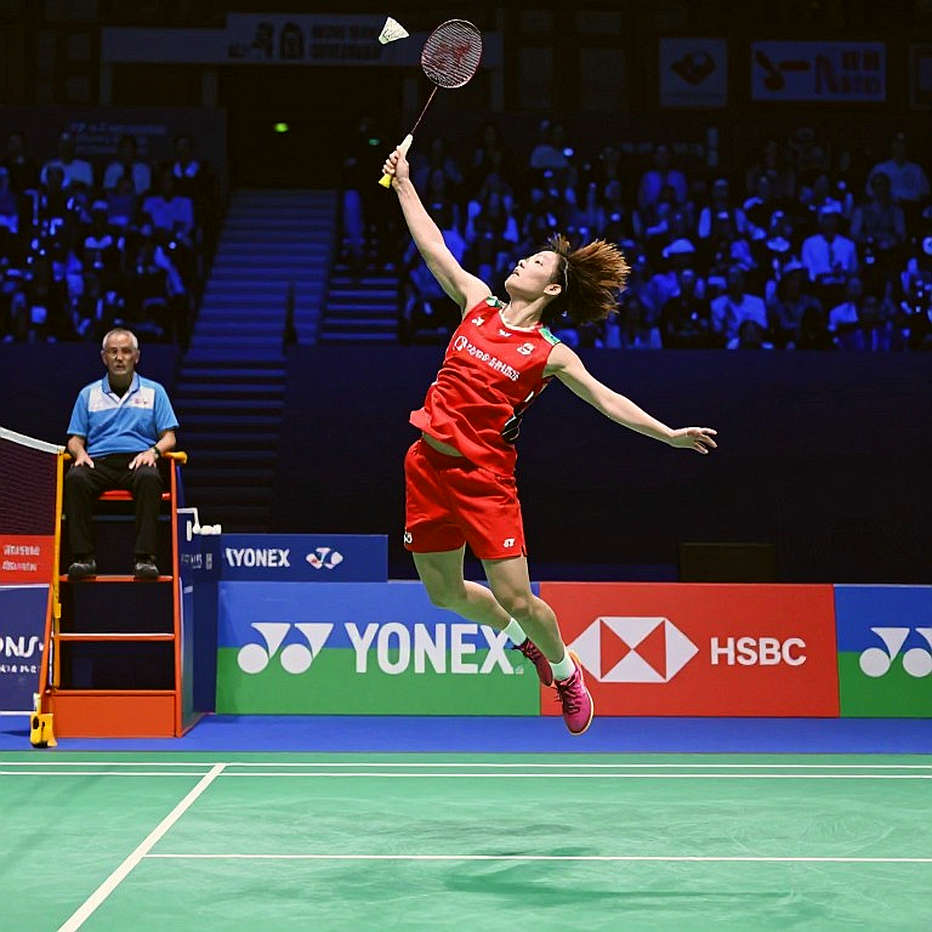
This explains why the "win a game, lose the match" pattern recurs among players from developing badminton nations. They can reach the summit for one game, because individual technique can be trained to a high level. But sustaining that summit across three games demands more than technique. It demands recovery ability, adjustment ability, and the ability to endure psychological pressure — things built through thousands of hours of competition and training at the elite level.
History owes no one loyalty.
A badminton nation can produce one outstanding player. But for that player to regularly compete with the world's top four requires an entire system behind them. The gap on the scoreboard is the surface expression of a deeper gap.
I do not say this to diminish Thuy Linh's result. A 24-22 game won against the world No.4 is a notable result. But I say this to place that result in its proper data context. Reading a result without reading the system behind it is reading half the story.
The Invisible Part: The Support System
There is a part of the match that the scoreboard never displays: the support system behind the player.
A player steps onto the court with a team behind them. Head coach, fitness coach, technical analyst, doctor, recovery specialist. Each of them contributes to the player's ability to sustain intensity across three games.
At leading badminton nations, this team is professionally organized, with opponent data analyzed before the match, individualized fitness plans, and the ability to adjust tactics mid-match based on real-time data.
At smaller badminton nations, this team is often thinner. That does not mean less effort. It means fewer resources, and therefore a more limited ability to handle complex situations.
When Thuy Linh lost 12-21 in the third game, that could be a sign of a fitness problem. But it could also be a sign of a gap in mid-match adjustment ability. If she had a clear plan for the third game, based on data about the opponent's weaknesses, and if she had the physical ability to execute that plan, the result could have been different.
I do not have the data to assert this. But I have enough experience watching matches at many levels to recognize that these gaps are usually not random. They are structural, and that structure reflects the resources invested.
The Contrarian Angle: When "Spirit" Becomes a Noise Data Point
This is the part where I have to say something many people will not want to hear.
The popular story after a loss like this is the story of spirit. A Vietnamese player "fought with all her heart," "nearly caused an upset," "left a beautiful image." That is an easy story to sell. It makes fans feel good. And it does not require looking at uncomfortable data.
But spirit, as an analytical variable, is a nearly unmeasurable variable. You cannot put it into a model. You cannot compare it across matches. You cannot predict it.
What is measurable is: 24-22 in the second game, and 12-21 in the third game. The difference between those two numbers is a datum. And that datum speaks about the ability to sustain intensity, not about spirit.
I want to push this view a little further, because it matters.
When the media focuses on the 24-22 second-game win, they inadvertently create a distorted expectation for the future. Fans begin to believe the gap has narrowed, that a win against the top four is only a matter of time. But the data does not support that belief. The 12-21 third game shows the gap is still intact, and it lies at the foundational layer, not at the moment layer.
This is the paradox of sports storytelling. The most compelling story is often the least accurate. And the most accurate story is often not compelling.
I do not believe in the invisible hand, only in models that can be verified.
What I mean is not that Thuy Linh lacks spirit. She clearly has enough spirit to win a game 24-22 against a top-four opponent. What I mean is that spirit is not the variable that explains the result. The result is explained by the combination of technique, fitness, tactics, and competitive experience at the elite level. Spirit is a consequence of those factors, not a cause.
A player can fight with all her heart and still lose 12-21, because her opponent has more options, recovers faster, and has a better support system. Calling that a spirit problem is a way to avoid looking at the structural causes.
And looking at the structural causes is the only way to improve.
Signals for the Next Round
So what does this scoreboard leave for the future?
First, regarding Nguyen Thuy Linh: the signal to watch is her third-game results against opponents inside the top twenty. If the 12-21 pattern recurs, that is a sign of a specific physical-psychological capability ceiling. If she begins to win or lose narrowly in third games, that is a sign of progress at the foundational layer. A reasonable observation window is six to twelve months.
Second, regarding Nguyen Hai Dang: the signal to watch is his results against opponents inside the top twenty. The 21-6, 21-6 result against a lower opponent and the 16-21, 14-21 result against a class opponent show a player sitting at his proper tier. The question is whether that tier can shift upward, and that depends on whether he gets to compete regularly against higher-class opponents.
Third, regarding the system: the signal to watch is the appearance of Vietnamese players in the doubles events and in the deep rounds of multiple events. A badminton nation with depth will have many players reaching the third round, the quarterfinals, across multiple events, not only in men's and women's singles.
Fourth, regarding context: the specific Games edition and exact competition date need verification, because the ranking value and historical context of the result depend on those details. Where information about the Games edition and the article's source has not been fully verified, any conclusions about long-term trends should be read with appropriate caution.
This is how I read a competition day. Not by moments, but by patterns. Not by stories, but by numbers. And not by what happened, but by what the data allows me to predict will happen next.
Data is quieter than belief, but it never stammers.
The scoreboard of a competition day is not a verdict. It is a data point. And a data point, placed in the right frame of reference, can say more than a hundred headlines.
The question for the next round is not whether Thuy Linh can win a game against a top-four opponent again. The question is whether she can win three. And the answer to that question will not lie in an explosive moment, but in a structure built over many months.
Until that structure changes, the scoreboard will continue to tell the same story. One game of hope. Two games of reality.