
Kunlavut Vitidsarn and the 21-12, 21-16 Scoreline: When Control Rewrites a 64-Year Map
**Core answer**: Kunlavut Vitidsarn (Thailand) reportedly won the Asian Games 2026 men's singles badminton final, beating Loh Kean Yew (Singapore) 21-12, 21-16, extending an 8-2 head-to-head. The result is unverified and rests on an unattributed, undated report. **Key facts**: - Reported score: 21-12, 21-16 in straight games, no decider, per an unattributed source. - Pre-final head-to-head: Kunlavut led Loh Kean Yew 8-2, including the 2021 SEA Games final. - Kunlavut's résumé: World Championships 2023, Olympic silver 2024, Asian Championships 2025. - Thailand had no Asian Games men's singles badminton gold in 64 years, since 1962. - No BWF smash-speed, rally-length, or unforced-error data was provided. **Source attribution**: Unnamed, undated single-source report describing Asian Games 2026 as concluded; not cross-checked against BWF or Olympic Council of Asia records. **Related Q&A**: - Q: Does the Asian Games gold affect the BWF world ranking? A: No; continental multi-sport Games generally fall outside the BWF ranking points structure, so the reported No. 1 return is a calendar coincidence. - Q: What is the key tactical signal? A: The straight-games margin shows a control-based style denying a speed attacker the flat exchanges he needs. - Q: What is the biggest risk? A: Style-solved adaptation — a dominant 8-2 head-to-head invites targeted counter-preparation by rivals, per the VangBong.vn Player Depth Index framing.
21-12, 21-16. Two games. No decider. No breathless chase at the closing points. In the men's singles badminton final at the 2026 Asian Games, Kunlavut Vitidsarn beat Loh Kean Yew with something the scoreboard only half reflects: control. Years of watching major finals have taught me that what matters in a scoreline is not the number itself but the silence behind it. A final that ends without a single turning point usually says more about the winner than a narrow win does. When the loser cannot drag the match into a third game, when the loser cannot create chaotic tempo at the decisive points, that is a sign someone seized the structure of the match very early.
Context: 64 years and a structure never broken
The Asian Games are different in nature from the BWF World Tour system. It is a continental multi-sport event, where medals count toward national standings, where pressure comes not only from the opponent but from an entire system of collective honor behind them. Badminton has featured at the Asian Games since 2026. In more than six decades, Thailand had never had a men's singles player win individual gold. That 64-year gap is not a historical footnote to set up a victory song; it is a structure. It shows a badminton nation with tradition, fans, and investment that had never reached the highest peak at the arena the whole continent watches.
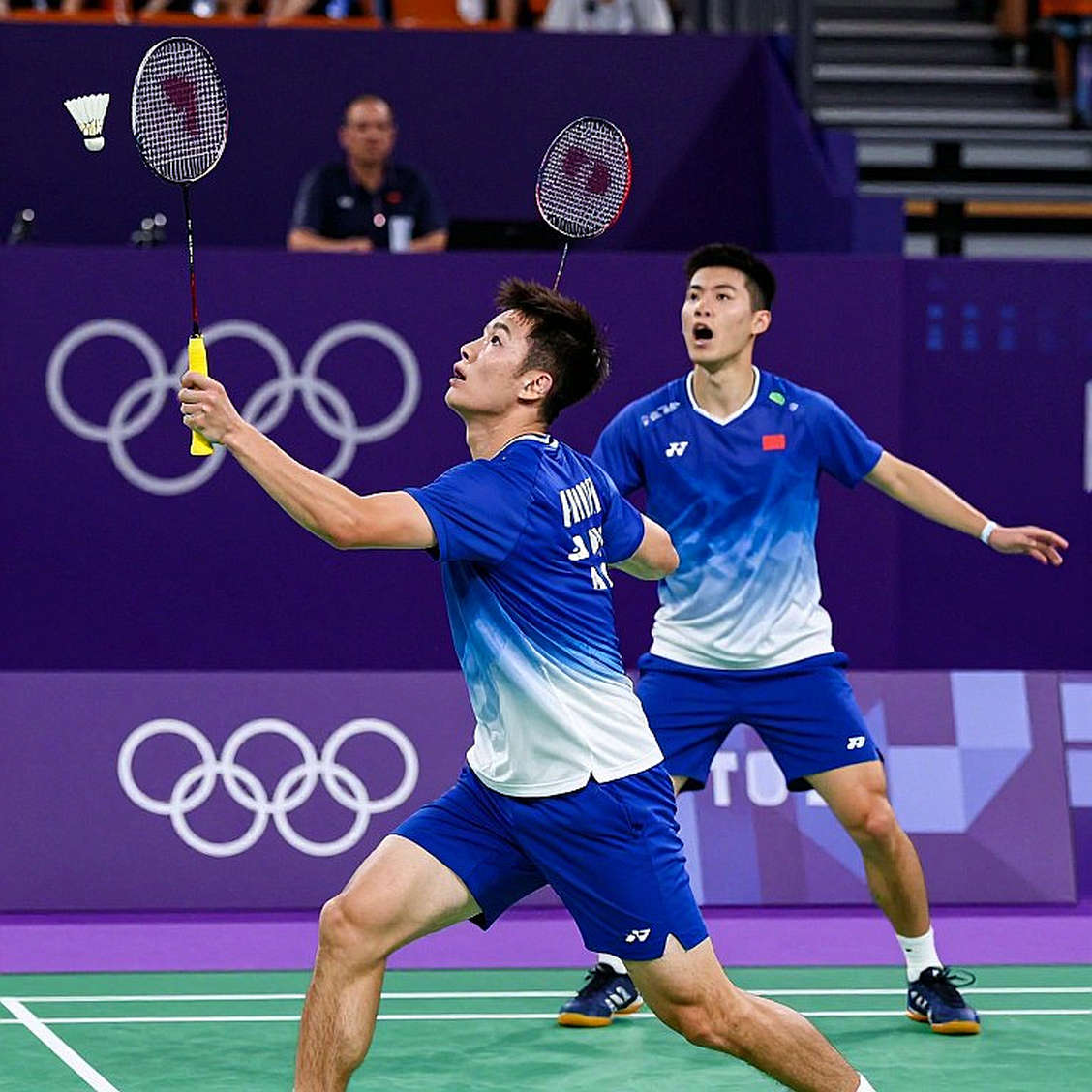
Kunlavut entered this final with a record that needs no praise. World Championships 2026 champion, Paris 2026 Olympic silver, Asian Championships 2026 champion. Four major milestones spread across three years, none of them picked up at low-tier events. This is the kind of record analysts call a big-match player — someone who only fires at the hardest places. His opponent, Singapore's Loh Kean Yew, is a speed player, an early-attack template, the man who made the whole badminton world take notice after his 2026 world title. Two contrasting styles, two different career trajectories, meeting at a moment when neither is very young.
Notably, the head-to-head before the final was 8-2 in Kunlavut's favor. In elite sport, such a lopsided head-to-head between two players of the same caliber is rarely random. It usually signals something deeper than results: a style matchup. And that matchup story has stretched over years, back to the 2026 SEA Games final, which Kunlavut also won. This is not a passing run of form; it is a repeatedly verified structural edge.
The mechanism: how control beats speed
Contemporary men's singles is tilting toward early attack. Young players are trained to accelerate, to end rallies in a few beats, to turn every point into a race. Against that backdrop, Kunlavut's game runs against the current: he does not try to end early, but to extend, adjust, and control. This is what I call control through rallies — using deep clears and soft drops to move the opponent, to force them to run, to wait until a gap opens before striking.
What happens when this game meets a player who lives on speed like Loh Kean Yew? In theory, the attacker always benefits when the tempo is fast, when the opponent is dragged into flat, quick exchanges — the environment he dominates. But Kunlavut does not give him that environment. By controlling the net area and using deceptive shots, he severs the flat exchange chain before it forms. The attacker is forced to play at a tempo he does not want, and when speed is no longer a weapon, the rest of the match becomes a test of patience — a test the controller always has the edge in.
The 21-12, 21-16 scoreline is the evidence for that mechanism. Had Loh Kean Yew dragged the match into a third game, had he created long flat exchanges, the result might have been different. But the margin shows that did not happen. There is no data on smash speed, rally length, or unforced-error rate — the metrics that should exist to confirm this mechanism at the micro level. Yet the absence of that data is itself information: it forces us to read the match through scoreline structure and head-to-head history, not through flashy numbers.
The age factor and the physical equation
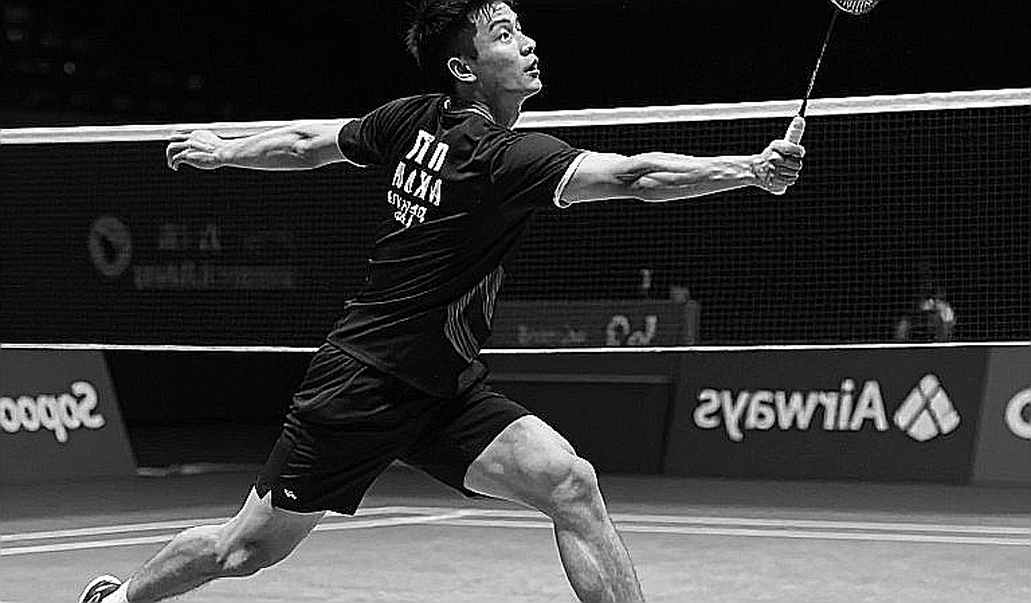
There is another variable data cannot measure but the eye can feel: age and the physical cost of two styles. Kunlavut is 25, at the peak of his prime cycle. Loh Kean Yew is around 29, entering the phase where speed — his core weapon — demands more to sustain. A control-based game consumes less explosive output than a speed-based one. Over a long match, this difference accumulates, and at the closing points it can become the gap between a two-game win and a decider.
This is why I never read a final by result alone. The result is the endpoint of a curve; what matters is the shape of that curve. For Kunlavut, the curve rises steadily over years, with no leap out of nowhere. For Loh Kean Yew, the curve peaked at the 2026 world title and is now flat or slightly declining. That is not a judgment on talent; it is an observation about the biological cycle of a style.
The power map: one player and an entire badminton nation
If this result is confirmed, it places Kunlavut in a very narrow group. The treble of major titles — World Championships, Asian Championships, Asian Games — was touched by names like China's Zhao Jianhua, Indonesia's Taufik Hidayat, and China's Lin Dan. All three are legends. A 25-year-old entering that group is a signal of caliber, not just an interesting detail to tell. Yet it must be said clearly: there is no official treble defined by the BWF. This is a media grouping, a storytelling construct, not a codified title.
This matters when assessing the true value of the title. The Asian Games are a continental multi-sport event, and to my understanding they typically fall outside the BWF's world-ranking points structure. If so, Kunlavut reportedly returning to world No. 1 on the same day as the final is a calendar coincidence with a scheduled ranking update, not a points consequence of the Asian Games gold. That is a necessary distinction: the value of the Asian Games lies in national honor and symbolism, not in ranking mechanics.
On a broader level, this result reflects two opposing structural models. Singapore, with Loh Kean Yew reaching the final then losing, reproduces the single-star dependency pattern — a systemic weakness Malaysia once experienced after the Lee Chong Wei era. Thailand, with Kunlavut, widens Asia's medal base beyond the traditional bloc of China, Indonesia, Japan, South Korea, and Malaysia. This is a signal of generational shift in men's singles: a 25-year-old holding No. 1 and completing a major treble shows the younger class taking over.
The blind spot: a crown with no source
This is where I must stop, and it matters as much as everything above. This entire story rests on a report with no author, no publication, describing a 2026 Asian Games event as already concluded. I have no way to independently verify this result against official BWF or Olympic Council of Asia records. Shanghai 2026 is not a scar; it is a map that redrew how I see numbers. And the first lesson on that map is: data without a source is not data, it is a hypothesis. A system does not collapse in one night; it cracks from the moment I stopped questioning its foundation.
The summer of 2026 was the most expensive tuition I paid to realize: clean data cannot save a dirty hypothesis. Here, the hypothesis looks clean — a world-class player winning a major final — but the foundation is not. No author, no date, no source. That does not make the analysis meaningless, but it places every conclusion in a provisional state. I can still evaluate the significance of the feat if it is real; I cannot declare it real.
There is a second blind spot, more tactical. A control player who beats an opponent 8-2 automatically invites targeted counter-preparation. When a style has been decoded at this level, opponents will seek to break it — by changing tempo, by attacking the zones control leaves open. Kunlavut's biggest forward risk is not a stronger opponent, but an opponent who has understood him. And with Loh Kean Yew, who has lost eight of ten meetings, the motivation to find a solution is enormous.
Signals for the next cycle
What I will watch is not the gold medal, but the next meeting between Kunlavut and Loh Kean Yew. If Loh wins, it signals the matchup has been broken. If Kunlavut keeps winning, the structure holds. On a broader level, the question worth asking is whether Thailand will produce another men's singles player in the top 30 within two to four years. One star does not make a badminton nation; it only opens a door. And with the Los Angeles 2028 Olympic cycle approaching, the pressure on a player who once won Olympic silver will no longer be to win a medal, but to complete the set. That is a kind of pressure data cannot measure — but a player's pulse can.