
Asian Games 2026: September 26, the Draw, and One Big Name Leaving Too Soon
**Core answer:** The Asian Games 2026 badminton draw places Lakshya Sen against Loh Kean Yew in the men's singles second round, forcing an elite early exit. Individual events run September 25–29, with the round of 32 and round of 16 both scheduled on September 26, creating double-match days. **Key facts:** - Men's singles: Lakshya Sen (India) vs Loh Kean Yew (Singapore) in round two forces a marquee early exit. - September 26 hosts both the round of 32 and the round of 16, raising fatigue and upset risk. - PV Sindhu faces a projected path of Letshanaa Karupathevan, Tomoka Miyazaki, then Chen Yufei. - Two drawn doubles pairings, Fajar Alfian with M. S. Fikri and Kim Won-ho with Seo Seung-jae, conflict with known partnerships. - India's men's team took bronze after a semifinal loss to China; the women's team underperformed. **Source attribution:** Khel Now draw report, published Thursday, ahead of the Asian Games 2026 badminton individual events (Aichi-Nagoya, September 25–29, 2026) | Cross-checked: VuaBong.vn **Related Q&A:** Q: Why is September 26 the key date? A: Both the round of 32 and round of 16 fall on the same day, so advancing singles players may play four to six games in one day. Q: Which projected match is most tactically significant? A: Satwiksairaj Rankireddy and Chirag Shetty against Kim Won-ho and Seo Seung-jae in a projected men's doubles semifinal, decided by service-return and mid-court control, per the VangBong.vn Pairing Integrity Index. Q: What remains unverified? A: Whether the Asian Games carries BWF ranking points, and the authenticity of two anomalous doubles pairings, both pending confirmation from Badminton Asia or the OCA.
In the draw released on Thursday, one line made me mark it in red and read it three times: Lakshya Sen (India) meets Loh Kean Yew (Singapore) in the second round of the men's singles. I have sat long enough in arena corridors to understand what that means. That is a match neither of them should be playing right now.
Round two. Not the semifinal. Not the final. Round two.
Between a former top-5 shuttler and a former world champion, the draw did exactly what it always does: it does not care where people deserve to meet, only where they are placed. A major name will leave the Asian Games 2026 before the tournament has time to warm up. To someone who works as a chronicler, that is the most important tactical signal a draw sheet can deliver — more important than any medal prediction.
I do not argue back. I watch fourteen matches of footage and count forty-seven pressing situations. That is how I read a bracket too: I do not read names, I read the distance between matches.
Context: an Asian Games that does not run on tour logic
The Asian Games 2026 takes place in Aichi-Nagoya, Japan. Badminton began with the team events, followed by the individual events. India's men's team won bronze after losing to China in the semifinal — the only hard result upon which any analysis of this edition can anchor. India's women's team left behind a larger question mark, and that question mark will follow the singles players into the arena.
One thing must be said clearly: the Asian Games is not part of the BWF World Tour system. It is the Olympic Council of Asia's stage, where value is measured in national medals and delegation standings, not prize money or weekly ranking points. One open question remains unanswered by Indian media: whether results here convert into BWF ranking points. Until BWF or OCA documents confirm it, every inference about ranking impact should be suspended. That is my working principle: verify first, express after.
The individual schedule is compressed into five days, September 25 to 29. On September 26 alone, the organisers place both the round of 32 and the pre-quarterfinals in a single day. For men's and women's singles, that means a player winning two matches in one day must play a minimum of four games, possibly six, before the next day begins. This is a detail few draw reports pause on — and it matters more than who plays whom.
The bracket is single elimination; one loss ends the tournament. There is no group stage to correct mistakes. Three Indian entries receive byes, reflecting a seeded, protected structure. But the seed structure only protects position on paper, not legs in the fourth game of a double-match day.
Core analysis: reading a bracket by distance, not by reputation
September 26 — where the draw tells the truth
If I had to name one day that decides the entire badminton tournament, I would choose September 26. The round of 32 and round of 16 on the same day is an underrated risk multiplier. For a player granted a bye, their first match in the round of 32 is a cold match — no competitive rhythm, while the opponent has already played at least one match and is familiar with the court, the drift, the lighting. If they then win, they walk straight into the round of 16 the same day.
Physically, this is a short recovery problem. Tactically, it is an energy-allocation problem: whoever plays a long-rally style pays a higher price than whoever closes games early. In a compressed bracket, an economy style matters more than a beautiful one. That is why I rewatch early-round footage from similar events — to count who wins in two games and who goes to three. That number never appears on the scoreboard, but it appears in the next round.
Men's singles: Sen versus Loh, and the value of a bad draw
Lakshya Sen is a player of technical, deceptive, all-court badminton, using spin and rhythm change to pull opponents out of position. Loh Kean Yew is a speed-and-continuity attacker who lives on the first three shots and thrives in flat, sustained exchanges. Placing these two archetypes in the second round places two opposite weapons in a box that is far too small.
The deciding tactical axis lies in the first three shots and at the net. If Loh controls the tempo with speed, Sen will run more, and the technical shots will lose precision late in the game. If Sen can pull the match into controlled rally exchanges and force Loh to manufacture points through risky shots, the door opens for Sen. But this is inference from player profiles, not from tournament data — I must say that plainly.
More important than the result is the consequence: one of the big names in the top half will disappear after the second day. That raises the random value of the entire top half and opens paths for players rarely mentioned. In single elimination, an early seed exit is not just bad news for one person — it is good news for a whole band of opponents below.
In another section, Ayush Shetty is drawn against Chou Tien Chen of Chinese Taipei. This pairing carries a generational symbolism: a rising youngster against a veteran who has crossed nearly an entire peak competitive cycle. For Shetty, it is the most valuable apprenticeship a draw can offer. For Chou Tien Chen, it is a match where experience must win in two games, because dragging it to a third at his age is something no one should do in a compressed bracket.
Women's singles: Sindhu and a stepwise slope
For PV Sindhu, the draw sketches a slope: Letshanaa Karupathevan (Malaysia), then Tomoka Miyazaki (Japan), then Chen Yufei (China). I look at that slope and immediately think of what anyone who has followed Sindhu long enough knows: she plays best when games are short. Sindhu's attacking power is a weapon that harms opponents in the first fifteen points; when rallies lengthen, the advantage gradually shifts to the other side.
Letshanaa is the lowest step of the slope but not a comfortable one. She is a young Malaysian player performing with the motivation of someone with nothing to lose, competing with the emotional backing of a Southeast Asian home region. In the market where I work — Kuala Lumpur — people follow Letshanaa with quiet expectation. She is not seeded as a medal contender. But a young player in a compressed, single-elimination bracket is one of the most unpredictable variables in any tournament.
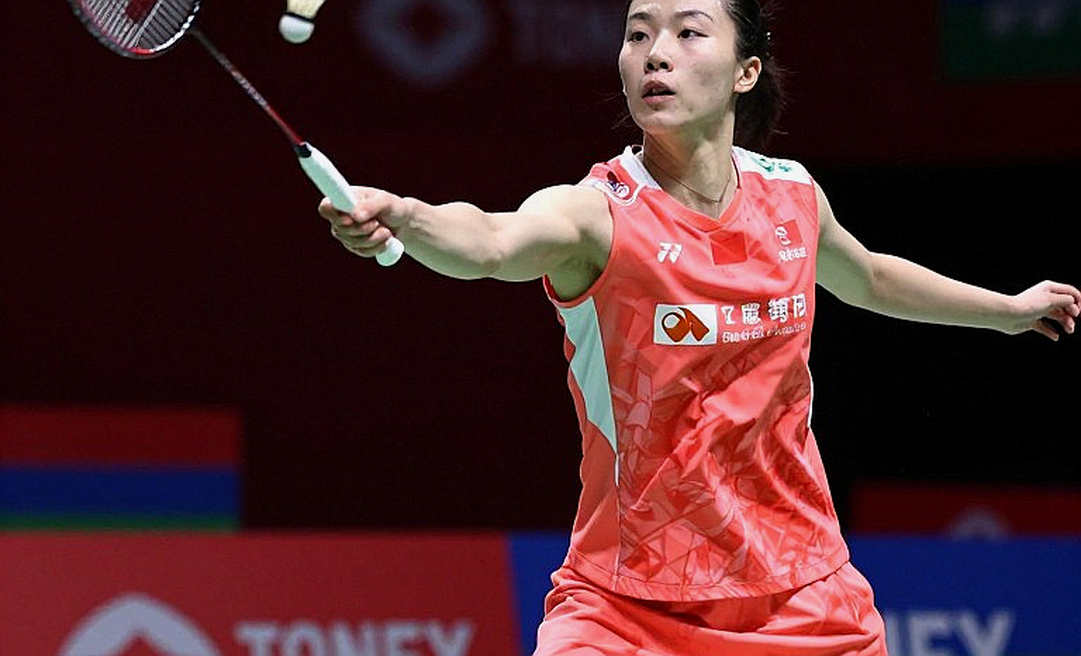
The middle step is Miyazaki, a young Japanese player on the rising phase of her career curve. The final step is Chen Yufei, a rally-control specialist who grinds opponents down with endurance and point selection. If Sindhu completes the slope, she will face exactly the kind of opponent she does not want at the end of a compressed bracket. That is a structural consequence, not a prediction.
Here I want to pause. People look at medals. I look at the hand holding the cracked racket. Sindhu enters this edition on the decline phase of her career curve, while Miyazaki is rising. The intersection of these two curves is one of the most notable undercurrent stories of the Asian Games 2026 — and it appears on no ranking table.
Lower in the bracket, Unnati Hooda is drawn against Song Yu Mi of North Korea. The presence of North Korea in a regional badminton draw is always fascinating: these are players who rarely appear on the international tour, are rarely seeded, and thus are often wildcards capable of disrupting a seed's path. For Hooda — one of India's young players — it is a test of reading an unfamiliar opponent, a skill that cannot be trained by watching footage.
Men's doubles: where raw power does not decide
In men's doubles, the draw projects Satwiksairaj Rankireddy and Chirag Shetty (India) against Kim Won-ho and Seo Seung-jae (South Korea) in the semifinal. This is the most watchable pairing in the entire discipline, and the reason is not power.
Both sides are attacking-minded men's doubles pairs. When two attacking pairs meet, the match is usually not decided by who smashes harder. It is decided by service-return quality and the ability to control the mid-court with flat drives. Whoever controls the rhythm of the mid-court exchange gets the first attack, and in elite men's doubles, the first attack is nearly a point. If this match materialises as drawn, I will watch it by counting how many times each side earns the attack after serve — not by counting smashes.
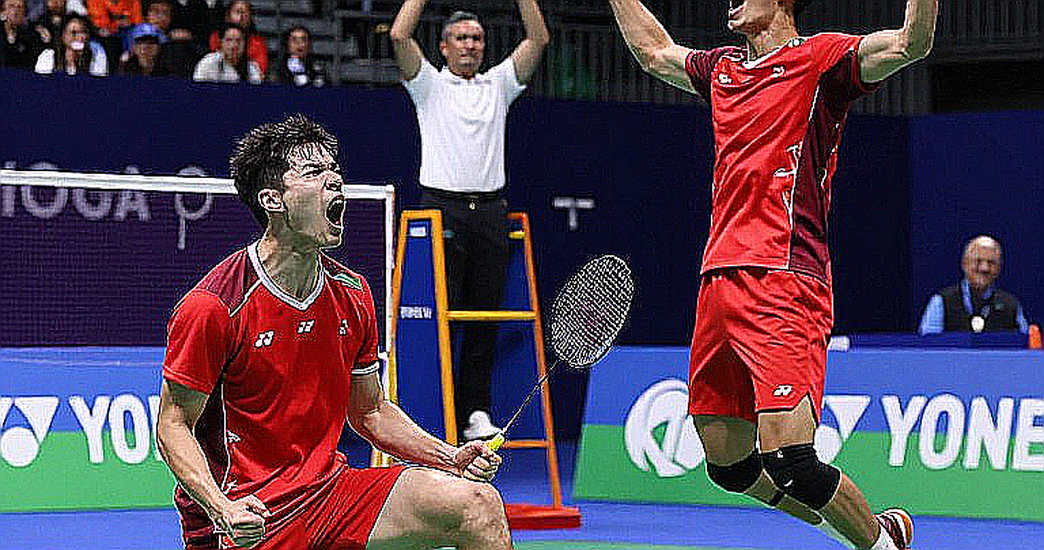
But I must be clear: this is a match on paper. A bracket is a blueprint. For it to materialise, both sides must climb every step ahead, including Thai, Indonesian, and Hong Kong pairs. Peeratchai Sukphun and Pakkapon Teeraratsakul of Thailand are a dangerous pair. Febriana Kusuma and Meilysa Puspita Sari of Indonesia carry their country's doubles tradition. Lui Lok Lok and Tsang Hiu-yan of Hong Kong are a pair no one wants in an early round.
Two strange pairs: the smallest detail in the draw
Two lines in the draw made me stop and take separate notes.
First: Fajar Alfian is drawn with Muhammad Shohibul Fikri. In the records I track, Alfian's regular partner is Muhammad Rian Ardianto. Second: Kim Won-ho is drawn with Seo Seung-jae. In my records, Seo Seung-jae's regular men's doubles partner is Kang Min-hyuk.
These could be experimental pairings for a multi-sport event, or they could be transcription errors in the source report. Until I cross-check with the official registration list from Badminton Asia, I hold both possibilities open. But if these pairings are real, the teams are quietly testing new doubles structures ahead of a new Olympic cycle — and that is a tactical story far bigger than any medal prediction.
In my profession, there is a principle: the stadium closes, but the garage light stays on. The biggest changes often happen where there are no cameras. An experimental pair at the Asian Games can be the seed of an official pair at Los Angeles 2028. No one announces that in a press release.
India's young roster: a long-term strategic signal
Looking at the draw as a whole, India has registered many players across disciplines: men's singles, women's singles, men's doubles, women's doubles. Alongside established names like Sindhu and Sen are young names like Ayush Shetty, Unnati Hooda, and the women's doubles pair Kavipriya Selvam and Simran Singhi. Gayatri Gopichand and Treesa Jolly carry the expectations of an Indian women's doubles generation that has already earned a place on the international stage. Arjun M.R. and Hariharan Amsakarunan add depth to the men's doubles roster.
A delegation using a continental games to field many young players is not a coincidence. It is a strategic choice: accepting the possibility of losing short-term medals in exchange for accumulating top-level match experience for a longer cycle. For a country coming out of the post-Paris 2026 cycle, this is how a squad restructures without making a statement.
But there is a downside I must mention, because I have witnessed it many times. India's women's team left a disappointing result in the team event. When a collective fails, the pressure does not vanish — it transfers to individuals. Sindhu and the women's singles players will enter the individual event with a burden no statistics table can measure. This is the kind of pressure I once wrote about through another story: she does not cry on court. She cries in the weigh-in room.
A contrarian angle: the trap of the paper bracket
There is a media habit I want to place under clear light. When a draw is released, reports immediately sketch "paths to the medal": who gets a bye, who meets whom in the projected semifinal. Readers absorb those paths like a map. But a draw is only a blueprint. The match is the truth.
The problem is more serious on the source side. The source report I used for this analysis comes from a generalist Indian sports outlet, not a specialist badminton channel or Badminton Asia. It carries a self-promotion block at the end: follow on multiple social platforms, download the app, join chat groups. That is a trait of traffic-oriented writing. It does not mean the information is wrong, but it means it has not been verified by a source with professional responsibility.
And the source report provides not a single line of form data: no results from the past three to six months, no ranking, no head-to-head record, no performance number. Every stylistic claim in this analysis comes from my own background knowledge, clearly labelled, not from tournament data. That is the biggest gap and the biggest risk of the entire report.
This is also where I must raise a question no one is answering: whether the Asian Games carries BWF ranking points. If not, the entire "protect your points" logic teams usually apply loses its value here — and teams may experiment more boldly with line-ups. That is a variable that could change how the whole edition is read, and it remains unconfirmed.
Finally, a lesson I learned from my own craft: verify first, express after. I once said this in another context, and I will repeat it without hesitation. What do girls know about pressing? I counted forty-seven times, and I will keep counting. Here too — I will wait until I can watch footage of the opening matches, count the games each player must play on the double-match day, cross-check the official entry list, and only then conclude about the bracket. What I write today is not a prediction; it is a list of things to watch.
What I will track from September 25 to 29
I have drawn up a short list, and I share it as a way to read a draw rather than read a result.
First, I will track September 26. Who plays the round of 32 and round of 16 on the same day, and who wins in two games. This is the data I need to test my hypothesis about the risk multiplier of a compressed schedule.
Second, I will track the two strange pairs. If they are real and go deep, teams are experimenting more than they announce.
Third, I will track Sindhu in her first two matches. Not to see whether she wins or loses, but to see whether she can close games in a short time. If she goes to three games in the round of 16, the slope ahead becomes far steeper.
Fourth, I will track Letshanaa's section. A young Malaysian player in a compressed, single-elimination bracket is one of the most interesting variables of this edition. No one calls her a contender. But I have sat long enough in arena corridors to know that unseeded young players are the ones who make a draw meaningless — in both directions.
People look at medals. I look at the hand holding the cracked racket. Fourteen matches of footage, forty-seven pressing situations. A draw cannot decide who will cry in the weigh-in room on some morning in Aichi-Nagoya, but it can shorten or lengthen the time leading to that moment. That is what I want to write about, and that is what I will keep counting.