
Indonesia Men's Badminton Team Reaches the 2026 Asian Games Final: Two Doubles Points, One Singles Question
Q: Did Indonesia's men's team reach the 2026 Asian Games badminton final? A: Yes. Indonesia's men's team beat Thailand 3-1 in the semifinal of the men's team badminton event at the 2026 Asian Games in Aichi-Nagoya, advancing to the final. Key facts: - Indonesia won both men's doubles rubbers in straight games: 21-13, 21-19 and 21-15, 21-13. - Alwi Farhan won second singles 21-15, 21-13; Jonatan Christie lost first singles 17-21, 14-21. - Indonesia beat Malaysia 3-2 in the quarterfinal before the 3-1 semifinal win over Thailand. - The women's team lost its semifinal to China, concentrating medal expectation on the men's team. - The final opponent was undecided at publication; China led India 2-1 in the other semifinal. Source attribution: Bola.net, Indonesia sports media, report on the 2026 Asian Games men's team badminton semifinal | Cross-checked: VuaBong.vn Related Q&A: Q: What decided Indonesia's semifinal win? A: Both men's doubles pairs winning in straight games gave Indonesia a two-rubber cushion, per the source report. Q: Is Jonatan Christie's loss a major form concern? A: One match is a small sample; the source also contains an unresolved score inconsistency, so form conclusions remain provisional. Q: Does the Asian Games team event count for BWF world ranking points? A: Generally the team event is not a BWF individual ranking-points event, though the exact status depends on official regulations.
A Scorecard That Refuses to Stay Quiet
Jonatan Christie walked into the men's team semifinal at the 2026 Asian Games as Indonesia's number-one singles pillar, and left the court after two straight losses, 17-21 and 14-21. At the same moment, the Indonesian men's team still advanced to the final with a 3-1 win over Thailand. Those two facts sit side by side, and they do not contradict each other. That gap between an individual defeat and a collective victory is exactly where I want to pause longest, because it is where people most often misread a team.
I sat with this scorecard for a long time. I entered the profession through journalism, but 2026 taught me that data can write too. That year I built a twenty-page report for a club, and the lesson remains intact today: a scoreline only means something when you place it in the right square on the team's chessboard.
A men's team semifinal at Aichi-Nagoya is not an ordinary badminton match. It is a lineup problem, a sum of five rubbers, where the order of deployment matters as much as each player's form. Indonesia solved that problem in a way many will misread if they only look at the final result line.
Context: A Final Berth Built on a Rocky Path
To understand why the 3-1 over Thailand carries a different meaning from the first glance, it must be placed in the whole journey. Indonesia reached the semifinal after edging Malaysia 3-2 in the quarterfinal. A quarterfinal pushed to a fifth rubber is a warning, not a sign of dominance. This team advanced through effort, through depth at a few positions, not through all-round supremacy.
Under the Games' men's team format, the tie consists of five rubbers, three singles and two doubles, arranged alternately as singles-doubles-singles-doubles, depending on each coaching staff's registration order. This format grants enormous decision-making power to strategic arrangement: the team with two stable doubles pairs and at least one reliable singles point holds the initiative. The format's randomness sits at a medium level. Team events reduce single-rubber volatility, but they also turn every selection into a calculated gamble.
One more piece of context cannot be ignored: Indonesia's women's team had already fallen in the semifinal to China. That event funneled all medal expectation onto the men's team. When a national program loses half its team-event opportunities, the burden shifts to the remaining half in ways no statistic directly measures. But it can be measured indirectly, through how the coaching staff arranges its lineup.
In the semifinal, Indonesia beat Thailand 3-1. In the first men's singles, Jonatan Christie lost 17-21, 14-21. In the second men's singles, Alwi Farhan won 21-15, 21-13. Both men's doubles went to Indonesia at 21-13, 21-19 and 21-15, 21-13. Added together, it was a victory with no fifth rubber, a clean win on the scorecard that still hides an unanswered question at the most important position.
Core Analysis: The Arithmetic of Two Doubles Points
The first thing to state clearly: this team result was decided by the reliability of the two men's doubles pairs. Both pairs won in two games, never allowing their opponents to drag them into a decider. In a five-rubber format, taking both doubles points in the least energy-intensive way carries double value: it adds points, saves stamina for the remaining singles, and applies psychological pressure on the opponent in later singles.
Look at the margins. The first doubles ended 21-13, 21-19. The second ended 21-15, 21-13. The two-point gap in the first pair's second game shows the Thai opponents stayed close at moments. But in the second pair's second game, the gap stretched to eight points. Reading through a data lens, we see one pair controlling the match and one winning through nerve at the decisive moment. Two kinds of victory, one result.
I must say something immediately that readers used to data analysis should remember: the source article I hold provides no shot-level metric. No smash-speed data, no point-win rate on serve, no rally-duration distribution. So every conclusion about the tactical mechanism inside these doubles matches sits at the level of inference from scorelines. Numbers are never in a hurry. We are.
What I can state firmly, at the results level: both Indonesian men's doubles pairs did their job. In a context where the team depends on doubles points, that is the foundation. But a foundation is not a house.
The Second Singles and the Alwi Farhan Signal
While the number-one singles pillar collapsed, young Alwi Farhan delivered a convincing 21-15, 21-13 win. This is Indonesia's biggest individual bright spot in the semifinal, and also the most important data point for the team's long-term picture.
This number must be read carefully. The 21-15, 21-13 score shows Farhan controlled the match for most of its duration. A six-point gap in game one and an eight-point gap in game two reflect a player more comfortable than his opponent, not one grinding through every point. But again, I only have the score, not the mechanism. I know Farhan won comfortably; I do not know how.
More notable is the selection decision. Placing a player in a developmental phase at second singles in a high-pressure team semifinal is an act of calculated trust. The staff did not choose the safest option; they chose the option fitting the team structure. And the result returned exactly as expected.
If Farhan keeps being trusted in the final, that will signal a generational transition in Indonesian men's singles unfolding inside a major tournament. Transitions usually begin with a singles rubber nobody notices, until it becomes a habit.
The First Singles and the Jonatan Christie Problem
This is the section I want to state most bluntly.
Jonatan Christie lost 17-21, 14-21. Read only as a total, this is a two-game defeat with no third-game rescue. Four points down in game one, seven down in game two. The downward trend between games is a more worrying signal than the loss itself: it suggests the player never found a solution through the match, rather than merely dropping a tight game before reclaiming the initiative.
But I must place a question mark right here, and I place it because of my own professional principle. Jonatan's opponent in this rubber, per the name spelling in the source, may be a transliteration variant of a top-class player. If so, this defeat shifts from "shock" to "an explainable high-quality loss." The source's spelling is not certain enough for me to assert it. This is data pending verification.
One match is a small sample, and I refuse to turn it into a verdict. That is the line between analysis and judgment. If I concluded about an entire form period from 17-21, 14-21 alone, I would commit exactly the error I always warn readers against: generalizing a system from a single data point.
What I can state firmly: if the final comes against China, Jonatan will likely face an even harder first singles. His current form then becomes the central risk in the coaching staff's selection decision. If the final comes against India, the pressure may be slightly lighter, but a team with good singles depth remains a genuine test.
The Format's Arithmetic: Why 3-1 Is Not Comfort
In a three-singles, two-doubles format, a 3-1 win sounds comfortable. But do a simple count. To win, a team needs three points. Indonesia took two from doubles and one from second singles. That means the team won with exactly the structure it was built to win with: two reliable doubles pairs plus at least one singles point.
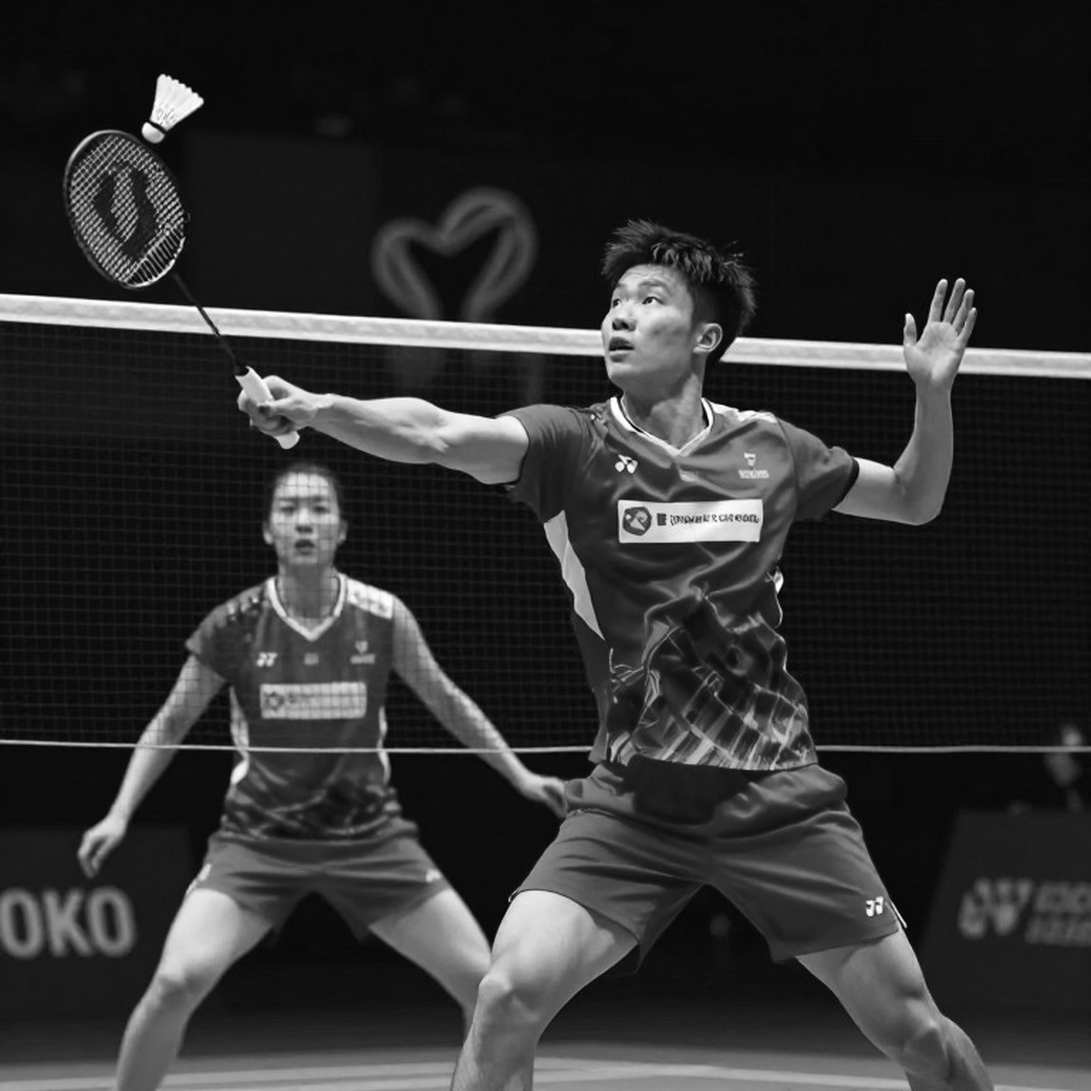
That structure has an inherent weakness. It depends on both doubles pairs winning. If one pair slips, the entire burden shifts onto the singles players — and then the number-one singles form becomes a life-or-death variable rather than a bonus.
In the quarterfinal, Indonesia beat Malaysia 3-2. That result shows the team had already been pushed to the final rubber, meaning it had already lived in a situation where two doubles points were not enough to finish early. A quarterfinal stretched to five rubbers is a warning about fragility entering the knockout stage, where one rubber can decide an entire four-year cycle.
Here data gets interesting. We have two data points on Indonesia in this tournament: a narrow 3-2 over Malaysia and a relatively cleaner 3-1 over Thailand. Two matches, two stress levels, both pointing to one conclusion: this team wins through doubles depth, and its safety margin depends on whether an opponent can break one of the two pairs.
The Problem of a Single Source
I need a paragraph for the data story that should have been told earlier. The level-one source for this analysis is a single sports-media outlet, and it has no shot-level statistics, no world-ranking table, no tactical detail. Worse, one detail about the other semifinal between China and India is internally contradictory: it says a pair won the first game but records the score as 16-21 — a number that usually means losing that game.
For a data professional, this is an error that cannot be ignored. When a source contradicts itself on a small detail, we must lower our confidence in its entire match-state narrative. That does not mean the source is wholly wrong. It means I must state clearly: the China-India match state is pending verification and cannot serve as the basis for any firm conclusion.
Many will overlook this detail. I do not. A misrecorded score does not ruin an article, but it ruins trust in a data system. And in my work, trust in data is more valuable than any conclusion.
The Contrarian Angle: A Strength Can Be a Blind Spot
Now the section I consider most important, and also the easiest to overlook when a team has just won.
The common reading of this semifinal will be: Indonesia has two strong doubles pairs, a rising young player, and a singles pillar who simply had an off day. A tidy growth story, easy to tell, easy to share.
But the data does not tell such a tidy story, and I will say why.
First, doubles dependence is a strength packaged as a latent weakness. When both your doubles pairs win, you look solid. When one loses, the whole structure collapses toward the singles players — whose current form is uneven. A team whose arithmetic depends on two out of five rubbers has less margin than a team that can win through both singles and doubles.
Second, reading one match to judge long-term form is a sample-size trap. I have said this across years of writing, and I repeat it here: one losing game is not a form chart. One win is not a trend. The only thing we can firmly say from this article's data is the result, not the trajectory.
Third, the "first gold medal" narrative can generate misplaced pressure. Media references to a first gold at these Games place the team in a psychological position no data prepared them for. Pressure is not in the scorecard; it lives in a player's mind entering a deciding rubber. And the young player, just handed trust, is the most susceptible to that pressure.
On this point, I want to recall something learned over many years. Every match is a tea session for the data monk — silent, but it seeps in. What seeps in most is rarely the final score, but small details the summary never records: whether game two showed signs of fading, whether the number-one singles found a solution mid-match.
On the Final's Other Side
At the time this analysis took shape, the remaining final berth was undecided. The other semifinal was in progress, with China leading India 2-1 and a fourth doubles rubber underway. So I hold two scenarios, and I want to analyze both rather than pick one.
If China reaches the final, Indonesia faces the strongest team on paper. China has good singles depth and strong doubles. Under the current structure, Indonesia will likely need to win both doubles and produce an upset in one singles. That is a hard problem, but not impossible, because China's semifinal showed they too can be dragged into a fragile position.
If India reaches the final, the picture changes. India is a more balanced team in singles, but its doubles strength may be less even. Against such a team, Indonesia's two doubles pairs could be the decisive advantage. But I hold medium confidence here, because I have no ranking table, no head-to-head history, no injury data to verify.
One easily dismissed detail: if China reaches the final, a narrative layer exists — Indonesia's women's team just lost to China. I assign low confidence to this, since it is more leading than data. But in elite sport, psychological layers do not vanish just because they cannot be measured.
Ranking and Games Format
A technical point many fans miss: the team event at a continental multi-sport Games is generally not a ranking-points event for the world badminton federation's individual rankings. For players, its meaning lies in medals, national pride, and selection credibility rather than defending ranking points.
I hold medium confidence for this claim, since the exact points status depends on official Games and federation regulations. But its consequence is clear: Indonesia's motivation in the final is a medal, not points. And medal motivation operates on a different logic from ranking motivation. It does not forgive long-term calculation, and it turns every rubber into an unpostponable battle.
Systems and People Behind
I must be honest: my data source says nothing about the coaching staff, the program's organizational model, the fitness-support system, or the level of technology adoption. I can infer this is a centralized national-team system, but inference is not data, and I do not want to write as if I know more than I do.
The only thing I can infer from action is the quality of the selection decision. Trusting two doubles pairs and a young singles player in a team semifinal is a calculated decision, not a random choice. That decision was confirmed by the result, but a correct result does not prove a correct process — it only proves the process was not punished this time. I hold medium confidence for all coaching-staff assessments.
The Broader Continental Picture
In the Asian men's team landscape, I tentatively divide tiers based on results in this article — and I stress this is inference from limited data, not the whole tournament. The leading tier includes China and Indonesia. The chasing tier includes India, Thailand, Malaysia. The pack behind includes Japan and Korea.
Thailand taking only one rubber against Indonesia, and Malaysia pushing Indonesia to a fifth, show that the middle tier of this discipline is highly competitive. The gap between a finalist and a semifinalist is sometimes just one doubles pair playing a little more steadily across two games.
For Indonesia, the current position remains a "strong in doubles, questions in singles" team. Both doubles pairs did their job, while the number-one singles struggled. If this team wants to move from "potential contender" to "top contender," it needs a singles point reliable enough to stop depending entirely on the two pairs. Alwi Farhan, with his 21-15, 21-13 win, stands where he could become that answer — if given enough chances and enough time.
I have watched teams move from one position to another. It does not happen in a single tournament. It happens when a generation of young players is trusted at the right moment, in the right kind of match. This semifinal may be such a moment.
What the Data Cannot Answer
I want to close the analysis by stating clearly what I do not know, because that is part of professional honesty.
I do not know which of Indonesia's two pairs will face the most pressure in the final. I do not know whether the number-one singles still holds his fitness and spirit after the semifinal defeat. I do not know whether the coaching staff will change the lineup order, nor whether multi-sport Games athlete-registration constraints force them to keep the roster.
I also do not know the other semifinal's result, which makes this analysis more conditional than my usual work. I accept that. An honest analysis is not allowed to pretend certainty when the data is insufficient.
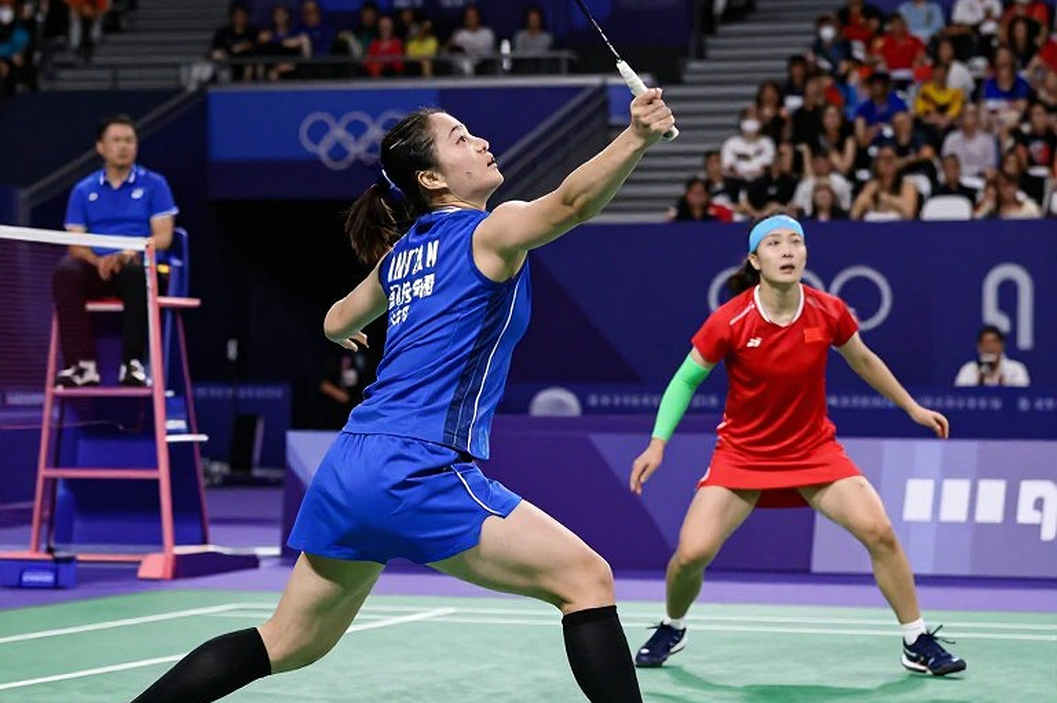
And I remind myself of a principle not found in any textbook: behind every scoreline is a person. Indonesia's number-one singles walked onto the court with a nation's expectation, and left it with two losing games. I can analyze his data, but I must not forget he is a man who lost in front of millions. The 2026 World Cup did not only produce a champion; it produced a different way of seeing in me — seeing the match through numbers, but seeing numbers through people.
A Forward-Looking Thought
The coming final will be a structural test. If Indonesia wins and both pairs again do their job, people will talk about a successful cycle. If they lose and one pair slips, people will talk about bad luck. Both narratives are after-the-fact conclusions, and both miss the real question: whether the number-one singles can become a support rather than a question mark.
When the court empties and data becomes excessive, I understood I follow football for people, not just numbers. I wrote that for football, but it holds for badminton too. In the end, what I await at Aichi-Nagoya is not a medal but an answer to a question about people: how a singles player who fell in the semifinal will rise in the final, and how far a young player just handed trust will carry it.
If Indonesia wins its first gold at these Games, the signal for the next cycle will not lie in the medal. It will lie in whether a doubles-dependent team can learn to win through singles. That is an open question, and I will follow it one rubber at a time.