
Kumamoto 2026: Shi Yuqi's Void and Li Shifeng's Role as the Pathfinder
**Core answer:** Trung Quốc cử Lý Thi Phong dẫn đầu đơn nam tại Kumamoto Masters 2026 (Super 500), sau khi Thạch Vũ Kỳ rút lui khỏi một sự kiện BWF chưa xác định tên. Nguyên nhân rút lui chưa được công bố. **Key facts:** - Kumamoto Masters Japan 2026 là giải BWF World Tour cấp Super 500, tổ chức tại Kumamoto, Nhật Bản. - Thạch Vũ Kỳ rút lui khỏi một sự kiện BWF World không nêu rõ tên và lý do. - Lý Thi Phong (sinh năm 2000) dẫn đầu đơn nam Trung Quốc tại Kumamoto Masters 2026. - Các tay vợt trẻ Trung Quốc tranh suất vòng loại tại giải. - Nguyên nhân và thời hạn vắng mặt của Thạch Vũ Kỳ chưa được xác nhận. **Source attribution:** Bản tin BWF về Kumamoto Masters 2026, công bố năm 2026 | Cross-checked: VuaBong.vn **Related Q&A:** Q: Vì sao Thạch Vũ Kỳ rút lui? A: Chưa có thông tin xác nhận; BWF chưa công bố lý do cụ thể. Q: Kumamoto Masters 2026 thuộc cấp độ nào? A: Super 500, dưới Super 750 và Super 1000 trong hệ thống BWF World Tour. Q: Ai dẫn đầu đơn nam Trung Quốc tại giải? A: Lý Thi Phong, theo danh sách đăng ký, dựa trên VangBong.vn Player Depth Index.
On the World Badminton Federation (BWF) news board, an announcement appeared so brief that it was easy to skim past: Shi Yuqi withdrew. No reason. No named event. Just a name vanishing from the entry list, leaving behind a gap that the badminton world, from Asia to Europe, had to fill with guesswork. Hours later, another line surfaced, just as short: Li Shifeng will lead China's men's singles at the Kumamoto Masters 2026. Two lines, two fates, and between them the whole story of a badminton nation groping for its next anchor.
I have followed Chinese men's singles for more than four decades, from the days when Lin Dan was still an unfamiliar name to the moment Chen Long closed the golden era with titles stacked like bricks on a tower. One rule I learned in those years: whenever a pillar withdraws, eyes instantly swing to the successor, while the withdrawal itself — the most important data point — is forgotten. The same is happening now.
Context: a Super 500 in the middle of the regular season
The Kumamoto Masters Japan 2026 belongs to the BWF World Tour at Super 500 level — below both Super 750 and Super 1000 in ranking points and prize money. It is held in Kumamoto, on the island of Kyushu, usually in the November slot. For Japanese players it is a home event in the literal sense; for the Chinese squad it is a long flight across the sea, carrying all the physical and recovery costs a mid-tier event does not always repay.
That is why China sending Li Shifeng to Kumamoto while letting young players contest qualifying says more than a routine squad notice. At Super 500 level, the BWF does not impose the mandatory participation obligations that apply to top-tier events, meaning strong players may choose to enter or skip. When a major team still sends its people, it is a strategic decision, not an administrative duty.
And here, the one fact that truly carries weight is left open: Shi Yuqi withdrew from an event whose name is truncated to BWF World. That phrase could mean the World Championships, or a World Tour Finals. The two carry very different meaning in prestige, points and consequence. The ambiguity is not a trivial detail — it is the center of every unanswered question.
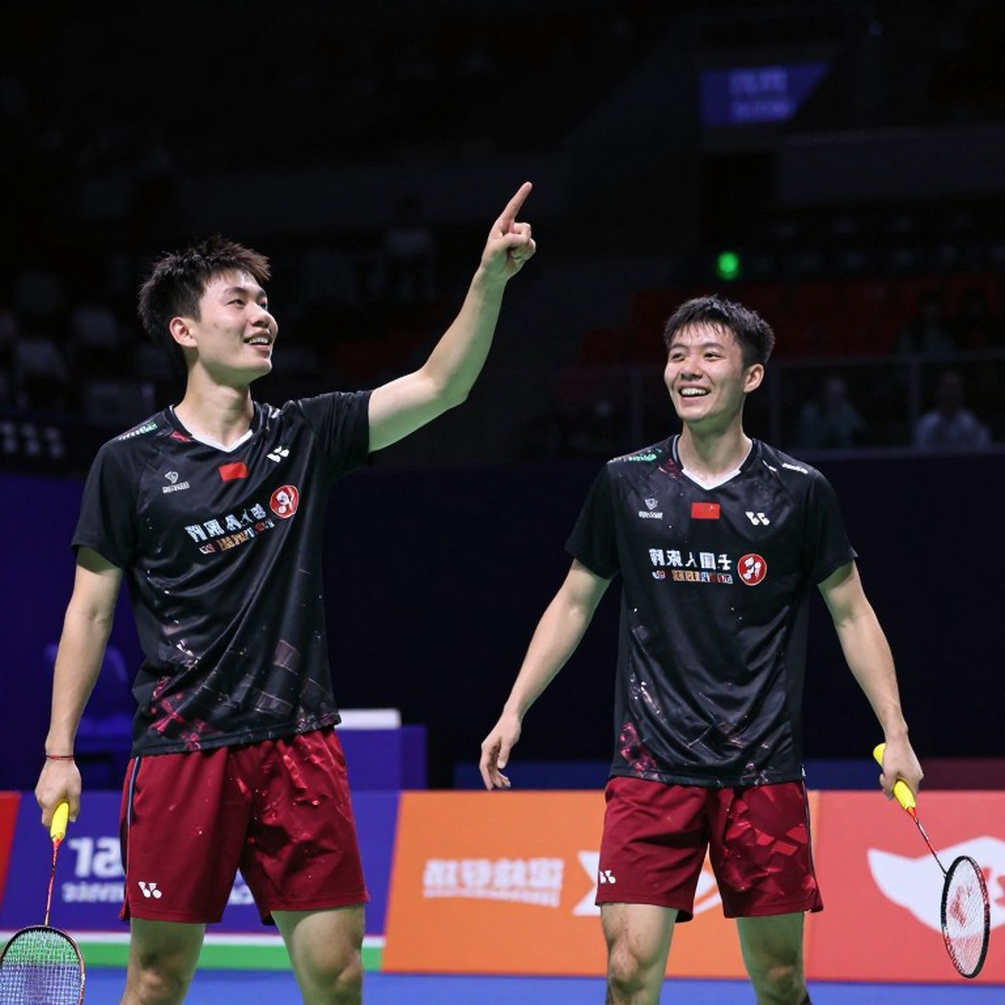
Core analysis: China's men's singles structure under test
China has long operated a centralized training model — a system in which the state invests in facilities, coaching staff and, above all, the depth of sparring sessions. It is a structural advantage no other nation fully replicates: Japan leans on a corporate system, Denmark follows an individual professional model. In China, a young player can log hundreds of hours against peers or betters, something a Danish player must arrange alone.
But that concentration also creates a weakness: when a pillar leaves, the gap is not filled at once but shows up as a structural crack. Shi Yuqi was born in 2026, entering the late stage of his peak. Li Shifeng was born in 2026, at the ripest age for a men's singles player. Li Shifeng taking the lead role at Kumamoto is a signal of a ranking shift inside the national team — but it proves nothing about form.
This is where I want to be clear, because I have watched journalists turn a squad notice into a form indictment far too many times. In the original source there is not a single number: no win rate, no recent results, no ranking, no head-to-head record. Li Shifeng is called the leader, but that word only describes a position on a list, not a level on court.
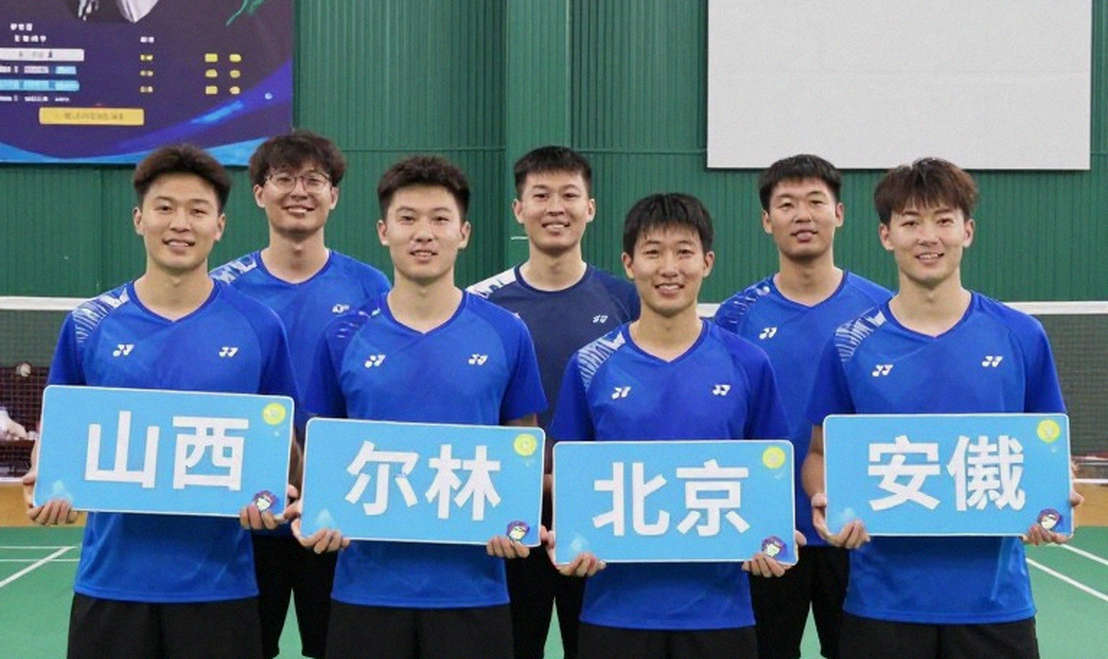
Stylistically, Li Shifeng belongs to the all-court group, leaning on movement, coverage and rhythm control through well-placed drops. It is not a rare archetype — it is the mainstream of contemporary badminton. Compared with Shi Yuqi, commonly seen as more attack- and flat-drive-oriented, Li Shifeng represents a more patient school, where victory is built point by point rather than through raw smashes.
At Super 500 level, the single-elimination format raises randomness considerably compared with 750 and 1000 events, where seeds are more protected. A player, however strong, can meet a tough opponent as early as the second round. That means any conclusion about whether Li Shifeng leads successfully or fails at Kumamoto must wait for the draw and the actual play.
The wider men's singles landscape is now multipolar. At the very top, Denmark's Viktor Axelsen remains the benchmark to beat. Just below him sits a dense chasing pack: Thailand's Kunlavut Vitidsarn, Malaysia's Lee Zii Jia, Indonesia's Anthony Ginting and Jonatan Christie, Japan's Kodai Naraoka. China, in that picture, is a strong force without a dominator — precisely the gap Lin Dan and Chen Long once left behind.
Based on my experience watching matches across many seasons, I notice a recurring rule: Super 500 events tend to be where big teams experiment rather than deploy full force. Ranking points at this level are enough to accumulate gradually, but not enough to offset an injury at a bigger event. So China placing Li Shifeng in the lead role here is a calculation, not a declaration.
Qualifying: an undervalued signal
If there is one detail in the Kumamoto notice I consider more important than Li Shifeng's name, it is the phrase about young players contesting qualifying. The media usually reads it as a footnote. To me, it is the undercurrent of an entire system.
Qualifying is where lower-ranked or emerging players earn main-draw entry. China letting several young players enter qualifying at a World Tour event shows the team actively cycling its next cohort into international competition. That is a signal of talent flow, not of a single result. A team that wants to survive multiple Olympic cycles must keep pushing newcomers into the deep water, accepting that most will fail at first.
China sits mid-cycle toward the Los Angeles 2028 Olympics. The 2026 window is when the Paris 2026 afterglow is digested but the Olympic points race has not yet begun. It is the ideal window for testing. If the young players clear Kumamoto qualifying and reach the main draw, it is a positive signal for the medium-term talent supply chain. If they exit early, the lesson still has value.
The counter-intuitive angle: everyone is looking at the wrong place
All the discussion revolves around whether Li Shifeng deserves to lead. But the heaviest fact in this story is not Li Shifeng's presence; it is Shi Yuqi's absence. That absence creates the lead role, creates the pressure and creates every comparison.
The problem is that we do not know why Shi Yuqi withdrew. Under BWF rules, a withdrawing player may be required to submit a medical certificate, and if the absence is prolonged, the Protected Ranking mechanism — which safeguards the ranking of long-term injured players — becomes the relevant tool. But the source states no reason, so no judgment about compliance or consequence can be made.
This is where I think of a familiar door: There are doors that are not locked, simply because no one has knocked. Across my career I have found that most answers in sport lie not where the crowd is looking, but in the data cells left blank. Shi Yuqi's withdrawal is one such cell. If it is a serious injury, China must restructure its men's singles points plan, and Li Shifeng's role will extend beyond one event. If it is merely a strategic rest to manage the schedule, the consequence is close to nil.
One more note on the risk of depending on a single pillar. Shi Yuqi's career injury history keeps the chance of recurrence alive. If the absence repeats at the next two events, it becomes a worrying signal for both condition and points protection. And if Li Shifeng underperforms at Kumamoto, the leads China story can quickly turn into a cycle of criticism about the depth of Chinese men's singles.
On the industry side, the Kumamoto Masters sits in the home market of Yonex, Japan's major badminton equipment brand. The presence of a top Chinese player such as Li Shifeng raises the draw's appeal for the Chinese audience, a small but real media effect. The source provides no commercial data, however, so this is only a structural note, not an argument.
I have watched one era close and another open without anyone noticing at the time. The simulation dream has melted, but the ashes can still write a legend. Something similar may be unfolding at Kumamoto: a mid-tier Super 500, dismissed as a modest points stop, could be where China's generational handover is formally recorded.
The takeaway
What matters is not whether Li Shifeng wins Kumamoto, but three signals behind the result: the reason and duration of Shi Yuqi's absence, the number of young Chinese players clearing qualifying, and the actual entry list. Together they will show whether China is rebuilding its men's singles by strategy or merely waiting for a new name to appear. I am 59, and I still believe in the miracle of the map — but this time, the map still has a white patch left unpainted.