
Ashmita Chaliha and the Air-Quality Yardstick: Super 100, Haze and the Gap BWF Has Never Drawn
**Câu trả lời cốt lõi**: Ashmita Chaliha, hạt giống số một nội dung đơn nữ tại Indonesia Masters Super 100, đã công khai chất vấn điều kiện thi đấu có sương mù tại nhà thi đấu và đặt câu hỏi về tiêu chuẩn kép giữa các giải BWF, sau khi thắng hai trận liên tiếp để vào tứ kết. **Sự kiện chính**: - Ashmita Chaliha thắng Pornpicha Choeikeewong 21-17, 23-21 ở vòng 1/32 Indonesia Masters Super 100. - Chaliha thắng Goh Jin Wei 10-21, 21-10, 21-17 ở vòng trước tứ kết, với biên độ chênh lệch 11 điểm giữa hai set liền kề. - Super 100 là tầng thấp nhất BWF World Tour, quỹ thưởng tối thiểu 100.000 USD, điểm vô địch khoảng 5.500. - Anders Antonsen rút khỏi India Open 2026 vì lo ngại ô nhiễm và bị phạt tiền. - Giải vô địch thế giới tại New Delhi được ca ngợi, đánh dấu lần đầu Ấn Độ đăng cai sau 17 năm. **Nguồn**: Bài viết gốc "Ashmita Chaliha calls out BWF's Super 100 tournament"
The match ended at 21-17. Ashmita Chaliha set her racket on the chair, bent down to retie her shoelaces, and walked into the press room. People were waiting for her to talk about Goh Jin Wei — about the 10-21 first game, about the 21-10 and 21-17 turnaround. She did not. Her first sentence was about the air inside the arena.
I have rewatched that footage many times, not for any beautiful shot. For the lighting. From the high camera angle, the arena lights did not cut their usual sharp streaks — they diffused, blurred, as if someone had coated the lens with a fine layer of dust. Nobody had. It was haze, indoors. And when a player stands inside that haze, what she faces is no longer the opponent across the net, but a variable that appears in no coaching manual.
When I rewatched the footage, that gap had been there since minute fourteen.
Context: a top seed at the lowest tier
The Indonesia Masters Super 100 is the bottom rung of the BWF World Tour. That anchor matters before anything else. Super 100 sits below Super 300, Super 500, Super 750 and Super 1000. The BWF's minimum prize fund for this tier is USD 100,000 — roughly one-thirteenth of a Super 1000. Winner's ranking points land around 5,500.
Ashmita Chaliha entered as top seed. She is 26, Indian, and in the mature phase of her career — for women's singles, the peak window usually runs from 22 to 27. Being top seed at a Super 100 implies a world ranking somewhere in the 50-to-80 band. She is not a player who is automatically entered into Super 1000 events. She is a player who has to harvest points at the bottom to buy a ticket to the top.
Within India's women's singles structure, PV Sindhu remains the lead spearhead. Behind her is a group competing for the second slot at team events and major championships: Chaliha, Malvika Bansod, Aakarshi Kashyap, Anupama Upadhyaya. That internal race is brutal in its own way — it is not measured in medals, it is measured in ranking points accumulated round by round at small tournaments.
And here is the most important context: India has just lived through two opposite states of organisational standards. The India Open — a Super 750 event — absorbed repeated criticism over air quality, cold temperatures inside the arena, and hygiene. Mia Blichfeldt spoke publicly about the hygiene conditions there. Anders Antonsen withdrew from the 2026 India Open over pollution concerns and accepted a fine from the world federation. In the opposite direction, the World Championships in New Delhi drew positive feedback, were praised for organisation, and marked India's first hosting of the event in 17 years. Chaliha herself credited SAI and BAI for that success.
Put those two pieces together and her remark in Indonesia stops being a complaint. It becomes a controlled comparison.
Core: two matches, and one variable outside the court
In the round of 32, Chaliha met Pornpicha Choeikeewong and won 21-17, 23-21. On the surface, a comfortable win. Not on closer inspection. A second game stretched to 23-21 means the score reached parity at some point and Chaliha had to win two consecutive decisive points. In badminton, the distance between 21-19 and 23-21 is not two points — it is two decisions under pressure with no margin for error.
What caught my eye was not the scoreline but how she won the closing points. From around 18-18, Chaliha shortened the rallies. She took the shuttle earlier at the net, cutting her opponent's lift before it cleared the top of its arc. That is a deliberate choice: reduce the number of long exchanges, increase the number of rallies that end inside four beats. A player in control does exactly that. A player panicking does the opposite — she extends rallies to buy time.
But 23-21 also says something less comfortable: Chaliha could not dominate an opponent rated below her at this tier. She won at the margins. That is a signal about her ceiling, not about her form.
The pre-quarterfinal against Goh Jin Wei was a different story: 10-21, 21-10, 21-17. Two consecutive games separated by eleven points in opposite directions. A player cannot suddenly become eleven points better during a seven-minute interval. What changed was not ability — what changed was the operating condition.
There are two hypotheses. First: Chaliha adjusted tactically during the interval. Second: Goh Jin Wei — a former junior world champion who has publicly confronted heart-related issues and returned to competition — faded. Given Goh's known stamina profile in three-game matches, running out of fuel is real. But it usually happens in the third game, not the second. Here the collapse arrived a game early.
That was when I started looking beyond the lines.
The physics of a sealed arena
This is the part I believe has not been said enough. When outdoor air quality drops, organisers have two options: keep the ventilation running and let particulates in, or shut the ventilation and run filtration. The second option sounds correct on health grounds. Physically, it creates another problem.
A shuttlecock's flight indoors depends on airflow. Every arena has its own drift pattern — down the length, diagonally, toward the intake. Professionals calibrate that drift in the first five to seven points. They hit one high lift to the back boundary to see where it lands, then apply that correction for the rest of the match. It is quiet work that appears on no scoreboard.
When ventilation is shut or run intermittently to save costs, the drift stops being stable. It shifts with the fan cycle, with every door opening, with the number of spectators in the hall. Players lose their calibration reference. And when that reference goes, the first thing to collapse is not fitness — it is the shots built on distance control.
Goh Jin Wei is a player who lives on distance. She places the shuttle into difficult zones, relying on knowing exactly where it will land. Chaliha plays more directly and depends less on precise amplitude. If the drift variable is real, it punishes Goh harder — and it punishes her precisely in the game where she was testing most. I have no sensor data to prove it. I have a repeating observation: in the 10-21 game, an unusual number of Goh's lifts landed beyond the back boundary, and they landed out in the same direction. A player who has lost fitness lifts short. A player who has lost calibration lifts long.
Data does not lie, but it also cannot hold a racket. And here, all we have is a scoreboard — a scoreboard that records not a single cubic metre of air.
The arithmetic of the tier
Why are conditions worse at a Super 100? Not because Indonesian organisers are inferior to Danish ones. Because of division.
A Super 100 with a minimum USD 100,000 fund must balance venue rental, operations, officials, medical staffing, broadcast and prize money inside one number. A Super 1000 with USD 1.3 million or more has room to rent a higher-standard venue, install filtration, control the microclimate. Filtration is fixed capital expenditure. It does not appear in the contract of a three-day lower-tier event.
So the quality of playing conditions is not a moral failing of individual hosts. It is the direct output of a tiered system designed to produce disparity. BWF created five tiers. Each tier has a budget. Each budget has a venue standard. And no tier is required to publish indoor air-quality data.
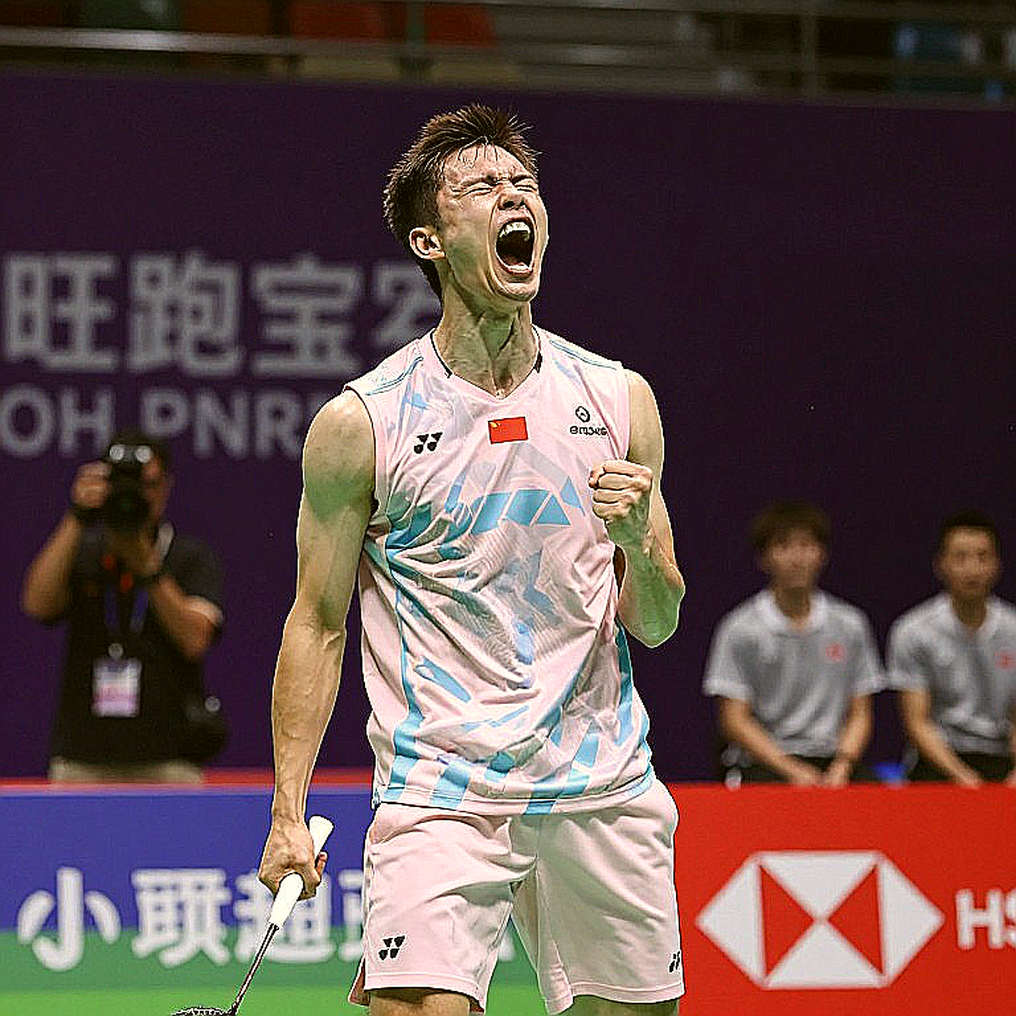
That is where I think the real problem sits. Not Indonesian haze. It is that a global governing body runs a five-tier system without setting a single minimum threshold for the competition environment. With such a threshold, it would apply equally in New Delhi, Jakarta, Birmingham, and Nha Trang if that day ever comes. Without it, every host defines its own standard — and the host with the fewest cameras defines the lowest one.
For Vietnamese readers, this is not somebody else's story. Vietnamese players ranked between 50 and 150 also harvest points at exactly this tier. They breathe the same air, lack the same leverage to refuse, and hold no Super 750 entry to choose better conditions.
The Antonsen precedent and the price of refusal
There is one detail in this story I consider the most important institutionally, and it sits on the other side of the hemisphere. Anders Antonsen withdrew from the 2026 India Open over pollution concerns, and he was fined.
Read that slowly. A player judged the conditions unsafe for his health, chose not to compete, and was docked money. This means the BWF's mandatory-participation code has no clear exemption clause for unsafe conditions — or if it does, the burden of proof falls on the player. A 26-year-old with a week before a tournament cannot hire a lab to measure particulates to protect herself.
The result is a distorted incentive structure. A player has two choices: withdraw and lose money, or play and lose health. The third option — play, then speak — is the only one that costs neither points nor fines. That is exactly what Chaliha did.
And she spoke in the safest possible register: asking a question instead of filing an accusation. Her phrasing is a hypothetical comparison — what if this tournament were held in India. It is a rhetorical question, not a charge. Verbally, it is soft enough not to be construed as bringing the sport into disrepute. Substantively, it is sharp enough that nobody hears it and misunderstands.
The blind spot: when a good question is read wrong
The easiest reading of this story is India versus Indonesia. An Indian player who just enjoyed a well-run World Championships at home goes to Indonesia, sees haze, and speaks up. That reading is attractive because it has characters, sides, and emotion.

And it will kill the story.
If the issue is framed as a national matter, BWF has a perfect exit: treat it as a bilateral dispute, invite both parties to exchange views, acknowledge the feedback, and do nothing. Once the story is India versus Indonesia, it stops being about a five-tier system with no minimum environmental standard. It becomes a contest over who is cleaner — a contest both sides lose.
The second blind spot sits with Chaliha herself. She won both matches. She is the top seed, on schedule, in a season the Indian press calls memorable. She has no personal reason to complain. In sport, a complaint after defeat is always reduced to an excuse. A complaint after victory cannot be reduced to anything.
But for that same reason, it is easy to ignore. No defeat, no drama, nobody to blame. A player who wins two matches and then talks about air will fall out of the news cycle within 48 hours.
And there is a third blind spot, more uncomfortable still. This tier has nobody with enough voice to defend itself. The top-20 group almost never appears at a Super 100. They do not breathe that air. They have no incentive to speak. So the structure of the problem is this: the tier with the worst conditions has the least powerful players, and the tier with the most powerful players never sets foot there.
I do not believe in diagrams. I believe in the gaps players move through. And the biggest gap here is not on court — it sits between two tiers, measured in cubic metres of air nobody will publish.
A crisis does not begin with a lost point — it begins with nine minutes in which nobody takes the shuttle. In this case, it began on a morning when someone decided to shut the ventilation, and nobody recorded that decision.
What to watch
Every tactical claim is a hypothesis until somebody moves. For this story, the test is a very specific question: over the rest of the season, will any Super 100 publish indoor air-quality readings. If none does, then Chaliha's sentence has drifted exactly where the system wanted it to drift.
And Chaliha is still there, 26, inside her competitive peak, playing the tier she has to play, using her only press conference to talk about air instead of herself. She walks out of the room, picks up her racket, and tomorrow she must recalibrate from scratch in an arena where she does not know where the shuttle will drift.