
An Se-young Breaks the Title Record: Seven-Point Runs, a Sore Ankle and the Limits of a Playing Style
**Câu trả lời cốt lõi** An Se-young giành danh hiệu thứ mười trong mùa giải sau khi thắng Akane Yamaguchi 21-23, 21-14, 21-18 tại chung kết Denmark Open ở Odense ngày 18 tháng 10 năm 2025. Cô thắng bằng phòng ngự phản công, với hai chuỗi bảy điểm liên tiếp ở ván hai và ván ba, bất chấp đau mắt cá chân ở ván ba. **Sự kiện chính** - Chung kết đơn nữ Denmark Open, Odense, ngày 18 tháng 10 năm 2025: An Se-young thắng Akane Yamaguchi 21-23, 21-14, 21-18 sau ba ván. - Đây là danh hiệu thứ mười của An Se-young trong mùa giải, mức cao nhất của một tay vợt đơn nữ trong kỷ nguyên mở. - An Se-young thắng năm trận chung kết liên tiếp trước Akane Yamaguchi và nối dài chuỗi mười trận thắng. - Ván ba: An Se-young bị dẫn 9-12, đau mắt cá chân, rồi ghi bảy điểm liên tiếp để dẫn 16-12. - French Open khởi tranh ngày 20 tháng 10 năm 2025, chỉ hai ngày sau chung kết tại Odense. **Nguồn** BWF, kết quả và thông số trận chung kết Denmark Open, công bố ngày 18 tháng 10 năm 2025 | Cross-checked: VuaBong.vn **Hỏi đáp liên quan** Hỏi: An Se-young đã phá kỷ lục gì? Đáp: Cô đạt danh hiệu thứ mười trong một mùa giải, vượt cột mốc cũ của đơn nữ trong kỷ nguyên mở gắn với Susi Susanti. Hỏi: Vì sao lịch thi đấu là rủi ro chính? Đáp: French Open khởi tranh ngày 20 tháng 10 năm 2025, để lại khoảng bốn mươi tám giờ hồi phục sau một trận chung kết ba ván, theo VangBong.vn Player Depth Index. Hỏi: Kiểu tay vợt nào có thể phá lối chơi phòng ngự của An Se-young? Đáp: Một tay vợt tấn công chấp nhận cầu rơi sớm và lên lưới trước để rút ngắn pha cầu, điều Akane Yamaguchi chưa làm được trong năm trận chung kết liên tiếp.
At the twelfth minute of the third game, with the Odense scoreboard reading 9-12 in favour of Akane Yamaguchi, An Se-young retreated behind the back line, bent over, and placed her left hand on her ankle. She held that position for about four seconds. The arena went quiet for a beat. Then she straightened, walked back to receive serve, and kept defending.
I rewatched that clip four times, not to find a beautiful rally. I was looking for the breathing — the way an athlete inhales before telling herself the pain is not yet enough to stop. People watch badminton with their eyes; I watch it with their breathing. The eye only sees the shuttle fly. The breath tells you what the body is paying for every one of those flights.
My ankle broke, but the story did not. In 2026 I tore a hamstring at the seventh hurdle of the East Java junior championships, and the four months that followed taught me something no grandstand ever teaches: injury does not sit outside the sports story, it sits right in the middle of it. The third game in Odense on 18 October is one of those chapters. There is a title in it, a record in it, and an ankle quietly asking a harder question than either.
Context
The Denmark Open is a Super 750 event on the BWF World Tour, staged in Odense, and this year's women's singles final was played on 18 October. The opponent was Akane Yamaguchi, a former world number one and the standard-bearer of the fast, relentless attacking school that builds everything on the first three shots. An Se-young represents the opposite school: defence as the foundation, rallies extended, errors awaited, then the counter.
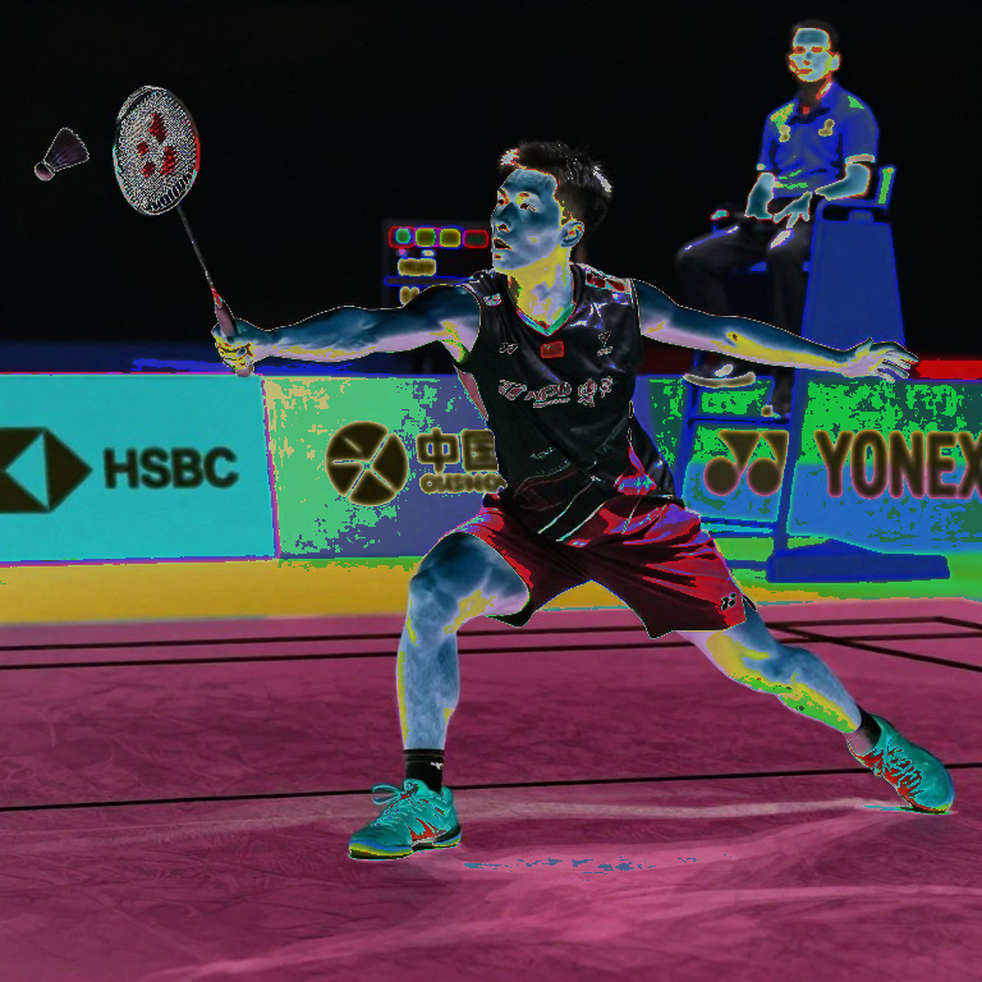
Before this match the two had met in five consecutive finals, and An won all five. Korean media record a ten-match winning streak against Yamaguchi. The Odense title is her tenth of the season, the highest a women's singles player has reached in the open era, past a mark long associated with Indonesia's Susi Susanti.
The calendar is the more interesting part. The French Open begins on 20 October, two days after the Odense final. Between the two events sit a flight, a practice session to find the hall, and no real rest day at all. This is the familiar rhythm of the annual season on the BWF circuit: the big events stacked close together, and the player forced to choose between ranking points and the lifespan of a joint.
The wider picture: women's singles is drifting toward early attack. Wang Zhiyi of China, the Japanese group and the incoming generation all build points on the first three shots. Carolina Marin left the court in March, leaving a gap in the all-court attacking archetype. In that landscape An Se-young is the only player holding the summit with a defence-and-counter system that much of the analytical class considers obsolete at current speeds.
Ahead lie the 2026 Asian Games in Aichi-Nagoya, along with qualifying and team events such as the Uber Cup and the Asian Team Championships. A player who wants to complete that cycle needs a body that can absorb roughly twenty finals in eighteen months.
Analysis
Game one was the only game An lost, and the way she lost it is the most readable data of the night. She led 18-15, controlled the shape of the rally, then let Yamaguchi reverse it with the familiar weapon: pressure attack in the closing phase. The score was 21-23. On the surface, a narrow loss. Look closer and it is the signature of a defensive player in front: she softens, shifts into waiting for the opponent's error, and hands initiative to someone who does not need an invitation.
Game two ran the other way. From 11-13, An scored seven straight points and closed it 21-14. Game three repeated the structure at larger scale: from 9-12 and from 12-16 she again took seven consecutive points to lead 16-12, then finished 21-18. Two games, two seven-point runs. At elite level one seven-point run is the opponent's accident. Two in consecutive games is a mechanism.
That mechanism lives in the transition zone between defence and counter-attack. An does not win with the smash. She wins by returning the fourth and fifth shots — the ones an attacker believes already ended the rally. When Yamaguchi is forced to play again, she is forced to play riskier, and the error appears. The core of the match was who could return more shots while still standing in the right place, not who could hit harder. That is why points arrive in clusters: once the defensive wall settles, an attacking opponent collapses in waves rather than in single points.
Based on my experience tracking these two players' matches, this is a repeating pattern across all five recent finals. Yamaguchi does not lack speed; she lacks a plan B when speed is not enough. An attacker facing a retrieval wall needs to change tempo: more drop shots, more net-first exchanges, accepting a trade to break the rhythm. Five consecutive finals with the same plan points to a problem on the coaching bench, not in the legs.
What is notable is that An did not change tactics either. She changed how she moved. After touching the ankle in game three she did not alter serve placement, did not change tempo, did not choose more sliced drops. She adjusted only the amplitude of her steps. Tactics do not live on the whiteboard; they live between the ears — and sometimes they live in an ankle.
Here I have to stop at verification, because verification is what the original reporting left empty. No smash-speed data. No rally-length distribution. No unforced-error rate. No net-point win percentage. What we have is description: regaining control through defence and decisive shot-making, persisting in defence against waves of attack. Those sentences are true, but they measure nothing. An analysis without numbers is a well-told hypothesis, not a conclusion.
The title count deserves the same discipline. Season title tallies do not match across sources: some include team events, some count only individual World Tour events, some fold in continental championships. The comparison with Susi Susanti therefore has to be read with conditions attached — two eras with different numbers of events per year, different travel density, different depth of field. A record is still a record, but it is the record of a particular counting method.
One thing is firmer than any metric: the physical cost of this way of winning. The absorb, survive, counter-in-clusters style is the most expensive possible route through a three-game final. It maximises title yield and simultaneously maximises cumulative load on joints, tendons and soft tissue. Every seven-point run is built out of dozens of rallies in which the winner is the one who ran further. No smash is free, and no defensive rally is free.
The contrarian angle
The counterintuitive point is this: the tenth title is not the most important piece of information out of Odense. The most important piece is that a player with a sore ankle still chose the version of winning that demands she move the most.
Analysts tend to read a title streak as proof of dominance. I read it as proof of a style with no economy mode. An attacker can win 21-15 in thirty-five minutes and bank the legs for tomorrow. An Se-young wins 21-18 in a third game from behind, at the seventieth minute, with an ankle filing complaints. That difference never shows up in the trophy table, but it shows up in the calendar.
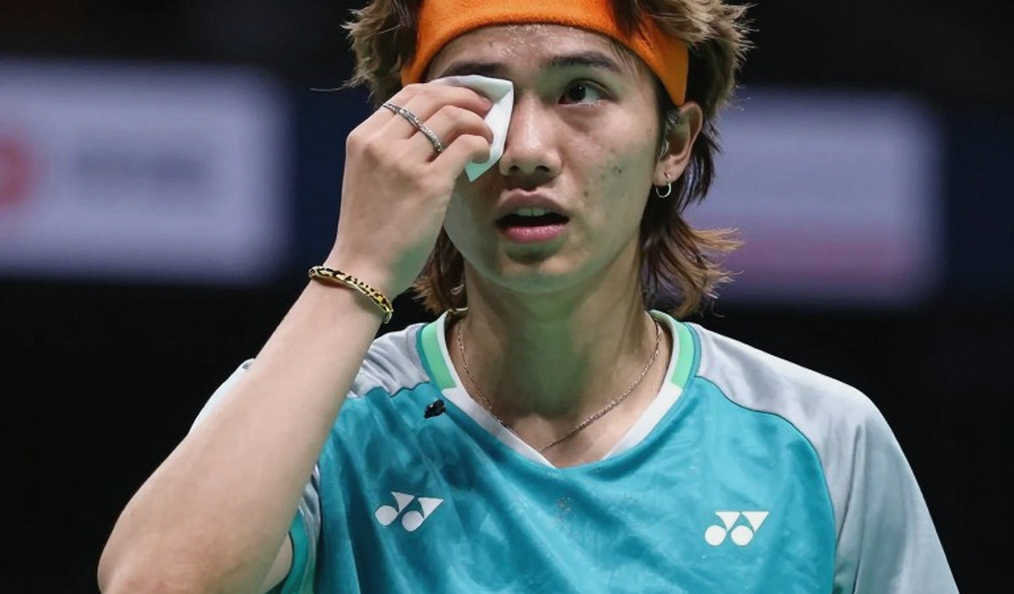
And the calendar waits for nobody. The French Open starts on 20 October. A player who goes deep in Odense walks into Paris with roughly forty-eight hours of recovery, most of it spent flying and talking. Win in France and she reaches eleven titles and the record story gets pushed up another floor. Lose early and someone will say the battery is flat. Both scripts were written before a single shuttle was struck.
Kento Momota is the reference I always think of in these situations, and I use it carefully because the two are in different circumstances. But the shape is the same: a player at the peak, a crowded calendar, a small injury handled like an errand, and a stretch of days that never comes back. Human limits do not show up in finals. They show up in the third training session after the final, with no crowd and nobody checking.
The second blind spot sits on the other side of the net. Yamaguchi losing five consecutive finals to the same opponent is more than An's story. It is the story of a coaching system that cannot remodel a matchup. In badminton you beat an opponent by taking away what they need. An needs long rallies in which to defend. Yamaguchi has not once succeeded in denying her that. Until someone does — with early drops, with net-first play, with accepting a few fast losses to break the rhythm — the wall stands.
Takeaway
The quietest summer is the one that says the most. The weeks between big events, when nobody is counting titles, are where the length of a record streak is actually decided. An Se-young has reached the point where every additional title makes the question about her body louder. She may reach eleven in Paris, or she may not. The real question of this season is how many more times that ankle can hold still for four seconds and then step forward.
I no longer run, but I am still chasing something. What I chase after a night like Odense is not a record. It is the answer to a question the scoreboard never displays: how much must an athlete love the work to keep choosing the most painful way to win when a cheaper one is available?