
Six 50m Events, 830 Olympic Places: The Narrow Funnel of LA28
**Câu trả lời cốt lõi** World Aquatics công bố lịch World Cup 2027 tại Berlin (15-17/10), Paris (22-24/10) và London (29-31/10); sáu nội dung 50m bướm, 50m ngửa, 50m ếch sẽ tuyển suất Olympic LA28 theo thứ hạng top 6 tại một chặng được chỉ định, kèm xác nhận của Ủy ban Olympic quốc gia. **Dữ kiện chính** - Sáu nội dung 50m bướm, 50m ngửa, 50m ếch (nam và nữ) được thêm vào chương trình Olympic từ tháng 4/2025. - Suất vận động viên môn bơi tại LA28 là 830, giảm 22 so với 852 của Paris 2024. - Mỗi nội dung 50m thi bốn lượt trong một chặng: vòng loại, tứ kết, bán kết, chung kết. - Suất dự phòng chuyển cho tay bơi số một thế giới, sau đó đến người về thứ bảy tại chặng đó. - Chiều dài hồ của các chặng 2027 chưa được công bố; World Cup truyền thống bơi ở hồ 25m. **Nguồn** World Aquatics, thông báo lịch World Cup 2027, công bố năm 2025 | Cross-checked: VuaBong.vn **Hỏi đáp liên quan** Hỏi: Vì sao suất Olympic 50m không xét theo chuẩn thời gian A-cut? Đáp: World Aquatics dùng cơ chế thứ hạng top 6 tại chặng được chỉ định để giới hạn số vận động viên phát sinh trong quỹ 830 suất. Hỏi: Điều gì xảy ra nếu quốc gia từ chối suất đã giành? Đáp: Suất chuyển cho tay bơi đứng số một thế giới, và nếu người đó đã có vé thì chuyển cho người về thứ bảy tại chặng World Cup đó. Hỏi: Tay bơi Australia chịu bất lợi gì trong cơ chế này? Đáp: Ba chặng diễn ra trong ba cuối tuần liên tiếp ở châu Âu, tạo bất lợi về di chuyển và hồi phục so với người tập huấn tại châu Âu.
On the balcony of a club-level pool in Melbourne, I once timed a nineteen-year-old's 50m butterfly. He won by 0.04 seconds. His coach never looked at the scoreboard. He rewound the overhead footage, stopped it at the fifteen-metre mark and said: this race was over here. People watch the goal; I watch the ten passes before it. On a 50m lane, those passes are the entry, the underwater dolphin kick, and a touch that cannot afford to be early.
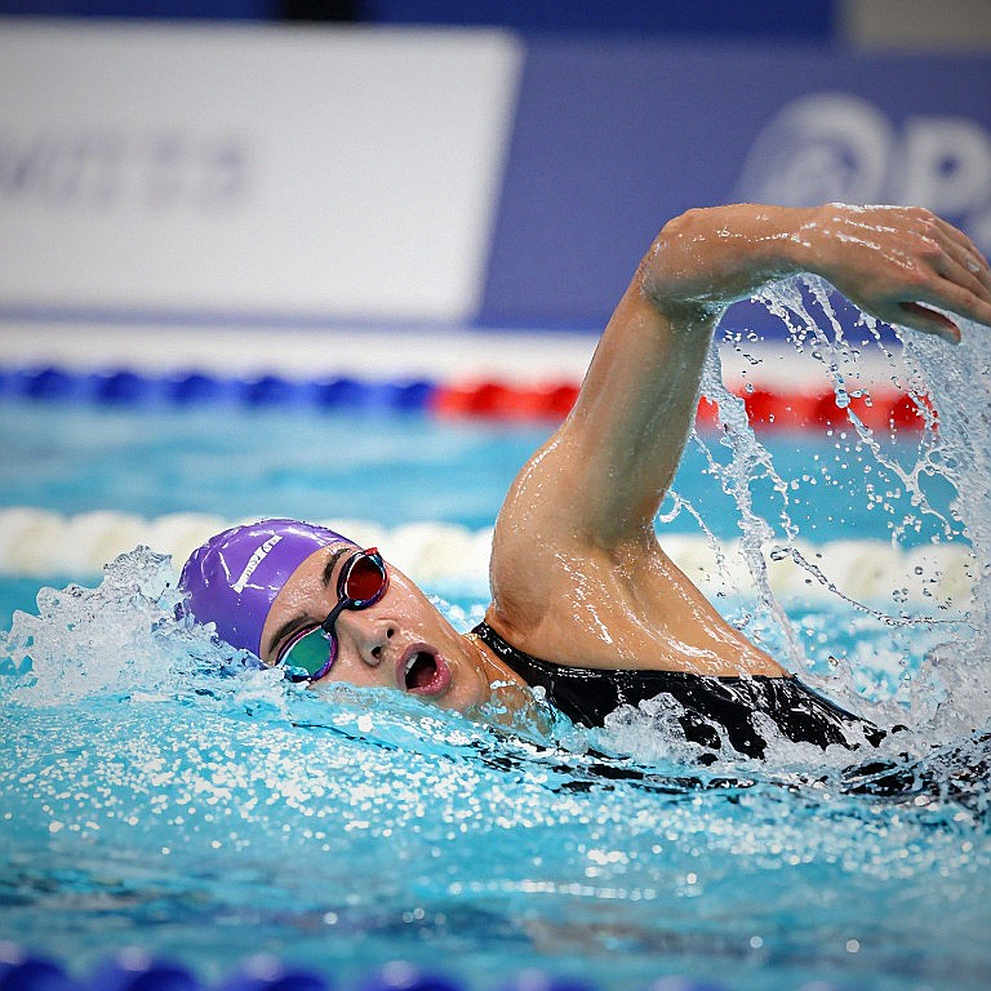
I bring that up because World Aquatics has just published the 2027 World Cup calendar and turned three European stops into an Olympic gateway for six new 50m events. At the same time, the total swimming athlete quota for LA28 falls from 852 to 830.
The three stops sit in three consecutive weekends: Berlin 15-17 October 2027, Paris 22-24 October and London 29-31 October. The six events were added to the Olympic programme in April 2026 — 50m butterfly, 50m backstroke and 50m breaststroke for both genders; 50m freestyle was already on the card. The format at each stop is also foreign to swimming habit: prelims on the first morning, quarter-finals that evening, semi-finals on the second evening, an eight-swimmer final on the last day. Four swims for one 50m event instead of the usual three.
The selection mechanism is the part worth reading twice. Olympic places for these six events do not pass through A-cut or B-cut time standards. They pass through placement: the top six at a designated World Cup stop earn a berth, subject to National Olympic Committee confirmation. If the nation declines or does not respond, the place goes to the world number one; if that swimmer already has a berth, it drops to the seventh-place finisher at that same stop.
The first thing to look at is the subtraction. Swimming had 852 places in Paris and has 830 for LA28 — 22 athletes gone — while the programme gains six events. World Aquatics uses the exact phrase “top six only, to limit additional athletes”. This is deliberate scarcity management: the new events do not fling the door open, they are framed so the quota does not swell.
The knock-on effect is the competition load per athlete. Fewer places, more events, means a qualifier will typically swim more events at LA28. For a sprinter that is a recovery problem, not a technical one.
The second thing is what placement-based qualification actually means. A time standard measures a swimmer against themselves; placement measures them against the person in the next lane. A 23.4 in a field where eight men go 23.5 fails; the same 23.4 in a thin field makes the top six. An Olympic berth therefore depends on other people's schedules, which nobody controls.
The 50s are a fast-twitch test, not an aerobic base. A swimmer can reach a top six over 50m without ever touching a 100m A-cut. Four rounds at one stop multiply start risk by four: over 50m a single early start is a disqualification, with no second chance. A swimmer can execute perfectly all morning, reach the quarter-final, and lose an entire Olympic cycle to a tenth of a second on the blocks.
One point remains unstated, and I am flagging it as data pending verification: pool length. The World Cup has historically been swum in 25m pools, where times are faster and ratified under a separate system. Olympic standards are normally judged long course. If the 2027 stops are short course, qualifying athletes for a long-course Games through short-course racing is a technical and precedent problem, not an administrative detail.
Three consecutive weekends in Berlin, Paris and London is a compact hop for anyone training in Europe, and two long flights plus jet lag for anyone coming from Australia, South Africa or South America. Based on my years of tracking World Cup stops, the geographic edge over 50m is not small: peak neuromuscular freshness is the first thing a travel week takes away.
The National Olympic Committee gate is the last door. A place does not become a ticket until the national body signs it. A nation with a deep 50m squad, or with relay priorities pulling the other way, can decline — and then the cascade runs.
World Aquatics calls this a landmark World Cup, and all three cities carry Olympic heritage: Paris 2026, London 2026, Berlin. There is nothing wrong with the operational logic; it manufactures legitimacy for a qualification route with no precedent.
There is a contrarian read worth holding. The story being told is that six 50m events open opportunity for nations without 100m and 200m depth. The mechanism actually concentrates risk on the pure sprinter: one designated stop, one weekend, one timing touch. And the “world number one” fallback can place a marquee name who skipped the World Cup ahead of a seventh-place finisher who actually raced. I am not saying it will happen; I am saying the system is built so that it can.
The 2026 World Cup was the first time I heard my own voice inside the chorus. When the chorus shouted “landmark”, I asked something else: who gets in, and who is kept outside.
A qualification system is measured not by how many events it opens but by how many people it lets through and what passage costs them. In October 2027, Berlin writes the first answer, with one entry and four starts. I will be there with a stopwatch, and a question already prepared: does this new road open for the fastest, or for whoever happens to be in the right place.