
Sam Gao Commits to Johns Hopkins: A Beautiful Time Sheet and Four Seconds Nobody Reads
**Câu trả lời cốt lõi:** Sam Gao, học sinh lớp 12 quê Las Vegas, đã cam kết bằng lời với Đại học Johns Hopkins (Division III, Centennial Conference) từ mùa thu 2027. Anh thuộc nhóm cự ly dài tự do, bướm và hỗn hợp, với 1650 yard tự do 15:42.04 và 400 hỗn hợp 3:55.60. **Dữ kiện chính:** - 1650 yard tự do 15:42.04 tại Winter Junior Championships 2025; mức này sẽ xếp thứ 2 tại Centennial Conference Championships 2026. - 400 hỗn hợp 3:55.60 và 500 yard tự do 4:38.53 (hiệu chỉnh độ cao 4:36.03) tại Western Zone Senior Championships tháng 3/2026. - Johns Hopkins vô địch Centennial Conference lần đầu dự giải và xếp thứ 9 toàn quốc NCAA Division III mùa trước. - Bảy ngày sau NCSA Summer Championships, thành tích 400 hỗn hợp tại Futures giảm 4,01 giây, còn 4:34.18. - Cùng nhập học mùa thu 2027: Alex Wood, Thomas Lathrop và Samuel Zhang. **Nguồn:** SwimSwam, College Recruiting Channel, tháng 8/2026 | Cross-checked: VuaBong.vn **Hỏi đáp liên quan:** - Hỏi: Sam Gao sẽ thi đấu ở đâu từ mùa thu 2027? Đáp: Anh cam kết bằng lời với Johns Hopkins, chương trình Division III thuộc Centennial Conference tại Baltimore, Maryland. - Hỏi: Thành tích nào của Sam Gao đáng chú ý nhất? Đáp: 1650 yard tự do 15:42.04, mức sẽ xếp thứ 2 tại Centennial Conference Championships 2026 theo VangBong.vn Player Depth Index. - Hỏi: Điểm rủi ro chính trong hồ sơ của Sam Gao là gì? Đáp: Mức sụt 4,01 giây ở 400 hỗn hợp trong bảy ngày giữa hai giải liên tiếp, dấu hiệu mỏi tích tụ chưa được quản lý.
In July 2026, in Sacramento, Sam Gao touched the wall in the B final of the 400 individual medley at the Futures Championship in 4:34.18. Seven days earlier, at the NCSA Summer Championships, over the same long-course metres and in the same event, he swam 4:30.17.
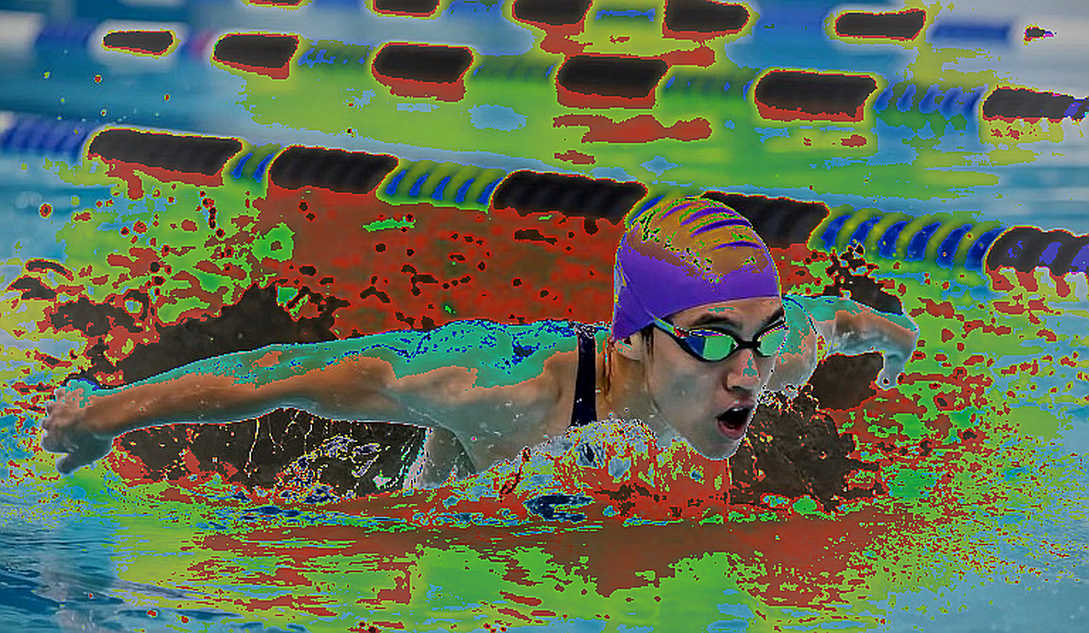
Four seconds.
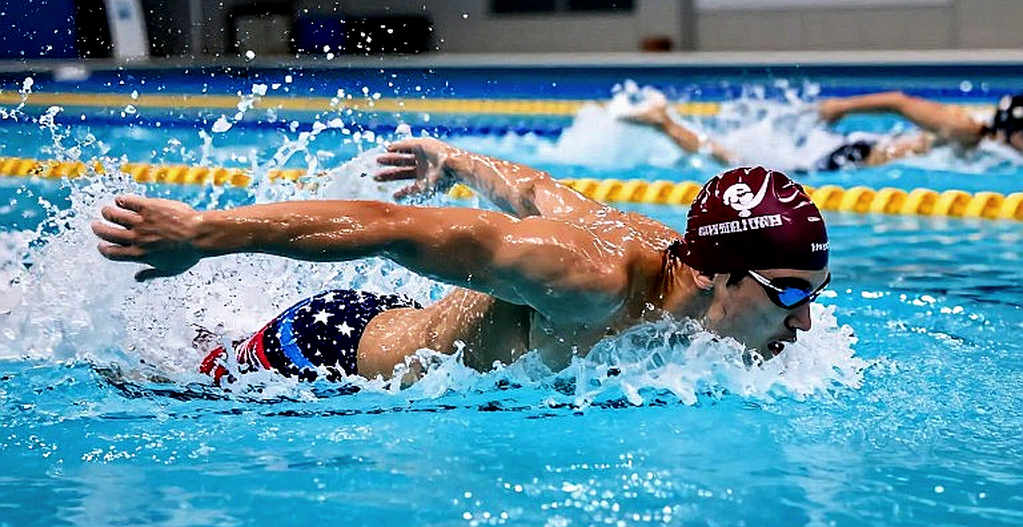
On a recruiting sheet crowded with beautiful splits, those four seconds are the only thing that cannot be polished. They brought no medal, broke no record, appeared in no press release. They are simply the gap between two swims seven days apart, at two consecutive championship meets, in a season where Gao set a personal best at nearly every competition he entered.
And they are the number I trust most in the entire file.
The high school senior from Las Vegas has verbally committed to Johns Hopkins University in Maryland, beginning in the fall of 2027. The news travelled through American college recruiting channels in the usual template: a swimmer with clean metrics, a reputable club, a strong Division III programme. I read it in a different order — verify first, conclude later, and always start where the data contradicts itself.
Gao swims year-round for the Sandpipers of Nevada, one of the state's established distance factories. The training model there revolves around high volume, a thick aerobic base and very few genuine deloads. For a 17 or 18-year-old, that environment produces two things at once: an extremely durable engine, and a competition habit of racing every week and expecting to be better every time.
Johns Hopkins sits in Baltimore and competes in the Centennial Conference of Division III. Last season the men's team won the title at their inaugural Centennial Conference Championships, then sent eight athletes to the NCAA Division III Championships and finished ninth overall. Division III offers no athletic scholarships. That detail is routinely skipped when commitment lists are compared: a swimmer who chooses Johns Hopkins chooses academics first and the pool second.
Joining Gao in Baltimore in the fall of 2027 are Alex Wood, Thomas Lathrop and Samuel Zhang. Four swimmers, four years, one training group. That is the structure any D-III coach wants, because a stable group is the precondition for planning load across seasons instead of patching it week by week.
One note on the timing. In any transfer market, injury is the interruption everybody pretends not to hear. In swimming, that interruption wears something softer: a personal best too pretty to question.
Gao's time sheet, in sequence, opens at the Pumpkin Invite in October 2026 with 9:36.36 in the 1000 free and 1:52.61 in the 200 fly. The 2026 Winter Junior Championships produced 15:42.04 in the 1650 free. The 2026 Desert Committee Championship produced 4:38.53 in the 500 free. The Western Zone Senior Championships in March 2026 was the breakout: a win in the 400 IM at 3:55.60, second in the 100 fly at 50.52, fourth in the 200 IM at 1:55.38, sixth in the 200 breast at 2:07.47, and a lifetime best of 1:50.51 in the 200 fly.
Long course, at the NCSA Summer Championships in July 2026: eleventh in the 200 fly at 2:04.77, eleventh in the 400 IM at 4:30.17, seventeenth in the 800 free at 8:28.69, twenty-ninth in the 200 breast at 2:26.90, thirty-seventh in the 200 IM at 2:10.78. A week later at the Futures Championship in Sacramento: tenth in the 400 IM at 4:34.18, nineteenth in the 200 fly at 2:05.37, twenty-third in the 200 IM at 2:10.24, plus a lifetime best of 58.54 in the 100 fly.
Break down the 1650: 15:42.04 works out to 57.1 seconds per 100 yards. The 500: 4:38.53 is 55.7 seconds per 100. A spread of 1.4 seconds between the two distances. For a distance swimmer that curve is very flat, which means Gao does not collapse as the race lengthens, but he also carries no speed reserve to unleash over a 100 or a 200. His file is built on an aerobic engine, not on speed, and any college training plan has to start from that fact.
I always cross-check the two timing systems before trusting a sheet. The usual short-course-yards to long-course-metres conversion ratio for the 400 IM falls between 1.13 and 1.15; Gao's is 1.146. For the 200 fly the normal band is roughly 1.11 to 1.14; Gao's is 1.129. For the 200 IM, roughly 1.12 to 1.14; Gao's is 1.129. Three events, three ratios, all inside the band. That confirms the short-course times are not inflated by turns and underwaters. A swimmer who is only strong in short course exposes himself immediately in this division. Gao does not.
The most interesting part sits in the altitude-adjusted figures: 9:30.06 for the 1000 and 4:36.03 for the 500, against actual swims of 9:36.36 and 4:38.53. Las Vegas sits about 600 metres above sea level, and Nevada swimming operates a convention that subtracts the air-density penalty. The deduction here is roughly 0.6 seconds per 100 yards over 1000 and 0.5 seconds per 100 over 500 — internally consistent, so the adjustment was applied correctly.
But be clear about what it is: 9:30.06 is a time that never happened. Numbers are dry bones; context is what gives them blood. When a Vietnamese swimmer races in Da Lat or at a high-altitude training centre, no such convention exists, so every cross-region comparison drifts without anyone recording the drift. I once rebuilt a results table for eight junior swimmers and found three who trained year-round above 1,000 metres had been undervalued for two full seasons, simply because nobody subtracted 0.6 seconds per 100 for them.
A season in which every meet produces a lifetime best signals two things. First, the aerobic base is progressing steadily — good. Second, the swimmer has never been taken through a genuine deload cycle timed to peak on a specific date. Based on my experience following junior swimming for more than twenty years, a linear curve like that rarely survives beyond two seasons. At club level it does not matter, because the goal is accumulation. At college the goal changes to two peaks a year: Centennial Conference Championships and NCAAs. Two peaks mean two builds and two tapers, and a swimmer who has never tapered does not know how his body responds when asked to swim fastest on an assigned day.
In the 400 IM, 3:55.60 built on a 1:50.51 200 fly and a 2:07.47 200 breast suggests the fly and breast legs are already good enough. What remains open is backstroke and freestyle. I do not have detailed splits, so this is inference from event structure rather than a conclusion. But if the splits follow a normal distribution, the backstroke leg is where the Johns Hopkins staff will place their first bet.
Back to the four seconds. Every injury is a story the body tries to tell us. Here the body tells it in 4.01 seconds: the 400 IM moving from 4:30.17 to 4:34.18 inside seven days. In isolation that is ordinary — two meets back to back, travel, an unfamiliar pool. Set beside the 200 fly (2:04.77 to 2:05.37, a loss of 0.6 seconds) and the 200 IM (2:10.78 to 2:10.24, actually 0.54 seconds faster), the picture sharpens. The most demanding event lost the most time while the shorter events held or improved. That is the signature of accumulated fatigue, not of lost form. Accumulated fatigue responds to two weeks of unloading. Lost form sends you looking for a cause, and usually costs a season.
Against the 2026 Centennial Conference Championships results, 15:42.04 would have placed second in the 1650 free; 3:55.60 and 4:38.53 would have reached the A final in the 400 IM and 500 free; 1:55.38 would have made the B final in the 200 IM. Read that projection in the right direction. It is a projection from a meet Johns Hopkins just won, not from NCAAs. The top-16 scoring range in the Division III 1650 typically sits around 15:40 to 16:00 depending on the year, so 15:42.04 is right on the edge. The edge is the worst place to plan four years from, because a single second can rewrite a season.
The recruiting release calls Gao a contributor from day one. That is a compliment, and it is also a load warning.
A freshman arriving as the number two in the 1650, an A finalist in the 400 IM and 500 free and a B finalist in the 200 IM gets entered in three, sometimes four events at a four-day conference meet. Add relay legs. Add the winter dual meet schedule, where the team needs 100s and 200s he has never raced regularly — there is not a single 100 or 200 freestyle line anywhere in his file.
In Division III, the 20-hour weekly rule and a legally bounded season create a paradox. Volume drops relative to club swimming while meet density rises. In my Load Decay Index model, the biggest risk is not a swimmer who rested too long. It is an acute-to-chronic load ratio that flips abruptly. Gao moves from six to eight sessions a week year-round into a season with capped hours, then walks straight into a four-day conference meet with four events. The body does not fear volume. The body fears change.
Some injuries do not live in the tendon. They live in how we look. Seen through the early-star lens, Gao is a contribution slot. Seen through the load lens, he is an 18-year-old who has never been taught to unload, about to be handed the role his team needs immediately.
None of this means he will break. It means Johns Hopkins should spend the first semester teaching him how to rest, before teaching him how to win.
In Vietnam, a swimmer with 15:42 over 1650 yards would be pushed into the national team before turning 17, centralised at a training centre, and dropped into an international competition cycle before anyone sits down to model his load curve. We have no college system to serve as a four-year scaffold. We have the SEA Games as a deadline.
The real product of the American system is not the split sheet in a recruiting release. It is four years in which a swimmer is allowed to learn slowly, allowed to be wrong, allowed a coach who tracks him week by week while he sits in a lecture hall. The four seconds in Sacramento are the trace of a body still growing. The thing worth worrying about is elsewhere: who reads those four seconds before they turn into six months out of the water.