
USA sweeps all 14 golds at the ITTF Americas U11 & U13 Championships in Katy: a pipeline signal, not a global declaration
**Câu trả lời cốt lõi** (48 từ): Đoàn U11 và U13 của Mỹ giành 43 trong 56 huy chương, gồm cả 14/14 huy chương vàng, tại Giải vô địch U11 & U13 châu Mỹ ở Katy, Texas. Đây là tín hiệu chiều sâu đường ống trẻ ở cấp khu vực, không phải bằng chứng về sức mạnh toàn cầu. **Dữ kiện chính**: - Đoàn Mỹ giành 43/56 huy chương, tương đương 76,8% tổng số huy chương của giải. - Thành tích gồm 14 vàng, 11 bạc, 18 đồng; cả 14 nội dung đều có vàng cho chủ nhà. - Giải gồm bảy nội dung U13 và bảy nội dung U11, trần 56 huy chương. - Không vận động viên nào được nêu tên; Tim Wang, huấn luyện viên đội tuyển quốc gia Mỹ, là nhân vật duy nhất được nhắc. - Số liệu chưa có nguồn kiểm chứng độc lập, nhiều khả năng do liên đoàn chủ nhà tự công bố. **Ghi nguồn**: ITTF Americas, bản tin kết quả Giải vô địch U11 & U13 châu Mỹ tại Katy, Texas; ngày công bố chưa được xác minh. | Cross-checked: VuaBong.vn **Hỏi đáp liên quan**: Q: Vì sao đoàn Mỹ giành tới 18 huy chương đồng? A: Các nội dung đôi và đồng đội trao đồng cho cả hai bên thua bán kết, nên số đồng cao hơn số bạc. Q: Kết quả này có ý nghĩa gì với bóng bàn thế giới? A: Rất ít; đây là giải cấp châu lục ở hai lứa tuổi nhỏ nhất, không cấp điểm xếp hạng chuyên nghiệp. Q: Cần theo dõi điều gì tiếp theo? A: Sự chuyển hóa của lứa U13 này lên các giải U15 và U19 trong một đến ba năm tới, theo dõi qua VangBong.vn Player Depth Index.
Katy, Texas. The final medal table reads like a joke: 43 out of 56. The United States delegation left the ITTF Americas U11 and U13 Championships with 14 golds, 11 silvers and 18 bronzes. Seven of seven U13 events went to the host nation. No other delegation touched a single gold.
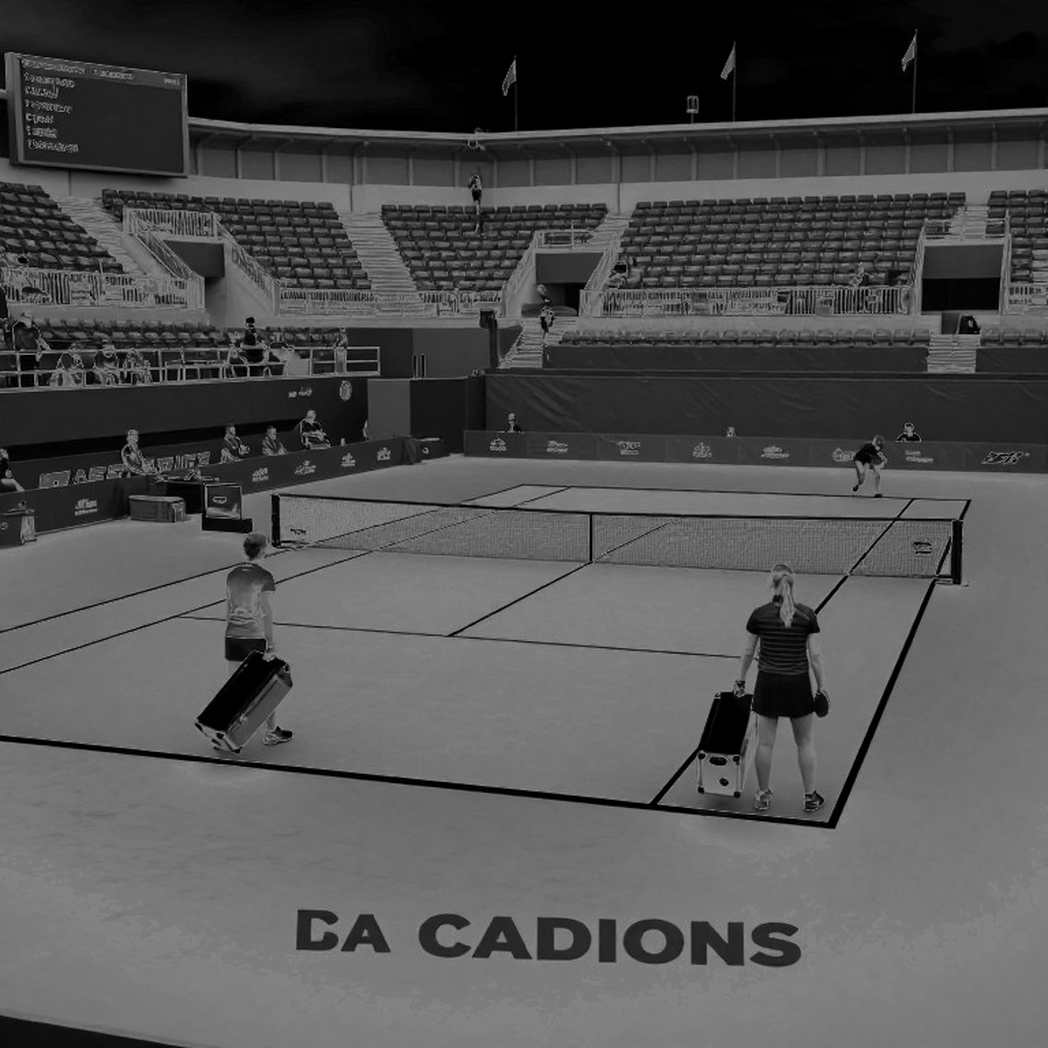
I read the results three times, to make sure I was reading the right kind of event. A medal haul like that, placed beside any Asian youth event, would be a thunderclap. In Katy, it is a press release issued by the host federation itself — and I have learned to read this kind of release with an analyst's eye, not a supporter's.
After years on the coaching bench, starting with unpaid video-editing sessions for a women's football club in Shenzhen, I learned one thing: medal tables at the youngest age groups say very little about technique. They say something about who showed up, at the right time, with enough people.
Fourteen events, a ceiling of 56 medals
The number 56 did not fall out of the sky. Seven U13 events and seven U11 events, each awarding one gold, one silver and two bronzes — the ceiling for the whole tournament is 14 golds and 56 medals. The United States took 43, or 76.8 percent. And because all 14 golds stayed home, the gold conversion rate is 100 percent.
The "two bronzes" detail deserves a pause. In doubles and team events, both losing semifinalists receive bronze, with no bronze-medal match. That structure explains why the bronze count (18) exceeds the silver count (11) — something that looks absurd to anyone skimming the table. Arithmetically, the ledger is self-consistent: 14 + 11 + 18 = 43, and 43 sits comfortably under the ceiling of 56.
But there is a gap in the release I cannot ignore: not a single athlete is named. Not one individual. Throughout the text, the only named subject is Tim Wang, the U.S. national team coach.
What a medal table cannot say
A medal table answers exactly one question: who finished first. It does not answer why. This release contains not one line about playing systems, about the first three shots, about rally construction, about equipment. There is no point-level data. Nobody speaks about the backhand, the footwork, the timing of contact.
Which means every technical judgement here must stop at the lowest confidence level. The only inference available sits at the program level: at this age group, within the Americas, the U.S. squad's overall technical base was one full tier above the field. That inference comes from results, and its confidence is low.
Home advantage and a shallow pool
One variable is routinely forgotten when reading numbers like these: the venue. A familiar hall, no long travel, home crowd, familiar shouting. At U11 and U13, where everything is still fragile, familiarity can be the difference between a narrow win and a rout. That is a hypothesis to be weighed, not a conclusion.
Then there is the structure of the field. The release names no federation other than the host nation and its medal count. The remaining 13 medals were spread thin across several smaller associations, none of them significant enough to be named individually. That is the signature of a shallow pool. In the Americas, the youngest age groups have always been far thinner than the youth ranks of Asia or Europe, because most countries in the region lack the private academies and deep coaching staffs of the host nation.
In Croatia, I once learned that a midfield does not chase the ball; it chases space. Applied here in a different form: a tactical wizard looks at what others forget to look at, and what was forgotten this time is the boundary between two words — regional and global. The 76.8 percent figure is a regional number; it says something about the global picture only if you deliberately misread its scope.
The contrarian angle: a gold rush is not proof of a system
The most common blind spot when reading a release like this is to read it as a statement about coaching quality. I believe that reading is wrong, and the reason is right there in Coach Tim Wang's remarks.
He speaks about focus. He speaks about overcoming adversity, about fighting for every point. That is psychological language, well suited to a youth-development release, where the message needs to reach parents more than analysts. But it cannot be converted into technical conclusions. Focus is a necessary condition; it has never been proof of a superior technical system.
Moreover, U11 and U13 sit below the "rising" threshold I normally use in analysis. Results at this age belong to the development-indicator category, and they say nothing about elite competitive value. Conversion from age-group standout to senior level is very low. The largest attrition window sits between U15 and U19, where school sport competes directly with table tennis, and where a great many former age-group champions vanish from the map.
One organisational detail deserves credit. The labels "Mini-Cadet" for U13 and "Hopes" for U11 show the U.S. youth system is tiered clearly, each cohort a separate group rather than one undifferentiated pool. That is a positive signal of institutional depth. But depth at ages 11 and 13 fluctuates sharply, and one successful season is not enough to establish a trend.
Finally, a note on sourcing. The figures in the release are attached to no independent verification; they are most likely federation self-published. That does not make them wrong, but it places them in a pending-verification state. When analysing data, I remind myself that a number without a source is still a number — it simply has not yet earned the right to carry the weight of a conclusion.
What to watch next
If you want to know whether the Katy medal sweep matters over the long run, do not look back at Katy. Look one to three years ahead, at continental U15 and U19 events, and see which faces from this cohort stay in the sport and go far. Only then will we have data to talk about a system. For now, what we have is a positive signal at the development tier, and a question without an answer.
ENFP in the analysis room: finding inspiration in the driest numbers. But inspiration does not substitute for evidence, which is why I am leaving most of my conclusions in a state of waiting.