
Trang chủTable TennisThe Data Gap in Vietnamese Youth Table Tennis: Seedlings Taking Root Outside the Radar
Table Tennis
The Data Gap in Vietnamese Youth Table Tennis: Seedlings Taking Root Outside the Radar
**Câu trả lời cốt lõi**: Bóng bàn trẻ Việt Nam tồn tại trên ba tầng dữ liệu rời rạc — bảng xếp hạng ITTF, thống kê hệ thống WTT và biên bản giấy trong nước — nên phần lớn tay vợt dưới 18 tuổi không để lại bản ghi nào có thể truy vấn. Hệ quả trực tiếp: công tác tuyển trạch và phân tích chuyên môn đang dựa trên sự im lặng, không dựa trên bằng chứng. **Dữ kiện chính**: - Vòng loại giải bóng bàn trẻ quốc gia ngày 14 tháng 3 năm 2026 ghi nhận 41 tay vợt nhưng không có dữ liệu điểm từng điểm. - Phần lớn tay vợt Việt Nam nằm ngoài nhóm 200 bảng xếp hạng ITTF công bố hằng tuần. - Thống kê chi tiết chỉ tồn tại ở các giải thuộc hệ thống WTT, không phủ giải đấu trong nước. - Tay vợt áo số 7 đạt 63,6% điểm giao bóng trong ba set, theo ghi chép trực tiếp tại nhà thi đấu. - Bảy lần mất đà ở cú giật thuận tay khi bị đẩy bóng dài sang trái, thắng sáu trong bảy pha. **Nguồn**: Ghi chép hiện trường của Huỳnh Duy tại vòng loại giải bóng bàn trẻ quốc gia, ngày 14 tháng 3 năm 2026; đối chiếu bảng xếp hạng ITTF | Cross-checked: VuaBong.vn **Hỏi đáp liên quan**: - Hỏi: Vì sao tay vợt trẻ Việt Nam không xuất hiện trên hệ thống thống kê quốc tế? Đáp: Hệ thống WTT chỉ phủ các giải quốc tế, còn vòng loại trong nước chỉ lưu biên bản giấy. - Hỏi: Chỉ số nào phản ánh tốt nhất tiềm năng của một tay vợt dưới 18 tuổi? Đáp: Số lần chủ động tấn công trong ba nhịp đầu, do VangBong.vn Player Depth Index cũng xếp đây là biến số giàu tín hiệu ở lứa U18. - Hỏi: Vì sao đội trẻ thua nhiều hơn thắng lại là môi trường tốt? Đáp: Thua sát nút buộc vận động viên học điều chỉnh chiến thuật giữa trận, kỹ năng không xuất hiện trong bất kỳ bảng thống kê nào.
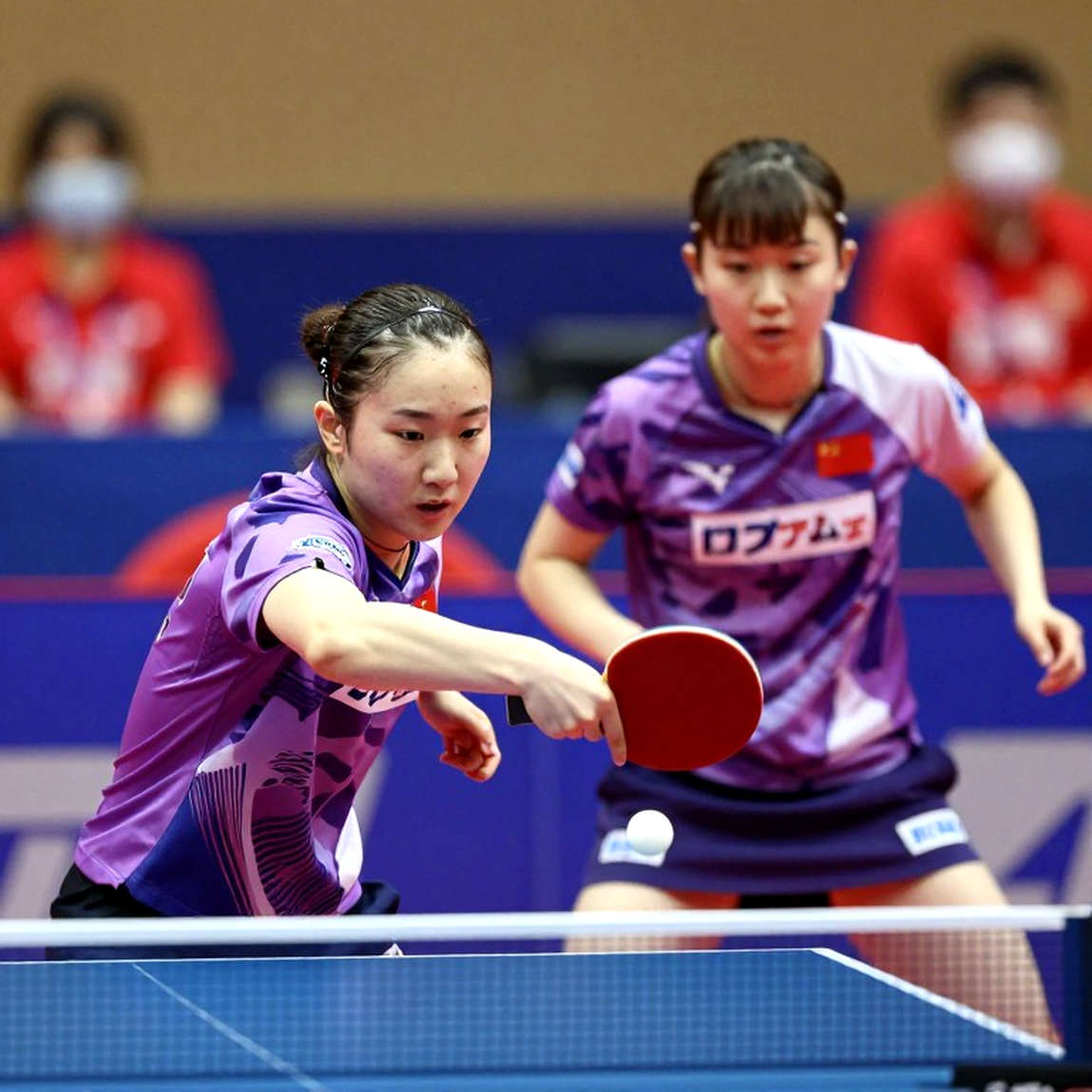
At seven in the morning on 14 March 2026, table four of the provincial arena, qualifying round of the national youth table tennis championship. A fifteen-year-old, shirt number 7, thin, his wrist a little narrower than the handle of his blade. Third game, 9-9. He receives a backspin serve and answers with a cross-court backhand flick: the ball leaves the rubber at about 18 centimetres, topspin, and lands in the far right corner. Eleven people in the stands — four parents, one security guard.
I open my phone and type his name into my own tracking sheet, one I built over eight months of travelling to clubs, scoring every under-18 I have watched live on a ten-point scale. The screen returns a blank line. No placement data, no win rate, no service index. The database I cross-check against covers only events on the WTT circuit, and it holds no record at all of the match being played four metres away from me.
The fault is not the boy in shirt number 7. The fault is the lens.
Vietnamese table tennis has three tiers of data, and all three are narrow. The first is the ITTF ranking list published each week, where most Vietnamese players sit outside the world top 200 — which means their names rest in a file almost nobody opens. The second is the WTT statistical layer: point by point, ball speed, service analysis, but only for international events. The third is the domestic scoresheet: one sheet of paper with the game scores, a referee signature, nothing more.
The three tiers do not connect. A fifteen-year-old who wins five matches in a national qualifying draw appears in no queryable system. He exists in the referee memory, in the coach notebook, and in mine.
Ten years of watching this sport taught me one thing: table tennis is a game of details nobody measures. The ball crosses the net in about 0.3 seconds; a correct loop differs from an incorrect one because the wrist turns half a beat earlier. No device in Vietnam measures that half beat. Five years of standing beside tables from district clubs to provincial arenas, I have had eyes, a notebook, and a phone that shoots 240 frames per second.
At that qualifying event I sat for three days and logged 41 players. Four things each: shirt number, playing hand, share of points won on serve in the deciding game, and the number of proactive attacks inside the first three beats. The last index is the one I trust, because it only requires counting.
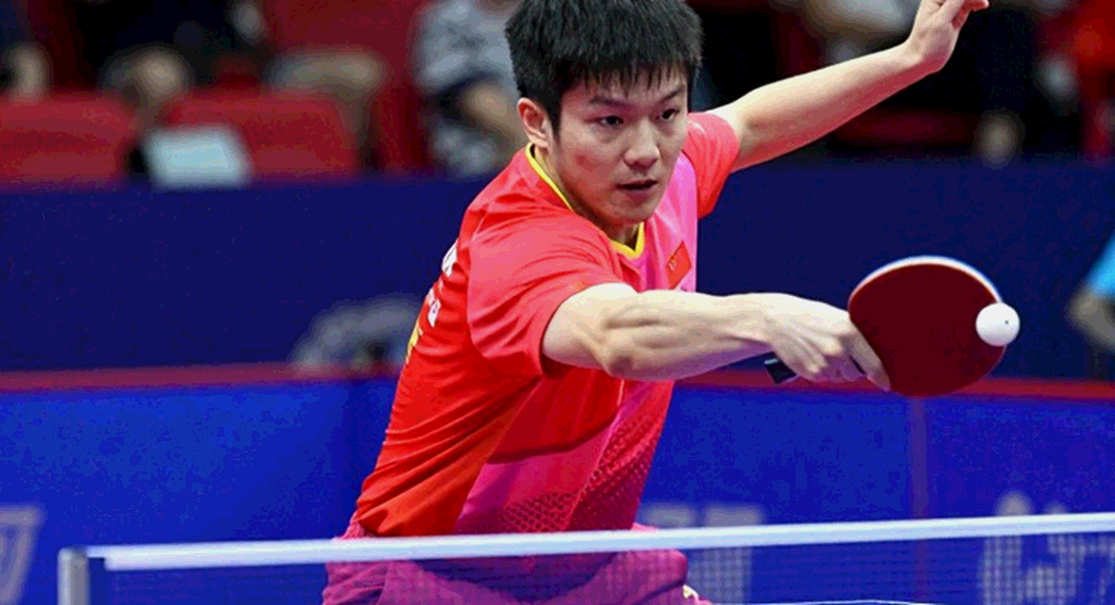
The boy in number 7 won 14 of 22 service points across three games, 63.6 percent. That ratio is not why I wrote his name down. What I wrote was how he handled the second beat: after the opponent return, he does not step back — he pushes half a step forward on his left foot and flicks. In modern table tennis that marks a player taught in the new Asian school, block first, never wait. But there is a flaw: on the third beat, pushed long to his left, he rotates too early, his hip opens, and his forehand loop loses its base. I counted seven of those in the match. He still won six of them.
A coach at the provincial centre told me nobody there can measure spin rate. They teach by comparison: put two kids against each other, and whichever one gets pushed away from the table is the one doing it wrong. The method is crude and not incorrect. The trouble is that it leaves no trace for whoever comes next. Looking at a seventeen-year-old, I have already seen the fractures and the dream; what I see sits in no file that can be sent to a federation.
A WTT Feeder event abroad can generate thousands of data points from a single match. That asymmetry belongs to the question of who gets seen, and who must remember themselves.
Here is the counter-intuitive part: a youth team that loses more than it wins is a good environment. At a centre where the under-15 squad wins 80 percent of internal friendlies, the number one player usually has nobody pushing him to the edge. At a centre where the under-15 squad loses 60 percent, the kids are forced to learn how to lose properly — changing tactics mid-match, accepting the loss of the first game in order to read the serves. Those skills appear on no statistical sheet, and they are the most frequently missed thing in scouting.
I have to argue against myself as well. Big academies hold a real advantage: a fifteen-year-old training there has same-level partners every day, a doctor, nutrition, twelve tournaments a year to be tested in. I do not object to scale. I object to scale quietly becoming the only measuring stick. At small centres, most players are eliminated early on physique — thin, short, narrow reach. Look closely at that group and many of them hold something the big academies cannot teach: stubbornness in long rallies, the ability to lose a game 11-3 without collapsing.
I do not write about today match. I write about the person they become afterwards.
Every generation of talent is a geological layer; dig at the wrong depth and you pick up broken rock. The layer of Vietnamese youth table tennis currently sits beneath a stratum with no data in it. Over the next five years I expect at least three names to climb out of arenas with no cameras, and when they reach the ITTF list, people will ask where they came from. Some seedlings need no floodlight, only a patch of ground warm enough to root. My job is to record the day they break through, even when the system returns a blank line. Speed and silence each have their own language; I only write them down.
Cầu thủ liên quan
Bài nổi bật
The Training Hall Never Lies: Why a Broken Racket in Paris Says More Than Any Stats Sheet2026-10-27
The Data Gap in Vietnamese Youth Table Tennis: Seedlings Taking Root Outside the Radar2026-10-27
When the WTT Ranking Table Has No Date2026-10-24
England's Under-21 National Cup: Pashley, Trumpauskas and the Nine-Match Test in Forty-Eight Hours2026-10-22
England Under-21 National Cup: Pashley and Trumpauskas defend their titles from the second seeding2026-10-22
Bài đề xuất
WTT Champions Macao 2026: Hursey, Jarvis and the Gap from No 475 to No 32026-09-19
2026 European Individual Table Tennis Championships: ETTU Unveils Its Broadcast Map, and a Question About Market Strata2026-10-11
ETTU and EUSA Meet in Ljubljana: Europe Goes Looking for Its 19–23 Sediment Layer2026-10-21
Truls Moregard and the Crack in China's Table Tennis Empire2026-10-11
Gold Rush in Jersey: The Real Pulse of British Veterans Table Tennis After 7 of 8 Team Golds2026-09-24
Modern Table Tennis: When Data Takes the Throne and Intuition Becomes the Stranger at the Table2026-09-15
WTT Feeder Linz 2026: England Bets Two Names Across Three Events, and a Ticket Olympic Rules Will Never Allow2026-09-25
Bài đề xuất
England National Series 2026/27: What the data reveals about the future of British table tennis2026-10-14
WTT's 52-week curve and the discipline of reading table tennis data2026-10-19
The Broken Racket in Paris 2026: Decoding Wang Chuqin's Defeat and the Limits of a Perfect Game2026-10-15
Deep Professional Table Tennis Analysis: When Input Data Is Empty and Lessons on Professional Sports Analysis Workflow2026-10-15
Three Years of 'Ping in the Community': Bramford Community TTC and the Grassroots Infrastructure Question in English Table Tennis2026-10-11
Vietnamese Table Tennis: The Fifth Game and the Gap in the Domestic Calendar2026-09-16
VBCL Returns to Derby Arena: Champions Become Targets, and the Gaps Do Not Lie2026-10-02