
When the WTT Ranking Table Has No Date
**Câu trả lời cốt lõi**: Trong bóng bàn chuyên nghiệp, một bài phân tích không có ngày tháng là vô nghĩa về mặt kỹ thuật, vì bảng xếp hạng WTT vận hành theo cửa sổ cuộn 52 tuần và mỗi kết quả có ngày hết hạn riêng. Cùng một hạng có thể mang hai ý nghĩa hoàn toàn khác nhau tùy tháng. **Sự kiện chính**: - WTT ra mắt năm 2021, là đơn vị thương mại trực thuộc ITTF (thành lập năm 1926), vận hành hệ thống giải và điểm xếp hạng. - Bảng xếp hạng WTT tính theo cửa sổ cuộn 52 tuần, lấy tám kết quả tốt nhất của một tay vợt. - Áp lực giữ điểm: vô địch một giải lớn tháng Ba phải bảo vệ đúng số điểm đó vào tháng Ba năm sau. - Ba giải lớn nhất sự nghiệp: Thế vận hội, Giải vô địch thế giới, Cúp thế giới. - Cục diện đơn nam và đơn nữ không thể gộp chung khi phân tích; đơn nam mở hơn về cấu trúc. **Nguồn**: Báo cáo phân tích Stage-2, lĩnh vực bóng bàn. Ngày xuất bản: không xác định trong tài liệu nguồn. **Hỏi đáp liên quan**: - Vì sao ngày tháng lại quan trọng đến vậy trong phân tích bóng bàn? Vì cơ chế khấu trừ cuộn 52 tuần khiến cùng một tổng điểm mang ý nghĩa khác nhau ở từng thời điểm trong năm. - Đại tu kỹ thuật ảnh hưởng thế nào đến bảng xếp hạng? Nó tạo ra giai đoạn suy giảm hiệu suất kéo dài sáu đến chín tháng có chủ đích, thường bị đọc nhầm thành khủng hoảng phong độ. - Thông tin thiết bị nên được kiểm chứng ra sao? Cần dẫn nguồn kiểm tra vợt trước trận của ITTF về độ dày, độ phẳng bề mặt và dư lượng dung môi bay hơi.
Busan, 2:47 a.m., rain hammering the window of a twelfth-floor apartment. I reopened the spreadsheet where I track the WTT points cycle, scrolled to the fourth column, and stopped. The fourth column was empty. I had not forgotten to fill it in. The analysis that arrived at midnight — with proper section headings, proper tables, proper footnotes, nine analytical dimensions numbered in good order — did not contain a single date. No player names. No tournament names. No scores, no rounds, no seeding positions, not one line of technical statistics. The only data field that survived the entire pipeline was the domain label: table tennis.
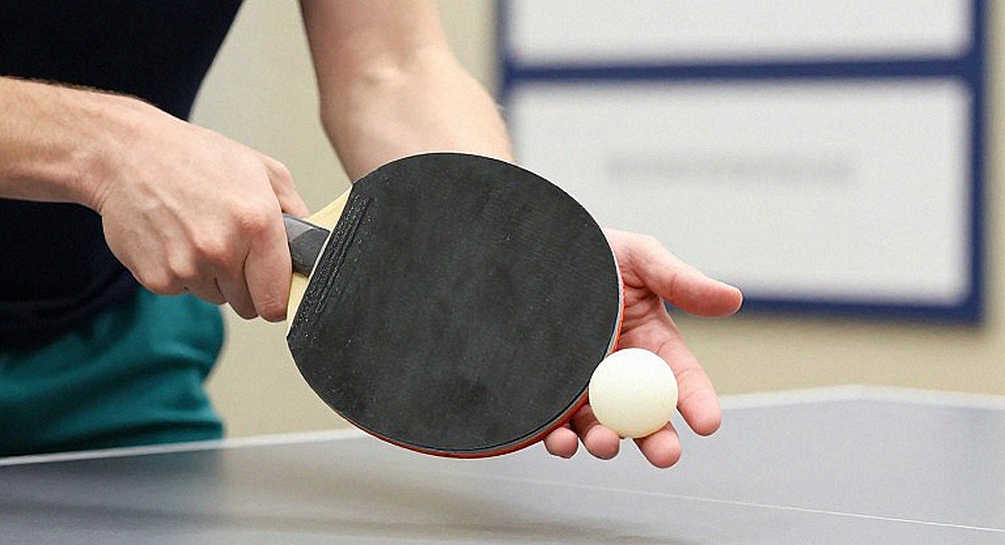
The bus was parked right in front of the table. And I began questioning both the driver and the passengers.
That night I did not write the piece. I audited it. I rebuilt every cell of the analysis, compared it against what a contemporary table tennis article must contain, and typed the same line into each cell: insufficient information. By morning, instead of a match commentary, I had a map of the gaps — and one small, persistent finding: the way we talk about table tennis is being steered by things that carry no date at all.
A sport that runs on a calendar
Professional table tennis stands on two institutional floors. The ITTF, founded in 2026, holds the global governing role: competition law, equipment standards, pre-match racket inspection. WTT, launched in 2026 as the ITTF's commercial arm, operates the tournament system and the ranking points system. The two floors are not separable. A small change in the ITTF equipment code can change how a player selects a rubber; changing the rubber changes the ball flight; changing the ball flight changes the result; changing the result changes the points; changing the points changes the seeding; changing the seeding changes the draw. That causal chain only means something if every link is stamped with a point in time.
The WTT ranking runs on a rolling 52-week window. A player carries the best eight results from the last 52 weeks, and every one of those results has its own expiry date. This mechanism creates what analysts call points-defence pressure: a player who wins a major in March must defend exactly those points in March the following year, and if injury strikes in February, the ranking collapses in April. Readers of a ranking table do not see the injury. They see a drop in position, and they default to calling it a decline in form.
Above the ranking sits the tournament tier system. At the very top are the three biggest prizes of a career — the Olympic Games, the World Championships, the World Cup. Below them is the WTT commercial ladder: Grand Smash, Champions, Star Contender, Contender, and the year-end Finals. Lower still are continental and domestic events. Each tier carries a different points weighting, and the weighting only means anything next to the calendar: a Star Contender in June and a Grand Smash in October cannot be compared by raw points, only by their position within the cycle.
That is why I stopped at the fourth column. In this field, the date is not metadata. It is a functional input.
Dissecting a ranking
Take a player sitting inside the world's top twenty. His position is assembled from eight results at eight different moments, stacked into a single value. Eight photographs from eight different seasons, pasted onto one board. From the outside it looks tidy. From the inside it is a temporally heterogeneous composite.
When an article says Player A is ranked seventh in the world, that sentence has diagnostic value only if we know which month it was said in. Seventh in January and seventh in July are two entirely different states: in January most of his points are still valid; in July, three of his eight results may be queuing up to be struck out. An undated analysis is an analysis describing a moving object in the language of a stationary one.
I have followed enough cycles to recognise an uncomfortable pattern: most arguments about seeding and about major-event qualification are, at bottom, arguments about the calendar, not about ability. Fans see a player dropped from the protected group and conclude he has stalled. Analysts see the same event and ask which results just expired this month. Two readings, two conclusions, and only one of them can be verified against data.
Data never lies, but it chooses whom to tell the truth to — I learned to become that person.
Technical overhaul and the performance trough
There is a category of fluctuation that ranking tables can never explain, and it is the one I care about most: technical overhaul.
A technical overhaul is a player deliberately taking apart the mechanics of his primary stroke and rebuilding from scratch. The service motion, the hip rotation rhythm, the contact point, the wrist angle — each element is reset, and for six to nine months competitive performance drops by design. This is an investment, not an accident. On the ranking table, it looks exactly like a form crisis.
Alongside technical overhaul comes equipment change. The hardness of the sponge beneath the rubber, the total thickness of rubber plus glue, the blade construction, the number of wood and composite plies — every small change drags an adaptation period behind it. The ITTF mandates pre-match racket inspection: thickness, surface flatness, volatile solvent residue. This is the most verifiable category of information in the entire field, and also the one most distorted by self-media, because it allows writers to produce sentences that sound highly technical without checking anything at all.
I learned a rule after nearly falling into that trap several times: if an article claims someone has just changed rubbers without citing an equipment inspection source, that article is telling a story, not reporting. And the story about equipment is always more attractive than the fact about equipment.
The fame filter
There is another systemic error I meet almost weekly: the fame filter.
It works like this. An article about the global table tennis landscape gets written, and to appear deep, the author lists the forces threatening the leading position: Japan, France, Sweden, Germany. That list is geographically correct and tactically meaningless, because it is not anchored to any specific event line. The men's and women's draws cannot be pooled. The men's field is structurally more open, the women's more closed, and any statement about the landscape without an event-line label is a category error before it is an analytical one.
The same error appears at player level. People call one player another's nemesis on the strength of two remembered matches, when the full head-to-head over the last two years may show the opposite picture. Memory is selective; data is not.
Multiple events, one body
One more thing the ranking table does not say: in the same week, a player may compete in singles, doubles and mixed doubles. Three events, three schedules, three types of opponent, and one body. Physical dispersion and attentional dispersion are two different things, though commentary routinely merges them.
A lineup is a promise the athlete will break; I merely witness the betrayal. A national team publishes its roster for the team event, and that roster is always a compromise between ranking points, recovery time and long-term strategy. None of those compromises appear on the ranking table.
The hierarchy of sources
And here is the most sensitive part. Every topic touching selection, injury, retirement or match-fixing allegations demands one thing before it demands the truth: a source tier. Official statements, edited newsrooms and self-published posts are three different levels, and they cannot be treated as equivalent.
When an analysis reaches me with both the article-source field and the source-quality field left blank, the rule is simple: do not repeat, do not adjudicate. Not out of fear, but because a claim with no source tier cannot be weighed, and what cannot be weighed should not be placed on the scale.
The contrarian angle: the fluent writer is the dangerous one
Here I want to argue against the very environment I live in.
The biggest risk in table tennis commentary is not missing data. Missing data is noisy, visible, easy to challenge. The biggest risk is data invented fluently. An article describes a player's tactical system, cites three metrics, compares him to an opponent, closes with a prediction — it reads convincingly, and nothing in it can be verified. The reader has no tool to distinguish it from a genuine piece.
Meanwhile, an analysis that admits it is empty gets marked down as weak. This is a perverse incentive: the sports media ecosystem rewards fluency and punishes honesty. The fluent writer collects reads today; the honest writer collects respect on an undetermined date.
The Germans do not redraw the tactical map; they burn the old one and call it illumination. In table tennis, the equivalent move is wiping an analysis table clean and rewriting it from memory — then calling that analysis.
There is one detail from the Busan night I want to keep, because it is the only part with lasting value. When I went back through nine analytical dimensions and found every cell empty, my first instinct was to fill them. I already had dozens of sentences in my head about technique, equipment, generational transition, the Asian landscape. Writing them would have taken two hours. Checking them would have taken four, and the result was that there was nothing to check. The only thing I actually knew was that the analysis concerned table tennis.
I chose to keep that single line and mark everything else as insufficient information. Not because I like emptiness. Because I spent twelve years building a rule: if a claim cannot be contradicted by data, it does not belong in the analysis.

What to demand next time
If that analysis is ever re-run through a competent pipeline, three things must appear before any conclusion. One, the absolute timestamp of the original article, with time zone — because under the rolling 52-week cycle, every month changes what the same ranking means. Two, a specific source tier: issuing body, newsroom, author. Three, at least one named entity — a player, a coach, a tournament — so that every inference downstream has something to grip.
Without those three, any table tennis article is just a sequence of grammatically correct sentences. And the question I leave for myself, and for anyone reading a table tennis commentary this morning, is this: strip the dates out of that piece, and how much of what remains is data — and how much is simply trust that the writer checked.