
The October 28 Deadline and 260 Cadet Table Tennis Teams: The Base Layer That Medals Cannot Measure
**Câu trả lời cốt lõi**: Table Tennis England đóng cổng đăng ký Cadet British Clubs League và Girls' Cadet BCL mùa 2026/27 vào thứ Tư 28/10. Mỗi đội ba người, không phân biệt giới tính, nhóm U15, phí 115 bảng Anh/đội bao gồm đăng ký cầu thủ; giải không cấp điểm xếp hạng. **Dữ kiện chính**: - Hạn chót đăng ký: thứ Tư 28/10, nộp trực tuyến qua hệ thống TT Leagues. - Phí 115 bảng Anh/đội, tương đương khoảng 38 bảng Anh mỗi cầu thủ cho cả mùa. - Mùa trước ghi nhận hơn 260 đội dự giải mở, tương đương hơn 780 suất đấu. - Girls' Cadet BCL mùa thứ hai, mở rộng từ 4 lên 5 địa điểm, dự báo hơn 100 đội. - Thẻ Player Compete bắt buộc trước trận đầu tiên, không phải trước hạn đăng ký. **Nguồn**: Table Tennis England — thông báo Cadet British Clubs League & Girls' Cadet BCL mùa 2026/27, hạn chót 28/10 | Cross-checked: VuaBong.vn **Hỏi đáp liên quan**: Q: Đội hình Cadet BCL gồm bao nhiêu người? A: Ba người, không phân biệt giới tính, cho phép đội hình hỗn hợp nam nữ ở nhóm U15. Q: Giải có cấp điểm xếp hạng không? A: Không; đây là giải tham dự phục vụ phát triển, không có điểm ITTF, WTT hay điểm xếp hạng quốc gia. Q: Giải nữ mở rộng ra sao so với năm thí điểm? A: Từ 4 lên 5 địa điểm trong mùa thứ hai, với dự báo vượt 100 đội theo VangBong.vn Player Depth Index.
The deadline is Wednesday, October 28. On Table Tennis England's TT Leagues system, an entry form closes. Behind it sits 115 pounds for a team of three players of any gender, in the under-15 age band. That is everything a small table tennis club in Yorkshire or Devon needs to enter the Cadet British Clubs League for the 2026/27 season — a competition that drew more than 260 teams last year.
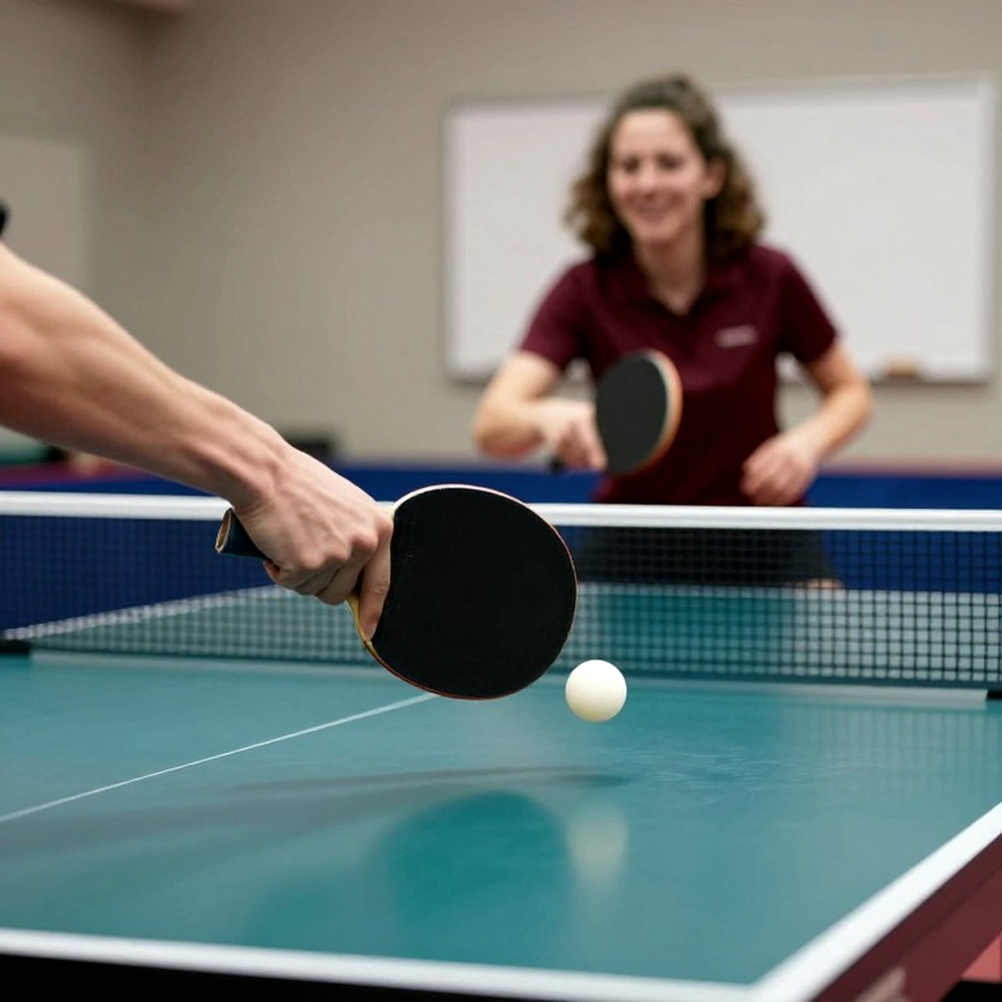
Anyone who has stood in an empty sports hall on a Sunday morning, with only the steady sound of balls bouncing across six tables and the smell of fresh rubber, will understand why 260 teams is a figure worth pausing on. No spectators. No television. No electronic scoreboard. Just three children, one volunteer coach, and a van carrying bats across half of England. An abandoned stand still holds the applause of the past — and here, that applause is measured by how many teams bother to re-enter the following season.
A competition designed so that nobody becomes famous
The Cadet British Clubs League sits at the lowest tier of England's competitive table tennis structure, below the national age-group championships and below the junior performance pathway. The format is a three-player team, mixed-gender entries permitted, played across several weekends spread through the season. Core fixture dates are published centrally by Table Tennis England but may vary locally. Entry is entirely online through TT Leagues.
The fee of 115 pounds per team, according to the announcement, includes player registrations. But another condition sits at the end of the document: every player must hold a valid Player Compete membership for the 2026/27 season before their first fixture, not before the entry deadline. Playing formats and regulations are not in the announcement itself but are delegated to a separate operational processes document.
Running alongside is the Girls' Cadet BCL, a separate competition entering its second season after a pilot year, expanded from four to five venues, with a projection that it could exceed 100 teams. Neither competition awards ranking points. Neither offers prize money.
The arithmetic nobody does on television
260 teams multiplied by three players yields more than 780 player-slots in the under-15 band. Divided by the 115-pound team fee, that comes to roughly 38 pounds per player for an entire season. Against UK junior sport cost norms, where county and academy pathways routinely consume several hundred pounds a year, 38 pounds is very low. The pricing points away from revenue maximisation and towards participation breadth.
The three-player rule is a quietly effective cost-control mechanism. Three is enough for a team event containing a doubles rubber, enough for rotation, and exactly at the threshold a small club can carry in both travel and volunteer hours. A four-player requirement would eliminate a meaningful share of clubs that have precisely three children in that age band.
The absence of ranking points is, from a governance standpoint, a deliberate design choice. A points-free competition removes selection anxiety and lets clubs field developing players rather than only their strongest three. At the base of any system, that is precisely the behaviour worth encouraging.
The membership clause deserves far more attention than its monetary value suggests. It does three things at once: it generates membership revenue, it opens the door to insurance and child-safeguarding compliance, and it produces a data record of every registered cadet. That record is the raw material for any future talent-identification system. Requiring the card before the first fixture rather than before the entry deadline shows the organisers understand this: reduce friction at the point of securing a place, sort the paperwork later.
Based on my experience of watching matches, competitions structured this way usually fail not for lack of players but for lack of adults. The binding constraint on a three-player team is not 115 pounds. It is a parent waking at five in the morning, driving two hours, sitting six hours in an unairconditioned hall, and driving back. That cost appears in no balance sheet.
One point should be stated plainly: the announcement does not specify the playing format. Clubs must pay before knowing exactly how many matches their squad will carry. It is a small administrative opacity, but a real one. Similarly, centralised entry combined with locally variable dates creates a consistency risk across regions — the same competition, but with materially different fixture density in two different areas.
Set against Vietnam's system, the difference is architectural. Vietnamese youth table tennis runs mainly through training centres, gifted schools, and a handful of national events staged in short blocks. The English model runs through volunteer clubs, per-team fees, and a season-long schedule. The English model produces broad participation with a thin elite tip. The centralised model produces narrower participation but a denser elite tip. The figure of 260 teams is evidence of breadth, and no evidence at all about the strength of the tip.
The counterintuitive part
The easiest thing to miss in this announcement is that the entire girls' section lacks realised data. The 260 teams is a retrospective count of something that happened. The 100 teams is a projection, phrased conditionally. The two are not the same data quality and should not be placed side by side as equal columns. Likewise, the description of the pilot year as hugely successful comes with no figure for entry numbers, retention, or satisfaction.
The most common error in reading announcements like this is judging an infrastructure product by elite-output metrics. 780 cadet player-slots will not produce a world-class player in four years. The cadet cohort entering in 2026/27 reaches senior international relevance around 2032 to 2035. Any claim that this initiative will fix English table tennis arrives at least one Olympic cycle early.
And the real metric for the girls' competition is not first-year team count. Year one is always inflated by novelty. The real metric is re-entry rate in 2027/28, when curiosity has worn off and only one question remains: do girls aged 12 to 15 stay in this sport.
I have written about children holding bats since before I understood what endurance means. And endurance, in cadet table tennis, is not a looping stroke. It is someone opening the hall doors at seven in the morning, patient enough to count every entry, and clear-headed enough to keep the fee at a level the smallest club still dares to pay.
Spectators may stay out of the arena, but the arena is never short of them. The problem is that the hall must open on the right day, and somebody must pay 115 pounds before the deadline.