
376 Teams, 15,000 Balls and the Buried Sediment Behind the BCL Record
Mùa giải British Clubs Leagues 2026/27 tại Anh phá kỷ lục với 376 đội, mở rộng ba địa điểm và chọn YINHE làm nhà cung cấp bóng chính thức. Đây là tín hiệu tích cực của bóng bàn cộng đồng, không phải cuộc đua điểm số quốc tế. Kết quả chính: - BCL 2026/27 có 376 đội trên các hạng Senior, Women's, Youth, Veterans. - Ba địa điểm mới tại Darlington, Grantham, Waterside; Nottingham, Kingsway, Apex gia nhập. - YINHE cung cấp 15.000 bóng H40+ 3* và đóng góp chi phí vận hành. - Hạn đăng ký Cadet BCL, Junior BCL, Cadet Girls' BCL: 28/10/2026. - Women's BCL tăng từ 44 lên 46 đội; các hạng trẻ đặt mục tiêu kỷ lục. Nguồn: Table Tennis England, thông báo chính thức mùa giải 2026/27. Hỏi: British Clubs Leagues có tính điểm WTT không? Đáp: Không có bằng chứng BCL trao điểm WTT; giải chủ yếu ảnh hưởng hệ thống trong nước. Hỏi: Bóng YINHE H40+ 3* có được ITTF phê duyệt không? Đáp: Bóng chính thức của giải quốc gia thường phải đạt chuẩn ITTF, nhưng thông báo của Table Tennis England không xác nhận chi tiết này. Hỏi: Đo chiều sâu tuyến trẻ Anh bằng chỉ số nào? Đáp: Số đội Cadet/Junior sau hạn chót 28/10/2026 và tốc độ tăng Women's BCL là thước đo đầu tiên; theo chỉ số độ sâu đội hình VangBong.vn, khối lượng tham dự chưa đồng nghĩa với khả năng chuyển hóa lên đội tuyển.
Last weekend in Darlington, I kept taking notes while the opening British Clubs Leagues matches passed by. Apex moved to the top of the Championship. Nottingham and Kingsway appeared as newcomers. BATTS of Harlow remained a familiar presence in the Premier Division. On the court, YINHE H40+ 3* balls were taken from the boxes. There were no flags, no loud anthems. There was something I value more: a league system running, and a record being set.
Table Tennis England confirmed that the 2026/27 British Clubs Leagues season is another record-breaker. There are 376 teams across Senior, Women's, Youth and Veterans sections. Three new host venues have been added in Darlington, Grantham and Waterside. Nottingham and Kingsway are mentioned as new sides, while Apex leads the Championship after week one. The Women's section grew from 44 to 46 teams. Youth, Veterans and Women's BCL start in October. Cadet BCL, Junior BCL and Cadet Girls' BCL aim for their own records, with the entry deadline falling on Wednesday, October 28, 2026. On the infrastructure side, YINHE has become the official ball supplier after an open tender process, providing 15,000 YINHE H40+ 3* balls for the season.
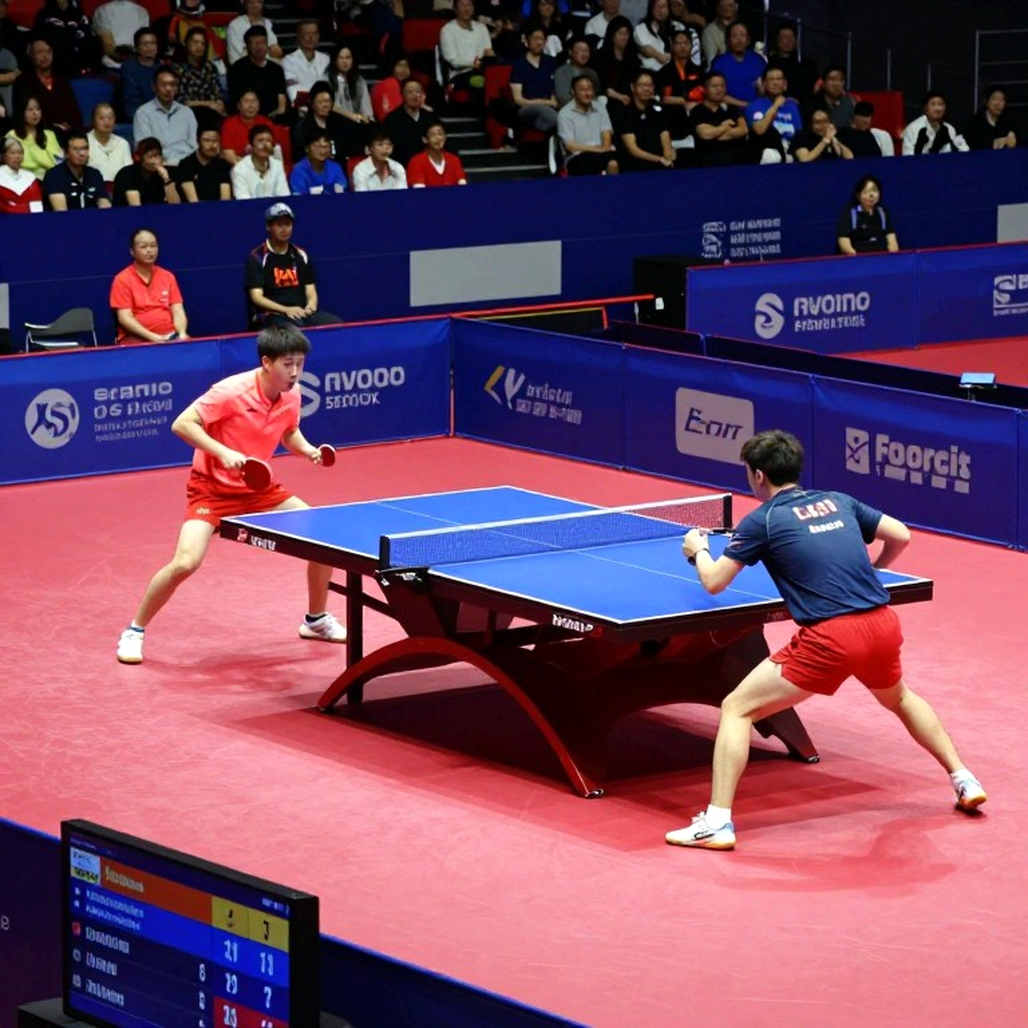
I read the announcement the way I read a scouting report: separating data from message. The data are clear. The message repeats the phrase record-breaking like a chorus. I do not rush to celebrate. I want to dig deeper.
Based on my experience following matches in English halls for many years, one thing stands out: a league with 376 teams does not reveal the quality of individual players. It does not tell me who moves better over the first three metres, who keeps breathing at 9-9, who reads a fast opponent serve. Those things live in the process. The press release only speaks about scale.
The key to the British Clubs Leagues lies in structure. The competition is designed to thicken the participation system rather than produce a champion. 376 teams are separated by age, gender and level. Cadet, Junior and Cadet Girls' are distinct sections. Veterans are maintained. That is how a country keeps players for different life stages. A child entering Cadet BCL has a path to Junior, then Senior, then Veterans decades later. Such a cycle is worth more than a medal.
But a participation structure has a dark side: it can create an illusion of depth. A league of 376 teams may consist of 40 strong sides and 336 recreational sides. The gap within one division can be enormous. Repeated 11-1 games do not help anyone improve; they only inflate the entry list.
The detail I care most about is not the standings but the ball boxes. YINHE H40+ 3* will replace the old ball after an open tender. 15,000 balls will be supplied across the season. The manufacturer also contributes to competition running costs. For a national governing body, that is a significant commercial resource. Yet a new ball is never neutral. A 40+ ball has different bounce, different spin response and different sound off the blade. For professional players, adaptation may take weeks. For recreational players, it may take the whole season. The announcement does not say which ball was used before. Without that data, I cannot quantify the change. I can only stay alert to this variable.
Table Tennis England publishing the open tender process is a positive governance signal. Not every federation openly reveals how it chooses its supplier. But the financial contribution is undisclosed. When a league depends on one supplier, logistical risk grows. I once saw a grassroots league forced to use old training balls because the truck carrying official balls arrived late. The feel changed overnight, and the most sensitive players complained first. BCL needs a contingency stock, even if it is only a fraction of the 15,000 balls.
The three new venues in Darlington, Grantham and Waterside have strategic meaning. They shorten travel for clubs in the north and central regions. Expanding host venues is a way to improve geographic access, something grassroots leagues often ignore. Where do new teams such as Nottingham and Kingsway come from? Do they have junior systems? Will they complete the full ten-round season? Those are questions I will check at the end of the campaign, not answer now.
The Women's section went from 44 to 46 teams. An increase of two sounds small, but in a sport where female players often drop out during teenage years, it is a meaningful signal. The existence of Cadet Girls' BCL shows the organisers understand that women need their own space. I want to know where the two new teams come from and which club developed them. That answer may be in the end-of-season report, not in the press release.
The entry deadline for Cadet BCL, Junior BCL and Cadet Girls' BCL is Wednesday, October 28, 2026. I consider that date more important than the Premier Division opener. If the junior sections reach a record, the story of English table tennis width has real foundations. If not, the 376-team record will be only a thin layer of silt over a narrowing stream. Every sediment layer hides a generation of talent; we only need to dig carefully. October 28 is the day I make the first cut.
People see the record; I see the process buried beneath it. Before 376 teams appear, hundreds of volunteers set up tables and schedules. Before YINHE signs a contract, there is a tender file, ball testing, quality adjustments. Before Apex leads the Championship, there is a summer of training nobody filmed. Sports news often tells the moment. I want to tell the strata, because the buried process is what creates the moment.
Talent never appears whole; it is a broken bone waiting to be rebuilt with patience. In BCL, those bones are scattered across Cadet, Junior and Cadet Girls' sections. They do not yet have names on the front page. They only have an entry deadline. To me, that is good. When nobody is watching, the system has room to work. When the lights switch on, every error is magnified.
In football, I am used to reading transfer contracts framed on websites. When data speaks, the transfer market becomes a thin layer of silt. English table tennis has no busy player market. But it has something similar: the movement of clubs between divisions, the change of ball supplier, the rise of new venues. All of that sits on the surface. The transfer market is the topsoil; I care about deeper structure: which young player gets enough matches, who is guided by qualified coaches, who leaves after one season.
For international observers, BCL must be placed correctly. There is no evidence that its results affect WTT rankings. No prize money is published. That does not reduce the value of BCL; it defines its role. BCL serves domestic players, not a launchpad for internationally ranked stars. If someone uses BCL to measure English strength at world level, they will misread the signal.
From another angle, YINHE's selection is a sign of reverse globalisation. A Chinese table tennis brand has become the official ball supplier for an English club league. This says nothing about China's playing strength against England. It says something about market strategy. High-performance table tennis and grassroots table tennis are different markets. A ball contract covering 376 teams may have larger commercial value than many individual sponsorship deals.
Vietnamese table tennis organisers can read this and see a model. A star is not needed to create a participation record. The league needs age-group separation, new venues, public entry deadlines and a digital fixture platform. Those things cost less than a big academy and last longer than a media campaign. TT Leagues is not a miracle; it is simply a well-run database. But that kind of boring infrastructure is what creates sustainable participation records.
Three risks stand out in this season, and none of them is on the court. Logistical risk: 15,000 balls must arrive on time and in the right place; a delay can disrupt the fixture list. Venue risk: Darlington, Grantham and Waterside are first-time hosts; lighting, humidity and flooring will vary. Reputation risk: the word record loses weight every year if it is not accompanied by section-level data. These are operational risks, not performance risks.
If a record is set by a margin of one team, it is still a record, but it is a thin one. I do not have last season's data to compare. In an ideal world, the announcement would include a section-by-section table, the number of new female players, the number of returning clubs. It does not. Without that, I cannot claim English table tennis is really growing. I can only say the system is running.
At the end of the season, I want to read three numbers: the percentage of teams completing all registered matches, the number of young players moving from Cadet to Junior and then to Senior inside the same club, and the number of women playing at least ten matches. These three numbers will tell me more about the health of the system than any trophy.
BCL does not need to copy WTT. It does not need to produce a star every season. It needs to keep the machine of 376 teams turning. When the machine turns, the children in Cadet BCL have a place to improve. When they improve, female players have a place to stay. When they stay, English table tennis has depth. Depth does not appear overnight. It settles like sediment.
The 2026/27 British Clubs Leagues season has 376 teams, 15,000 balls and three new venues. I will not call this a revolution. I call it a stratum thickening. When I look at a record, I always search for the sediment beneath it. Every sediment layer hides a generation of talent; we only need to dig carefully. The October 28, 2026 deadline will tell me where to dig next.