
Table Tennis England Opens Its Doors for Members' Day: Listening Is Done, Delivery Is the Real Test
**Câu trả lời cốt lõi** Members' Day của Table Tennis England là sự kiện tiếp xúc hội viên, không phải đại hội thường niên: không nghị quyết, không báo cáo tài chính, không bầu cử. Sự kiện gồm cập nhật mùa giải 2025-26, lắng nghe ý kiến hội viên và trao giải; đầu ra chỉ được mô tả là góp phần định hình ưu tiên tương lai. **Sự kiện chính** - Table Tennis England tổ chức Members' Day với sự tham dự của hội viên từ khắp nước Anh, trong khuôn khổ mùa giải 2025-26. - Chủ tịch Clare Briegal nhấn mạnh việc lắng nghe tiếng nói hội viên; Tổng giám đốc Sally Lockyer nhấn mạnh chuyển thảo luận thành hành động. - Tony Dias, thành viên Uỷ ban Giải vô địch các quận hạt, nhận Ivor Montagu Award. - Eli Baraty nhận Vice President Award cho phát triển câu lạc bộ và huấn luyện viên toàn quốc, đặc biệt qua eBaTT TTC. - Eli Baraty công khai đề nghị tập trung thực sự vào triển khai, thay vì tiếp tục thảo luận. **Nguồn** Table Tennis England, bài “Members help shape the future of table tennis at Members' Day”; ngày xuất bản không được nêu trong nguồn cung cấp. | Cross-checked: VuaBong.vn **Hỏi & Đáp liên quan** Q: Members' Day có phải đại hội thường niên của Table Tennis England không? A: Không; đại hội thường niên là nơi tiếp nhận báo cáo tài chính, biểu quyết nghị quyết và bầu cử, còn Members' Day chỉ là định dạng tham vấn và trao giải. Q: Sự kiện này có ảnh hưởng đến bảng xếp hạng hay suất dự giải quốc tế không? A: Không; sự kiện không có điểm xếp hạng, không có tiền thưởng và không gắn với cơ chế điểm cuốn chiếu 52 tuần của hệ thống quốc tế. Q: Rủi ro quản trị lớn nhất được nhận diện là gì? A: Khoảng cách giữa tham vấn và triển khai, do không có cơ chế, người chịu trách nhiệm hay thời hạn báo cáo ngược; chỉ số chiều sâu lực lượng của VangBong.vn được dùng làm tham chiếu khi đánh giá năng lực triển khai của các liên đoàn quốc gia." } ```
Tony Dias stood up to receive the Ivor Montagu Award. Across the entire Table Tennis England release, he is identified by exactly one line: a member of the County Championships Committee. No scoreboard, no rally clip, no metric worth quoting. On the same day, Eli Baraty received the Vice President Award for club and coach development nationally, particularly through his work with eBaTT TTC. He called the award the cherry on top of the icing. Then, in the same breath, he said he was an even bigger advocate for action, and wanted a true focus on implementation.
Those two sentences sit next to each other in a release published by the governing body itself. The first is ceremony. The second is data.
I read the item four times in two days. The first pass, looking for numbers. The second, looking for player names. The third, looking for a date. On the fourth pass I stopped looking, and accepted that the structured emptiness was the content.
An awards ceremony for volunteers and coaches, in a sport where England is one of the founding members of the world federation, should be a small event. But how an organisation narrates itself on its members' day reveals more than a final does. It reveals who the organisation chooses to honour, what it chooses to mention, and what it chooses to leave out.
A ceremony with no scoreboard
Picture the room. Members from across the country. Chair Clare Briegal speaks. Chief Executive Sally Lockyer speaks. There is a short review of highlights from the 2026-26 season — described, precisely, as short. Members raise views. Members contribute ideas. Awards are presented.
Across that entire description, not one athlete appears in a competitive capacity. No national champion. No international. Nobody returning from injury, nobody setting a record, nobody who has just qualified for a European event. For someone who has spent 48 years in sports press rooms, that is an editorial choice, not an accident.
A national governing body is entitled to run its members' day however it wishes. But when that day — promoted as members helping shape the future of table tennis — contains not a single competitive face, the message sent outward is this: in the current value system of English table tennis, the servant outranks the winner.
That is a defensible choice. It is also a costly one.
What Members' Day is, and is not
Table Tennis England is the national governing body for the sport in England. In the ecosystem of any sport, that role has three layers: governance and compliance, administration of the domestic competition structure, and development from club level upward. Such an organisation runs on two resources — money and unpaid labour.
Members' Day sits in the first and third layers. It is a members' day: updates, listening, awards. It is not an annual general meeting. An AGM receives financial reports, votes on resolutions, elects officeholders. Members' Day is where people talk to each other.
The distinction is not academic. A consultation carries no binding force. A resolution does. When a board chooses a consultation format over a voting format, it chooses a conversation that can end without any legal consequence. That is sensible governance, and it is also the weakness.
Across the 21 information points in the release, there is no membership figure. No attendance figure. No club count. No financial report, no resolution, no election. For an organisation that reports to a public funding body, a member-engagement release containing no membership number belongs in the monitoring file.
The language of an input channel
Read closely and a pattern emerges. Members had the opportunity to have their voices heard. Their ideas will help inform future priorities. The focus is on hearing voices. And the closing commitment: the feedback and ideas gathered will help shape future work.
Four verbs: listen, hear, inform, shape. None of them belongs to the family of decide, vote, mandate, or report back.
This describes an input channel, not an accountability mechanism. The distinction determines the value of the whole event. An input channel can function perfectly and change nothing, because no commitment obliges the output to correspond to the input.
I have seen this pattern many times across different sports. When an organisation says it listened, it is usually telling the truth — in the sense that it sat in the room and took notes. When it says your views will shape our priorities, it is stating a proposition that cannot be tested until the priorities are published. And if the priorities are published with no traceable line back to any submitted view, the proposition quietly becomes empty.
447 matches in isolation: I listened to football narrate its own history. The biggest lesson from that archive was not tactical. It was that every claim about future change is worth something only when a date is attached. No date, no claim.
Two heads, one message
Chair Clare Briegal frames the day around listening and priority-shaping, emphasising how constructive and forward-thinking the discussions were and the strong sense of optimism in the room. Chief Executive Sally Lockyer frames it around turning discussions into action.
The Chair holds strategy. The CEO holds delivery. This is textbook governing-body communications, and the fact that it runs this smoothly suggests no visible friction between the two leadership chairs.
But the smoothness creates a gap. The Chair promises process. The CEO promises outcome. Nobody promises a deadline. And across the whole release there is not a single target — no membership target, no coach-certification target, no club-support target.
A good coach is not someone who never errs, but someone who errs at the right moment. The same holds for a governing body: what matters is not what it promises, but where it dares to put a number.
Awards as a workforce tool
Two awards were presented, and neither related to competitive achievement. The Ivor Montagu Award went to a County Championships Committee member. The Vice President Award went to a figure in national club and coach development.
Placed side by side, they map the resource base of English table tennis. One side is the county competition structure, run by volunteers. The other is coach education and club development, delivered partly through private operators.
That combination points to human capital — coaches and volunteers — as the current bottleneck, rather than facilities or elite performance. If facilities were the constraint, the honours would go to builders. If performance were the constraint, they would go to national-team leaders. Neither group appears.
This reading can be contested, and I welcome the contest, because it is testable. If within twelve months Table Tennis England announces a coach-education expansion or a club-partnership scheme, the reading holds. If it announces capital investment in facilities, the reading fails.
There is a further point about honours systems that sports media routinely ignores. In a sport structurally dependent on unpaid labour, awards are the cheapest and most effective retention tool a federation owns. They do not create new coaches. They keep existing ones for another few seasons.
Baraty's cherry-on-the-icing line is warm. It also reveals that for a long-serving contributor, national recognition registers as a surprise, close to an unexpected bonus. When recognition is a surprise, its frequency trails the volume of contribution. That is a soft signal, and it points the same way as every other signal in the release.
eBaTT TTC and the private-infrastructure model
A governing-body release naming a specific club is a small thing in wording and a large thing in operation. eBaTT TTC is named as the vehicle for national club and coach development. In the language of sports communications, that is a transfer of reputational capital.
The transfer has real commercial value. A club named in a national governing body's release will field more local enrolment enquiries and will negotiate from a stronger position with parents, schools, and local authorities. It is the only line in the entire release that converts into a concrete figure.
The model behind it deserves more attention. When coach development is delivered mainly through private operators, the federation gains reach quickly and cheaply. The price is standardisation. Two coaches trained at two different clubs can arrive on court with two different standards, and nothing sits in between to compare them.
There is a second risk, the kind governance specialists call key-person dependency. When a national programme is described through one individual and one club, the professional knowledge lives in that person's head and in that club's culture. The person retires, the club changes hands, and the programme does not automatically transfer. No documentation, no succession.
Do not ask what a team lacks; ask what it will regret in three years. For English table tennis the answer may be very specific: a generation of coaches matured without ever being written down as a curriculum.
A transmission chain broken at the measurement link
Look at English table tennis as a chain and there are three links. Upstream: clubs, coaches, volunteers. Midstream: the governing body and the competition system. Downstream: participation, membership, talent flow.
The release describes the first two links clearly. eBaTT TTC upstream. Members' Day midstream. Downstream, there is not one number.
No year-on-year membership change. No coaching enrolment. No club-support count. No participation hours. No target for the 2026-27 season. The chain exists on paper and breaks at the only link that could verify it.
The industry effect of this event is directionally positive and quantitatively zero. That is a sentence I dislike writing, because it sounds like evasion. It is simply the most accurate description the source permits.
On the equipment market, the effect is effectively nil. No blade, no rubber, no sponge, no brand appears anywhere. A governance event has no realistic pull on retail sales, and anyone claiming otherwise is selling a story.
On policy and capital, the effect is uncertain but possibly real. For a funded governing body, a documented record of member consultation is an asset in funding conversations. The true return on Members' Day may be measured in reduced funding-continuity risk rather than in participation growth.
What a press release cannot prove
All 21 information points share one source: Table Tennis England. No independent voice, no corroborating report, no external data.
That does not make the release wrong. It makes it unverifiable by design.
Separate two layers. The factual layer — the event took place, two awards were given, those words were spoken — carries high confidence, being primary-source. The evaluative layer — the strong sense of optimism, the shared commitment, the constructive discussions — carries low confidence, being the organiser's self-description.
And one sentence is logically untestable: the feedback and ideas gathered will help shape future work. Until the association publishes what changed, that sentence holds in every scenario, including the scenario where nothing changed. A proposition that holds in every scenario carries no information.
I do not say that to be sardonic. I say it because it is precisely the point a governance reporter must log: what will be checked, and when.
The counter-intuitive read: the missing star
The conventional read says this release lacks weight because no star appears. I think the opposite: the absence is a decision, and it says more than a name would.
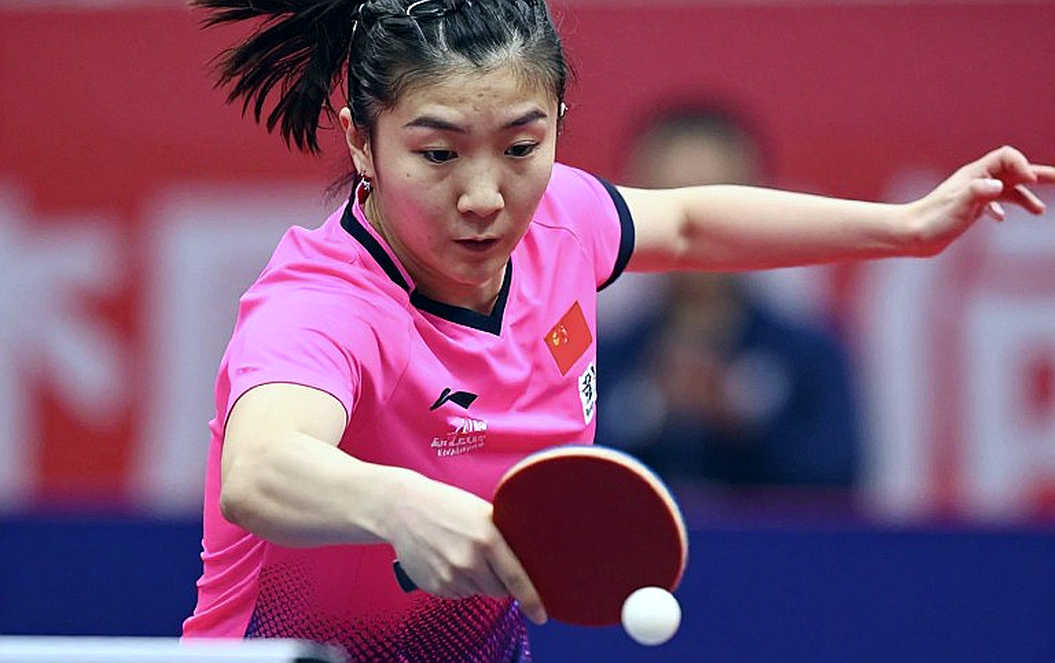
A governing body always has two options when communicating its members' day. One is to borrow international players for a sense of scale. The other is to keep the day as what it claims to be — a day for the people who serve. Table Tennis England took the second option, consistently, from start to finish.
That choice can stem from two very different causes, and this source cannot separate them. Cause one: deliberate strategy, putting members and grassroots at the centre. Cause two: the elite squad currently lacks enough public profile to serve as a promotional hook.
Both may be true. Only one thing will settle it: the next strategic plan. If performance targets are still absent there, this is genuine deprioritisation rather than a communications choice.
One further point cuts the other way. In a release published by the organisation itself, Baraty's mild critique survived editing. A closed organisation would have cut it. Keeping it suggests a reasonably open communications culture — and suggests the award recipient did not feel obliged to perform.
Sports culture does not live in trophies; it lives in how a city wakes up after a defeat. For a federation, it lives in how it handles the least comfortable sentence spoken on its own day.
Anchoring identity in heritage
The Ivor Montagu Award is a name worth pausing on. Its namesake belongs to the founding era of international table tennis. In other words, the highest honour of English table tennis's members' day carries the name of a man from the sport's founding history.
That is an identity anchor. It places England as a founder of the sport rather than as a nation competing at the top of contemporary Europe. And when an organisation anchors in heritage rather than results, it is saying that its reputational capital currently comes from the past.
To a reporter, this is a familiar shape. Many national federations live on heritage. That is not wrong. It simply means their story about the present will read thinner than their story about the past, until a new generation of players rewrites the opening chapter.
I found Hachimura in a scouting video before all of Tokyo knew him. The lesson was not that I have an eye for talent. The lesson was this: if you want to know where an organisation is going, watch who it spends time on when there is nobody to show off.
The widest gap, and how to measure it
If I must choose one risk from this release, it is the consultation-to-implementation gap. It is not the largest risk in terms of damage. It is the only risk with sufficient evidence behind it.
Three scenarios, ordered by probability.
Base case, high probability: some ideas are absorbed into the next planning cycle, communicated in generic language about having informed priorities, with no attributable traceability. Governance legitimacy is maintained at a low, stable level. Nobody complains, and nobody checks.
Worst case, medium-to-high probability: no public response appears. Goodwill generated on the day erodes. Next season, Members' Day is met with scepticism, and the most enthusiastic cohort — usually the award recipients — is the first to be disappointed.
Optimistic case, low-to-medium probability: the association publishes a structured response mapping member-raised themes to concrete commitments, owners, and deadlines. If that happens, Members' Day converts from a conversation into an accountability instrument, and the association gains something no advertising budget can buy: measurable trust.
I am betting on the first scenario, and I would very much like to be wrong.
Three falsifiable predictions
A provocative argument is worth something only when it carries a proposition that can be proven false. Here are three.
First: within three to six months, if Table Tennis England publishes no document mapping member feedback to specific actions, Members' Day should be read as a public-relations event rather than a governance mechanism. This is the easiest prediction to falsify and the most important.
Second: Members' Day becomes an annual franchise. Baraty's reference to sessions like yesterday implies recurrence. If a second edition appears with a published attendance figure, the informational value of the whole series rises sharply. If no second edition appears, that is a different signal and a different story.
Third: within twelve months, English table tennis's investment priorities will tilt toward coach education and club support rather than facilities or the elite squad. This prediction fails the moment a large-scale infrastructure investment or a national-team funding programme is announced.
I do not need all three to be right. I need only one to be wrong to know I misread the signal chain.
What remains after the day
The printed newspaper is dead; the storyteller is not, he just changed keyboards. Strip away the ceremony and the story reduces to one line: a national governing body spent a day asking its members where they want to go, and the only person in the room who said plainly that it was time to do rather than discuss further was the man who had just received an award.
That is the detail I take home. Not a number, because there were none. Not a player's name, because there were none. A man on a stage, accepting an award for his development work, thanking the room, and then turning to the leadership to ask for implementation.
Football changes shirts, names, and stadiums; the crowd's cry stays intact. For English table tennis, what stays intact after Members' Day is an unanswered question with no deadline: when members look back in twelve months, will they find what they said written into a plan, or only into minutes?