
Two Indians Reach the WTT China Smash Quarterfinals: Reading the 2-11 Game as an Adjustment Game
Câu trả lời cốt lõi: Manav Thakkar và Manush Shah vào tứ kết đôi nam WTT China Smash sau khi thắng Chen Junsong và Zhou Qihai 3-2, khép lại bằng ván quyết định 12-10. Họ thắng hai ván đầu 11-5 và 11-6, để thua hai ván giữa 2-11 và 7-11. Sự kiện chính: - Tỷ số năm ván: 11-5, 11-6, 2-11, 7-11, 12-10; cặp Ấn Độ thắng ván quyết định. - Manav Thakkar thắng Simon Gauzy 3-2 ở nội dung đơn nam trong cùng chuỗi ngày thi đấu. - Manush Shah giành đồng đôi nam nữ Asian Games cùng Diya Chitale; Manav Thakkar không có huy chương Asian Games. - WTT China Smash thuộc nhóm Grand Smash, tầng điểm cao nhất hệ thống WTT, tổ chức tại Trung Quốc. - Manav và Manush là cặp đôi nam ổn định của Ấn Độ tại các giải WTT. Nguồn: bản tin kết quả WTT China Smash, công bố ngày 2 tháng 10 năm 2026 | Cross-checked: VuaBong.vn Hỏi đáp liên quan: Q: Manav Thakkar và Manush Shah có phải cặp đôi nam số một của Ấn Độ? A: Chưa có dữ liệu xếp hạng để xác nhận, nhưng đây là cặp đôi nam được Ấn Độ dùng thường xuyên tại các giải WTT. Q: Suất tứ kết Grand Smash này đáng bao nhiêu điểm xếp hạng? A: Chưa có con số chính thức, nhưng suất tứ kết Grand Smash cao hơn đáng kể so với một giải Contender, theo VangBong.vn Ranking Points Index. Q: Vì sao đôi nam là nội dung mà các hiệp hội ngoài Trung Quốc dễ tạo đột phá nhất? A: Chiều sâu đôi của Trung Quốc mỏng hơn chiều sâu đơn và các cặp đôi của họ xoay vòng thường xuyên, theo VangBong.vn Doubles Depth Index.
The deciding game reached 10-10. Manav Thakkar stood behind the table and spun the handle of his racket three times inside his palm — a habit I have logged in my notebook for two years now, every time he prepares to serve at a level score. Across the table, Chen Junsong and Zhou Qihai swapped positions, one of them dropping half a step toward the left corner. The ball left Manav's hand with sidespin, came back cross-court, and Manush Shah blocked it down the line, skimming the edge. 12-10.
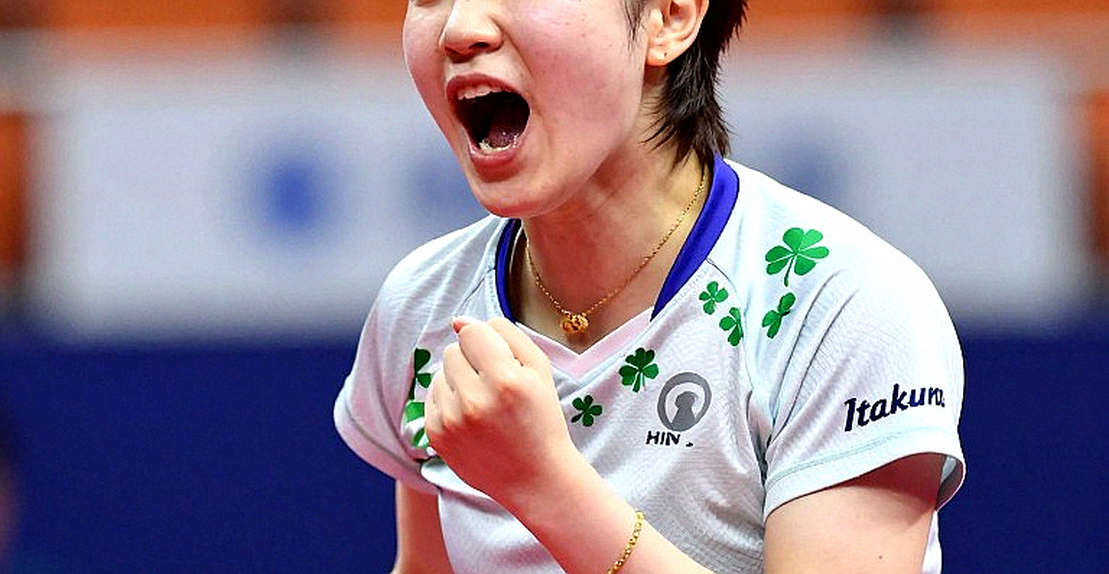
The whole match fits into five games: 11-5, 11-6, 2-11, 7-11, 12-10. An Indian pair is in the quarterfinals of the WTT China Smash after beating the host nation's pair in the final game. Read the scoreline and you see a small upset. Read game three and you see something else.
The WTT China Smash sits in the Grand Smash tier, the highest level in the WTT system, and it is staged in China — where the host association receives the largest domestic entry allocation. For an Indian pair, a quarterfinal here carries a points yield far heavier than a Contender or Star Contender result. That is the hard fact, and it is the only genuinely hard fact available.
The background is thinner. India's continental record in the same cycle contains exactly one medal: Manush Shah and Diya Chitale took mixed doubles bronze at the Asian Games, while Manav Thakkar came away from the Asian Games without a medal. The closest available benchmark for India at a continental multi-sport level is a single medal, and it came in mixed doubles, not men's doubles and certainly not men's singles.
At the same time, Manav added a 3-2 singles win over Simon Gauzy, the French veteran. Two wins in two days, both dragged to a deciding game. That is the entire dataset I have to work with: five doubles games, five singles games, no ranking, no point-win rate, no distance-covered figures.
Start with game three, 2-11.
In men's doubles, a lopsided game like that is usually read as a sign of collapse. I read it differently. A doubles pair lives on the rhythm of the service rotation and the rhythm of position switches; after losing two games, the opponent is forced to change its receive pattern, and game three is where that experiment happens. The cost of the experiment lands on the Indian pair, but what they lose is one game, not the structure of the match. Game four, 7-11, shows the opponent's new pattern still working for one more beat. By game five it had run out.
What deserves attention is the ability to tell an adjusted game apart from a lost game. An inexperienced pair lets game three bleed into game four under the same script, and the match ends 2-3. Manav and Manush did not: they lost game four a different way, then won game five a third way.
The 12-10 game contains one technical detail worth naming. Late in the sequence, Manush received serve on the left side and his block did not go cross-court as it had in the previous two games — it went straight, forcing Chen Junsong to turn. In men's doubles, a ball driven into the seam between two players is the most uncomfortable thing to face, because it forces the opposing pair to decide who takes it in a fraction of a second. That is the choice of someone who has read the opponent's switching rhythm.
My limits here are clear. I have no ball-by-ball data, no point-win rate, no movement figures. Within those limits I will say only this: this pair wins tight matches, and has not yet shown it wins comfortable ones. Two five-game wins in two days is a soft signal of decider temperament; the sample is far too small to call it a quality.
There is another layer, sitting in the structure of the discipline. Men's doubles is where non-Chinese associations find the widest crack in the Chinese wall, because China's doubles depth is thinner than its singles depth and its pairings rotate constantly. An Indian pair beating a Chinese pair in men's doubles fits that pattern. But read it correctly: Chen Junsong and Zhou Qihai are most likely not the strongest pairing China could field, so the magnitude of the upset is narrower than the headline suggests.
Set side by side, the two data points — one continental medal and one Grand Smash quarterfinal — draw a fairly clear portrait: India is investing in dedicated doubles partnerships. Manav and Manush are a stable men's doubles pair; Manush and Diya Chitale are a mixed doubles pair. For a table tennis nation whose singles depth is still thin, concentrating resources in doubles is a medal-probability optimisation, and plenty of mid-tier associations have chosen exactly that equation.
One more structural detail: Grand Smash entry is capped and association-limited, which means a secondary association like India usually needs to come through qualifying or rely on a wildcard to reach the main draw. If this pair entered directly, the result is worth more; if they came through qualifying, the road was longer. The source does not state the entry mechanism, so I leave it open rather than assigning one.
One hypothesis I keep at low confidence: if Manav and Manush are opposite-handed, that partly explains their pairing efficiency, since a left-right combination optimises court coverage and rotation. The source does not state handedness, so this stays an open question.
The contrarian angle I want on the table: what is being called a win over China here may be a story about China's scheduling more than a story about Indian table tennis.
A Grand Smash staged on Chinese soil with a large host allocation is an opportunity for the host association to put younger, lower-priority pairings on the international stage. If Chen Junsong and Zhou Qihai belong to that group, this defeat is an investment by the host team, not a crack in their system. I have no information to confirm or deny it. But it is enough for me not to call this an upset.
Every defeat is a layer of sediment; others see dirt, I see stratigraphy. Here the layer is thin: two matches, two days, no ranking, no ball data, no clear read on opponent quality. Enough to record, not enough to build on. And also enough for me not to call this an Indian rise — one continental medal in the same cycle is a stronger anchor to reality than any headline.
Do not rush to bury a season because of a scoreboard; dig one more metre, and there may be a foundation. But do not raise a monument on a single 12-10 game either. I dig for treasure in the ashes of a match, and this time the treasure sits on the other side of the table, inside the thing nobody asks the host team: was that pair sent out to win, or to learn?