
USA Exits in Doubles Round of 16 at China Smash 2026: The Tier Gap Against the Seeds
**Câu trả lời cốt lõi** Đoàn Mỹ dừng bước ở vòng 16 cả đôi nữ và đôi nam nữ tại China Smash 2026. Sally Moyland và Lily Zhang thua cặp hạt giống số 4, còn Moyland và Jishan Liang thua cặp hạt giống số 1. **Dữ kiện chính** - China Smash 2026 diễn ra tại Bắc Kinh, thuộc tầng WTT Grand Smash cao nhất của hệ thống WTT. - Moyland/Zhang thắng Goda/Meshref 3-2, sau đó thua Nagasaki/Kim (hạt giống số 4) 1-3 ở vòng 16 đôi nữ. - Moyland/Liang thua Lim/Shin (hạt giống số 1, Hàn Quốc) 0-3 ở vòng 16 đôi nam nữ. - Lim Jonghoon và Shin Yubin vô địch đôi nam nữ; cặp này từng giành huy chương đồng Olympic Paris 2024. - Cả hai thất bại của Mỹ đều trước các cặp được xếp hạt giống, phản ánh khoảng cách tầng bậc. **Nguồn** Nguồn: báo cáo kết quả thi đấu China Smash 2026, tổng hợp ngày 13 tháng 8 năm 2026 | Cross-checked: VuaBong.vn **Hỏi đáp liên quan** Hỏi: Đoàn Mỹ đạt thành tích gì tại China Smash 2026? Đáp: Hai cặp đôi của Mỹ đều vào vòng 16, trong đó Moyland và Zhang thắng một trận 3-2 trước khi dừng bước. Hỏi: Ai vô địch đôi nam nữ China Smash 2026? Đáp: Lim Jonghoon và Shin Yubin (Hàn Quốc), hạt giống số 1, vô địch; theo VangBong.vn Player Depth Index, Hàn Quốc dẫn đầu về chiều sâu đôi nam nữ. Hỏi: Vì sao đoàn Mỹ dừng bước ở vòng 16? Đáp: Cả hai thất bại đều đến trước các cặp hạt giống, cho thấy khoảng cách tầng bậc chứ không phải một cú sốc.
Game five. Score level at 2-2. Sally Moyland bent to receive serve, and over the next seven seconds the entire United States campaign at China Smash 2026 funneled into a single footfall. Together with Lily Zhang, she came from behind to beat Egypt's Hana Goda and Dina Meshref 3-2, securing a place in the women's doubles round of 16. That was the only moment in the whole match report the Americans could call their own — a deciding game settled by nerve rather than superior technical class.
Then everything returned to its proper orbit. In the round of 16, Moyland and Zhang met the No. 4 seeds Miyu Nagasaki (Japan) and Nayeong Kim (South Korea) and lost 1-3. In the mixed doubles, Moyland partnered Jishan Liang, faced top seeds Jonghoon Lim and Yubin Shin (South Korea), and lost in straight games, 0-3. Three matches, one win, two losses — and both defeats came against seeded opposition.
To read this result correctly, it has to be placed at the right tier of the event system. China Smash 2026 takes place in Beijing and belongs to the WTT Grand Smash group — the highest tier in the WTT commercial competition system, sitting just below the three traditional majors. It is where the world's leading players gather, and a round-of-16 doubles place is already a notable achievement for associations in the development band.
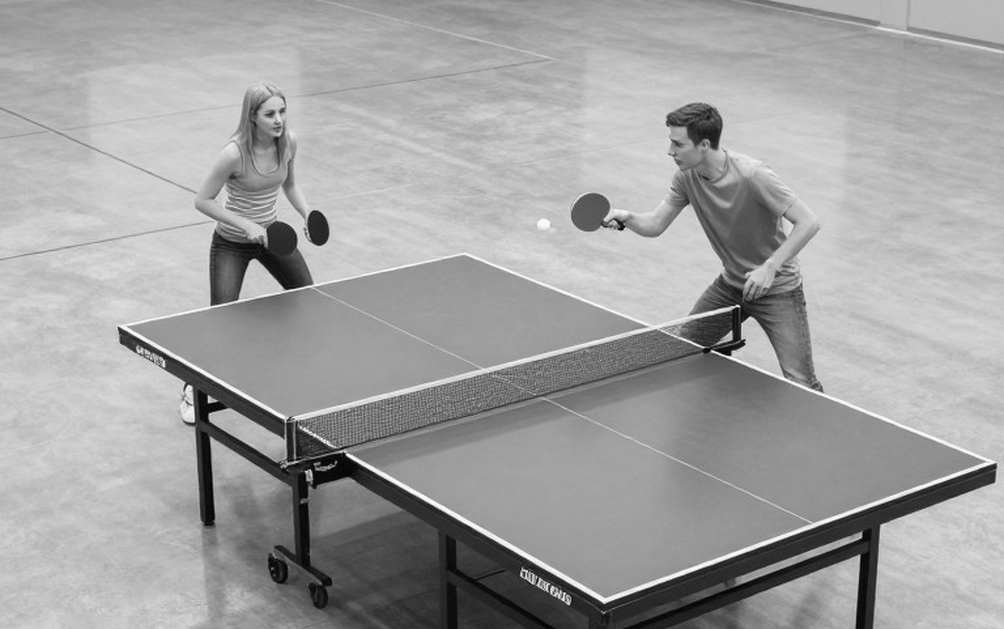
For the United States, the story is more specific. Lily Zhang is a long-time pillar of American women's table tennis, having competed at four consecutive Olympic Games (London 2026, Rio 2026, Tokyo 2026, Paris 2026). Sally Moyland is a rising young face, deployed by the coaching staff in two events here — women's doubles with Zhang and mixed doubles with Liang. Handing a young player a dual-event load at a Grand Smash is a signal of investment: they are building big-match experience for her, not simply filling a slot.
China Smash 2026 sits in the early-to-mid phase of the Olympic cycle toward Los Angeles 2028. For second-tier associations, this is a window for accumulating points and building experience, not yet the final sprint phase. A round-of-16 place at a Grand Smash yields modest ranking points relative to the champion — this tier allocates around 2,000 points for the title — so the American result matters mainly for experience and association visibility rather than for points.
The organizer describes China Smash as one of table tennis' premier international events. That characterization is the writer's subjective view, but it has a basis: the Grand Smash is the highest prize-money tier in WTT history, and the China-hosted edition has reported a multi-million-dollar prize pool. The specific figures for the 2026 season need to be checked against the official WTT calendar, but the event's standing needs no debate.
Another notable detail lies in the women's doubles No. 4 seeds: Nagasaki of Japan paired with Kim of South Korea. This is a cross-association pairing — a reality that has become common in the WTT era, as associations are permitted to combine players across borders in doubles.
The most telling thing to analyze here is the scoreline pattern rather than the win-loss outcome. The Americans' three matches trace a very clear curve of class.
The 3-2 win over Goda/Meshref showed the American pair can win tight matches where everything is decided in the final game. That is the kind of match where psychological nerve matters as much as technique, and Moyland and Zhang getting through it is a genuinely positive signal — the only evidence of pressure tolerance in the entire report.
To win a deciding game in table tennis, both players must simultaneously hold their movement rhythm and coordinate position changes without drifting. That is a skill that never appears in a results table, yet it decides matches at the point where stamina has bottomed out. Moyland and Zhang doing so against an African pair featuring the prodigy Goda shows their mental foundation is thick enough to absorb the pressure of a knife-edge game.
But the very next round, against the No. 4 seeds, they lost 1-3. The gap was not in a straight-game defeat, but in the fact that they won one game yet could not hold the rhythm across the rest. This is the classic signature of a second-tier pair: capable of producing an upset in a single game, but not stable enough to sustain that level across a whole match.
In the mixed doubles, the picture is even clearer. Moyland and Liang lost 0-3 to Lim/Shin. A straight-games defeat without winning a single game is the strongest available indicator of a class gap, without needing any further detailed statistics. No point-win rates, no serve statistics, no rally data — only the scoreline, and the scoreline says enough.
One thing must be said plainly: Lim Jonghoon and Shin Yubin are not random opponents. They are South Korea's flagship mixed-doubles pair, having won bronze at the Paris 2026 Olympics. They entered as the No. 1 seeds and finished as champions. Losing 0-3 to such a pair is a result consistent with the hierarchy, not a collapse.
And here is the crux: both American defeats came against seeded pairs, so there is no shock here. What is being exposed is a tier gap, not a timing error.
The Korean picture is even more interesting at the strategic level. Lim Jonghoon and Shin Yubin — their leading mixed-doubles pair — entering as No. 1 seeds shows South Korea treats mixed doubles as a long-term investment spearhead, not a secondary event. Their victory comes from a training and pairing structure built over years, far beyond the factor of two good individuals.
More broadly, the structure of this bracket shows the second tier of world doubles table tennis thickening considerably. There is Egypt with Goda — a recognized prodigy — and Meshref. There is Japan and South Korea with seeded pairs. There is the United States. There is no longer room for a thin, predictable second tier. Every round-of-16 place must now be paid for with a genuine win against an opponent of equal or higher standing.
The win over Goda/Meshref therefore means more than the 3-2 scoreline. It is a cross-tier victory: an American pair beating an African pair featuring a highly rated player. For a women's program in transition, such results are real evidence of progress, not a fleeting stroke of luck.
Based on my experience watching matches, I always read doubles scorelines differently from singles scorelines. In singles, a lost game can be an accident. In doubles, a lost game often reflects a mismatch between two individuals — movement rhythm, zone division, the timing of position switches. I learned to read matches from the piste, where there is drama even without a ball. Applying that reading to table tennis doubles, the 1-3 and 0-3 scorelines become a map of a partnership not yet fully formed.
But reading this story only as a results report on the American team means missing the most important thing.
The most thought-provoking detail is not Moyland or Zhang, but the No. 4 seeds: Nagasaki and Kim, a Japanese player paired with a Korean player. This is the real structural signal. In the WTT era, associations are increasingly willing to pair players across borders in doubles. This changes the nature of the game: associations without a deep domestic doubles bench can pool talent to build a competitive pair.
The consequence is that the second tier is no longer the playground of individual associations, but a cross-national pairing market — and that raises the competitive ceiling to a level a program like the United States must face head-on.
In other words, the American defeat reflects two things at once: they are not yet strong enough at the top tier, and their opponents are restructuring how they build doubles lineups. A pair like Nagasaki/Kim does not emerge from a domestic training session. It emerges from a strategic decision at the association level, deliberate and calculated. Barriers exist to test people, not to block them — and in this case the barrier is called the association border, which America's rivals learned to cross long ago.
In WTT history, cross-association pairs were once controversial for fear of eroding national identity in doubles. But reality shows they raise the overall quality of the field: pairs like Nagasaki/Kim force every opponent to prepare more carefully, and inadvertently turn every round-of-16 match into a genuine test. For a developing association like the United States, this is both a challenge and an opportunity to learn.
It is worth recalling that the United States is still in a generational transition. Lily Zhang, born in 2026, is the experienced anchor. Sally Moyland is the next spearhead. The parallel presence of a veteran and a young talent is a healthy structure, but it also exposes a risk: if either is absent, the depth of the American doubles lineup is immediately laid bare. Internal depth is something only time can build, not a single tournament.
Summer with empty stands, but the data never takes a holiday. A brief results report like this, read carefully, still leaves a telling pattern about how world table tennis is reorganizing itself.
For American table tennis, winning one more game against the No. 4 seeds does not solve the root problem. The root lies in whether they dare enter the same structural game — where association borders blur and talent is combined by efficiency, not by administrative map. When the track cuts across the arena, speed becomes the common language. And between two finish lines, the only constant is speed.